List Your Land
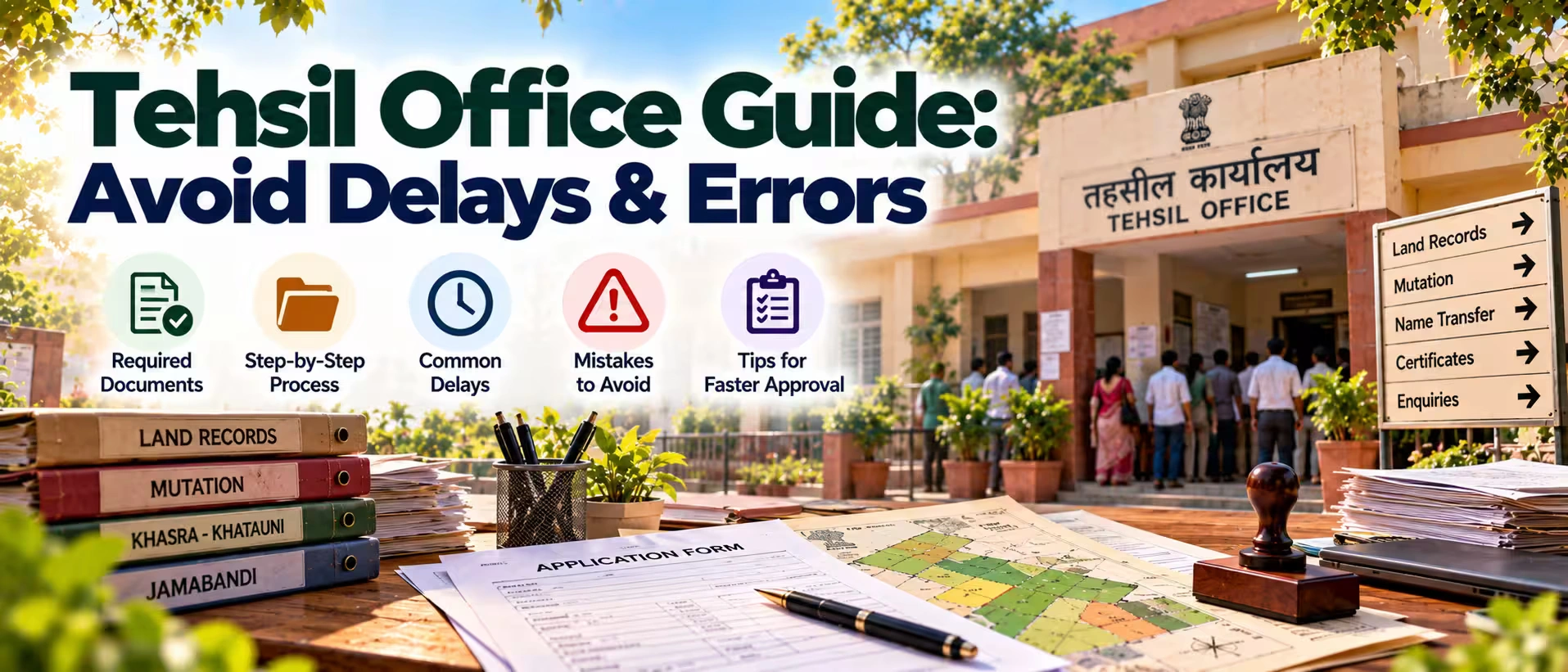
You visit the tehsil office only once or twice in your whole life, but each time for the reason of doing something important, say mutation after buying a property, partition of siblings, income certificate, land record, etc. The knowledge about which desk deals with what is entirely unknown to them. So, whoever first comes to their rescue ends up becoming the middleman. That is how any file becomes very expensive and complicated to handle. This book will let you know everything about tehsil offices, mistakes that cause delays in your file, and the way you can get your work done.
What Does a Tehsil Office Actually Do?
The tehsil is a subdivision of a district. The officer-in-charge is known as the Tehsildar, with a Naib Tehsildar, Kanungo, Patwari/Lekhpal, and an administrative clerk in his team. The tehsil office is the lowest tier for dealing with land revenue, land records, and citizen documents. In simple terms, the Tehsildar’s jurisdiction consists of:
- Preparation and maintenance of village land records
- Authorization of mutation (naamantaran or dakhil kharij) due to sale, succession, or gift
- Measurement, mapping, partition and subdivision of the land
- Issue of income certificates, caste certificates, domicile certificates, and residence certificates in many states.
- Conducting cases in revenue courts and collection of land revenue
- In some states, acting as Sub-Registrar for property documentation
Each state may have a different nomenclature of its own. In Delhi, the SDM office takes care of it in general terms. In Karnataka, the Tahsildar’s office deals with the Bhoomi land records and Nadakacheri centres for serving the customers. Always check the concerned office prior to any travel.
| Work | Usually handled by | Typical papers |
|---|---|---|
| Mutation after sale | Tehsildar / Naib Tehsildar | Registered deed, ID, khasra or survey details |
| Mutation after inheritance | Tehsildar | Death certificate, legal heir papers |
| Land record copy | Patwari / online portal | Khasra, khata or survey number |
| Demarcation | Kanungo / revenue inspector | Application, fee receipt, record copy |
| Partition of holding | Tehsildar | Family consent, record copies |
| Income or caste certificate | Tehsil / e-service centre | Address proof, ID, affidavit |
Why People End Up Depending on Middlemen?
Nobody enjoys paying an agent for something that is supposed to be either free or inexpensive. But it still occurs for various reasons. Firstly, the procedure is not clear. Very few know what to begin with: the patwari, clerk, or Tehsildar. Secondly,the lack of even one document leads to going back to the place where you live, and a second journey means losing a day’s salary. Thirdly, the middlemen know the officials and process the documents faster than the applicants do themselves. This is why they seem so necessary. Finally, many applicants do not live in the city but in another city, especially those who own land and plan to sell it.
What is more important, a middleman seldom solves the problem once and for all. He simply bypasses it, and the same defect pops up later when it is being checked by someone else – a potential buyer, bank, or court. What is more, unofficial money can lead to trouble, because you have nothing to prove your payment.
Common Mistakes People Make at the Tehsil Office
Most delays come from preventable mistakes, not from officials alone.
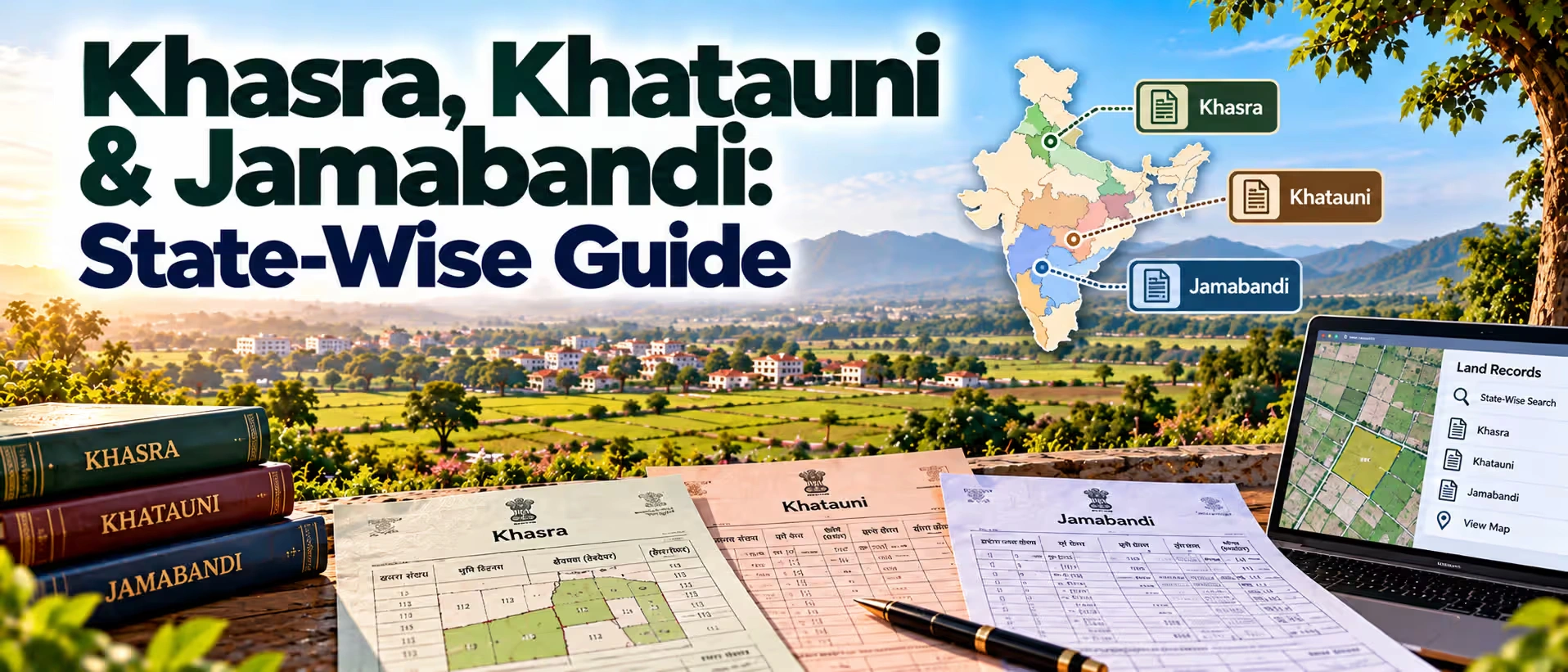
1. Going without checking the record first. Pull your khasra, khatauni, or jamabandi online before applying. If the name, area, or land type is wrong, fix that first; otherwise, the new application will be rejected on the same ground.
2. Carrying only photocopies. Many offices ask to see originals for verification. Take both, and keep a few extra sets of self-attested copies.
3. Applying to the wrong officer. Certificate work, mutation, and demarcation go through different desks. A short call to the helpline or a look at the state's service portal can save a wasted trip.
4. Ignoring co-owners. If the land is jointly held, objections from one family member can freeze the file. Settle shares in writing before you apply. This matters a lot for anyone planning farmland for sell, since buyers and lenders read the share column closely.
5. Skipping the receipt. Always get an application number or receipt. Without it, you cannot track the file, file an appeal, or prove when you applied.
6. Letting the mutation lapse after a sale. Many buyers register the deed and stop there. The revenue record still shows the old owner until mutation is done, and that gap causes disputes.
7. Not tracking the file. Applications sit when nobody follows up. Note the date, desk, and the name of the person you spoke to.
8. Handing original papers to an agent. Once originals leave your hands, you have little control. Give copies when possible.
A Practical Way to Avoid Middlemen
You do not need contacts. You need a clear sequence.
Step 1: Find out the exact process
Open the state’s revenue or e-District website and find the service that you need. In most cases, you will find a list of all the documents required, the fee, and the period during which the service should be provided, according to the Public Service Guarantee Act of your state.
Step 2: Check what can be done online
The copies of land records, mutation status, certificate forms, and fee payment can also be completed online in several states. It is advisable to use the government site instead of going to any other site that asks for additional money for the same. Uttar Pradesh, Haryana, and Chhattisgarh are some of the states.
Step 3: Prepare one complete file
Maintain another folder containing all your identity proofs, proofs of address, a copy of your record, registered deeds, and passport size photographs. Arrange them in that order following the checklist that you prepared. This is the only effective means of ensuring no further visits.
Step 4: Visit at the right time
The mid-week mornings are generally not as busy as Monday mornings and the last days of the month. You can inquire at the help desk or the reception about which counter deals with your work and speak to the clerk who is dealing with your file.
Step 5: Keep proof of everything
Keep the receipt, make note of the reference number, and take a picture of your application form. You can then use the clean record for further submission if time runs out without any reply.
Step 6: Use the grievance route
In case the file gets delayed, then one should complain to the Tehsildar and after that to SDM or DC. There are many states that have set up grievance redressal mechanisms such as CM helpline numbers or online portals. One can also use RTI for the reason behind the delay in file.
When Is Outside Help Reasonable?
Not every kind of help is a problem. A licensed lawyer, a document writer, or a surveyor does real work. The line is between professional help with a clear role and fee, and an unofficial fixer who promises to "settle it".
| Type of help | Fair to use? | Why |
| Advocate for legal opinion or disputes | Yes | Gives advice and takes responsibility |
| Deed writer or petition writer | Yes | Official role, fixed fee |
| Licensed surveyor | Yes | Needed for measurement and maps |
| Common service centre operator | Yes | Online filing help at set rates |
| Fixer who says he knows the staff | No | Unclear fee, no accountability |
| Anyone asking for "speed money" | No | Illegal and risky for you |
If someone asks for an unofficial payment, you can refuse and report it to the department's vigilance or anti-corruption helpline in your state.
Tehsil Work That Matters Before You Buy or Sell
Anyone searching for land for sale near me should treat tehsil records as the starting point, not an afterthought. Before paying an advance, check that the seller's name appears in the latest record, that mutation of the previous sale was completed, and that the land type allows what you plan to do.
Conversely, sellers need to do the opposite. It is easier to sell land if it has a clean title, since the buyer will not be required to ask for any rectifications midway through. If the intention is to retain the land for a long period, then one can check the title annually.
How 2Bigha Helps With Land Deals?
Visits to the tehsil are just one aspect of land transactions. 2Bigha is an online marketplace that allows landowners to post their land and allows buyers to browse through lands as per their location, acreage, and price range. Buyers who wish to view the lands available may begin browsing from the farms for sale page.
Sellers who prefer selling property online can list their land with their record details ready, and buyers can ask for the 2Bigha land report to understand the key checks on a parcel. Having your khatauni, jamabandi, or mutation proof ready before you list makes the conversation with buyers quicker and reduces the need to run to the tehsil mid-deal.
Disclaimer: This article is for informational purposes only and should not be considered investment, legal, financial, or property advice. Real estate regulations, infrastructure plans, market conditions, and government policies may change over time. Readers are advised to verify information with relevant authorities and consult qualified professionals before making any investment or property-related decisions.