List Your Land
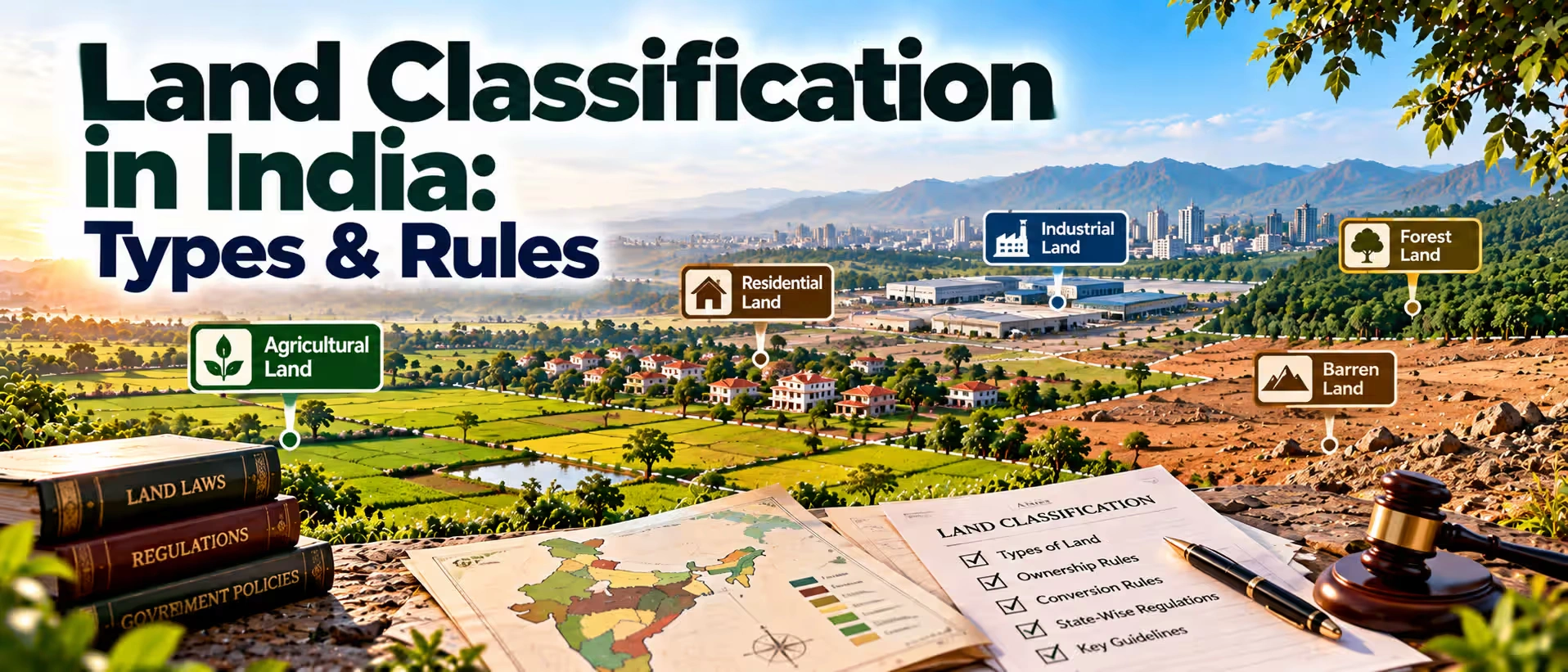
Go through any revenue document, and there is always one row telling the nature of the plot of land. Most buyers just skip this information and go directly to the name of the owner. This is an expensive practice as it is the nature of the land that determines what use can be made of the land, whether the land can be sold or not, and how the agreement can be contested later on. This article highlights five terms, abadi, gair mumkin, banjar, charagah, and shamlat, in both English and Hindi languages.
Land Classification Terms: Meaning in English and Hindi
There is a slight variation in names from state to state, and there is a variation in the spelling based on the documentation. The following table shows the meaning of each term along with the Hindi meaning and the search query used for each term. The search queries listed below are commonly used.
| Term | Meaning in English | हिंदी में अर्थ |
| Abadi (आबादी) | Inhabited village area where houses and residential structures stand | गाँव की बसी हुई रिहायशी ज़मीन, जहाँ मकान बने होते हैं |
| Gair Mumkin (गैर मुमकिन) | Land where cultivation is not possible, such as paths, ponds, drains, hills, and graveyards | ऐसी ज़मीन जिस पर खेती संभव नहीं, जैसे रास्ता, तालाब, नाला, पहाड़ या श्मशान |
| Banjar (बंजर) | Barren or uncultivated land, either fallow for a short period or unused for long | बंजर या परती ज़मीन, जिसमें खेती नहीं हो रही |
| Charagah (चरागाह) | Village grazing land kept for cattle | गाँव के पशुओं के चरने के लिए छोड़ी गई ज़मीन |
| Shamlat (शामलात) | Common village land shared by the community | गाँव की साझा या सामूहिक ज़मीन |
| Mumkin (मुमकिन) | Cultivable land where farming is possible | खेती योग्य ज़मीन |
If your record uses a different label, the state revenue department's glossary or the tehsil office can confirm the exact meaning for your village before selling property online.
Abadi Land: What It Is and Whether You Can Buy It?
The term Abadi refers to the area wherein people reside. Herein lie the dwellings, lanes, cattle sheds, and courtyards. The term 'lal dora' or 'abadi deh', which refers to the red line surrounding a village settlement on the map, is common in Punjab, Haryana, and Delhi regions.
Many a time, abadi plots have been handed down for years through families in a manner that there is neither any sale deed nor any revenue entry to prove ownership. However, that is changing now, thanks to the Svamitva scheme of the central government that offers homeowners property cards upon mapping the abadi plot with drones.
Can it be purchased? Yes, it can be purchased if there is proof of ownership and if local laws permit a transfer. The issues are the absence of a record of sale deed/revenue entry, absence of clear boundaries, dispute within the family, etc. You should ask for the property card or the revenue entry if available; the latest site map and a 'no dues' certificate from the village administration. The abadi land is of a residential nature and is unsuitable for cultivation.
Gair Mumkin Land: Why It Is Risky for Buyers?
"Gair Mumkin" means "impossible". These pieces of land can't be put to agricultural use. Gair mumkin lands are classified according to their characteristics, like rasta, nala, talab, pahar, abadi, or buildings.
Major parts of gair mumkin lands belong to the government, panchayat, or community, as these lands are necessary for the existence of villages. Private buyers normally can't buy such land. Also, any transaction on this piece of land may be considered unlawful. Private owners of gair mumkin lands may be found in some states where there is such kind of property with a building on it.
Any low-priced offer of gair mumkin land should serve as an alert signal, and the first thing one needs to know is the ownership column.
Banjar Land: Cheap, but Check the Owner First
Banjar means barren land. In Haryana and Punjab, you may see two forms: banjar jadid for land recently left uncultivated and banjar qadim for land that has been unused for a long time. The reason differs from plot to plot. It may be poor soil, lack of water, or simply that the owner stopped farming it.
This is the category where a lot of buyers get confused. Private banjar land held by a recorded owner can usually be sold like any other private land. Banjar land that belongs to the government or the gram sabha cannot be sold by an individual, and illegal occupation of it can be removed. The type alone tells you very little, so the ownership column matters more than the word banjar.
Buyers often search for farmlands near me hoping to find cheap barren plots they can reclaim. That can work, but only when the title is private and clean, and when you know what it will cost to make the soil usable.
Charagah Land: Not Open for Private Purchase
Charagah is grazing land meant for the cattle of the village. This is a common property vested in the gram panchayat or gram sabha, and this is there so that every family can have access to this grazing land irrespective of their own landholding capacity.
One cannot buy or sell the land of the charagah. The Supreme Court has advised the state government many times to protect the common lands of the village and remove the encroachers. Hence, anyone selling this land is misguiding you or is just misled himself.
Shamlat Land: Common Land With Fine Print
Shamlat or shamlat deh is the land that is communally owned by the village. This term is frequently used in Punjab and Haryana, and the laws relating to village common lands in these two states will determine the ownership; in most cases, the panchayat.
There is one thing you should know about this kind of property. You may come across shamlat patti in some villages where the common land is jointly owned by a number of proprietors and not the panchayat. However, even here the co-proprietor cannot sell the entire plot alone. Purchase of such property through a single proprietor is always risky, as the others can contest it at a later point in time.
Which Types Can You Legally Buy? A Quick Comparison
| Land type | Can a private buyer purchase it? | What to verify |
| Abadi | Usually yes, with proof of ownership | Property card or record, boundaries, no family dispute |
| Gair Mumkin | Rarely, and often not at all | Owner column, subtype, permitted use |
| Banjar | Yes if privately owned | Owner column, whether it belongs to the gram sabha or government |
| Charagah | No | Panchayat ownership, encroachment status |
| Shamlat | Generally no | Whether it is common land or a recorded private share |
| Mumkin (cultivable) | Yes, subject to state rules | Khasra, khatauni, mutation, liabilities |
Two extra checks apply to every type. First, before you buy Abadi land in India, check whether state-specific rules restrict who can purchase agricultural land, such as requiring the buyer to be a farmer or obtain prior approval. Rules vary by state, so confirm them with the local revenue office. Second, land classification can change only through a formal process approved by the competent authority, and the updated record must reflect that change.
How to Check the Land Type Before You Pay?
This can all be done using your mobile phone prior to visiting the plot.
- The khasra or survey number, as well as the name of the village, tehsil, and district, will be provided by the seller.
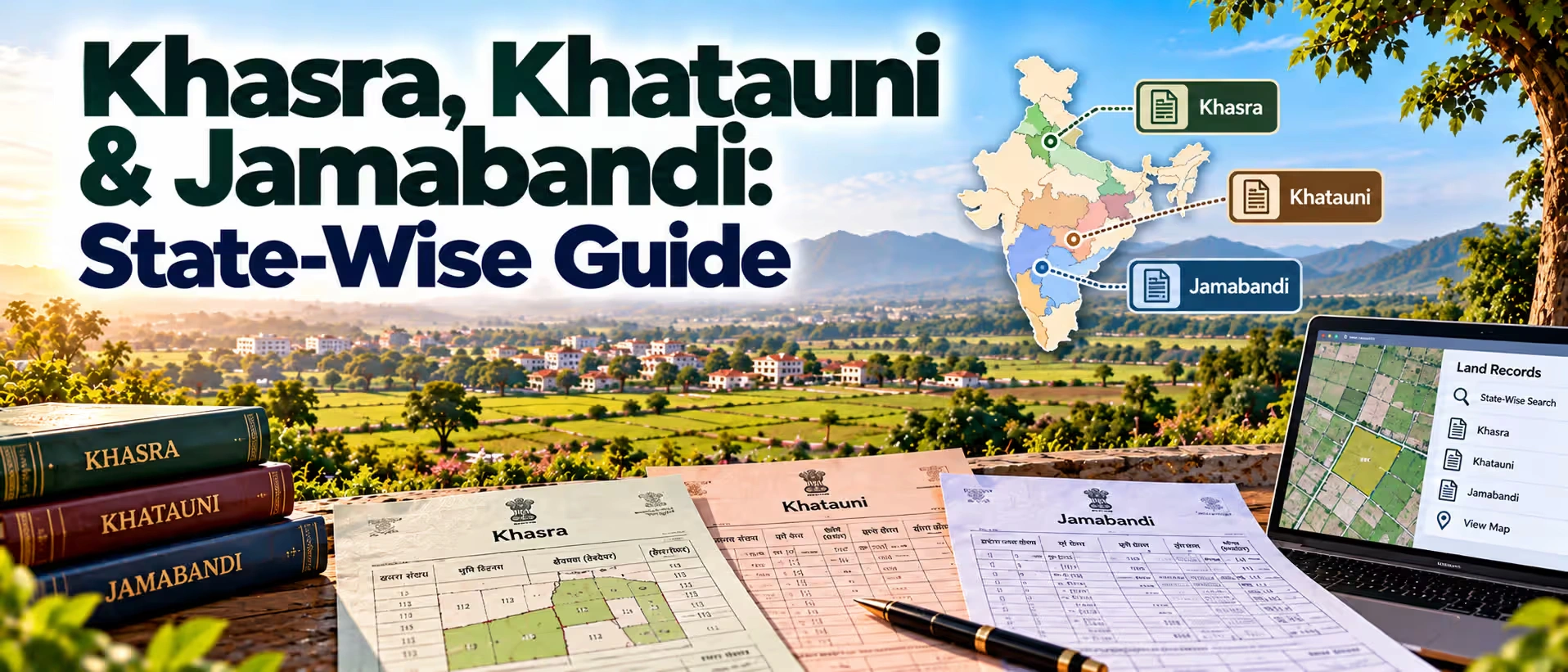
- Go to the website of your state for its land records and download the khasra, khatauni, or jamabandi.
- Check out the land use or classification column and match it with the definitions given in the table above.
- Check the owner column. If the government, panchayat, or gram sabha is the owner, then it means you cannot buy it.
- Cross-check the record with the village map to make sure that the plot is correct.
- Check the mutation history and the liabilities column for loans and court cases.
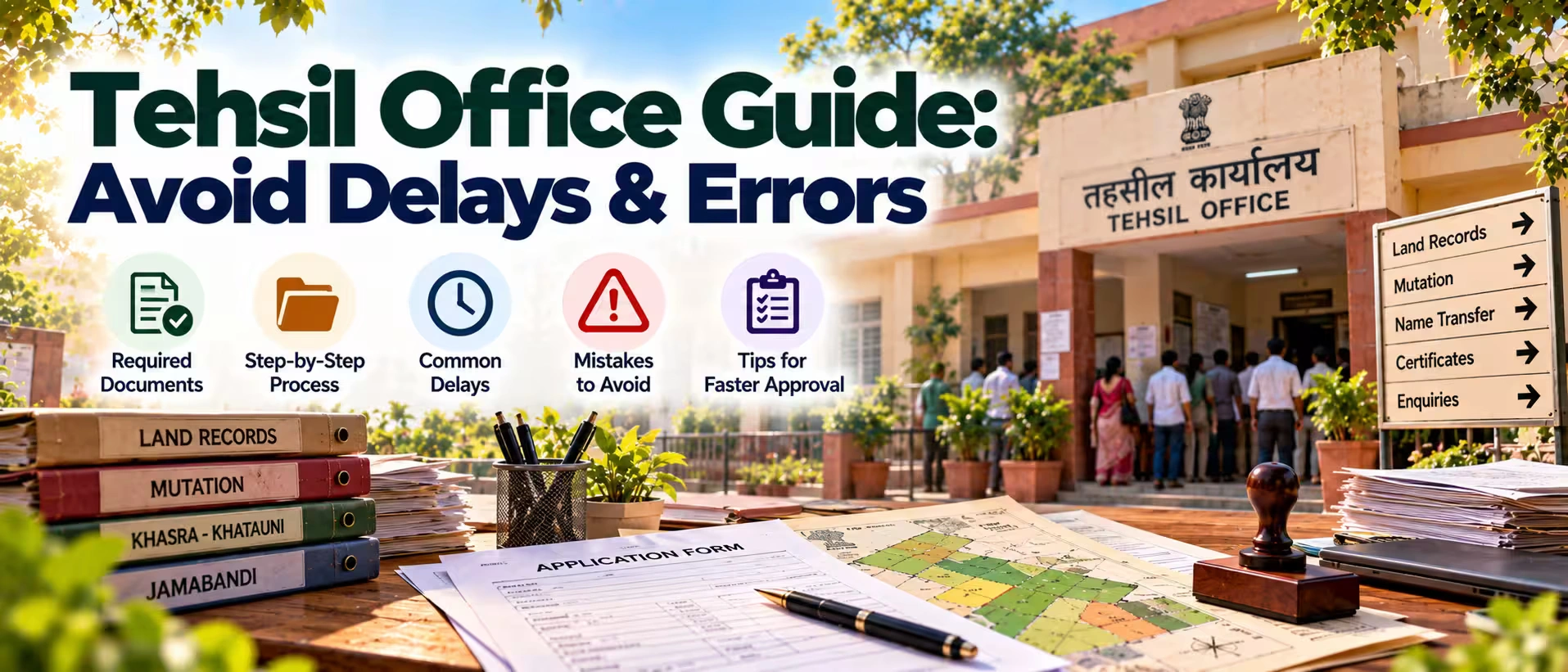
- If anything is confusing, check with the tehsil office or a local advocate before paying any advance.
Any farm search must start with the record and not with the pictures. Pictures only show soil but not the status.
Land Types and Selling: What Owners Should Know?
The sellers are also affected. If you have cultivable land registered in your name, then selling the land will be easy. However, if you have a restricted type of land, then the potential buyer’s bank will realize that, and the transaction will not be done at all. Those owners who want to sell their properties online must clear out the incorrect entry, mutation, or joint share first.
Finding Verified Land on 2Bigha
Once you know what you need, the next thing to do is to find the right land. 2Bigha is an online platform where landowners post their lands and buyers can search based on location, area, and budget. If you are looking for land for sale near me or agricultural land for sale near me, you can begin by visiting the farms page and then comparing the khasra numbers of the land with the type of land. For a detailed analysis of a particular piece of land, the 2Bigha land report will have all the information in one place.
Disclaimer: This article is for informational purposes only and should not be considered investment, legal, financial, or property advice. Real estate regulations, infrastructure plans, market conditions, and government policies may change over time. Readers are advised to verify information with relevant authorities and consult qualified professionals before making any investment or property-related decisions.