List Your Land

Land is among the rare instances where one slip-up can drain away a family’s fortune and lead them into legal action for decades. It is also a very vulnerable subject. The property is remote from the purchaser, documents are spread out in many offices, and people get so carried away by "great deals" that they neglect the tedious research work.
There are two frauds that come around repeatedly, such as the double sale, where a particular plot is sold to several buyers, and the fraudulent listing, in which someone sells land that either is not theirs or does not even exist at all. This handbook tells you how it is done, what the telltale signs are, and the checklist to follow before you pay the first rupee.
What Is a Double-Sale Scam?
A double sale involves one seller who enters into agreements with two or more buyers for the same land parcel. Each buyer feels he or she is the only one. The seller receives advances from both parties, and by the time the truth dawns on everyone, the money will be lost in a dispute. Below is the typical scenario.
- The seller receives an advance from Buyer A and enters into an agreement of sale. This agreement may be written on stamp paper but not registered.
- After some weeks, the seller meets Buyer B and promises a lower price or quick settlement.
- The sale deed is registered in the name of Buyer B because registration is the final step in transferring immovable property.
- Buyer A remains with an agreement that confers no ownership rights and must chase the seller for refunds.
It is not necessarily one dishonest owner. At times, one of the family members, co-owners, or power of attorney holder sells the land without the knowledge of the other owners. Sometimes the seller sells the land and mortgages the same or re-sells the land after failing to register it.
Why the agreement to sell is not enough?
An agreement to sell is a promise. It does not transfer ownership. Under Indian law, the transfer happens through a registered sale deed, and the revenue record is updated through mutation. A buyer who pays money against only an agreement carries the risk that someone else registers first. That is the gap double-sale scammers exploit.
What Is a Fake-Listing Scam?
A fake listing is an advertisement for land that is not really on sale. The land may belong to someone else, may be government or community land, or may not exist in the form shown. The goal is to collect a booking amount, a site-visit fee, or an advance from buyers who are hunting for a farm on sale near me or similar bargains. Common versions include:
- Photos lifted and stories fabricated. The scammer will take the images of an actual piece of land from a different listing or a stock photo and will provide a khasra number that doesn't correspond.
- Seller doesn't own the property. A broker or impostor lists a property belonging to someone else with false identity cards or a forged POA.
- Government/protected land. Pieces of land situated on gair mumkin, charagah, or ceiling land are represented as plain private lands.
- Excessive discount. A suspiciously low price is set so that the buyer pays the token amount as quickly as possible without any investigation of details.
- Advance fee scheme. A down payment on "holding" the plot and after that nothing.
The listed scams don't apply solely to agricultural lands. People who investigate potential business investments in commercial properties are exposed to the same schemes.
Red Flags That Should Make You Stop
None of these proves fraud on its own, but two or three together are a strong signal to slow down.
| Red flag | Why it matters |
| Price far below nearby plots | Scammers use low prices to stop you from checking |
| Pressure to pay an advance today | Real owners can wait for a verification visit |
| Seller refuses to share khasra, khatauni, or jamabandi | The record is where fraud shows up |
| Name on ID does not match the record | The seller may not be the owner |
| Only a power of attorney, no owner present | POA documents are often forged or outdated |
| Payments requested in cash or to a personal wallet | No paper trail and little recourse |
| Seller avoids meeting at the site or the registrar's office | Common in impostor cases |
| Same plot appearing under different names or numbers | May be a double sale or a recycled photo |
| Agreement on plain stamp paper but no registration plan | A sign the deed may never be registered in your name |
| Broker unwilling to give the owner's contact | They may not have the owner's permission |
How to Check a Listing Before You Pay?
The checks below take a few days at most and are much cheaper than a court case, whether you plan to buy or sell land.
Step 1: Ask for the full record and pull it yourself
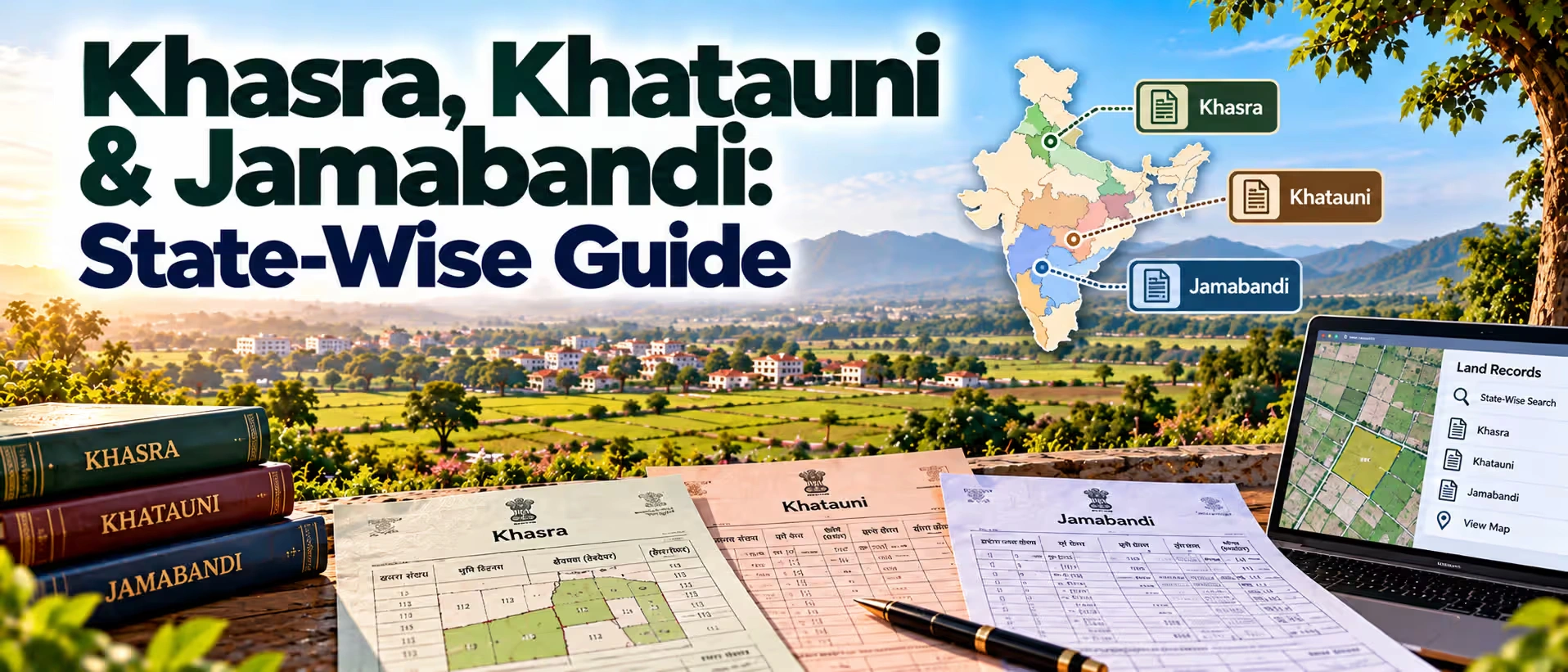
Obtain the Khasra/Plot/Survey number along with the village, tehsil, and district. Go to the state government website for land records, and then download the document. Avoid using the PDF sent by the seller. Check the owner's name, land area, land type, and mutation particulars that he/she provided.
Step 2: Check the land type and owner column
In cases where the owner is described as the government, panchayat, or gram sabha, or where the land type is limited, the land is not for private purchase. In our guide on land classification, we explain these concepts thoroughly.
Step 3: Get an encumbrance certificate
An encumbrance certificate from the Sub-Registrar shows transactions relating to the particular property over a period. This may show that there was an earlier sale, mortgage, or even an agreement that was not disclosed by the seller. Try to obtain 13-30 years of records wherever feasible.
Step 4: Verify the seller's identity
Match the identity of the seller with the document, and do it yourself in person. In case of a power of attorney holder as the seller, request the original document to be shown, ensure that it is registered and still valid, and reach out to the owner directly. POA is nullified upon death of the owner.
Step 5: Visit the site and speak to neighbours
Stand within the plot using the village map and find its limits. Ask the nearby cultivators whether this piece is being cultivated by them. In case it is with someone else, this is the problem to be aware of.
Step 6: Search for disputes and legal notices
Check the pending cases from the records of the revenue court and civil court and check the liabilities column for loans. Some buyers also place a public notice in the local newspaper seeking objections, which is common practice in many places.
Step 7: Pay safely and in stages
Pay the money by bank transfer directly to the owner's account, not to that of any broker personally. Keep the advance small, relate the amount to the registration process, and insist on receiving a receipt every time. Get the sale deed registered in the sub-registrar's office, and apply for mutation immediately.
Read More: How to Spot a Fake Farmland Listing Before You Drive Out to See It?
What a Safe Payment Plan Looks Like?
| Stage | What happens | Who should be involved |
| Before advance | Record check, encumbrance certificate, ID match | You, owner, advocate if possible |
| Token or advance | Small amount by bank transfer with written receipt | Owner only |
| Agreement | Written terms, timelines, and refund clause | Owner and buyer, ideally witnessed |
| Registration | Balance paid and sale deed registered | Both parties at the sub-registrar's office |
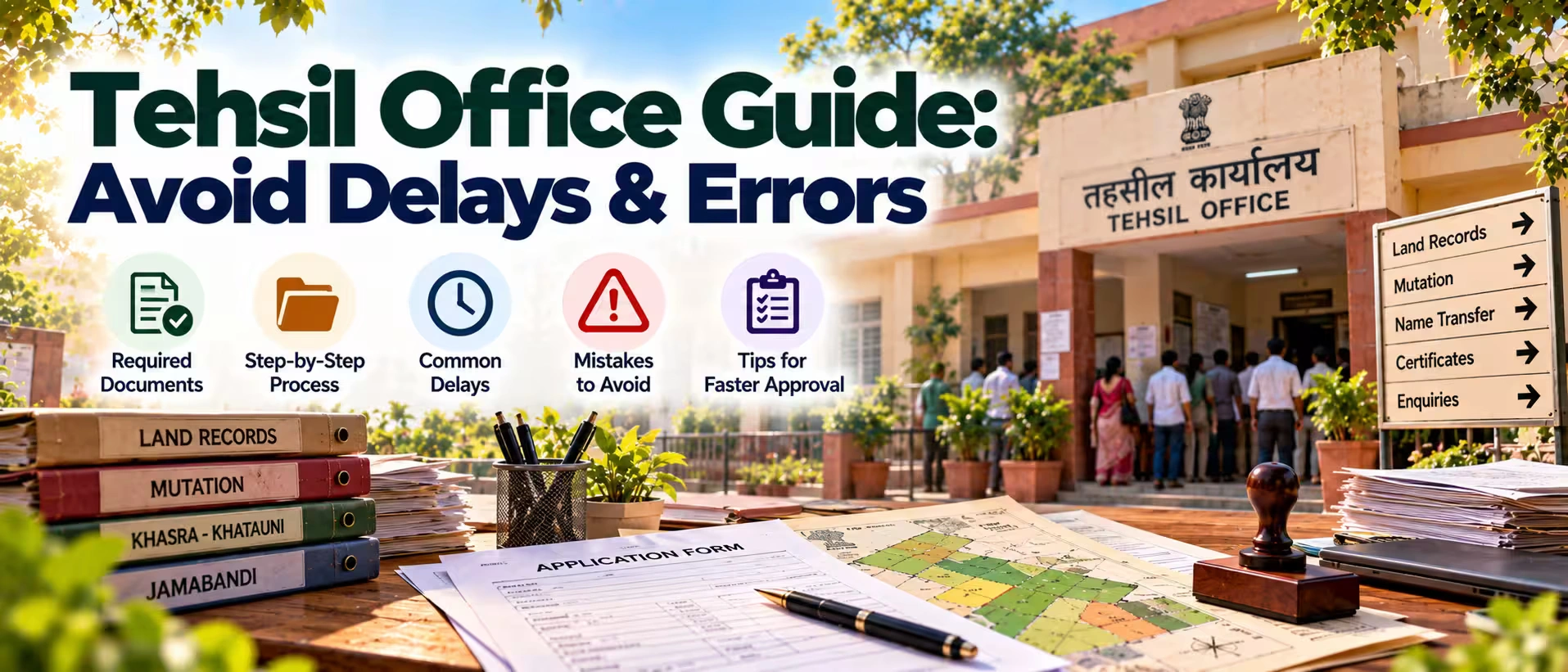
| After registration | Mutation applied and record updated | Buyer, tehsil office |
What to Do If You Think You Have Been Scammed?
Don’t lose time, as delay makes recovery difficult.
- Stop making all payments and retain every communication, receipt, bank statement, and photograph.
- See if any registration of sale or mortgage has been done after your agreement.
- Complain to the nearest police station or economic offence wing of the police station wherever it exists. Cheating and forgery fall under the ambit of the Bharatiya Nyaya Sanhita replacing the Indian Penal Code.
- In case the fraud takes place online, complain at the National Cyber Crime Reporting Portal or on the 1930 helpline in case of a digital payment.
- Consult an advocate regarding filing of a civil suit for a refund or specific performance and seek an injunction order against any further sale.
- Inform the sub-registrar and the tehsil in writing so that they may take note of your objection prior to registering any other deed.
Rules and remedies differ from state to state and also from case to case. So, this should be taken as a general guide only.
Protecting Yourself as a Seller Too
It is not only consumers who get affected by fraudulent activities. Even if the seller plans to sell his land, the chances of being pulled into problems become much greater when fraudsters list this land for sale or use some previous contract regarding its possession. Do not let your mutation slip. Every year, look through your record; make sure your khatauni or jamabandi contains your proper name and share in it. When selling land, always prepare a clear file containing all necessary documents.
Safer Land Search on 2Bigha
A reliable listing source saves you from a lot of guesswork. 2Bigha is a land marketplace where owners list plots and buyers can search by location, size, and budget. If you are looking for agriculture land near me or farm plots for sale, you can start from the farm listings page and then run your own record check on any plot that interests you.
The 2Bigha land report pulls together the key checks on a parcel, which helps you spot mismatches early. Whatever source you use, the rule stays the same: verify first, pay later.
Disclaimer: This article is for informational purposes only and should not be considered investment, legal, financial, or property advice. Real estate regulations, infrastructure plans, market conditions, and government policies may change over time. Readers are advised to verify information with relevant authorities and consult qualified professionals before making any investment or property-related decisions.