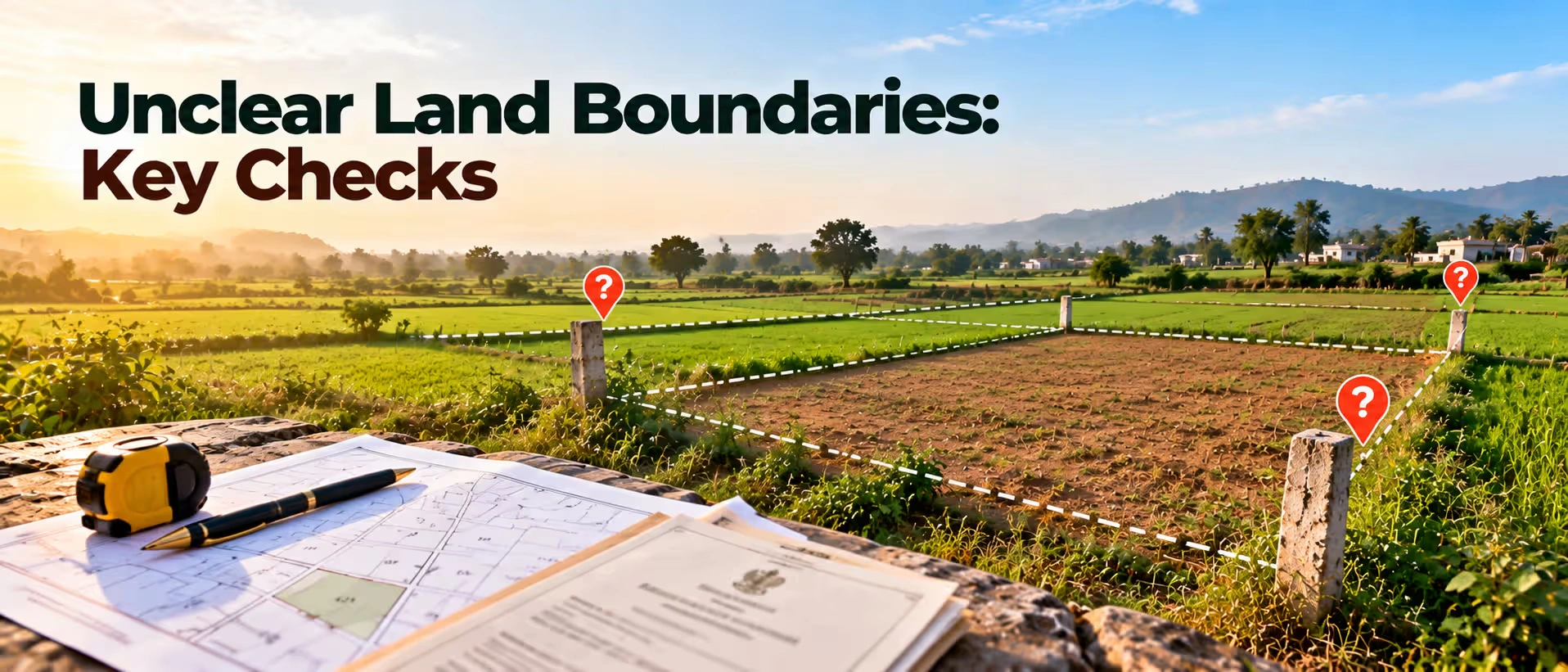
Selling agricultural land in Andhra Pradesh requires more paperwork than anticipated by most sellers since the process hinges on the revenue records of the village, legal status of the property as per the restricted lists of the state, and proper registration at the Sub-Registrar office. A seller who is able to sort out the above three prior to approaching a buyer will sell their property quickly, at a reasonable price, and avoid falling into the trap of having their deal fall through after receiving the advance. The guide will take you through the selling process in the sequence that you would actually go about it.
Check Whether Your Land Can Legally Be Sold
Before anything else, a seller who wants to sell land in Andhra Pradesh should confirm that the parcel is free to transfer, since certain categories of land cannot be sold or can be sold only with permission. The state maintains a list of prohibited properties under Section 22A of the Registration Act, and a Sub-Registrar will refuse to register a sale if the survey number appears on it. Assigned lands, which the government gave to landless families, are another common problem, because the law generally bars their transfer except in limited situations. Run through this list first:
- Go to the Meebhoomi website and see that your name comes up in the Adangal and 1B as the owner, because the buyer's attorney will verify exactly this.
- Verify whether the land had been allotted by the government or was part of inam/endowment ownership. Check whether there is a Waqf or temple claim on the land.
- Check whether the 22A prohibited list from the registration office website or from the local Mandal Revenue Office includes your land. Get it confirmed in writing if needed.
- Make sure there is no court case pending on the land, no tenancy claim, or acquisition notice.
- In case there is any crop loan or bank mortgage on the land, make sure it is cleared and get a no dues letter issued.
Documents to Gather Before You List the Land
Buyers in Andhra Pradesh tend to ask for the same set of papers, and having them ready in one folder shortens the negotiation noticeably. If the land came through inheritance, the paperwork matters even more because the chain of ownership has to be visible from the earlier owner to you.
| Document | What it proves | Where to get it |
| Pattadar passbook and title deed | You are the recorded owner | Mandal Revenue Office |
| Adangal and 1B extract | Survey number, extent, cultivation, and owner details | Meebhoomi portal |
| Existing sale deed or gift or partition deed | How you acquired the land | Your own records or Sub-Registrar office |
| Encumbrance Certificate | No loans or earlier transfers pending | Registration department portal |
| FMB sketch and village map | Boundaries and exact extent | Survey department or Mandal office |
| Legal heir or family member certificate | Inheritance, if applicable | Mandal Revenue Officer |
| Aadhaar and PAN of all owners | Identity and tax details | Your own documents |
| No dues letter from bank | Loan is cleared | Your bank branch |
If the land is held by several family members, every co-owner will need to sign the sale deed or give written consent, so settle any disagreement among heirs before a buyer is involved.
How to Price Your Land Properly?
Pricing is where many sellers lose money, either by asking too much and scaring away serious buyers or by accepting the first offer from a broker. A good starting point is the recent registered sale price of similar land in your own village, which you can learn by checking nearby sale deeds or asking the Sub-Registrar office about market value guidelines. Buyers searching for agriculture land for sale in Andhra will compare your parcel with several others, so your price needs to make sense against what is listed around you.
| Factor | How it affects the price |
| Distance from highway or town | Closer land commands a clear premium |
| Road access and width | Land with a proper approach road sells faster and at a higher price |
| Water source | Borewell, canal, or tank irrigation raises value |
| Soil and crop history | Fertile, well-maintained fields attract farmer buyers |
| Nearby projects | Industrial corridors, ports, or capital region plans push demand up |
| Shape of the parcel | Regular shapes sell better than narrow or broken ones |
| Clean records | Clear title can mean a better price and faster closing |
Keep in mind that the registered value is always at least the government's basic market value for that area, so quoting a price far below it will not help you on paper.
Where to Find Genuine Buyers?
You can approach a potential buyer through a variety of ways, and each one is best suited to the particular type of seller. Local brokers know the buyers from the village but often take a commission on both sides and try to rush the sale. Nearby farmers are the most reliable buyers as they already know the land and its water situation. Advertising in newspapers and WhatsApp groups will get local buyers, but casual inquiries are common. Land websites will help you connect with investors or buyers from other districts or states, especially if your land is in a developing region such as the Vijayawada-Guntur corridor, Visakhapatnam or Nellore.
In whichever way you go about selling your land, make sure that you give copies of the documents only once you are sure of the intentions of the buyer.
Agreement of Sale and Advance Payment
Once a buyer agrees on a price, most deals begin with a written agreement of sale and a token advance. Serious buyers of farm land for sale in Andhra Pradesh will want the agreement to state the survey number, extent, price, advance paid, balance schedule, and the date by which the sale deed will be registered. Write down what happens if either side backs out, and keep a copy signed by both parties and two witnesses. Some points to keep straight at this stage:
- Accept the payment in advance through bank transfer or cheque and not cash, because it will create a proper account for each rupee.
- The amount of advance should be low, generally a small part of the total cost, until the buyer's lawyer completes his work on your documents.
- Provide a reasonable period of time to complete, as buyers require time to arrange finance or obtain a loan.
- Specify who will bear which expenses, as the buyer usually pays stamp duty and registration costs in Andhra Pradesh, whereas the seller bears all clearances and dues.
Registering the Sale Deed at the Sub-Registrar Office
The sale is legally complete only when the sale deed is registered at the Sub-Registrar office that has jurisdiction over the land. A draft is prepared, usually by a document writer or advocate, and both parties verify the details before the registration slot. The buyer pays stamp duty, transfer duty, and registration fees online, and the combined rate for sale deeds in the state sits at a noticeable percentage of the higher of the sale price or the government market value, so confirm the current figure on the registration department's website before the date.
| Step | What happens | Who is involved |
| Draft the sale deed | Details of parties, land, and price are entered | Seller, buyer, document writer |
| Pay duty and fees | Stamp duty, transfer duty, and registration fee paid online | Buyer |
| Book a slot | Appointment fixed at the Sub-Registrar office | Either party |
| Present documents | Aadhaar, PAN, title papers, and witness details submitted | Seller, buyer, two witnesses |
| Photo and biometric | Identity is recorded | Seller, buyer, witnesses |
| Registration | Deed is signed, stamped, and registered | Sub-Registrar |
| Receive the deed | Registered copy handed over after processing | Buyer, with a copy for seller |
When completing an agricultural land purchase in Andhra Pradesh, receive the balance payment through banking channels on or before the registration day, and keep proof of every payment for your records.
What to Do After the Sale: Mutation and Tax?
A sale does not end everything. The name of the buyer has to be entered into the records of village revenues, and it is known as mutation. You must ensure after a few days that your name has been removed from the records. Otherwise, you have to approach the Mandal Revenue Office, because having an old entry against you could pose serious issues for you later on, like wrongful taxation or lending liability.
Taxation would depend upon the land. Rural agricultural land outside the prescribed distance from municipal limits is normally not considered to be a capital asset, so there will be no capital gains tax, whereas agricultural land inside the prescribed limits will be taxed as a capital asset with some relief under certain conditions. Thus, if you wish to sell land in a developing belt adjacent to the city, you should know which kind of land you have before you fix the price. TDS at one percent is applicable to most property sales over fifty lakh rupees, excepting rural agricultural lands. Tax laws have undergone revision lately; thus, you must consult a chartered accountant with your survey number and distance details.
Selling Your Land Through 2Bigha
If you need buyers from other villages, 2Bigha helps landowners post their land in such a way that buyers from other states will be able to find it, and you can post your land here by giving information regarding its location, size, cost, and photographs. The posting will be verified before going online, and buyers can ask for a Background Verification Report on the postings, while Book a Visit will enable a genuine buyer to visit the property on a fixed date instead of calling you again and again. This is helpful when your land is located near a highway or city outskirts or in the proximity of any upcoming project.
Mistakes Sellers Should Avoid
- Selling without verifying the 22A list or assigned land status, which may cause a refusal to register even after the buyer has paid
- Collecting a hefty down payment without a contract
- Neglecting to update records after inheritance so that the buyer’s attorney sees a break in the link
- Overlooking co-owners who will later come forward and contest the deed
- Failing to check for mutation after registration
- Basing the transaction on a verbal quote from a broker without verifying similar sale deeds in the area
Disclaimer: This article is for informational purposes only and should not be considered investment, legal, financial, or property advice. Real estate regulations, infrastructure plans, market conditions, and government policies may change over time. Readers are advised to verify information with relevant authorities and consult qualified professionals before making any investment or property-related decisions.