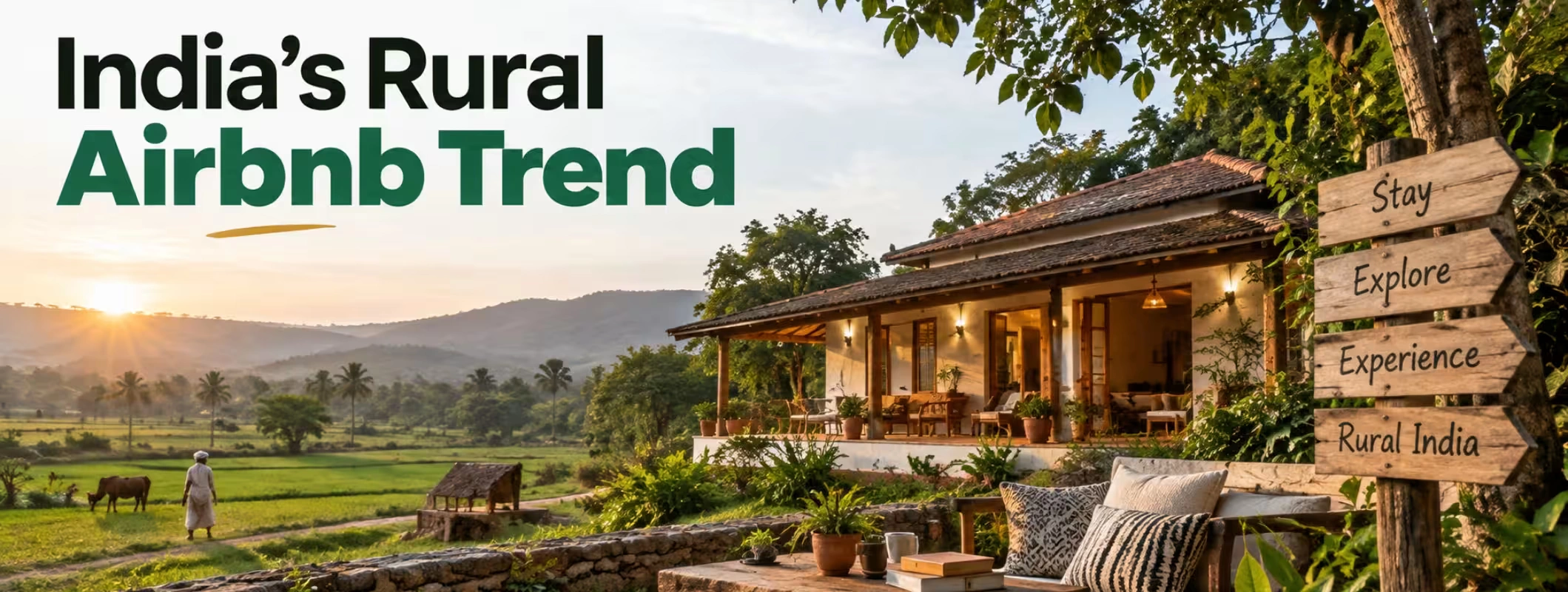
Whereas a few years back, "visiting a farm over the weekend" used to mean visiting relatives who were farmers, now it implies booking through apps, spending a couple of thousand rupees for a night's stay, and enjoying yourself on Saturday harvesting produce which you will never grow in your life. Farm stays have become one of the fastest-growing categories of tourism in India, and such trends have begun affecting the kind of people who buy farms and why.
It is not just about tourism anymore. It is now becoming a land story too. If you have been looking for farmlands near me or "plots for sale nearby," you must be able to feel rising prices in some villages.
What's Actually Driving the Farm Stay Boom?
A few things came together at once to make this happen:
- Work-from-anywhere culture left a lot of city professionals free to travel on weekdays, not just weekends
- Social media turned "authentic village experience" into something people actively search for and post about
- Post-pandemic fatigue with crowded hill stations pushed travellers toward quieter, less-touristy options
- Rising disposable income in tier-1 and tier-2 cities made short, frequent getaways affordable in a way they weren't a decade ago
Put together, this created steady demand for a kind of property that barely existed as a business category ten years ago: a working or semi-working farm with a few rooms, a pool maybe, and Wi-Fi good enough to post about it.
Where This Is Actually Happening?
Farm stays aren't spread evenly across the country. They're clustering in specific belts, usually within a few hours' drive of a major city.
| Region | Nearby City | What's Driving Demand |
| Karjat, Lonavala belt | Mumbai, Pune | Weekend escape, easy highway access |
| Coorg, Chikmagalur | Bangalore | Coffee estate stays, cooler climate |
| Alibaug hinterland | Mumbai | Beach plus farm combination |
| Villages around Jaipur | Jaipur, Delhi | Heritage-style farm stays |
| Sonipat, Karnal outskirts | Delhi NCR | Close, affordable weekend option |
| Coastal Goa hinterland | Goa itself | Farm stays paired with tourism season |
Notice the pattern: almost every hotspot sits close enough to a big city for a two-to-four-hour drive. That distance seems to be the sweet spot buyers and investors are chasing.
How Is This Changing What Buyers Want?
Farm stay demand has created a new type of buyer, and it's changing what "good land" even means in these areas. A plot that would've been valued purely on soil quality or crop yield five years ago is now also being judged on things like road access, mobile network coverage, and distance from the nearest highway exit.
People searching for land selling near me in these belts today often aren't farmers at all. They're small investors, first-time entrepreneurs, or even groups of friends pooling money to build a farm stay together. That's a genuinely different buyer than the traditional agricultural land market used to attract.
What Makes a Piece of Land "Farm Stay Ready"?
Not every plot works for this. Buyers evaluating land for a potential farm stay tend to look for a fairly specific combination:
- Water availability — a borewell or nearby water source, since dependable water is non-negotiable for hosting guests
- Road connectivity — land that's reachable by a decent road, not one that needs a four-wheel-drive after monsoon
- Distance from the city — close enough for a weekend trip, far enough to feel like a genuine escape
- Existing structures or conversion potential — an old farmhouse that can be renovated is often more attractive than a completely empty plot
- Legal clarity on land use — since running a paid stay isn't purely agricultural activity, buyers check conversion rules before committing
This last point trips up a lot of first-time buyers. Land that's still classified purely as agricultural often needs local approvals before it can legally host paying guests, and that detail gets missed more often than it should.
Is This Actually Good News for Land Owners?
For people already holding farmland in these belts, yes, mostly. Owners who've had land sitting idle for years, generating little income, are suddenly getting inquiries they wouldn't have a few years back. A lot of them are turning to online land selling platforms instead of waiting for a local broker to eventually find a buyer, simply because the buyer pool now includes people from cities who'd never have heard about the land otherwise. That said, not every plot benefits equally. Land far from any road, or in areas with no reliable water source, isn't seeing the same jump in interest, no matter how scenic the setting.
What This Means If You're Selling?
If you own land in one of these growth belts and you're thinking about listing it, a few things are worth knowing before you do:
| Do This | Skip This |
| Mention water source and road access clearly | Leave buyers guessing about basic infrastructure |
| List distance from the nearest city or highway | Assume buyers already know the area |
| Get clarity on conversion status beforehand | Wait for a buyer to ask and find out you don't know |
| Show real photos, ideally in different seasons | Use old or unrelated stock images |
| List on more than one platform | Rely on one broker's local network alone |
Selling property online has become the natural next step for a lot of these owners, mostly because farm stay buyers are typically searching from cities, not walking through the village asking around. If your listing isn't visible to that search, you're missing exactly the buyer this trend has created.
A Quick Look at Buyer Search Behaviour
It's worth understanding how these buyers actually search, because it shapes what a good listing needs to include:
- General proximity searches like "farmlands near me" when someone already has a rough area in mind
- Specific plot searches, such as "plots for sale near me", usually once they've narrowed down a region
- Niche searches like "farm for sell", often from buyers specifically hunting for land with an existing structure or farming activity already in place
- Comparison searches across nearby villages before making a final decision
A listing written with these exact patterns in mind — clear location, clear land type, clear documentation — tends to get found faster than one written in vague, generic language.
How 2Bigha Fits Into This Shift?
2Bigha verifies ownership records, checks conversion status, and confirms water and road access details before a listing goes live, which matters a lot for this specific kind of buyer, someone who often can't visit five different villages in person before deciding. Whether you're an owner exploring online land selling for a plot with farm stay potential, or a buyer comparing land across a few growth belts near a city, 2Bigha brings verified listings and background checks together in one place, instead of leaving buyers to piece it together from a broker's word alone.
Disclaimer: This article is for informational purposes only and should not be considered investment, legal, financial, or property advice. Real estate regulations, infrastructure plans, market conditions, and government policies may change over time. Readers are advised to verify information with relevant authorities and consult qualified professionals before making any investment or property-related decisions.