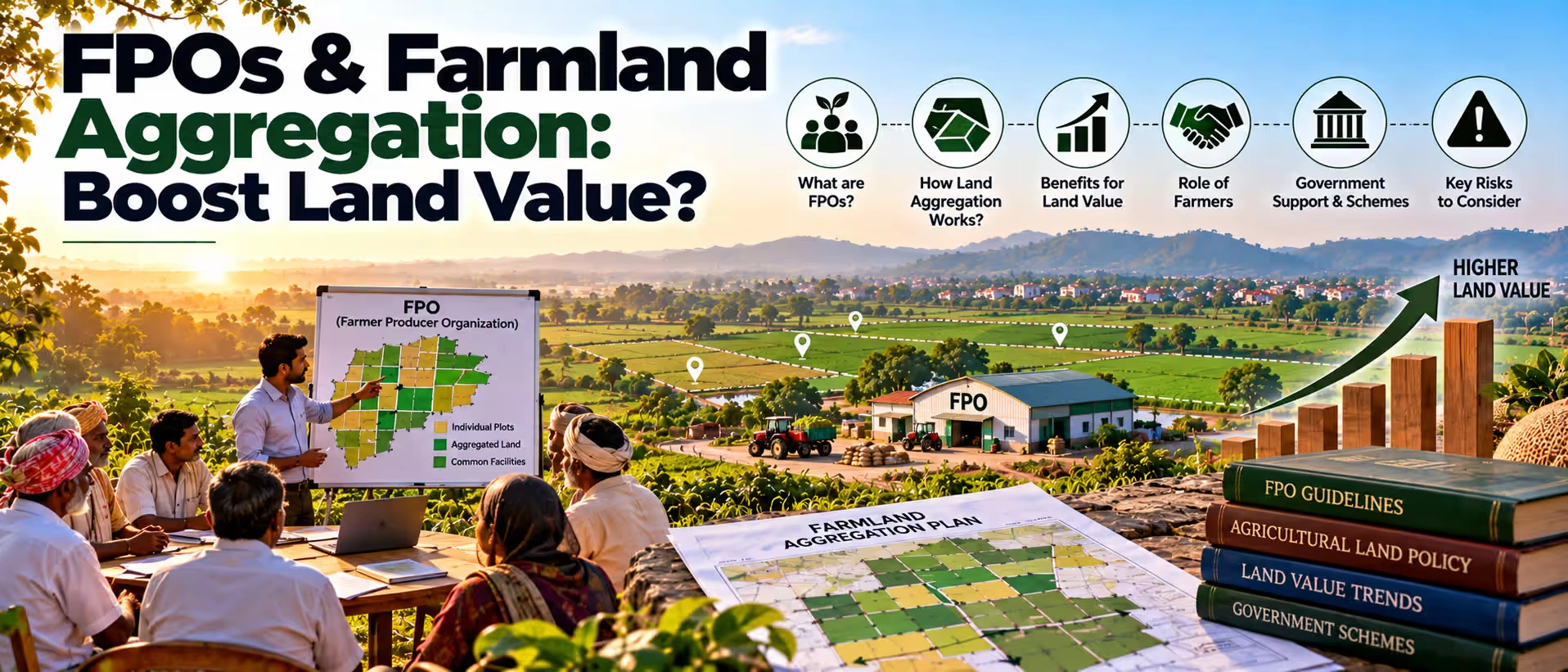
FPOs have been presented as the solution to the problem of small plots, and that is only partially correct. An FPO creates a platform for joint purchasing of seeds and fertilizers, joint marketing of their product, and negotiating better prices with traders due to an improved bargaining position. However, what it does not do in most cases is combine any of the plots into one. In other words, each individual farmer continues using his/her own plot, keeping his/her rights to it in the form of an entry in the revenue register under the same name. Can aggregation in such a format add value to the small plot? It can be debated whether the answer will lie somewhere between "Yes, somewhat indirectly" and "No, it cannot."
What an FPO Is and What It Is Not?
The FPO is the farmers’ owned business entity. It may be in the form of a producer company, cooperative societies, or any other entity formed under the Companies Act, Societies Registration Act, and Public Trusts Act. They have shares, a board of directors, and together decide what the entity should do, which may range from operating a collection center, cold rooms, seed unit, or even a small processing facility.
The importance of an FPO in the context of Indian agricultural lands is because of the scale. The size of the holding is very small, and a single-acre land farmer has no bargaining power against the trader who visits the field. But the same farmer, as part of the group of several hundred members, can negotiate with the trader for a truckload of graded produce on a particular day. The land itself remains the same, but the income from the land varies.
Where the FPO Movement Stands in 2026?
The numbers are large, though they come from official replies in Parliament and should be read as reported progress and not as independent audits.
| Measure | Reported figure |
| FPOs registered under the central scheme | 10,000 as of 1 March 2026 |
| Farmers mobilised | 56.32 lakh as of 1 January 2026, of whom 21.96 lakh are women |
| FPOs with only women members | 1,175 |
| Combined turnover of scheme FPOs | ₹20,358 crore as of 31 July 2026 |
| FPOs that received management cost support | 9,865 |
| FPOs that got equity grants | 8,357 |
| FPOs that used credit guarantee support | 3,140 |
Each FPO under the scheme gets financial assistance of Rs 18 lakh towards management costs, and five years of handholding support through implementing agencies and cluster-based business organisations. The gap between the 10,000 registered and the 3,140 that used credit guarantees is a reminder that registering an FPO and running a profitable one are two very different jobs.
Collective Farming, Aggregation and Land Pooling: Three Different Things
These terms get mixed up constantly, and the mix-up leads to wrong expectations about land values, so it is worth separating them.
| Model | What is shared | What happens to ownership | Typical effect on a plot |
| FPO (marketing and inputs) | Buying, selling, processing | Unchanged | Better income per acre, no change in plot size |
| Collective or joint cultivation | Farming operations across adjoining plots | Unchanged, usually by agreement | Machinery use improves, boundaries stay |
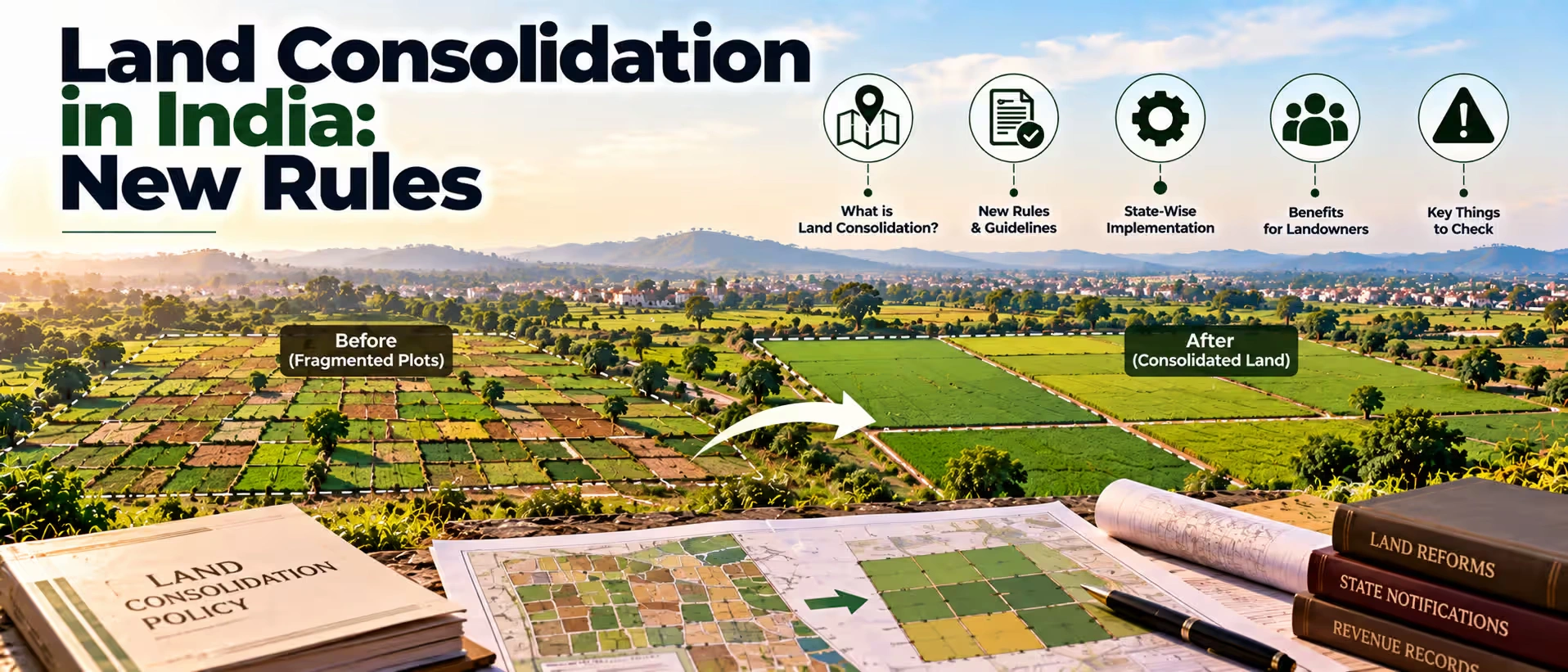
| Land consolidation | Plot locations are swapped | Same value, new shape | Scattered strips become one block |
| Land aggregation by a buyer | One buyer collects many small plots | Ownership moves to the buyer | Larger holdings under one owner |
Most FPOs sit in the first row. Some run shared cultivation on top, particularly for crops where a bigger contiguous area helps, such as maize or vegetables meant for a single buyer. People searching for agriculture land for sale in a district with an active FPO sometimes find the listings mention the group, since being near a working collection centre or processing unit can make a plot easier to farm profitably.
Can FPOs Make Small Plots More Valuable?
Land prices in India are driven mostly by location, road access, water, and what the nearby land is allowed to be used for. An FPO moves none of those directly. What it can change is the income a plot can reasonably earn, and over time that feeds into what a serious farming buyer is willing to pay.
| Where value can improve | Why |
| Net income per acre | Bulk input buying and better selling prices raise margins |
| Access to credit | Members with a record of group sales and a functioning FPO behind them may find lenders more comfortable |
| Crop planning | A group can commit to a crop and a buyer before sowing, which cuts risk |
| Post-harvest handling | Storage and grading units reduce the loss that small farmers usually absorb |
| Where it usually does not help | Why |
|---|---|
| Plot size | Members still own their separate parcels |
| Legal clarity | A messy record stays messy regardless of the FPO |
| Location-driven price | A plot far from a road is still far from a road |
| Weak FPOs | A group that exists on paper only changes nothing |
So the fair reading is this: collective structures can raise what a plot earns, which supports its value, but they rarely raise the market price by themselves. A buyer paying for farmland in a village will still compare road access, water, soil, and records first, and the FPO comes in as a bonus where it works well.
What Buyers Should Check Around an FPO?
Some additional questions to be asked by the buyer of crop land with regard to an active FPO in the area include:
- Is the FPO currently active, and what organization manages it? It is important to distinguish between a producer company which regularly files its annual returns and has legitimate sales, and an FPO which was registered for the purpose of receiving the scheme grant.
- What kind of crops do the members produce and who are their buyers? It is natural that the land plot suitable for producing such crops will fit nicely into the existing supply chain.
It also helps to ask whether the seller is a member, and whether any membership terms or dues pass to the next owner. Anyone browsing farmland for sell listings in such a cluster should find out whether the land is under any group commitment to supply produce, because a buyer should not discover that after paying. In most cases there will be no such tie, but a short conversation with the FPO office settles it.
What Owners Should Do Before Selling Land Near an FPO?
An owner thinking of selling is in a decent position if the FPO is working, because proof of regular group sales can support the case for the land's earning power. Gather the last few seasons of sales records from the FPO if you are a member, along with your Record of Rights, survey map, and tax receipts. Settle any dues owed to the FPO, since an unpaid balance can cause questions at the time of sale.
If you want to sell land and you currently grow for the FPO, tell the organisation early, so that your produce commitments are handled properly, and the buyer is not caught between you and the group. Owners who share a boundary with other members sometimes find that a neighbour in the same FPO is the best first buyer, and that kind of local sale can be quick because both sides already know the land.
How 2Bigha Helps?
Collective structures and clean records both make land easier to trust, and that is where a verified marketplace fits in. 2Bigha is a marketplace for agricultural land and farmland across India, with verified listings and Background Verification Reports so buyers can see the paperwork picture before they decide. Book a Visit lets a buyer see the plot in person with someone who knows the area, which matters even more when the question is how a plot fits into the village around it.
Owners who want to start selling property online can list their plot with survey details, access information, and any relevant notes about crops or group arrangements, which gives serious buyers the context they usually have to ask for. Anyone ready to sell land after reading through the checks above can begin at 2Bigha.
Disclaimer: This article is for informational purposes only and should not be considered investment, legal, financial, or property advice. Real estate regulations, infrastructure plans, market conditions, and government policies may change over time. Readers are advised to verify information with relevant authorities and consult qualified professionals before making any investment or property-related decisions.