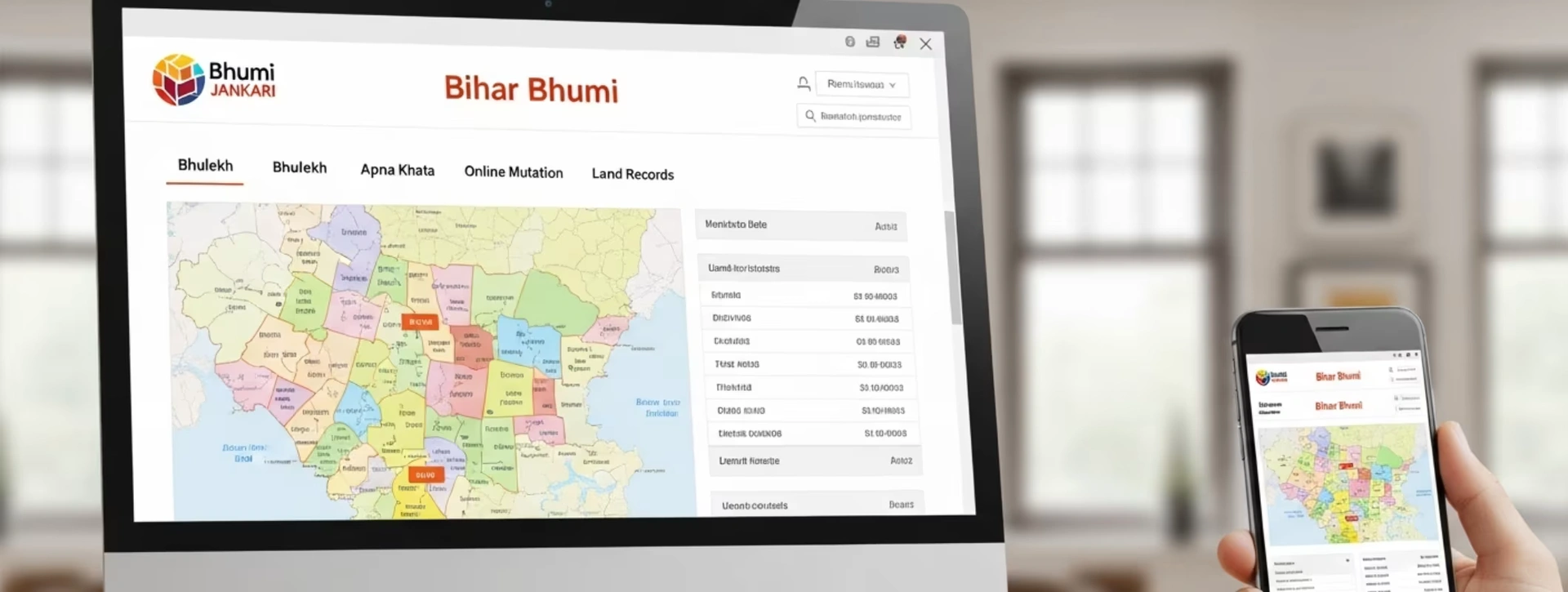
Land problems in Bihar usually start with one thing: people buy first and verify later. The good news is that Bihar has put most land services online, so you can check Jamabandi (Register-II), mutation status (Dakhil-Kharij), corrections (Parimarjan), and even certified record systems from your phone or laptop.
This blog breaks it down in simple steps, what to check, where to check, and how to avoid land fraud.
What “Bihar Bhumi”, “Bhulekh”, and “Apna Khata” really mean
Let’s clear the confusion:
- Bihar Bhumi is the state’s official online land services ecosystem run by the Revenue & Land Reforms Department. You use it to access services like Jamabandi register viewing, mutation status, LPC status, and correction portals.
- Bhulekh is a common public term for land records / RoR (Record of Rights). In Bihar, what most people want is the Jamabandi / Register-II entry.
- “Apna Khata” is also a popular term people use across North India for “my land record”. In Bihar, don’t get stuck on the name, focus on the official Register-II/Jamabandi record on government portals. Many “Apna Khata Bihar” websites are unofficial clones. Stick to government domains.
Bottom line: In Bihar, your practical target is usually Jamabandi (Register-II) + plot details + mutation update trail.
Why you must check land records before any deal?
Whether you’re buying agricultural land, a residential plot, or inherited property, land records help you confirm:
- Who the recorded raiyat/owner is
- Khata number, Khesra/Plot number, area, land type
- Whether mutation updated after sale/inheritance
- If there’s a mismatch in names, plot mapping, or old entries needing correction
Bihar has also been pushing more digitisation and online-only issuance for certain certified land record services, so learning the portals is no longer optional.
Official Bihar Land Portals you should know (and what each one does)
1) Bihar Bhumi (core services dashboard)
Use this for the main citizen services like Jamabandi register view, mutation status check, LPC status, and links to correction services.
2) eMutation portal (Online Dakhil-Kharij)
This is where you apply for online mutation and track mutation application status.
3) Parimarjan / Parimarjan Plus (Jamabandi corrections)
If your Jamabandi has spelling mistakes, wrong khata/plot linkage, or missing updates, Parimarjan portals are used for correction workflow and Jamabandi viewing/search options.
4) Department portal (Revenue & Land Reforms)
This is the broader department website linking multiple services (including objection against mutation and other governance tools).
5) Bhu Abhilekh portal (document/scanned record system)
Used for accessing land record documents in a system that notes scanned images are treated as authentic for practical purposes (as per portal disclaimer).
How to Check Bhulekh / Jamabandi (Register-II) in Bihar
You can usually search Jamabandi using filters like:
- raiyat name
- plot number
- khata number
- jamabandi number
Step-by-step (works for most districts)
- Open the Jamabandi/Register-II view page on the official portal.
- Select district → circle/anchal → mauza (menu may vary by portal).
- Choose your search type:
- By Khata
- By Plot/Khesra
- By Raiyat name
4. Enter details + captcha, then view the record.
5. Cross-check:
- Owner/raiyat name spelling
- Plot/khata linkage
- Area and land classification
- Any remarks/notes
If you see a mismatch, don’t ignore it—move straight to the correction workflow (Parimarjan).
How to Apply for Online Mutation (Dakhil-Kharij) in Bihar
Mutation is the revenue record update after:
- sale deed registration
- inheritance
- gift deed
- partition (as applicable)
In Bihar, the official system supports online mutation application and status tracking.
What you typically need (keep it ready)
Exact document list can vary by case type, but in most normal cases you’ll need:
- Registered deed / inheritance proof
- Applicant ID proof
- Land/plot identifiers (Khata/Khesra)
- Supporting affidavits or declarations if asked
Step-by-step: eMutation application flow
- Go to the eMutation (Dakhil-Kharij) portal.
- Choose “Apply online for mutation”.
- Fill property identifiers (district/anchal/mauza, khata, plot, etc.).
- Upload supporting documents as required.
- Submit and note down the application/reference number.
- Track using “mutation application status” on the same portal.
Don’t skip this reality check
Registry ≠ Mutation. Registry transfers legal title, but mutation updates revenue records. In many disputes, people have registry papers but the revenue record still shows the old name—this creates unnecessary risk during resale or loans.
How to Check Mutation Status (and why you should)
Even if you applied correctly, you should track status because:
- objections can be filed
- document clarification can be asked
- cases can stay pending if data doesn’t match Jamabandi
Bihar’s department ecosystem also lists services like filing objections related to mutation cases through official channels.
How to Fix Errors in Land Records using Parimarjan
Common errors people face:
- wrong spelling in owner name
- incorrect khata/plot linkage
- area mismatch
- mutation completed but Jamabandi not reflecting correctly
Bihar’s Parimarjan portals exist specifically to reduce office visits and allow correction applications online.
Practical approach:
- First, pull the Jamabandi entry and take screenshots/print.
- Identify the exact field that is wrong (name, khata, plot, area).
- Apply correction on Parimarjan/Parimarjan Plus with supporting proof.
- Track the application like you track mutation.
How to Reduce Fraud Risk (this is where most buyers lose money)
Before paying token money or signing anything:
Do these 7 checks
- Match seller name with Jamabandi/record entry.
- Verify khata + khesra/plot + area all match.
- Ask for the latest registry document and verify identifiers match records.
- Check mutation trail—has ownership been updated after the last transfer?
- Watch for multiple claimants in inherited property.
- Avoid “agent screenshots” from unofficial sites—use official portals only.
- If the deal value is significant, do a quick local advocate/title search.
This is basic due diligence, but it saves you from 90% of land disputes.
If you’re also checking land in Faridabad or land in Great Noida
Even though this blog is about Bihar, a lot of investors compare options across states—like land in Faridabad (Haryana) or land in Great Noida (Uttar Pradesh). Here’s the smart way to think:
- The process logic stays the same everywhere: check RoR/land record → verify registry identifiers → ensure mutation update → confirm no disputes.
- The portals change by state, and rules/terminology also change—so don’t apply Bihar steps blindly in Haryana/UP.
If you’re shortlisting land in Faridabad or land in Great Noida, treat land-record verification as a non-negotiable filter before you even visit the site.
FAQs: Bihar Bhumi, Bhulekh, Apna Khata & Mutation
1) Is Bihar Bhumi the official website to check land records?
Yes. Bihar Bhumi is an official citizen-facing portal under Bihar’s Revenue & Land Reforms Department that provides multiple online land services like Jamabandi view and mutation status links.
2) What should I search to see “Apna Khata” in Bihar?
In Bihar, what people call “Apna Khata” usually means viewing the Jamabandi/Register-II (RoR-style record) using khata/plot/raiyat name search options on official portals.
3) Where do I apply for online mutation (Dakhil-Kharij) in Bihar?
Use the state’s eMutation portal, which provides “apply online” and “application status” features.
4) How do I correct mistakes in Jamabandi?
Use Parimarjan/Parimarjan Plus correction services. They are meant for correcting errors in digitised Jamabandi entries and reduce the need for office visits.
5) What if my mutation is done but Jamabandi still shows old name?
That’s exactly when you should file for correction/update through the official correction workflow (Parimarjan) and keep your mutation reference handy as supporting proof.
6) Are “Bhulekh Bihar” private websites safe?
Some are only informational. But for any real decision, rely on government portals. Private sites can show outdated data, wrong links, or misleading ads.
7) Is Bihar issuing certified land records online now?
Recent reports say Bihar has moved toward online-only issuance for certified land records from December 31, 2025, as part of digitisation efforts. Always follow the latest instructions on official portals.
8) What’s the fastest way to avoid land fraud in Bihar?
Do not rely on verbal claims. Verify khata-khesra-area + owner name on official records, then match those identifiers with the registered deed. If anything doesn’t match, pause the deal.
Final Takeaway
If you use Bihar Bhumi the right way, you can do what most buyers skip: verify first, pay later. Use a free land listing to cross-check details on Bihar Bhumi—check Jamabandi, confirm plot identifiers, track mutation, and fix errors through Parimarjan—because land disputes don’t start in court, they start with ignored mismatches.