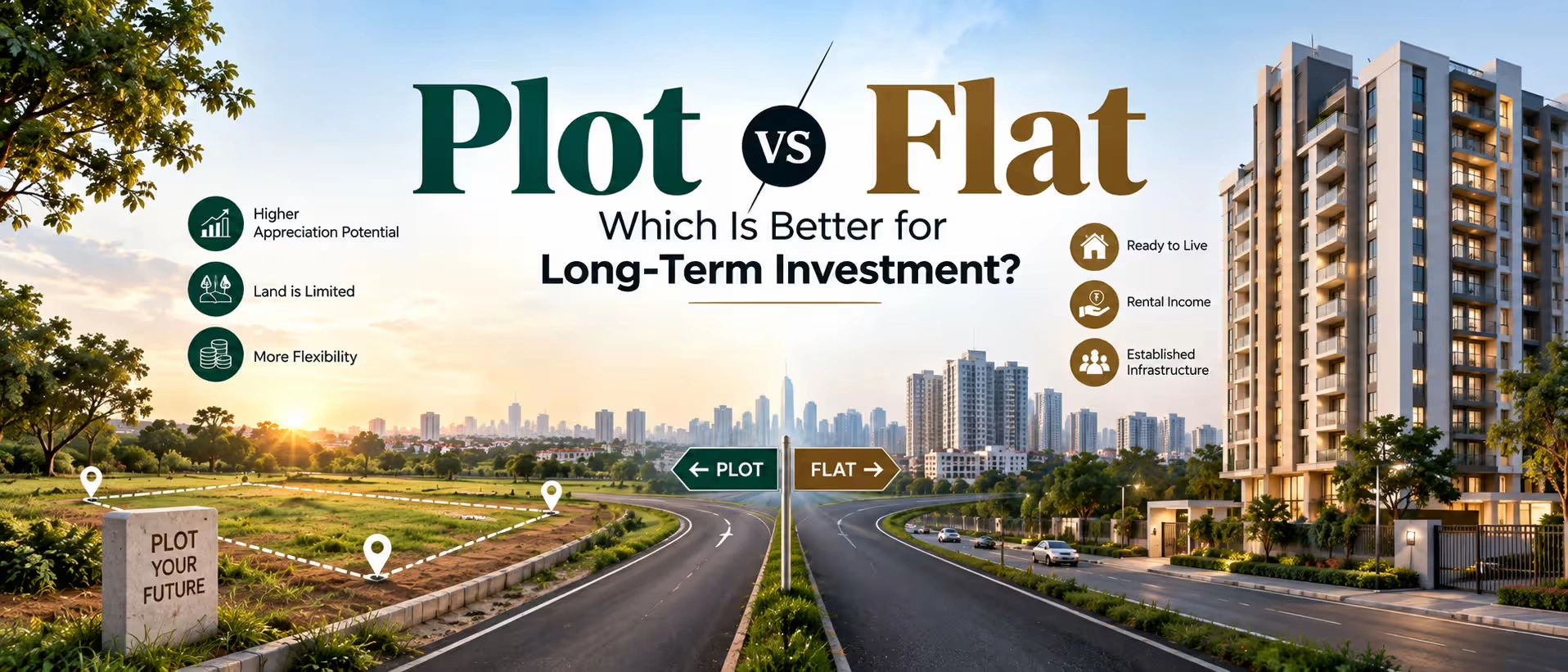
Ask ten different people who would prefer to either purchase a plot or a flat, and there's a good chance that there will be ten different responses, mostly driven by their instinctual preferences rather than actual calculations. This is one of the most discussed issues in Indian real estate, and I must say that both sides are right. There are certain advantages of purchasing a flat that is convenient and ready to live in. There are also the benefits of buying a plot that are quite often ignored, including the ability to expand. But which one of them actually creates more value if we look into the future of fifty years rather than five years?
The Core Difference: What You're Actually Buying
In case of purchasing a flat, one acquires the property itself, which includes the structural components, such as walls and roof, and fittings, which sit on the plot of land below. On the other hand, when one purchases a plot, one gets the piece of land, which comes without any limitations as to what one can erect on top of it. In fact, it is the only difference that can be the explanation for virtually all other differences between the two. Land does not depreciate, whereas a flat depreciates with each passing year due to its concrete, plumbing, and wiring becoming aged.
Appreciation: Where the Real Gap Shows Up
This is usually where plot investors make their strongest case, and the data generally backs them up. Land appreciation tends to outpace flat appreciation over long holding periods, particularly in areas seeing new infrastructure, highways, metro corridors, industrial corridors, or SEZs.
| Factor | Plot | Flat |
|---|---|---|
| Depreciation | None, land holds value | Structure depreciates with age |
| Appreciation driver | Location, infrastructure, scarcity | Location + build quality + amenities |
| Typical long-term growth | Higher in developing corridors | Steadier but usually slower |
| Renovation dependency | Not applicable | Value tied to upkeep and renovation |
| Liquidity | Can be slower to sell in rural areas | Generally faster, especially in cities |
That said, appreciation isn't automatic just because it's land. A plot in a stagnant area with no development pipeline can sit flat (no pun intended) for years, while a well-located flat in a growing city center might outperform expectations. Location still does most of the heavy lifting either way.
Cost of Ownership Over Time
This is the aspect that people fail to estimate the most. Flats come with recurring expenses, which include maintenance, society dues, repairs, and renovations as well, once the structure is old enough. Plots do not require many recurring expenses other than property tax and some maintenance.
- Flats: Maintenance charges, sinking funds, repairs, possible renovation costs after 15-20 years
- Plots: Annual property tax, possible fencing and/or boundary repairs, no structural expenses because there is nothing there
- Flats: The value may be affected by the age of the structure, the condition of the elevator, and also the quality of the society management
- Plots: The value remains unaffected by any factor apart from the condition of the land itself
As time passes by, for example, after 15-20 years of investment horizon, these expenses add up significantly – expenses that you could have avoided by investing in the land instead.
Flexibility and Control
A plot gives you options a flat simply can't. You can build a home exactly to your design, lease it out for commercial use, convert it for agricultural purposes if zoning allows, or just hold it as a long-term asset while you decide. Someone running a farm search today might, ten years later, decide to build a farmhouse on the same land or sell it entirely; the flexibility stays open the whole time. A flat locks you into a fixed layout, a fixed use case, and often a fixed community structure you have little control over. That's not necessarily a downside if convenience is the priority, but from a pure investment-flexibility standpoint, plots win this comparison fairly clearly.
| Consideration | Plot | Flat |
|---|---|---|
| Usage flexibility | High, build, lease, farm, or hold | Low, fixed residential structure |
| Customization | Full control over construction | Limited to interior changes |
| Exit options | Sell land for sale near me listings, lease, or develop | Primarily resale as-is |
| Regulatory dependency | Zoning and conversion rules apply | Society bylaws and builder terms apply |
Risks Worth Weighing on Both Sides
Neither option is risk-free, and it's worth being honest about where each one can go wrong. Plots carry legal risk more heavily; unclear titles, disputed boundaries, or land caught in litigation are far more common issues with land than with a flat purchased from a registered builder. Anyone searching agriculture land for sale near me or scanning listings for a farm for sell should be especially careful about verifying ownership and encumbrance records before committing. Flats, on the other hand, carry construction and builder risk; delayed possession, quality shortcuts, or disputes with the developer are common complaints, especially with under-construction projects. Once built, flats are also more exposed to physical depreciation than land ever is.
- Plot risks: title disputes, unclear boundaries, delayed infrastructure development, illiquidity in rural markets
- Flat risks: builder delays, construction quality issues, depreciation, dependency on society upkeep
- Shared risks: market cycles, regulatory changes, and location misjudgment affect both equally
So, Which One Actually Wins for Long-Term Investment?
If the goal is pure long-term wealth building, a 10, 15, or 20-year horizon — plots generally have the edge, provided the location and legal groundwork are solid. The lack of depreciation, lower ongoing costs, and flexibility to sell land or repurpose it later all tilt the math in land's favor over long stretches.
Flats make more sense when the priority is immediate usability, rental income potential, or living in the property yourself while it appreciates modestly. They're also generally easier to liquidate quickly, which matters if flexibility around timing is more important than maximizing returns. There isn't a universally "correct" answer here; it depends on whether you're optimizing for growth or convenience. But for someone specifically comparing the two purely as an investment decision, land tends to come out ahead over long enough timeframes.
Where does 2Bigha come in?
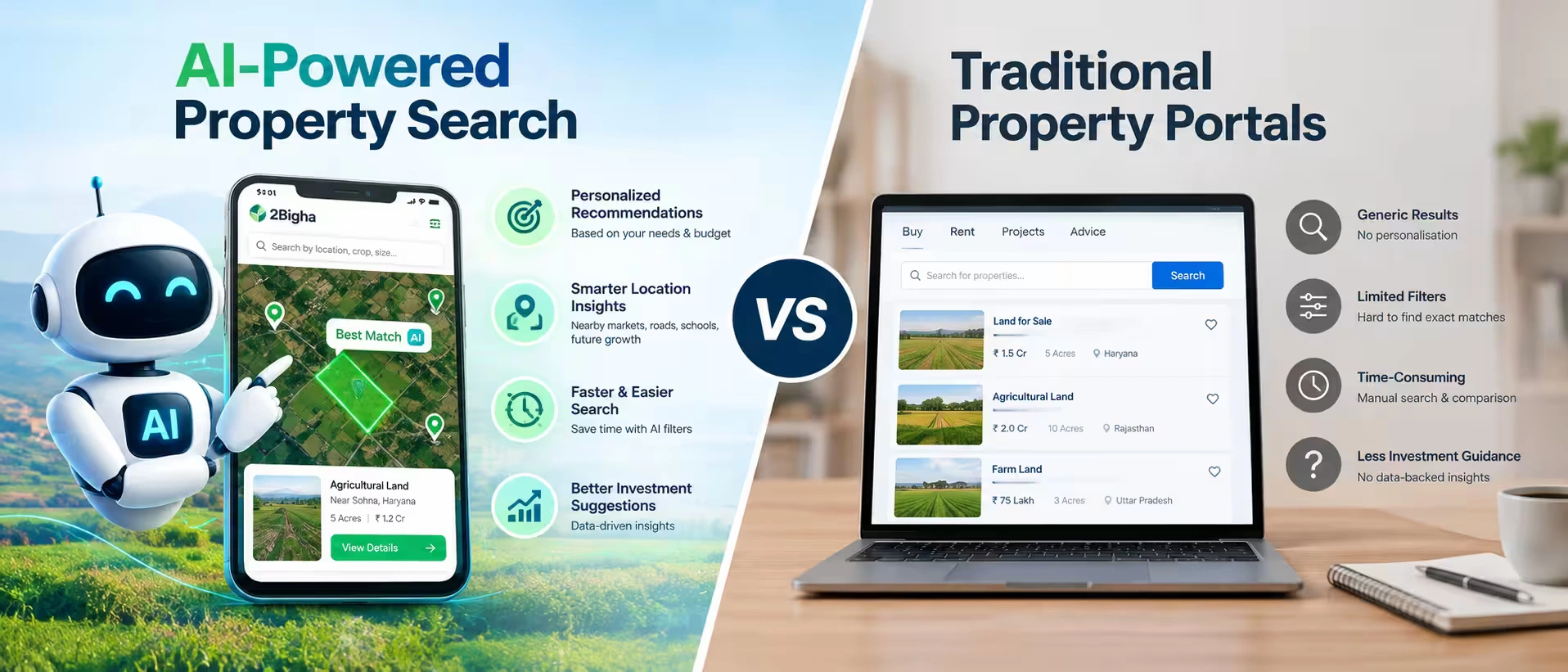
If you're leaning toward land as your long-term play, the biggest challenge usually isn't the decision itself; it's finding land that's actually verified, correctly priced, and free of the legal headaches that plot ownership can carry. That's the problem 2bigha.ai is built around. Instead of relying on a random farm search across unverified listings, the platform checks ownership records, flags legal issues early, and helps you compare pricing against real market data before you commit.
Whether you're browsing land for sale near me for a personal plot, evaluating a farm for sale as an investment, or just exploring how selling property online has changed compared to traditional broker-led deals, 2Bigha's verification layer takes a lot of the guesswork out of the process on both the buying and selling sides.
Disclaimer: This article is for informational purposes only and should not be considered investment, legal, financial, or property advice. Real estate regulations, infrastructure plans, market conditions, and government policies may change over time. Readers are advised to verify information with relevant authorities and consult qualified professionals before making any investment or property-related decisions.