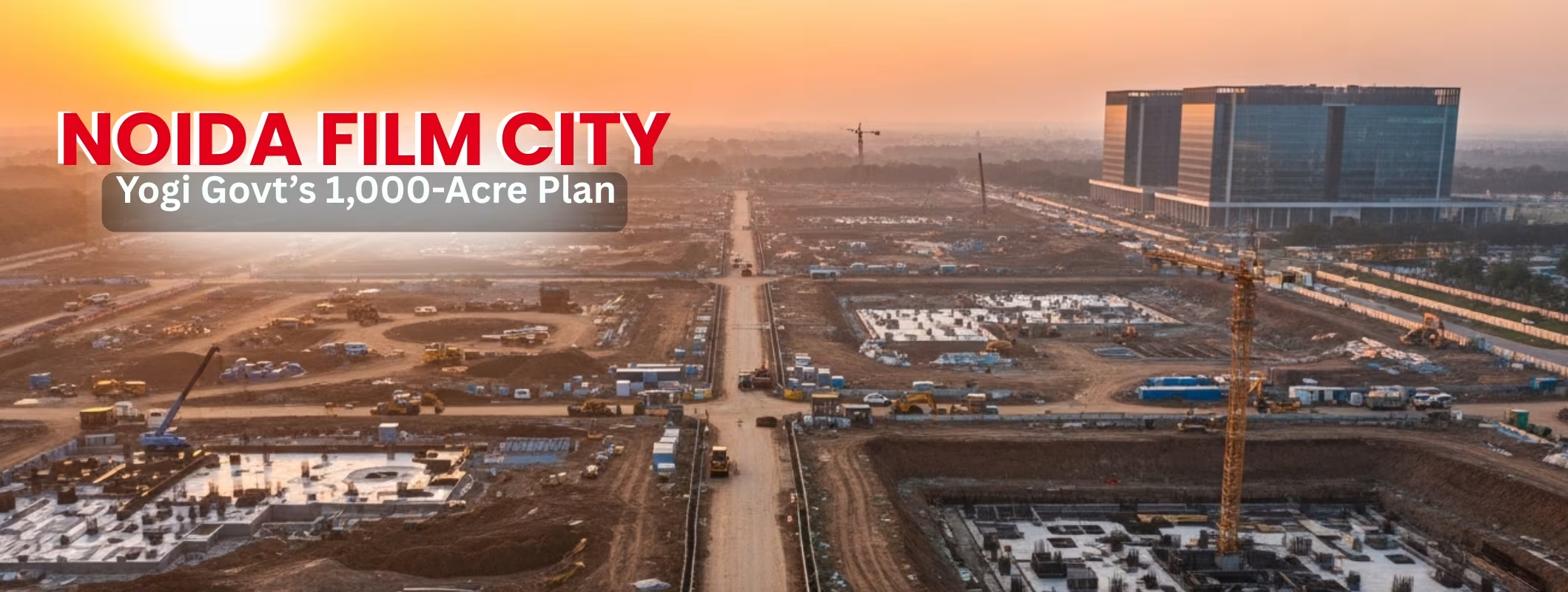
Noida’s upcoming Film City isn’t a “one more government announcement” kind of project. It’s a planned 1,000-acre media and entertainment ecosystem being positioned along the Yamuna Expressway corridor, right where the next wave of infrastructure is already reshaping land demand and development patterns. This is why many early movers looking to buy land in Noida are watching this corridor closely.
If you’re tracking real estate in the region, this matters not because it’s glamorous, but because large anchor projects like this typically pull roads, hotels, retail, jobs, and housing around them.
Quick Project Snapshot
Detail
|
What it means
|
Location
|
Sector 21 in the YEIDA region, on Yamuna Expressway; near the upcoming airport at Jewar
|
Total area
|
~1,000 acres
|
Phase 1
|
~230 acres; Phase-I cost reported around ₹1,510 crore
|
Delivery model
|
PPP on DBFOT basis (design–build–finance–operate–transfer)
|
Concessionaire
|
Bayview Bhutani Film City Pvt Ltd (reported)
|
Timeline signals
|
Monitoring + supervision tenders indicate movement into execution/construction-stage activities
|
The Real Strategy: Build a “Growth Magnet” Next to the Airport Corridor
The core play is location. The project site is planned in Sector 21 on the Yamuna Expressway and is described as strategically located near the upcoming airport, with the authority noting proximity and planned connectivity enhancements.
That’s the development logic in simple terms:
- Airport + expressway connectivity attracts production houses, events, and hospitality
- That triggers commercial demand (retail, offices, F&B)
- Which then triggers housing demand (workforce + executive + rentals)
- And the whole belt starts behaving like a new economic corridor, not just “plots on the highway”
The corridor is also getting fresh connectivity proposals, for example, a 74-km link expressway plan to connect the airport with the Ganga Expressway is reported to merge near the upcoming Film City in Sector 21.
What will actually come up on the ground (not just brochure talk)
The Film City is being positioned as an integrated hub like studios, shooting floors, post-production and an education component are repeatedly mentioned in reporting.
Two important “reality checks” from the project documents/reporting:
- Some components are mandatory, not optional like filming infrastructure and a film institute (Phase I requirements are referenced in the concession framework).
- Some components are optional and commercial in nature, amusement/hospitality/retail/serviced villas/office/F&B zones are cited as possible add-ons under the agreement structure.
That mix is deliberate. Creative infrastructure brings the brand value; commercial components bring the financial engine.
How the Government is trying to “De-risk Execution”
Big projects fail when oversight is weak. Here, the authority has invited bids to bring in:
- an independent engineering agency to monitor planning/design/construction stages, and
- chartered accountant firms for financial supervision under the concession framework
Also, the project is reported as being developed under a PPP model on a DBFOT basis, which usually means:
- developer invests and builds
- operates for a defined period
- and then transfers back as per agreement
For investors and end users, the takeaway is simple: the state is trying to run it like a long-term infrastructure concession, not like a one-time construction contract.
The Phased Approach (why Phase 1 matters the most)
Phase 1 (~230 acres) is where momentum is created. Reporting indicates the master planning and layouts have progressed over time, and the broader development has been discussed as multi-phase over several years, with early phases prioritising core filming infrastructure and institute-style development.
From a real estate lens, Phase 1 is the “tell”:
- If Phase 1 moves fast → the corridor narrative strengthens
- If Phase 1 drags → speculation cools and timelines stretch
What this means for Real Estate around Yamuna Expressway?
A Film City doesn’t automatically make every nearby plot/land a jackpot. But it can change demand patterns in predictable pockets.
1) Hospitality & short-stay demand
If studios, events, and training activity scale, you’ll see demand for:
- hotels
- serviced stays
- F&B clusters
- This direction is already reflected in how optional components around the Film City are being discussed.
2) Workforce Housing & Rentals
Media production ecosystems don’t just hire actors. They hire:
- editors, sound, camera teams
- set designers, technicians, support staff
- That creates steady rental demand if activity becomes regular.
3) Logistics + Support Ecosystem
Airport-led corridors typically pull warehousing, vendors, equipment rentals, transporters, and back-end services. Add new expressway connectivity plans and the logistics story becomes sharper.
4) Commercial Spillover
Retail, offices, and mixed-use pockets tend to cluster around “high-footfall” anchors. The concession framework’s optional commercial components reflect that intent.
Smart Buyer Checklist
If you’re considering property exposure near the corridor, don’t buy the hype, buy clarity.
- Confirm land use (industrial/commercial/residential/mixed) and what is legally permitted—this matters later if you plan to sell land without disputes
- Verify authority maps or sector plans, not just brochure location pins
- Watch infrastructure timelines, not just launch headlines (roads, interchanges, access routes)
- Avoid “inside news” deals—speculation spikes around such projects, and policy controls can tighten fast (transaction curbs have been used in corridor planning contexts).
Real Estate Tip: In corridors like this, connectivity + land use matter more than distance alone.
Why this Project is a Big Bet for Uttar Pradesh?
The state is trying to build a north India media anchor that:
- attracts private investment (PPP structure)
- creates jobs and related services
- strengthens tourism/hospitality around an integrated destination
FAQs - Noida Film City
1) Where is Noida Film City being developed?
It’s proposed in Sector 21 of the YEIDA region along the Yamuna Expressway, and the authority positions it close to the upcoming airport at Jewar.
2) How big is the project?
Official project notes and reporting describe it as ~1,000 acres.
3) What’s in Phase 1?
Phase 1 is reported around 230 acres, with a Phase-I cost figure reported around ₹1,510 crore in multiple reports/briefings.
4) What will be built first?
Phase I is required to include core filming infrastructure and a film institute under the concession framework, as reported.
5) How is the project being delivered?
It’s being developed through a PPP model on a DBFOT basis, with independent engineering and financial monitoring mechanisms being put in place.