List Your Land

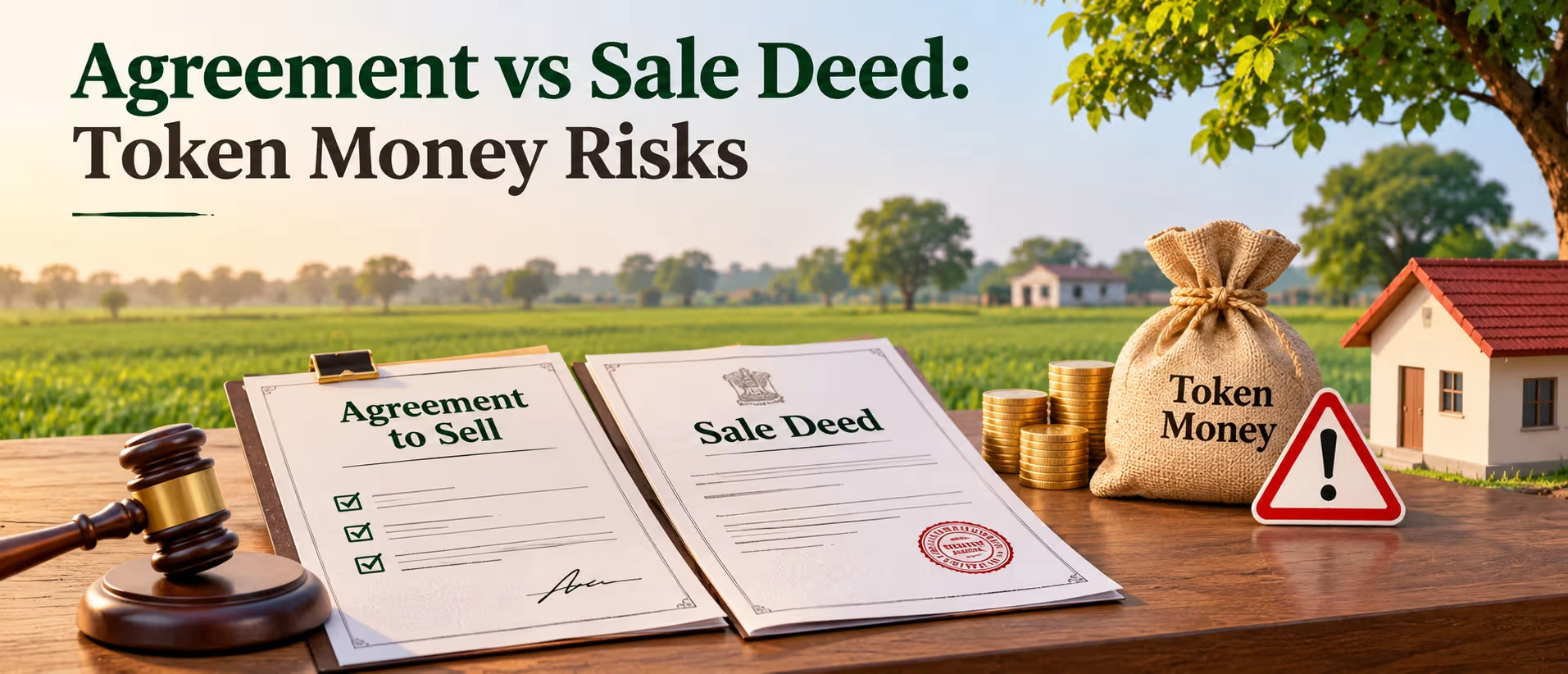
The payment of an advance seems to be the actualization of a land deal, and most buyers feel relieved that their land deal is done or almost done. However, the seller receives a better offer, prices increase in the area, or a family member raises a problem, and now the seller wants out. Whether this is possible or not will depend on the contract, the amount paid, the record made, and what both parties did after the transaction. This book will help buyers and sellers understand their rights and what the law says about this matter.
What an Advance Actually Does
An advance is the pre-payment of a sum against the purchase price that is made at the time of agreement between the two parties to go ahead with the transaction of selling. The term may also be used as token money, earnest money, or booking amount, which makes a significant difference because all these terms would be handled differently should the deal fall through.
Acceptance of advance does not transfer ownership of the property from the seller to the purchaser. Transfer of ownership in immovable property happens by way of a sale deed in India. An agreement to sell alone does not transfer ownership in favor of the purchaser. All that it does is establish a binding contract between the two parties.
The question arises whether or not the seller can just cancel the deal. The answer is yes, in some sense.
What Happens If the Seller Backs Out?
When a seller cancels a land deal without a valid reason, it may amount to a breach of contract. The buyer then has a few possible routes, while the seller may also face consequences when they sell land under a new deal despite being bound by an existing agreement.
| Option | What it means | When it fits |
|---|---|---|
| Ask for refund of the advance | Seller returns the amount paid, sometimes with interest | Buyer no longer wants the land or the deal has gone bad |
| Claim compensation | Buyer asks for loss caused by the breach | Buyer suffered real, provable loss |
| Seek specific performance | Court orders the seller to complete the sale | Buyer still wants this exact plot and has been ready to pay |
Specific performance matters most in land cases, because every plot is unique and money alone doesn't always replace it. Since the Specific Relief Act was amended in 2018, courts are generally expected to enforce such contracts when the legal conditions are met, instead of treating it as a rare remedy. The buyer, though, has to show they were ready and willing to perform their side, which means having the balance money available and not delaying without a reason.
When a Seller Can Legitimately Cancel?
However, not all cancellations amount to a breach of contract. Even when you plan to sell land in Ujjain, there may be circumstances in which you have valid legal grounds to terminate the agreement, depending on its terms and the applicable law.
- The buyer did not pay off the balance by the set date in the agreement.
- The buyer did not fulfill some other obligation within the agreement.
- There is a defect on the buyer’s side of the agreement, like the bouncing of cheques.
- The agreement contains provisions for a cancellation based on certain circumstances.
- Both parties agreed to terminate the agreement, preferably in writing.
Time could also be an issue. There are agreements stating that “time is of the essence,” meaning failure to meet the deadline could result in termination of the buyer’s rights, but many real estate agreements are open to leniency in terms of deadlines unless it’s explicitly mentioned in the agreement.
Forfeiture and the "Double the Advance" Clause
A common clause says that if the buyer backs out, the seller keeps the advance, and if the seller backs out, they return double. Many people assume this is automatically enforceable, but courts usually look at whether the amount is a reasonable estimate of loss. Under the Indian Contract Act, the party that suffers a breach is generally entitled to reasonable compensation, not an arbitrary penalty, so a very large forfeiture or a very large payback can be reduced by a court.
The practical point is that writing a number into the agreement doesn't guarantee that you'll collect exactly that number. It helps, but it's the court's view of reasonableness that finally decides.
What Buyers Should Do If the Seller Cancels?
In case this situation applies to you, do things in an organized manner instead of arguing with the plot or over the phone.
- Gather your documents. Have all your agreements, receipts, bank transaction papers, messages, and even witness information in one place.
- Check the terms of the agreement. Review the deadline, the payment schedule, and even the cancellation and forfeiture clause.
- Send a notice in writing. The legal notice will be from your lawyer, which tells the seller that he is in breach and that the seller should complete the sale or refund the money on a particular date.
- Be prepared to perform. Make sure the balance is readily available for payment since this can be used in court.
- Determine your objective. Decide if you want a refund, compensation, or to enforce the sale, with the assistance of a lawyer.
- Be aware of the time limit. There is a limitation period for civil cases, and a suit for specific performance should usually be filed within three years after the date fixed for completion, or when the buyer knew of the refusal of the seller.
Where the seller tries to sell the same plot to someone else, a lawyer may also advise asking the court for an order stopping the sale while the case is pending.
What Sellers Should Know Before Taking an Advance?
Anyone in land selling should treat an advance as a serious commitment and not as a casual deposit. Before you take one:
- Be sure the land title is clean, and the records are in your name.
- Check whether any co-owner or family member needs to agree, since one owner can't always bind the others.
- State the full price, the balance, the deadline, and the consequences of delay in writing.
- Give a proper receipt and keep a copy.
- Don't promise the same plot to two people.
If you do want to cancel for a genuine reason, speak to the buyer early, return the advance and put the cancellation in writing, ideally signed by both sides. A quiet, documented exit costs far less than a court case.
How Buyers Can Protect an Advance?
A little care at the start saves a lot of trouble later. Anyone planning a farmland purchase or looking at agriculture land to buy should follow these habits.
- Verify title, mutation, and records before you pay anything.
- Pay by bank transfer and avoid cash wherever you can.
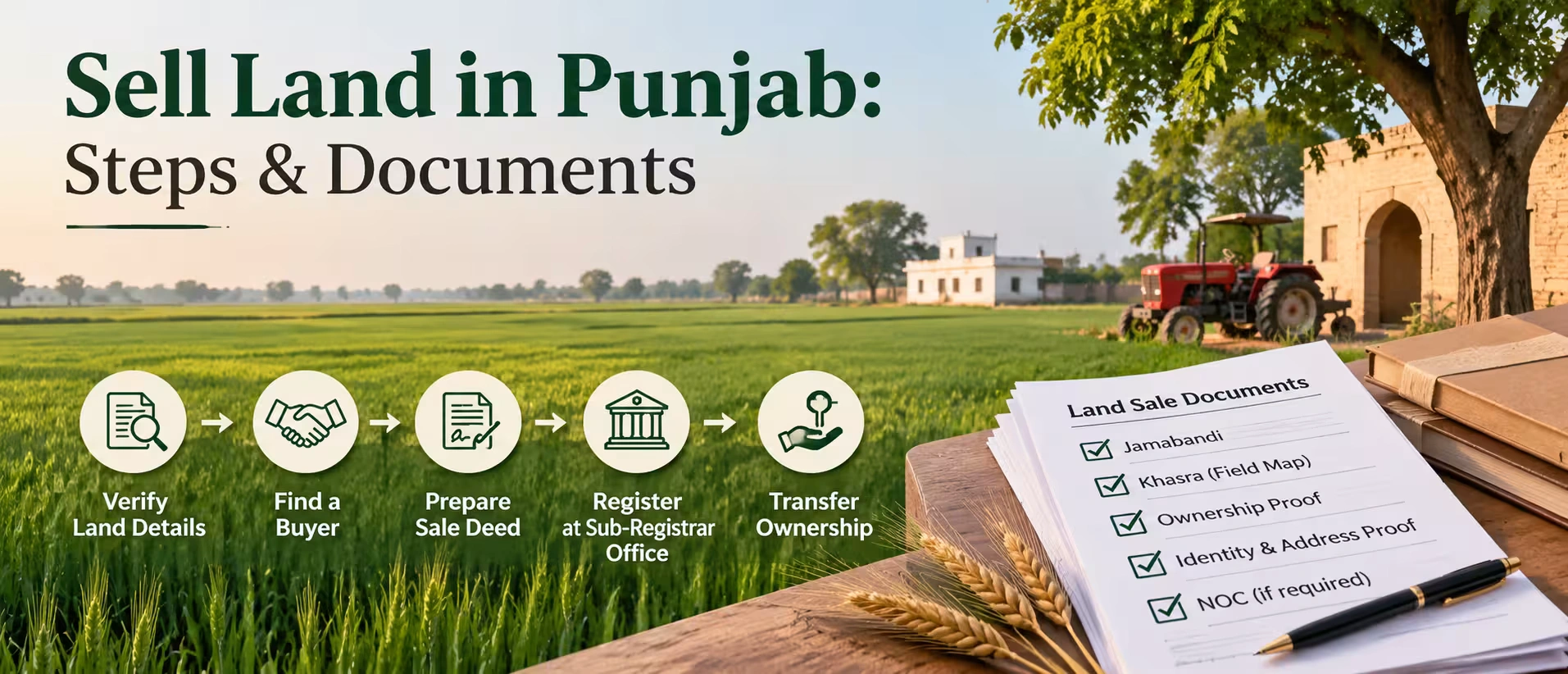
- Get a written agreement to sell with the plot details, survey or khasra number, price, advance, balance, and deadline.
- Keep the advance modest until the documents are checked.
- Register the agreement where your state requires or allows it.
- Check that the seller is the real owner and has the right to sell.
The same care applies to someone who wants to sell land, since a clean agreement protects both sides equally.
How 2Bigha Can Help?
2Bigha is a farmland marketplace in India where buyers can browse listings, compare plots, and book a visit before deciding. Whether you're looking at a farm house for sale or searching for plots near me for sale, the team can help you understand what to verify on the ground before you pay an advance. Owners can also list their land on 2Bigha and connect with buyers who are already searching.
Disclaimer: This article is for informational purposes only and should not be considered investment, legal, financial, or property advice. Real estate regulations, infrastructure plans, market conditions, and government policies may change over time. Readers are advised to verify information with relevant authorities and consult qualified professionals before making any investment or property-related decisions.