Key Takeaways
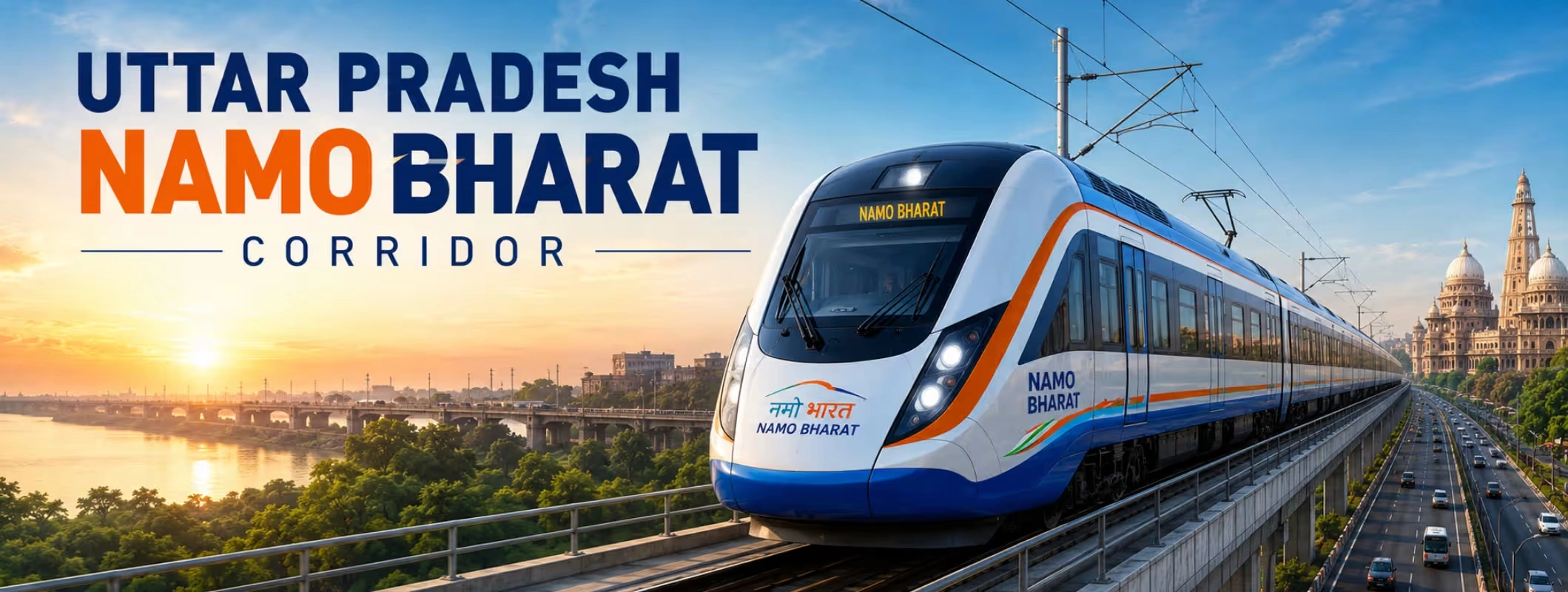
- The UP Namo Bharat Corridor is proposed as a high-speed regional rapid transit corridor connecting Kanpur, Unnao, Lucknow, Barabanki, and Ayodhya.
- Recent reports say the proposed Kanpur Lucknow Ayodhya corridor may be around 187 km long, with 12 proposed stations and an estimated project cost of about ₹32,000 crore.
- The first phase is expected to focus on the Kanpur Nayaganj to Lucknow Amausi Airport section, roughly 67 km, while the second phase may extend from Lucknow towards Barabanki and Ayodhya.
- The corridor may reduce Kanpur to Lucknow travel time to around 40 minutes and Kanpur to Ayodhya travel time to about 90 minutes, if executed as currently proposed.
- For real estate buyers, this project can create long-term interest in plots near Namo Bharat Corridor, land near Lucknow-Ayodhya corridor, investment property in Kanpur-Lucknow belt, and real estate near proposed Namo Bharat stations.
- Investors should not buy only on hype. Always verify route alignment, title records, zoning, road access, land-use category, and nearby development before buying land.
- Platforms like 2Bigha can help buyers, sellers, landowners, and agents discover land and plot opportunities with better visibility, verified listing presentation, and a simple subscription plan.
UP Namo Bharat Corridor: Why This Route Matters for Uttar Pradesh Real Estate
The UP Namo Bharat Corridor is one of the infrastructure-led growth success stories that can happen in the state of Uttar Pradesh. There are some three highly influential cities along the proposed corridor namely Kanpur, Lucknow and Ayodhya. While Kanpur is the economic hub, Lucknow is the administrative center and Ayodhya is growing as one of India’s hotspots for religious tourism.
It is more than about connectivity when all these three cities will be joined together by a fast regional rapid transit. It may influence the way people choose their lands, companies set up their offices, developments take place, and residents select their residence places.
There is already talk about the feasibility of the Namo Bharat train in UP project because it is one of the initiatives that promote faster regional mobility in the region. In short, it is the concept of reducing commuting time between centers while increasing growth around transit stations. It is the reason for the booming real estate markets near expressways, airports, metros, industrial corridors, railway stations and other such nodes of growth.
For investors searching for property near UP Namo Bharat Corridor, the opportunity is not just in the train route. The real opportunity lies in the areas around proposed stations, road junctions, commercial zones, future townships, airport access points, logistics hubs, and religious tourism pockets.
What is the UP Namo Bharat Corridor?
UP Namo Bharat Corridor is a proposed high-speed regional rapid transit corridor to be constructed linking Kanpur, Lucknow, and Ayodhya via important locations. It has recently been identified as a Regional Rapid Transit System that will allow faster movement of individuals within Uttar Pradesh.
It is anticipated to accommodate daily passengers, commuters working in offices, students, religious devotees, tourists, merchants, and even business people. As compared to a typical passenger train, Namo Bharat is meant for faster regional connectivity with few stops.
The Namo Bharat system currently serves in the Delhi-Meerut area. According to PIB, Namo Bharat trains can achieve high speeds of 180kmph with an operating speed of 160kmph. This speed profile is one reason many states are looking at similar rapid transit corridors for regional connectivity.
For Uttar Pradesh, the proposed Kanpur Lucknow Ayodhya corridor can support three major goals:
- It can reduce travel time between important cities.
- It can encourage planned development around stations.
- It can unlock new land and property markets along the route.
This is why the project is attracting attention from homebuyers, investors, landowners, developers, and real estate platforms.
Proposed UP Namo Bharat Route Map: Kanpur to Lucknow to Ayodhya
The latest reported route starts from Nayaganj in Kanpur and moves towards Unnao, Lucknow, Barabanki-side locations, and finally Ayodhya. The proposed corridor is expected to have 12 stations.
Proposed Namo Bharat Stations List
| Proposed Station | City / Belt | Real Estate Relevance |
| Nayaganj | Kanpur | Commercial activity, old market strength, city-centre connectivity |
| Unnao | Kanpur-Lucknow belt | Affordable land pockets, logistics potential, commuter demand |
| Bashirpur / Bashiratganj | Unnao region | Future station-led development potential |
| Nawabganj | Unnao-Lucknow side | Eco-tourism angle due to bird sanctuary belt |
| Banthra | Lucknow outer belt | Industrial and warehousing potential |
| Amausi | Lucknow Airport belt | Airport-linked growth, commercial property, rental demand |
| Sushant Golf City | Lucknow | Premium residential and township growth |
| Juggaur / Jugpur | Lucknow-Barabanki side | Future expansion and plotted development potential |
| Barail / Barel | Barabanki side | Corridor-side land interest |
| Safdarganj | Barabanki belt | Highway and transit-led land demand |
| Bhitriya | Ayodhya approach belt | Logistics and regional connectivity potential |
| Ayodhya | Religious tourism hub | Hospitality, commercial land, plotted investment, rental demand |
This station list is based on current media reports and may change after final approvals, DPR updates, technical surveys, land acquisition, and government notifications. Buyers should treat it as a planning signal, not a final legal map.
Also Read: Namo Bharat Rapid Rail: Connectivity & Real Estate Growth in NCR
Project Timeline and Current Status
The Namo Bharat UP project is currently being discussed through a proposed master plan. According to recent reports, a consultancy agency has presented the broad plan to the Lucknow Development Authority, and the project may be taken forward by the Uttar Pradesh government along with NCRTC.
The proposed corridor may be developed in two main phases.
| Phase | Proposed Stretch | Approx. Length | Expected Travel Impact |
| Phase 1 | Kanpur Nayaganj to Lucknow Amausi Airport | 67 km | Kanpur to Lucknow may reduce to around 40 minutes |
| Phase 2 | Lucknow / Amausi towards Barabanki and Ayodhya | Remaining corridor | Kanpur to Ayodhya may reduce to around 90 minutes |
| Full Corridor | Kanpur-Unnao-Lucknow-Barabanki-Ayodhya | Around 187 km | Faster regional travel across central UP |
This timeline is still evolving. Infrastructure projects of this scale usually pass through feasibility checks, alignment finalisation, funding approval, land acquisition, environmental review, tendering, civil work, testing, and phased opening. So, property buyers should take a long-term view instead of expecting overnight gains.
Why Kanpur-Lucknow-Ayodhya Connectivity Can Change the Property Market
The greatest advantage of the UP rapid rail corridor is its ability to serve three kinds of demand.
Kanpur offers industrial, educational, trading, textiles, leather industry, engineering, and commerce demand.
Lucknow offers governmental, corporate, medical facilities, educational, airport facilities, luxury residential, and administrative demands.
Ayodhya offers tourism, hospitality, religious, commercial, and visitor demand.
A buyer begins to think of the city when there is a quick train connection with all three places. An office worker based in Lucknow may want to settle outside the city limits, and a businessman in Kanpur may opt for commercial property on the Lucknow route. A hotel investor may look for land near the Ayodhya route. A family may search for residential plots in developing areas where prices are still manageable.
This is how transit oriented development UP can shape the next phase of property growth.
Real Estate Along Namo Bharat Route: What Can Grow?
The proposed Namo Bharat Corridor route map can influence multiple property categories. Not every location will grow at the same speed, but the corridor can bring fresh attention to selected land pockets.
1. Residential Plots
Residential plots near proposed stations can attract buyers who want long-term appreciation and future liveability. Areas around Lucknow outskirts, Unnao, Banthra, Amausi, and Barabanki-side belts may get interest if road access and civic infrastructure improve.
2. Commercial Property
Commercial property near station areas can gain demand from shops, food outlets, offices, service centres, parking facilities, hotels, guest houses, and local businesses. Station-led footfall often creates new micro-markets.
3. Land Near Lucknow-Ayodhya Corridor
The Lucknow to Ayodhya corridor has strong potential because Ayodhya’s religious tourism is expanding. Buyers may look for land for hospitality, dharamshala-style accommodation, budget hotels, restaurants, warehouses, and roadside commercial use.
4. Industrial and Warehouse Land
Banthra, Unnao, Kanpur outskirts, and highway-connected belts may see stronger interest from warehousing and logistics players. Better connectivity can reduce time loss and improve workforce movement.
5. Investment Plots Near Rapid Rail
People searching for buy plots near Namo Bharat Corridor may prefer locations where prices are still lower than central Lucknow or central Kanpur. These buyers should compare distance from proposed stations, road width, land-use status, and nearby development.
Location-Wise Investment Potential Along the UP Namo Bharat Corridor
Kanpur: Industrial Strength Meets Transit Growth
Kanpur is already one of Uttar Pradesh’s strongest industrial and commercial cities. It has a large population base, trade activity, educational institutions, and manufacturing history. If the Kanpur to Lucknow Namo Bharat route reduces travel time, Kanpur can become more strongly linked with Lucknow’s administrative and corporate ecosystem.
For real estate, this may help commercial property, plotted development, rental housing, and land parcels near the proposed Nayaganj route and outer connectivity points.
However, buyers should be careful in dense city locations. Old city properties may have title complexities, shared ownership, narrow access roads, or redevelopment challenges. For plotted investment, outer belts with cleaner access and planned growth may be easier to evaluate.
Unnao: The Middle Belt Opportunity
Unnao sits between Kanpur and Lucknow, making it one of the most interesting locations in the proposed route. It may benefit from both sides of the corridor.
If travel time improves, Unnao can attract people who want affordability but do not want to disconnect from Lucknow or Kanpur. Land prices may remain more accessible compared to prime Lucknow and Kanpur pockets, making it attractive for long-term buyers.
The practical opportunity here may be in residential plots, small commercial plots, warehousing land, and agricultural land with clear legal status.
Banthra and Amausi: Airport and Industrial Advantage
The Banthra-Amausi belt is important because of its proximity to Lucknow Airport. Airport-linked zones often attract hotels, logistics facilities, commercial spaces, rental housing, and service businesses.
Reports also mention that Amausi may be developed as a modern aerohub integrated with Chaudhary Charan Singh International Airport, while Banthra may be promoted as an industrial corridor.
This makes Banthra and Amausi important for buyers looking at investment property Kanpur Lucknow or real estate near Namo Bharat stations.
Lucknow: The Main Interchange Hub
Lucknow is expected to play the role of a major regional interchange hub in the proposed network. Reports compare this role with the importance of Sarai Kale Khan in Delhi NCR’s regional transit planning.
This can strengthen property demand around airport-linked areas, Sushant Golf City, outer Lucknow, and future transit-connected corridors.
Lucknow already has strong demand from government employees, professionals, students, medical users, business owners, and investors. The Namo Bharat corridor can add another layer of demand by improving regional movement.
Barabanki Belt: Affordable Expansion Zone
The Barabanki side may benefit from Lucknow’s outward expansion and Ayodhya-bound connectivity. If the corridor improves accessibility, the area can attract plotted development, roadside commercial activity, warehousing, and budget housing demand.
Buyers looking for land near Lucknow-Ayodhya corridor should compare Barabanki-side options carefully. The key is not just cheap land. The key is clean ownership, clear access, and future usability.
Ayodhya: Religious Tourism and Property Demand
Ayodhya has become one of India’s most watched religious tourism destinations. Better connectivity from Lucknow and Kanpur can support hotels, guest houses, restaurants, parking facilities, retail spaces, and plotted investments.
The Ayodhya connectivity project angle makes this corridor especially important. Pilgrim movement can create steady demand for hospitality and commercial land. But buyers should remember that Ayodhya’s real estate market is already active, so pricing discipline is necessary.
Do not buy overpriced land just because it is “near Ayodhya.” Check actual distance, road access, zoning, development permission, and market resale potential.
Comparison Table: Which Location Suits Which Buyer?
| Buyer Type | Best-Fit Corridor Locations | Why It Makes Sense |
| Long-term land investor | Unnao, Barabanki belt, Lucknow-Ayodhya side | Lower entry cost and future connectivity potential |
| Commercial investor | Amausi, Banthra, Lucknow, Ayodhya | Airport, transit, tourism, and business movement |
| Residential plot buyer | Lucknow outskirts, Unnao, Sushant Golf City side | Better liveability and future commuting potential |
| Hospitality investor | Ayodhya, Lucknow-Ayodhya corridor | Religious tourism and visitor demand |
| Warehouse/logistics buyer | Banthra, Unnao, Barabanki, Kanpur outskirts | Road and transit-linked movement |
| Seller / landowner | Kanpur-Lucknow-Ayodhya route belts | Better visibility as corridor interest rises |
Why This Corridor Can Support Land Investment
Land investment near infrastructure corridors works because infrastructure improves access. Better access improves usability. Better usability improves buyer demand.
The UP Namo Bharat route map can support land investment for several reasons.
First, travel time may fall sharply. A 40-minute Kanpur-Lucknow commute can change how people view distance.
Second, Ayodhya’s tourism growth can create new commercial demand.
Third, Lucknow’s role as a regional hub can push development outward.
Fourth, station areas may become future economic and commercial hubs.
Fifth, people may prefer plotted assets in developing belts because apartment prices in prime city areas are rising.
This does not mean every land parcel will appreciate. Infrastructure increases attention, but documents decide safety. Land with unclear ownership, poor road access, disputed boundaries, or wrong land use can create serious problems.
Buyer Checklist Before Investing Near the UP Namo Bharat Corridor
Before you invest near Namo Bharat Corridor, use this checklist.
| Checklist Point | Why It Matters |
| Verify title ownership | Confirms the seller has legal rights |
| Check mutation and revenue records | Shows whether ownership is updated in government records |
| Confirm land-use category | Agricultural, residential, commercial, and industrial land have different rules |
| Check road access | Landlocked plots are difficult to use and resell |
| Verify distance from proposed station | Do not rely only on broker claims |
| Check master plan | Helps confirm whether the area is planned for future development |
| Review encumbrance status | Protects against loan, dispute, or legal burden |
| Compare nearby rates | Prevents overpaying in hyped locations |
| Visit the site physically | Photos and maps cannot replace ground reality |
| Use a verified platform | Helps improve property discovery and shortlisting |
This checklist is important because many buyers make emotional decisions after reading infrastructure news. A smart investor uses the news as a starting point, not as the final reason to buy.
How 2Bigha Helps Buyers and Sellers Near Growth Corridors
The biggest challenge in land buying is trust. Buyers often face incomplete listings, unclear location details, missing documents, wrong distance claims, and inflated pricing. Sellers also struggle because serious buyers are not easy to reach.
This is where 2Bigha becomes useful.
2Bigha helps buyers discover land, plots, and investment property in a more structured way. If someone wants to search for plots near Namo Bharat Corridor, land near Lucknow-Ayodhya corridor, property in Ayodhya, or investment plots near rapid rail, 2Bigha can support better shortlisting.
For sellers, 2Bigha can improve listing visibility and help present land more professionally. For agents and landowners, the platform creates a better way to reach people who are actively searching for land opportunities in developing corridors.
For buyers, the value is simple: better discovery, clearer property presentation, and easier comparison before taking the next step.
Should You Buy Land Near UP Namo Bharat Corridor Now?
You can consider it, but only with a long-term mindset.
The UP RRTS latest update shows that the corridor is gaining attention, but it is still a proposed infrastructure project. Final route alignment, station locations, construction timeline, and execution details may change. That is why buyers should avoid rushed decisions.
A good strategy is to shortlist areas that already have some development strength, not only future promises. For example, airport access near Amausi, industrial movement near Banthra, affordability in Unnao, Lucknow’s urban expansion, and Ayodhya’s tourism growth are real demand drivers. The corridor can strengthen these locations further.
For investors, the best approach is:
- Buy where the land is legally clean.
- Buy where access is practical.
- Buy where there is existing or planned demand.
- Buy where the price still leaves room for future growth.
- Avoid buying only because a seller says, “station yahin banega.”
Best Property Types to Watch Along the Corridor
Residential Plots
Residential plots can work well for long-term buyers who want land ownership near future growth corridors. Look for plots with proper roads, clear boundaries, nearby habitation, and planned development.
Commercial Land
Commercial land near station areas, junctions, and tourist movement zones may see demand from shops, restaurants, service centres, and rental businesses.
Agricultural Land
Agricultural land can attract long-term investors, but rules differ by location and land category. Always check eligibility, conversion rules, and future land-use permissions.
Farmhouse Land
Some buyers may explore farmhouse-style investments near developing belts outside congested city areas. This works best when the land has good road connectivity and clean records.
Hospitality Property
Ayodhya and the Lucknow-Ayodhya route may see more interest in hotels, guest houses, dharamshala-style stays, food courts, and parking-linked commercial spaces.
Final Thoughts
The UP Namo Bharat Corridor can become a major growth trigger for Uttar Pradesh if the project moves from proposal to execution as planned. By connecting key cities like Kanpur, Lucknow, and Ayodhya, it can significantly reduce travel time, improve regional mobility, strengthen tourism flow, and unlock new real estate opportunities across the state.
For buyers, the opportunity is not just about owning property “near the train.” The real value lies in identifying land near future stations, airport-linked zones, industrial corridors, highway access points, religious tourism routes, and upcoming urban expansion areas. This is especially relevant for investors looking to buy rural land in Uttar Pradesh, where infrastructure-led appreciation can create long-term value alongside lower entry prices.
For sellers, this is the right time to organize land records, verify ownership documents, improve listing quality, and make property details more transparent for serious buyers and investors. Better documentation and location clarity can directly improve buyer confidence.
For investors, the message is simple: infrastructure creates momentum, but due diligence creates safety. Study the proposed route carefully, compare surrounding land prices, verify legal documents, and assess growth drivers before investing. Platforms like 2Bigha can help buyers and sellers discover verified opportunities, compare locations, and explore agricultural, rural, and investment-focused land options across Uttar Pradesh.
FAQs - UP Namo Bharat Corridor
1. What is the UP Namo Bharat Corridor?
The UP Namo Bharat Corridor is a proposed high-speed regional rapid transit corridor planned to connect Kanpur, Lucknow, and Ayodhya through key locations such as Unnao, Banthra, Amausi, Barabanki-side areas, and Ayodhya.
2. What is the proposed route of the Namo Bharat Corridor in UP?
The proposed route starts from Nayaganj in Kanpur and moves through Unnao, Bashirpur, Nawabganj, Banthra, Amausi, Sushant Golf City, Juggaur, Barail, Safdarganj, Bhitriya, and Ayodhya, as per current media reports.
3. How much time will Kanpur to Ayodhya take by Namo Bharat?
Current reports suggest that once the full corridor becomes operational, Kanpur to Ayodhya travel time may reduce to around 90 minutes.
4. Is land investment near UP Namo Bharat Corridor a good idea?
It can be a good long-term opportunity if the land has clear title, proper road access, correct zoning, realistic pricing, and genuine proximity to the planned corridor. Buyers should avoid speculation without document verification.
5. Which areas may become property hotspots near the UP Namo Bharat route?
Kanpur outskirts, Unnao, Banthra, Amausi, Lucknow outer areas, Barabanki belt, and Ayodhya may attract real estate interest due to better connectivity, airport access, industrial movement, tourism demand, and planned corridor development.