Introduction: Connectivity is Now the Biggest Land Value Driver Near Delhi
Land near Delhi has always carried strong demand because of jobs, business, education, healthcare, and lifestyle access. But in the last few years, one factor has changed the market faster than anything else: expressway connectivity.
Earlier, buyers used to ask, “How far is this land from Delhi?” Now they ask, “How fast can I reach Delhi, Gurgaon, Noida, the airport, or Jaipur?” That shift is important. In real estate, distance is no longer measured only in kilometres. It is measured in travel time, road quality, future development, and access to economic corridors.
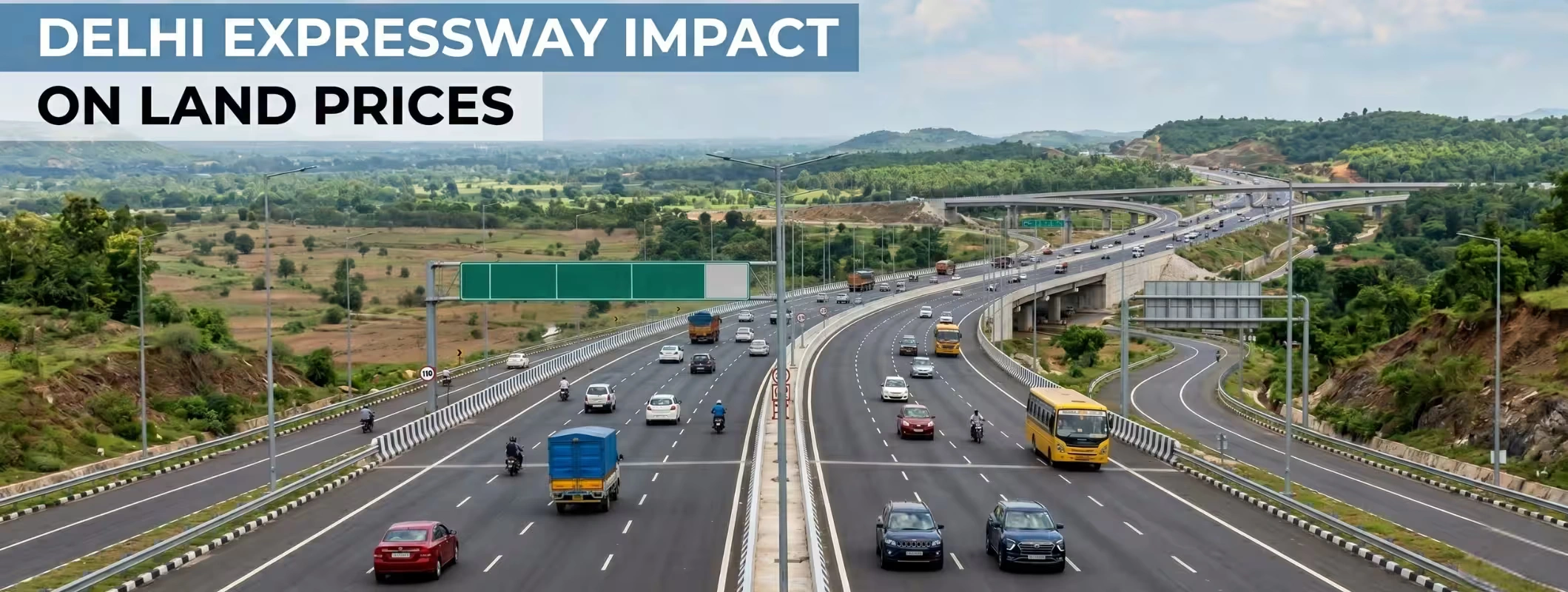
Expressways such as Dwarka Expressway, Delhi-Mumbai Expressway, Delhi-Dehradun Economic Corridor, Delhi-Meerut Expressway, and Urban Extension Road-II are changing how people look at land for sale in Delhi NCR. Locations that once felt too far are becoming practical options for weekend homes, farmhouses, warehouses, plotted developments, and long-term land investment.
The 19 km Haryana section of Dwarka Expressway was inaugurated in March 2024, and it was positioned as part of Delhi’s wider decongestion plan to improve traffic flow between Delhi and Gurugram. The Delhi section and UER-II links were also highlighted by PIB in 2025 as major urban decongestion projects that improve access to Bahadurgarh, Sonipat, and industrial movement in NCR.
Why Expressways Push Land Prices Up
Expressways increase land prices because they solve the biggest problem in outer-city real estate: accessibility. A piece of land may be affordable, scenic, or large, but if reaching it takes too much time, buyers hesitate. Once a high-speed corridor reduces travel time, the same land becomes more useful.
This is why land near expressway exits, interchanges, service roads, and growth corridors usually gets more attention. Buyers see future potential. Developers see project feasibility. Warehousing companies see logistics value. Families see weekend-home convenience. Investors see long-term appreciation.
The Delhi-Mumbai Expressway is a clear example of this shift. The Delhi-Dausa-Lalsot section was dedicated to the nation in February 2023, and PIB noted that it reduces Delhi-Jaipur travel time from around 5 hours to nearly 3.5 hours while giving a boost to regional economic development. When such travel-time improvement happens, the benefit does not stay limited to commuters. It spreads into land demand across adjoining belts.
Delhi NCR Land is Expanding Beyond Traditional City Limits
Delhi has limited land availability, strict development controls, and high entry costs. Because of this, many buyers searching land for sale in Delhi eventually explore nearby NCR zones such as Gurgaon, Sohna, Faridabad, Bahadurgarh, Sonipat, Noida, Greater Noida, Ghaziabad, Baghpat, and other peripheral locations.
This does not mean every outer location is a good investment. It means the market has started valuing land based on connectivity and future usability. A land parcel near an expressway may attract more attention than a cheaper parcel with poor road access, unclear title, or no development potential.
Gurgaon and Sohna are Getting Stronger Because of Expressway Access
The demand for land for sale in Gurgaon is not limited to central Gurgaon anymore. Buyers are also looking toward New Gurgaon, Dwarka Expressway sectors, Southern Peripheral Road, Sohna Road, and the Sohna side because these areas connect better with Delhi, Manesar, Faridabad, Jaipur, and the Delhi-Mumbai Expressway corridor.
Gurgaon has always been a corporate and residential magnet. But expressways are helping its outer belts move from “future potential” to “active demand.” This is especially visible in plotted developments, farmhouse land, low-density residential options, and commercial land parcels near major roads.
Sohna also benefits from this infrastructure story. Its appeal comes from relatively larger land parcels, better affordability compared to core Gurgaon, and improving road connectivity toward Delhi-Mumbai Expressway and Gurgaon business zones. For buyers looking at agricultural land for sale or farmhouse-style land investment, Sohna and nearby belts often come into consideration because they offer a mix of access, open space, and future urban expansion.
However, buyers must be careful. Agricultural land, farmhouse land, and residential plots are not the same. Before buying any agriculture land for sale, check land-use permissions, ownership title, mutation records, road access, zoning, and whether conversion is required for the intended use.
UER-II Is Opening New Demand Toward West and North Delhi NCR
Urban Extension Road-II, also known as UER-II, is another major reason why land demand is rising around Delhi’s outer belts. It improves movement around Delhi by connecting key areas and reducing pressure on inner city roads.
PIB stated that the Alipur to Dichaon Kalan stretch of UER-II, along with links to Bahadurgarh and Sonipat, was built at a cost of around ₹5,580 crore and is expected to ease traffic on Delhi’s Inner and Outer Ring Roads, Mukarba Chowk, Dhaula Kuan, and NH-09. This matters for land buyers because better access to Bahadurgarh, Sonipat, and industrial areas can increase demand for residential plots, warehouses, farmhouses, and commercial land.
For investors, UER-II is important because it connects Delhi’s urban pressure with outer land availability. When a road improves daily movement, land does not remain “remote” in the buyer’s mind. It becomes reachable, useful, and more marketable.
Delhi-Dehradun Economic Corridor Is Creating a New North-East NCR Growth Belt
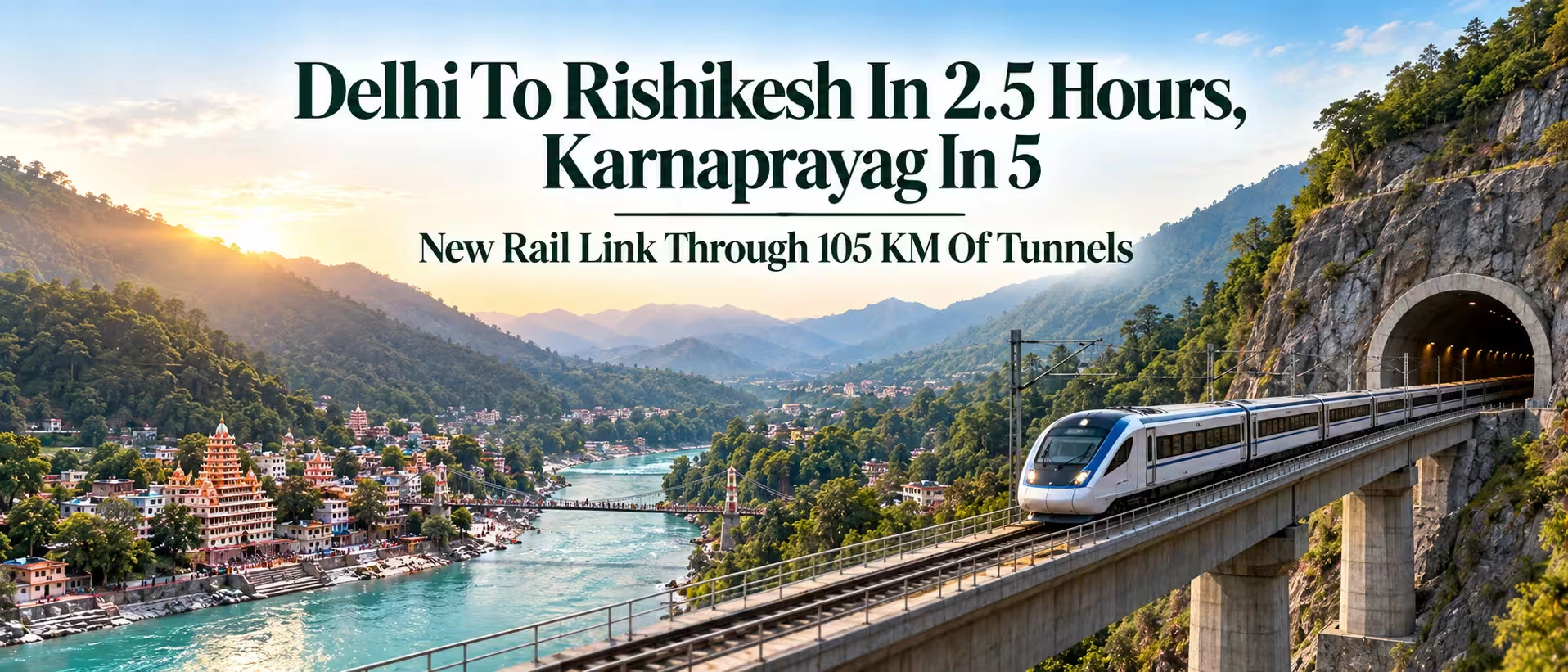
The Delhi-Dehradun Economic Corridor is also influencing buyer interest toward East Delhi, Ghaziabad, Baghpat, Shamli, Saharanpur, and Uttarakhand-facing belts. The corridor is designed to reduce travel time between Delhi and Dehradun from over 6 hours to around 2.5 hours.
For land buyers, this corridor can make weekend-home, cafe, restaurant, and farmhouse locations more attractive because travel becomes easier. People who earlier avoided land far from Delhi due to long travel time may now consider it for leisure, second homes, retreats, agro-tourism, or long-term appreciation.
Still, buyers should not purchase only because an expressway exists nearby. Is the land legally clear, accessible from a proper road, and located in a growth zone with real demand? Expressway hype can increase prices, but only usable land with clean documents holds value over time.
How Expressways Change Buyer Behaviour
Expressways create confidence. When buyers see better roads, faster travel, upcoming townships, commercial projects, petrol pumps, logistics parks, schools, and hospitals, they start believing in the future of that location.
For end-users, expressways make daily or weekend travel easier. For investors, they create a long-term appreciation story. For developers, they improve project saleability. For businesses, they reduce movement time for goods and people.
This is why land near Delhi is becoming attractive in multiple formats:
- Residential plots for future homes
- Farmhouse land for weekend use
- Agricultural land for long-term holding
- Commercial land near major junctions
- Warehouse and logistics land near industrial routes
- Mixed-use development land in approved zones
The real value comes when connectivity meets legal clarity, demand, and planned development. A land parcel beside an expressway is not automatically profitable. But a clear-title land parcel in a planned growth belt with good access has stronger chances of appreciation.
Why Land Prices Rise Before and After Expressway Completion
Land prices often move in three phases.
- First comes the announcement stage. Investors and local brokers start talking about the proposed route. Prices may rise, but risk is also high because alignments, permissions, and deadlines can change.
- Second comes the construction stage. Roads, bridges, interchanges, and service lanes become visible. Buyer confidence improves. Developers begin land aggregation. Prices usually move faster in this phase.
- Third comes the operational stage. Once vehicles start using the expressway, the market sees real travel-time benefits. At this stage, serious end-users, builders, hospitality players, and commercial operators enter the market. Prices may stabilise in some pockets and rise sharply in others, depending on demand and land availability.
This pattern is already visible around major NCR corridors. Dwarka Expressway’s price growth is a strong example of how completion and improved connectivity can reshape buyer demand in a micro-market.
Best Land Pockets to Watch Near Delhi
The most active land belts near Delhi are usually those that combine expressway access with future development potential. Gurgaon and Sohna remain popular for buyers looking for land for sale in Gurgaon, farmhouses, plotted developments, and long-term investment.
Bahadurgarh and Sonipat are gaining attention because of UER-II and industrial connectivity. Noida, Greater Noida, and Yamuna Expressway belts attract investors due to airport-led development and planned urban growth. Ghaziabad, Meerut, and Baghpat-side locations benefit from improved access through Delhi-Meerut and Delhi-Dehradun corridors.
But every location has a different risk profile. Gurgaon may offer stronger demand but higher entry prices. Sohna may offer future growth but needs careful document checking. Agricultural land near outer NCR may look affordable, but buyers must verify land-use restrictions and conversion rules before planning construction or resale.
What Buyers Should Check Before Buying Land Near an Expressway
Do not buy land only because someone says, “Expressway ke paas hai.” Many parcels are marketed loosely using big infrastructure names. A land parcel may be 5 km from the expressway in marketing language, but 18 km by actual road travel.
Before buying, check:
- Clear ownership title and sale deed history
- Mutation and revenue records
- Legal road access from the main road
- Distance from actual expressway entry or exit
- Land-use category and zoning
- CLU or conversion requirement, if applicable
- Encumbrance, litigation, or bank loan status
- Master plan alignment and future acquisition risk
- Flood zone, green belt, forest, or restricted-area issues
If you are buying agricultural land for sale near Delhi NCR, take extra legal advice. Some states have rules around who can buy agricultural land and how it can be used. If your plan is to build a farmhouse, resort, warehouse, or plotted project, check permissions before payment.
Is It the Right Time to Invest in Land Near Delhi?
The demand is strong, but buyers should stay practical. Expressways are powerful growth drivers, but they do not remove investment risk. Prices near popular corridors may already include future expectations. So, buying at the wrong price can reduce your returns even in a good location.
The best approach is to compare three things: current price, legal safety, and future usability. If the land is clean, accessible, fairly priced, and located near a real growth corridor, it can be a strong long-term asset. But if the land has unclear title, no proper access, or unrealistic pricing, avoid it.
For buyers searching for Land near Delhi, the opportunity is real. Delhi NCR is expanding through highways, expressways, logistics routes, and regional economic corridors. But smart buyers should focus on verified land, planned development zones, and practical access—not just marketing claims.
Conclusion
Expressways are changing the land market near Delhi in a big way. They are reducing travel time, improving access to outer NCR, supporting commercial movement, and making nearby locations more attractive for residential, farmhouse, agricultural, and investment purposes.
Dwarka Expressway has already shown how a corridor can reshape demand in Gurgaon. Delhi-Mumbai Expressway is pushing interest toward Sohna, Gurgaon, Faridabad, and Jaipur-facing belts. UER-II is improving access toward Bahadurgarh and Sonipat. Delhi-Dehradun Economic Corridor is creating new interest toward North-East NCR and Uttarakhand-facing locations.
But the best land investment is not the one closest to the expressway. It is the one with clear documents, proper road access, realistic pricing, and future usability. So, whether you are searching for land for sale in Delhi, land for sale in Gurgaon, or agriculture land for sale near NCR, treat expressway connectivity as an advantage—not as the only reason to buy.
FAQs
1. Why are expressways increasing land prices near Delhi?
Expressways reduce travel time and make outer locations more accessible. When buyers, developers, and businesses see better connectivity, demand rises for residential plots, farmhouses, commercial land, agricultural land, and logistics spaces.
3. Should I buy agricultural land near Delhi NCR?
Agricultural land can offer long-term appreciation, but it needs careful legal checking. Before buying, verify ownership, mutation, land-use rules, conversion permission, access road, and state-specific restrictions.
4. Does land near every expressway give high returns?
No. Only legally clear, well-connected, usable land in demand-driven locations has better appreciation potential. Land with poor access, unclear title, or restricted usage may not perform well even if it is near an expressway.