Key Takeaways
- The Union Cabinet has approved a 4-lane, 80.45 km highway project worth ₹3,839.42 crore on the Badnawar–Petlawad–Thandla–Timarwani stretch of NH-752D in Madhya Pradesh.
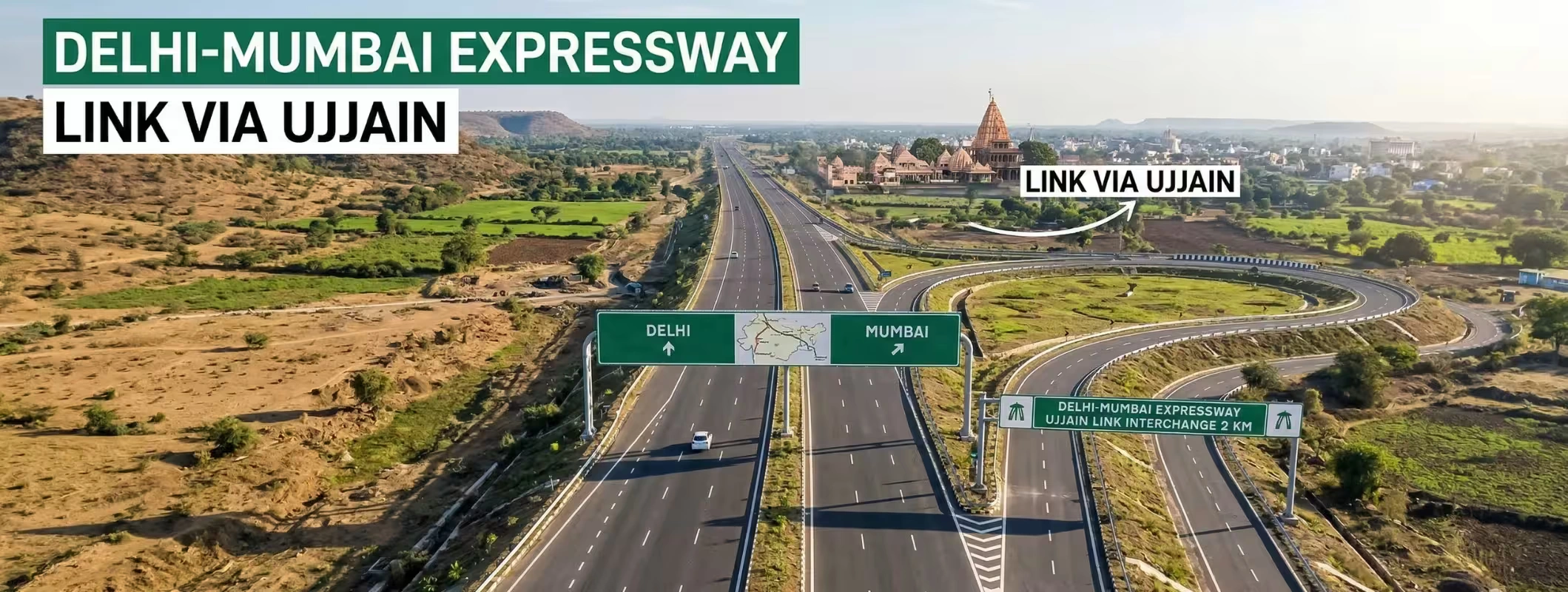
- The project will give Ujjain direct connectivity to the Timrawani interchange on the Delhi-Mumbai Expressway.
- The government says the upgraded corridor should reduce travel time by around one hour and improve speeds on the currently weak Badnawar–Timarwani section.
- The route is strategically important because it is the shortest corridor for traffic coming to Ujjain from Gujarat and Maharashtra and is also expected to support movement during Simhastha 2028.
- For real estate, this is not just a road story. It is a connectivity-led growth signal for land, hospitality, logistics, and highway-facing commercial activity in and around the broader Ujjain growth belt. This is an inference based on the project’s stated role in lowering logistics costs and strengthening access to industrial hubs such as Indore, Pithampur, Ujjain, and Dewas.
Why This Highway Matters Right Now
Ujjain is already one of Madhya Pradesh’s most important religious and regional urban centres. What has held it back, in practical terms, is not relevance but speed of access. The newly approved corridor changes that equation. Instead of depending on a slower intermediate-lane stretch with poor geometry and speeds as low as 20–50 kmph, Ujjain will get a completed 4-lane link to the Delhi-Mumbai Expressway network, with the upgraded section designed for 80–100 kmph movement.
That matters because expressway connectivity does more than reduce road fatigue. It changes how investors, developers, transport operators, pilgrims, and end users evaluate a city. Once access becomes faster and more predictable, real estate attention usually starts shifting from only prime city-core assets to corridor-driven growth pockets, especially where land is still comparatively affordable. This is a market inference, but it is strongly supported by the project’s official objective of improving traffic flow, cutting operating costs, and strengthening access to industrial and logistics hubs.
What Exactly Has Been Approved?
The approved project covers the Badnawar–Petlawad–Thandla–Timarwani section of NH-752D and will be developed in 4 lanes under the Hybrid Annuity Mode. The project cost is ₹3,839.42 crore, and the official construction period is 24 months. The government has also stated that the already-upgraded Ujjain–Badnawar 70.40 km section, together with this new upgrade, will complete direct 4-lane connectivity from Ujjain to the Timrawani interchange of the Delhi-Mumbai Expressway.
The corridor passes through parts of Dhar and Jhabua districts, including tribal regions, and the government has positioned it as a project that can improve regional infrastructure, support safer traffic movement, and contribute to broader economic development.
How Much Travel Time Could It Save?
The official statement is clear on one immediate benefit: the corridor is expected to reduce travel time by approximately one hour. That one hour is more important than it looks on paper. In India, one hour saved on an intercity route often means:
- better freight predictability,
- lower fuel and operating costs,
- stronger same-day movement possibilities,
- more practical weekend and religious travel,
- and better investor confidence in peripheral locations.
The broader Delhi-Mumbai Expressway itself is a major national corridor. In NHAI’s 2023–24 annual report, it is described as a 1,386 km expressway, the longest in India, designed to improve connectivity to major economic hubs including Jaipur, Bhopal, Indore, and Ahmedabad. The report also notes that the project is expected to reduce Delhi–Mumbai travel time significantly once fully completed.
So the Ujjain link is not an isolated local road upgrade. It is an entry point into a much larger high-speed transport ecosystem.
What It Means for Ujjain Real Estate
1. Better connectivity usually expands the real estate map
When a city gets stronger expressway access, demand does not stay limited to traditional residential pockets. Interest typically spreads to:
- plotted developments on approach roads,
- hospitality and stay assets,
- retail and service corridors,
- warehousing or transport-linked land,
- and mixed-use roadside commercial zones.
That is a reasonable real-estate inference here because the government itself says the project will improve connectivity to industrial hubs and MMLPs in Indore, Pithampur, Ujjain, and Dewas, while reducing logistics friction.
2. Religious infrastructure can drive parallel demand
The project is also being positioned to handle traffic linked to Simhastha Kumbh Mela in April 2028. That matters because event-led infrastructure often leaves a longer-term footprint. Even after the event, improved roads, better mobility planning, and stronger public attention can continue supporting tourism-led and service-led demand.
In plain terms, places that become easier to reach usually become easier to sell, lease, develop, and operate.
3. Ujjain could benefit from spillover demand
As access improves, some buyers who find core city prices, congestion, or inventory constraints challenging may begin exploring nearby growth corridors. That does not mean every parcel becomes a great investment. It means good connectivity starts becoming a stronger filter in buyer decisions.
The big winners are usually not random plots. They are assets with:
clear title, legal approach road, realistic land use potential, and proximity to actual movement corridors.
Which Segments May Benefit Most?
Based on the official project rationale and standard corridor-growth patterns, these are the segments most likely to gain attention:
- Plotted land and second-home interest: Buyers looking for future appreciation often track areas that gain expressway access before full-scale price discovery happens.
- Hospitality and pilgrim-support assets: Ujjain’s religious importance means faster approach roads can support hotels, guest stays, food courts, parking-linked retail, and service formats, especially before major religious events. The Simhastha 2028 angle strengthens this possibility.
- Logistics and transport-linked land: Because the corridor is officially tied to lower logistics costs and access to industrial hubs, transport, warehousing, and support-use land may see stronger investor interest over time.
- Highway-facing commercial activity: Fuel, food, repairs, storage, convenience retail, and service-commercial formats often follow movement corridors where traffic quality improves.
A Smart Buyer Checklist Before Investing Near the Corridor
Before buying land or property because of highway news, check these basics:
- Verify title and chain of ownership
- Confirm land use and zoning
- Check exact road approach, not just map proximity
- Review whether any acquisition risk or alignment impact exists nearby
- Understand water, power, and local development potential
- Compare end use: self-use, rental, plotting, hospitality, or long-term hold
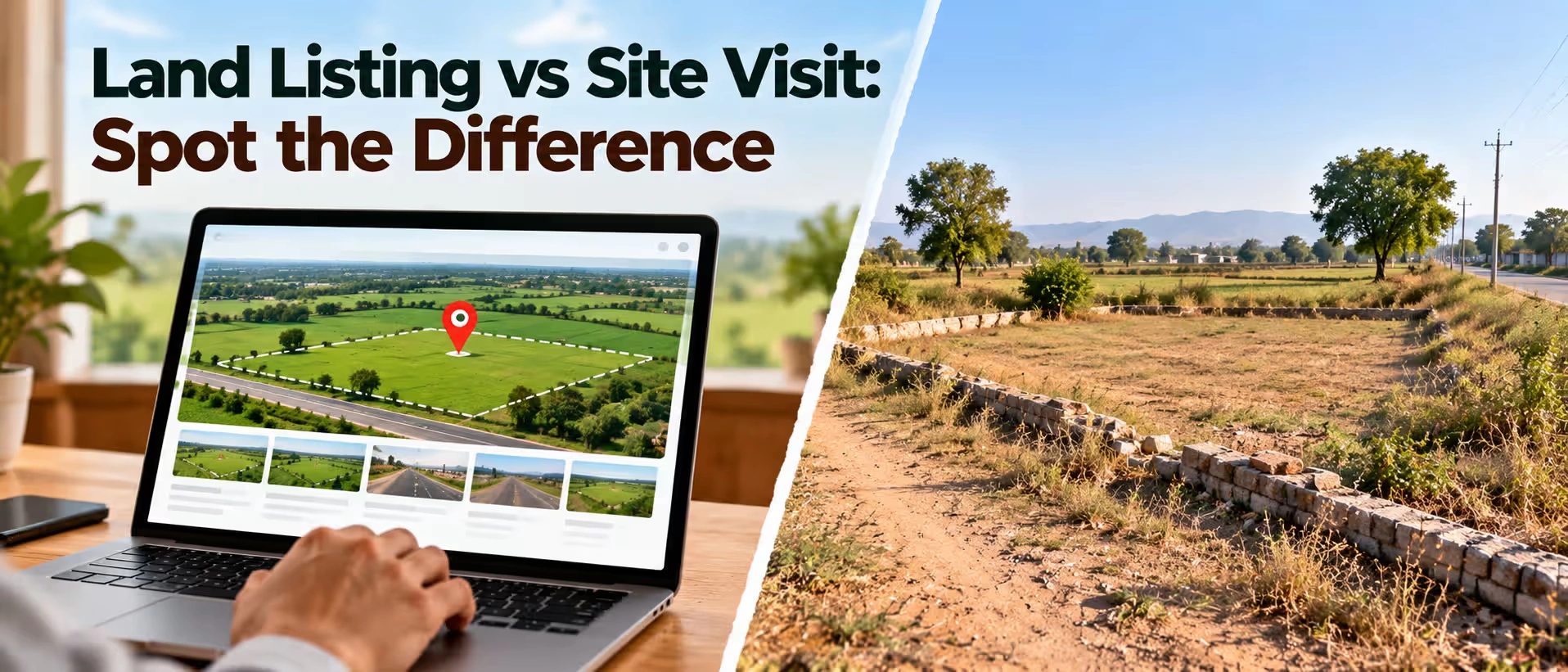
- Do not buy only on announcement hype
This is where many investors go wrong. They buy the headline, not the asset.
Where 2Bigha Fits in
For buyers who want to track emerging land opportunities around infrastructure-led markets, 2Bigha can be useful as a discovery and comparison layer. Instead of relying only on dealer talk or unverified listings, investors should look for platforms that make it easier to review location context, road connectivity, map visibility, and verified listing details before taking the next step.
That said, no platform replaces legal due diligence. Use 2Bigha to shortlist smarter, but close only after document checks, site verification, and use-case clarity.
Final Verdict
The new highway link between Ujjain and the Delhi-Mumbai Expressway is a meaningful infrastructure move, not a routine widening project. It brings together three strong demand drivers at once: faster regional mobility, expressway-led access, and event-driven infrastructure ahead of Simhastha 2028.
For travellers, the biggest headline is simple: less time on the road. For real estate watchers, the bigger story is what happens next: improved access usually reshapes where value starts building.
If you are looking at Ujjain, do not wait until every location becomes expensive and crowded. Watch the corridor, study access quality, and focus on assets that match actual future demand, not just social-media buzz.
Frequently Asked Questions (FAQs)
1. What is the new highway project connecting Ujjain to the Delhi-Mumbai Expressway?
It is the newly approved 4-lane Badnawar–Petlawad–Thandla–Timarwani section of NH-752D, with a total length of 80.45 km and an approved cost of ₹3,839.42 crore. It will connect Ujjain to the Timrawani interchange of the Delhi-Mumbai Expressway.
2. How much travel time will the new Ujjain highway save?
The government has officially said the project is expected to reduce travel time by around one hour on the corridor.
3. Why is this project important for Ujjain?
It improves direct 4-lane connectivity, supports traffic movement from Gujarat and Maharashtra, and is also expected to help manage travel demand linked to Simhastha 2028.
4. Will this highway increase real estate demand in Ujjain?
No authority has published a guaranteed price-growth figure, so nobody should pretend that appreciation is certain. But better connectivity, lower logistics friction, and stronger access to industrial and religious travel circuits usually increase investor attention over time. That is the real-estate case here.
5. Is this a good time to buy land near the Ujjain corridor?
It can be a good time to research, compare, and inspect. It is not a good time to buy blindly. Focus on legal clarity, approach road, future use, and exact location quality before making a decision.