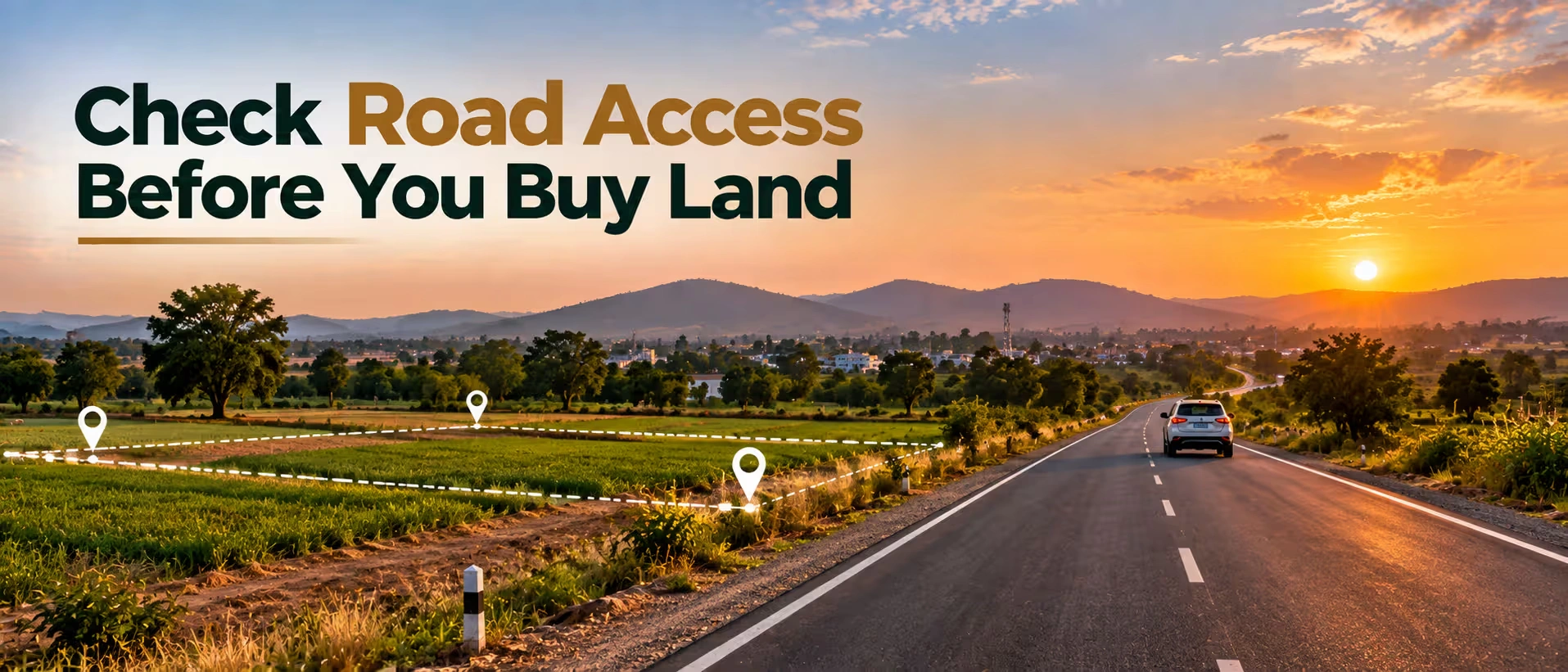
A buyer once told me he fell in love with a mango orchard in the first five minutes. Good soil, tall trees, a fair price. It was only after the token money went out that he asked how a tractor would reach it. The only way in was a narrow bund between two other people's fields. That story is not rare. Across farm lands in India, road access is one of the most ignored parts of a deal. People check the soil, the water, and the rate. The road comes last, if at all. It should come first. This guide explains why, what kinds of access exist, and how to check it step by step.
Quick Pointers
- A plot with no legal road is hard to farm, hard to finance, and hard to resell.
- A road you can see is not always a road you can legally use.
- Road type, width, and ownership all change the price.
- Always check access on paper and on the ground.
- Ask about the road before you ask about the rate.
Why Road Access Matters So Much?
Think about what a farm needs every single week. Seeds and fertiliser must come in. Crops must go out. Workers need to reach it. Machines like tractors, harvesters and trucks need space to move. In the season, a delay of even a day can cost you. Now think about what happens later.
- Selling: A buyer will ask the same question you should ask now. If access is weak, they will offer less or walk away.
- Loans: Banks usually want clear access before they lend against land.
- Building: A farmhouse, a shed, or a cold room needs material trucks to reach the site.
- Emergencies: An ambulance or fire vehicle cannot use a footpath.
So the road is not a small detail. It decides how useful the land really is.
The Main Types of Road Access
Not all access is the same. Here is a quick way to sort it.
| Access type | What it means | Effect on the buyer |
| Direct road frontage | Plot touches a public road, state or village road | Best case, easy to use and resell |
| Common village path | Shared path used by many farmers | Usable, but check width and who maintains it |
| Right of way through a neighbour's land | You pass through someone else's plot | Risky unless written and legal |
| Seasonal or field track | Usable only in dry months | Limits farming and lowers price |
| No access | Land is surrounded by other plots | Very hard to use; the deal is usually not worth it |
Keep this table in mind during every visit. Ask yourself which row your plot falls in. Be honest with the answer.
Read more: Should You Buy Road-Facing Land? Pros and Cons
Public Road vs Private Path
This is where most trouble starts. A public road is owned by the government or a local body. It is on the records, it is maintained (at least on paper), and anyone can use it. A private path is different. It may cross someone's land. The owner can be kind today and change their mind tomorrow. If there is no written right, you may end up in a long argument. Some points to remember:
- A path that people have used for years does not automatically become your legal right.
- Indian law does recognise a right of way in certain cases, such as one created by long use or by necessity. But proving it can take time and money.
- The safest approach is to get the right written into the sale papers or registered separately.
Because rules and records differ from state to state, talk to a local lawyer about your exact plot.
How Road Access Changes the Price?
Sellers know this even when they do not say it. Two plots of the same size and soil can have very different rates because of the road.
| Factor | Higher price when | Lower price when |
| Road type | Paved or well-made road | Mud track or no road |
| Width | Wide enough for trucks and tractors | Only a footpath or narrow bund |
| Distance from main road | Close to a highway or market road | Deep inside, far from any main road |
| Ownership | Public road, clear records | Private path with no written right |
| Season | Usable all year | Cut off in monsoon |
If you are looking at an agricultural plot for sale and the price seems low, check the access first. Very often, that is the reason.
Step by Step: How to Check Road Access?
Follow these steps for every plot. Do not skip any.
- Walk the full route. Start from the nearest main road and go to the plot on foot. Note every turn, gate, and crossing.
- Measure the width. A tractor needs more space than you think. Measure at the narrowest point, not the widest.
- Visit after rain, if you can. Some roads turn to mud or groundwater. It is better to find out now.
- Ask who owns the road. Is it a government road, a village road, or a private strip?
- Check the village map. Look at the revenue map and see if the path or road is marked. Compare it with what is on the ground.
- Look at the papers. Read the sale deed and see if it mentions access or a right of way. If not, ask for it to be added.
- Talk to neighbours. Ask who else uses the path. Ask if there has ever been a fight over it.
- Take a photo and video. Keep a record of the road as it looks on the day of your visit.
Eight steps sound like a lot. But they take one or two days, and they can save you years.
Questions to Ask the Seller
Keep these ready. Note the answers down.
- How do I reach this land from the main road?
- Is the road government-owned or private?
- Has anyone ever objected to its use?
- Is there a written right of way in the papers?
- Will you help me get that right added to the sale deed?
- Is the road usable in every season?
- Is there any plan to widen or change the road?
If the seller gets uncomfortable or gives vague answers, that tells you something too.
Searching for Land the Smart Way
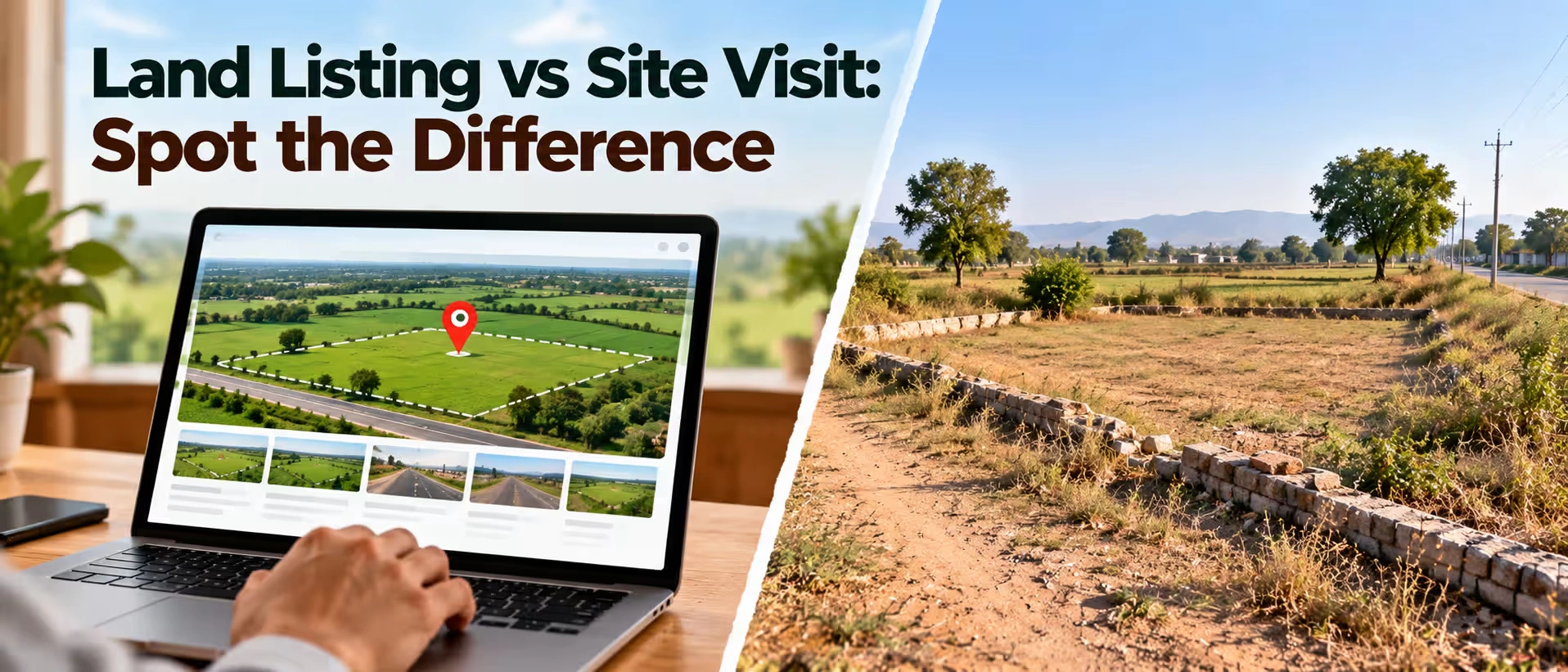
Many buyers begin with a phone search like agriculture land near me and then jump at the first cheap listing. Photos rarely show the road. Listings rarely mention it. So the buyer travels for hours and then finds out on arrival. A better habit is to ask for road details before you plan a trip.
- Ask for a photo or short video of the access road.
- Ask for the location pin, not just the village name.
- Ask how far the plot is from the nearest paved road.
The same goes for a listing that says farm on sale near me. Nearby on a map does not mean easy to reach on the ground. A plot that looks close may be across a river, a rail line, or a canal with no crossing.
Common Mistakes Buyers Make
| Mistake | What can go wrong |
| Trusting a verbal promise about access | Seller or neighbour can refuse later |
| Visiting only in dry weather | You miss flooding and mud problems |
| Checking only the plot, not the route | Road may be blocked or too narrow |
| Skipping the map check | Path on ground may not exist on records |
| Assuming a track is a legal road | You may have no right to use it |
| Buying because the price is low | Low price often hides poor access |
If You Are the Seller
Road access works in your favour too, if you handle it well. A plot with clear access sells faster and at a better price. Here is what you can do before listing.
- Confirm your own access. Walk the route and check the papers.
- Get a right of way in writing. If your path crosses a neighbour's land, sort this out now.
- Clean up the path. Clear weeds, fill deep holes, mark the entry point.
- Mention the road in your listing. Say what type it is, how wide it is, and how far from the main road.
- Show proof. Photos, maps, and papers all help.
When you sell plots, buyers who can see the road clearly are more comfortable. They ask fewer questions and close faster. If you plan to sell land online, put the access details right at the top of your listing. Add a short video walking from the main road to the gate. It costs nothing, and it builds trust quickly.
Where 2Bigha Fits In?
Remote verification becomes a challenging process. It becomes necessary to find a site where one can verify the location before going on the trip. 2Bigha is a website for buying and selling agricultural land in India. You can go through the website, get the location data, and schedule a visit at 2Bigha. If you are aware of a particular plot, then the 2Bigha Land Report would be helpful for your further understanding. The report would act as a preliminary measure and would not substitute for a visit and a lawyer's opinion.
Disclaimer: This article is for informational purposes only and should not be considered investment, legal, financial, or property advice. Real estate regulations, infrastructure plans, market conditions, and government policies may change over time. Readers are advised to verify information with relevant authorities and consult qualified professionals before making any investment or property-related decisions.