Managed farmland can be defined as a piece of land that is planted, fenced, watered, and cultivated by the company or cultivator on behalf of the owner of the land. Such lands do sell out each year, although not quite as fast as a flat in an urban project. In response to the stated in the title of the essay question, the answer is that it has a lot less to do with your farm than with who you are selling it to and whether your papers are in order. This blog will discuss such groups of potential buyers who actually pay for farmland, obstacles on the road to selling, and how to prepare for it.
What Managed Farmland Actually Includes?
Before delving into the resale process, it would be important to know what the prospective buyer sees. The managed farm would not normally consist of just soil. Depending on the particular project, the owner would be equipped with one or more of the following:
- Fencing and entry gate
- Bore well, drip irrigation or water storage tank
- Plantation, such as mango, teak, sandalwood, moringa, or other seasonal produce
- Caretaker or farm manager, funded by annual payment
- Written management agreement
Most buyers start their farmland search online, often by typing farmlands near me and comparing whatever shows up. A managed plot looks attractive in that comparison because it already has a visible set of assets. At the same time, it comes with strings attached (the management contract), and those strings are exactly what a second buyer will ask about first.
How Easy Is the Resale, Really?
The market of potential buyers is smaller when it comes to farmland as opposed to a registered residential property within a township, while managed farmland reduces the buyer’s list even further in that the buyer must also be willing to take the manager along. A sale can take between a few months to a year or more, and the range largely depends on where you are and the price, among other factors. Do not expect an exact figure that will hold true for all states. Below is what drives a resale in each direction.
| Factor | Makes resale easier | Makes resale harder |
|---|---|---|
| Title and records | Clear ownership, updated mutation, no disputes | Pending mutation, joint owners who haven't agreed |
| Road access | Approach road with a legal right of way | Only a mud track through someone else's field |
| Management agreement | Transferable, with a clear exit clause | Lock-in period, penalties, or no transfer clause |
| Price | Close to recent registered deals nearby | Based on the original brochure price |
| Location | Within a couple of hours of a city or highway | Far from towns, weak connectivity |
| Condition | Plantation healthy, records of expenses and yield | Neglected rows, no maintenance history |
Notice that only one row in that table is about the land itself. The rest are about documents, access, and contracts, which is good news, because those are the things an owner can actually fix before listing.
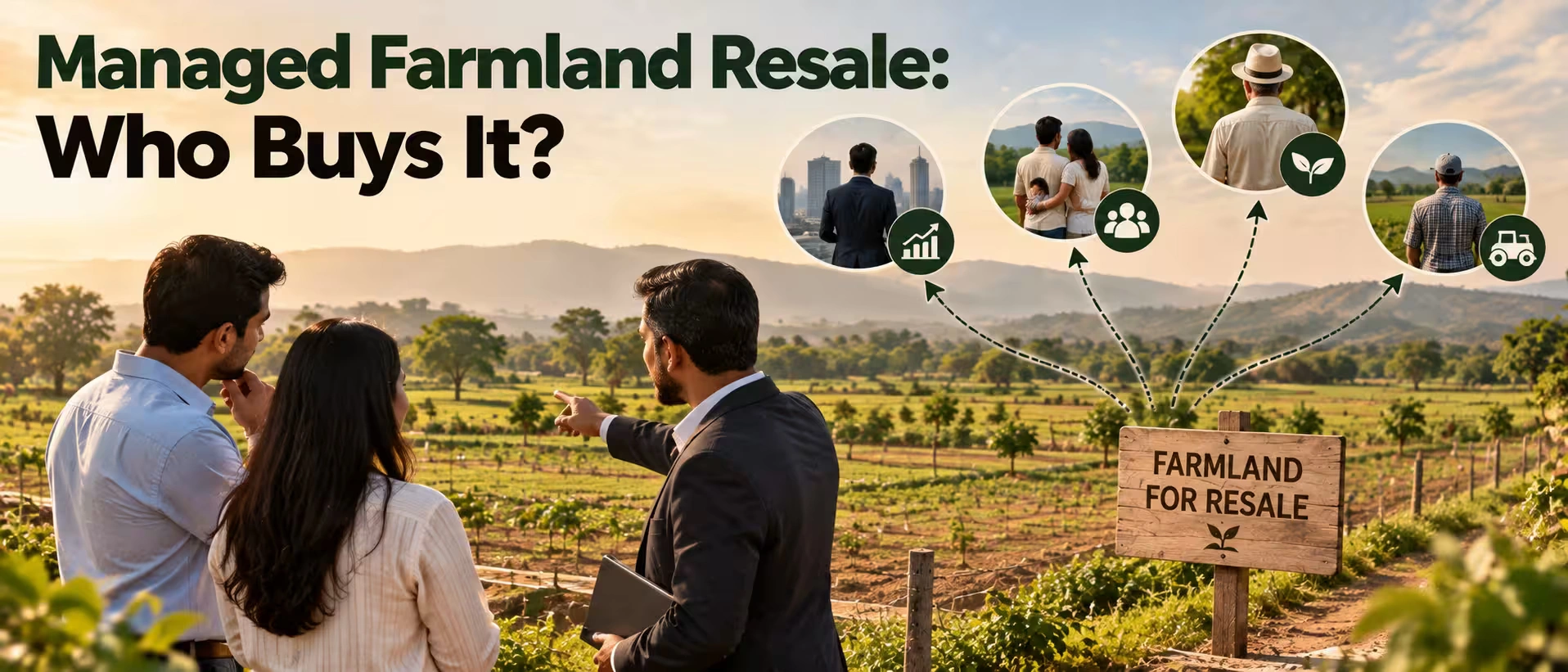
Who Buys Managed Farmland?
Different buyers care about different things, so it pays to know which group your plot suits best.
Weekend home seekers. City professionals who want a green escape within a short drive from the largest group. They care about distance from home, water, a safe boundary, and whether someone will look after the place while they're away. A managed farm solves the last worry for them, and when they scroll through plots for sale near me, they tend to shortlist anything with a caretaker already in place.
First-time farmland investors. The buyers don’t intend to farm. They wish to buy land as an investment and would prefer a plot to be maintained by someone else. They will request the yield history, expense sheets, and a breakdown of what is included in the annual payment.
Neighbouring farmers. A neighbouring farmer might wish to join his farm to yours. He is more familiar with the local price than any broker, pays less for plantation he does not need, but acts quickly with little questioning about the management.
Agri business and agri tourism operators. The owner of a homestay, fruit orchard tour, or processing facility will look for land where there is road access, electricity, and sufficient space for building within the regulations.
Retirees and lifestyle buyers. There are some buyers who seek peace, fruit trees, and farming. They will give more importance to safety, the presence of health care services, and trust in the manager than profits.
Existing investors in the project. Some managed farmland projects have investors willing to increase their holdings and not bring in outsiders. It may be useful to inquire with the project company whether such buyers are interested.
| Buyer type | Main priority | What convinces them |
| Weekend home seeker | Short drive, caretaker, safety | Photos, site visit, clear fee details |
| First-time investor | Appreciation, low effort | Records, comparable deals, exit terms |
| Neighbouring farmer | Extra acreage | Fair price, quick registration |
| Agri business operator | Usable infrastructure | Water, power, road access |
| Retiree or lifestyle buyer | Peace and security | Manager reputation, nearby facilities |
One group that people often assume is a big buyer is NRIs. Under FEMA rules, NRIs and OCI holders can't purchase agricultural land, plantation property, or a farmhouse, although they can inherit it or buy it from another person resident in India under specific conditions. So when you plan to sell, a resident Indian buyer is the realistic target.
What Slows a Sale Down?
Most delays in buying farmland come from a short list of problems, and almost all of them surface during the buyer’s checks. Understanding the differences between managed farmland and standalone farms can help buyers know what to verify before proceeding.
- State-level buying rules. In some states, only a person recorded as an agriculturist can purchase agricultural land, while other states have relaxed this. Confirm the rule in your own state before you shortlist buyers, because a rejected buyer costs you weeks.
- Pending mutation. If the land is still in the previous owner's name in revenue records, a careful buyer will wait for it to be corrected, and most banks won't lend until then.
- A management contract that can't be passed on. If the agreement says nothing about transfer, the buyer's lawyer will ask the project company, and that conversation can take time.
- Unpaid fees. Dues to the manager or the project company become the buyer's problem if they are not cleared, so most buyers want a written statement that nothing is pending.
- Overpricing. Many owners price based on what they paid plus the plantation cost, but buyers pay for the land's market value first and look at the trees second.
- Access and zoning doubts. A plot with an unclear approach road or a doubtful land use status tends to sit unsold.
A Quick Word on Tax Before You Sell Land
Your tax treatment depends on the location of the land. The treatment of agricultural land located in a rural zone is different from agricultural land located at certain distances from the municipality, and the latter may be subject to capital gains tax. There are exemptions that are applicable if you reinvest in certain ways. Because of recent changes in rules depending on your holding period and location, you should consult a chartered accountant prior to setting the price, since the post-tax amount is what you would earn.
Steps to Prepare Your Managed Farmland for Resale
Treat the preparation as a small project. Done in order, it shortens the whole sale.
- Collect the documents. Keep the sale deed, the land record extract for your state, the mutation entry, the latest tax receipts, an encumbrance certificate, and a copy of the management agreement together in one folder.
- Read the management agreement closely. Find the clauses on transfer, exit, notice period, and fees, and note them down so you can answer a buyer's questions without hunting.
- Clear dues and ask for a letter. Get written confirmation from the manager that no amount is pending and that they will continue serving the new owner.
- Check who can legally buy. Confirm your state's rules on agricultural land buyers, so your enquiries come from eligible people.
- Price using real deals. Look at recently registered sales around your plot, not asking prices. Add a modest premium for the plantation and infrastructure only if the records support it.
- Make the farm visit ready. Trim the paths, tidy the gate area, and keep expense and yield records on hand, since buyers often ask for them on the first visit.
- List on a platform that serious buyers use. Photos, a location pin, and a short description go a long way, and listing where people search for agriculture land for sale brings in more relevant enquiries than a roadside board.
- Sign an agreement to sell, then register. Have a lawyer draft it, set a clear payment schedule, and complete the registration at the sub-registrar's office.
Selling Managed Farmland Through 2Bigha
If you want to sell land without chasing brokers, 2Bigha is built for exactly this kind of listing. Buyers on the platform are already in a farmland search mindset, so your plot is seen by people who came looking for agricultural property and not by random visitors. You can list your managed farm with its photos, location, and key details, and genuine buyers can enquire directly.
For buyers, 2Bigha offers verified listings, Background Verification Reports, and the option to Book a Visit, so serious interest turns into a site visit faster. That matters for your resale, because a buyer who trusts the checks is less likely to walk away at the last stage. Whether you hold a small plot or a larger managed farm, you can start by visiting 2bigha.ai and listing your land.
Disclaimer: This article is for informational purposes only and should not be considered investment, legal, financial, or property advice. Real estate regulations, infrastructure plans, market conditions, and government policies may change over time. Readers are advised to verify information with relevant authorities and consult qualified professionals before making any investment or property-related decisions.