Something unusual happened in Delhi's property market this week, and it wasn't in Dwarka or Vasant Kunj or any of the areas that usually make headlines. It happened in Najafgarh, a part of West Delhi most people have driven past on the way somewhere else, not stopped to invest in. That's the part worth sitting with for a second, actually. A listed developer just put ₹420 crore behind a single stretch of land there.
What Actually Happened?
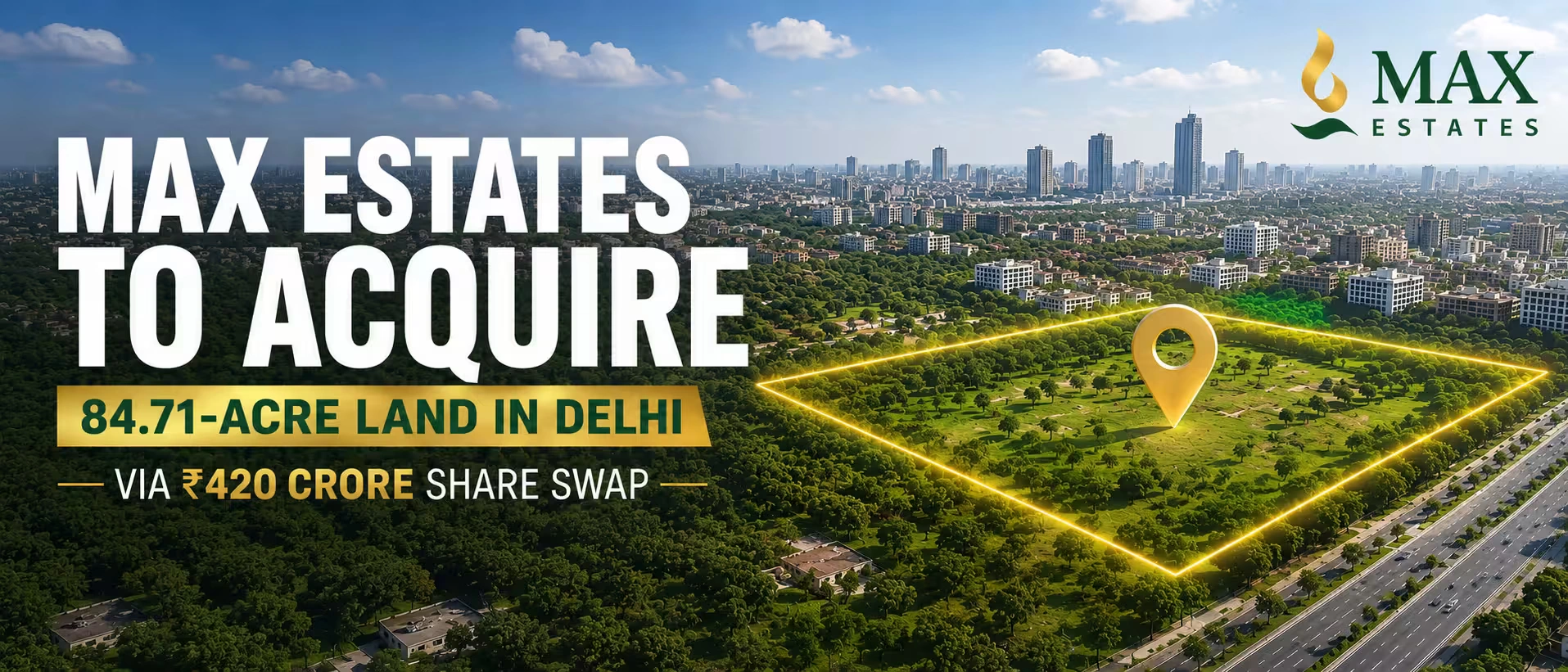
Max Estates, the real estate arm of the Max Group, is acquiring about 84.71 acres of land in Sector 3, Najafgarh. There's no cash changing hands in the usual sense; the company is issuing roughly 70.33 lakh equity shares at ₹597.50 apiece, which works out to around ₹420.23 crore. Nine companies that currently own the land will become fully owned subsidiaries of Max Estates once everything closes. For landowners looking to sell land in Najafgarh, deals of this scale also highlight the growing interest in the area's larger land parcels and future development potential.
Why does this matter beyond the number itself? Because it's the company's first real push into core Delhi. Max Estates has built its name in Gurugram and Noida so far. Delhi was the one market it hadn't touched until now. Sahil Vachani, the company's vice-chairman and managing director, put it simply: the land sits right where Delhi is expanding westward under Master Plan Delhi 2047, and connectivity is only getting better with the Urban Extension Road-II project, plus its closeness to Dwarka, the Gurugram border, and IGI Airport.
The Deal, In Numbers
| Detail | Figure |
| Land size | 84.71 acres |
| Location | Sector 3, Najafgarh, West Delhi |
| Deal value | ₹420.23 crore |
| Structure | Non-cash share swap |
| Shares issued | Up to approximately 70.33 lakh equity shares |
| Issue price | ₹597.50 per share |
| Estimated GDV | ₹10,000–12,000 crore |
| Developable area | 4–6 million sq. ft. |
| Land valuation | Approximately ₹4.95 crore per acre |
| Entities acquired | 9 land-owning companies, now wholly owned subsidiaries |
What I find most telling here isn't the size of the deal; it's the structure. Max Estates didn't write a cheque. It traded shares for land, which means its cash sits untouched while it still walks away with one of the last large, unbroken land parcels left in the city.
Why Najafgarh, Specifically?
A few years back, the honest answer would've been "because it's cheap." That's still partly true, but it's not the full picture anymore. Najafgarh is increasingly being considered among the top places to invest near Delhi, particularly as land pooling under MPD 2047 quietly reshapes this belt, turning what was once primarily agricultural land into zones marked for planned residential growth.
Connectivity is catching up too; UER-II is changing how Najafgarh links to Dwarka, Gurugram, and the airport, in a way that just wasn't there a decade ago. And large, contiguous plots inside Delhi have genuinely become hard to find; most of what's left in the market is broken up across many small owners, which makes assembling anything at scale a slow, messy process. Then there's the simplest reason of all. When a developer this size commits ₹420 crore to one location, other builders and buyers tend to notice and follow within a year or two. None of this means Najafgarh has suddenly "arrived." But it's no longer the area nobody's watching.
What This Means If You're Tracking the Land Market?
Deals like this don't usually stay contained to one plot. When a big developer moves in, prices in the surrounding area tend to firm up, sometimes within months, sometimes over a couple of years.
- If you're looking to buy agricultural land in Delhi, expect fewer easy bargains in Najafgarh going forward. A large piece of usable land here has just been locked into one company's pipeline.
- Anyone checking agricultural land for sale in Najafgarh right now should know that pricing patterns here are likely to shift differently than they have over the past five years.
- If you're a smaller landholder thinking about whether to sell land in Najafgarh, this is a reasonable window — developer and investor interest both tend to spike after a deal this size makes news.
- For buyers who specifically want to buy farm land in Najafgarh for actual farming rather than future resale, double-check current land classification first. Parts of the belt are shifting toward residential use under the master plan.
Where Najafgarh Sits Among Top Places to Invest Near Delhi?
Najafgarh is now part of a shortlist that keeps coming up whenever people talk about the top places to invest near Delhi, alongside pockets near the Dwarka Expressway, stretches of South West Delhi, and areas along the upcoming UER-II route. The one thing that still separates Najafgarh from most of these is price. Per acre, it's still cheaper, even as everything around it starts improving.
Where 2Bigha Fits Into This?
A deal this size is a useful signal, but it doesn't actually tell you much about the one plot you're personally considering. That gap is exactly where a platform like 2Bigha — Buy and Sell Agriculture Land & Farmlands in India comes in.
If you're trying to buy agricultural land in Delhi, or specifically hunting for agricultural land for sale in Najafgarh before prices catch up with all this attention, verified listings save you from guessing about ownership and land classification. Someone who wants to buy farm land in Najafgarh for the long haul can compare real options instead of chasing broker calls that go nowhere. And landowners ready to sell land in Najafgarh while interest is running high get put in front of buyers who are actually searching for this exact opportunity, not just browsing.
The Bigger Picture
Whether Najafgarh turns into Delhi's next big residential story or just a quieter, steady growth pocket, one thing's already true: a ₹420 crore bet on 84.71 acres doesn't happen quietly, and it rarely happens without ripple effects for everyone holding land nearby. Worth keeping an eye on this one over the next year or two.
Disclaimer: This article is for informational purposes only and should not be considered investment, legal, financial, or property advice. Real estate regulations, infrastructure plans, market conditions, and government policies may change over time. Readers are advised to verify information with relevant authorities and consult qualified professionals before making any investment or property-related decisions.