Delhi will always attract buyers, but smart investors know one thing: the best opportunities are often just outside the city, not inside it. When land in Delhi becomes too expensive or too limited for meaningful appreciation, the next move is to study the growth belt around NCR. That belt is getting stronger because of new expressway links, airport-led development, industrial corridors, and rapid regional transit. Nearby cities are no longer just spillover markets. Many of them are becoming destination markets in their own right.
Why Investors are Looking Beyond Delhi
A decade ago, many buyers focused only on the prestige of buying land in Delhi. Today, that thinking has changed. Investors now look at connectivity, employment generation, industrial growth, future townships, and exit potential. The NCR network is expanding through corridors linked to Faridabad, Rohtak, Meerut, Panipat, Alwar, and the Jewar airport zone. That means the value story is no longer limited to central Delhi or mature urban pockets. It is moving outward into growth corridors where infrastructure is shaping the next cycle of demand.
1. Faridabad: Practical, connected, and still relevant
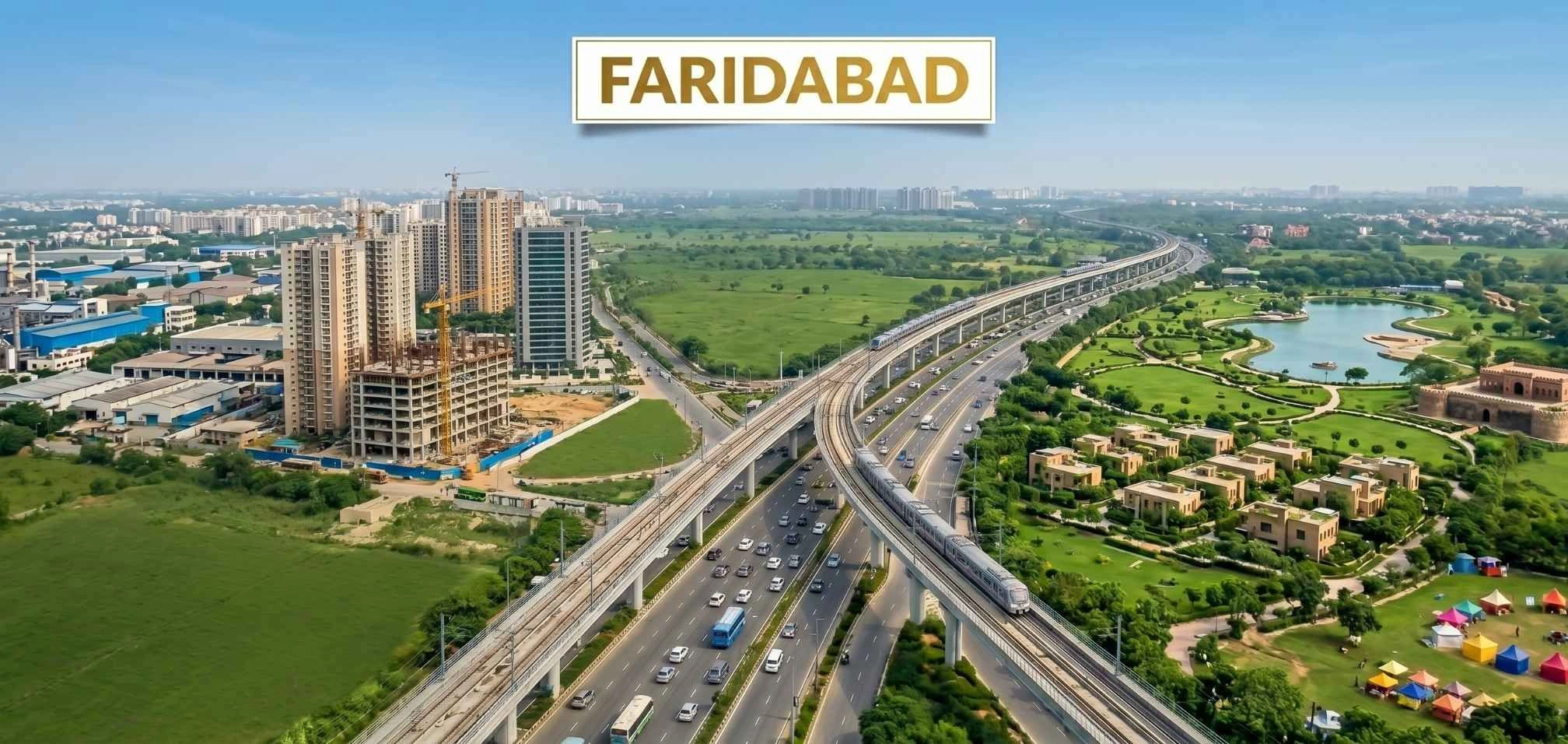
If you are comparing premium land in Delhi with more practical options nearby, Faridabad remains one of the strongest names on the list. It already has established urban demand, industrial depth, and better familiarity among NCR buyers. What makes it more interesting now is its linkage to the new road connectivity planned toward Jewar International Airport from the DND–Faridabad–Ballabhgarh side, which strengthens its position in the broader NCR logistics and mobility story. NCRTC also lists Delhi–Faridabad–Ballabgarh–Palwal as one of the regional corridors in the NCR transport framework.
For buyers searching for Land in Faridabad, the attraction is not only residential expansion. Faridabad also continues to show institutional industrial backing. HSIIDC’s 2025–26 published reserve pricing includes IMT Faridabad and multiple Faridabad industrial sectors, which tells you this is still a structured, active land market rather than a speculative blank zone. That kind of ecosystem usually matters more than hype, because appreciation follows real economic use.
Faridabad works especially well for buyers who want a balance of familiarity, accessibility, and mid- to long-term hold potential. It may not feel as “early-stage” as some outer corridors, but that is also its strength. The risk is generally easier to read, and end-user demand is easier to understand.
2. Rohtak: The sleeper market many buyers ignore too long
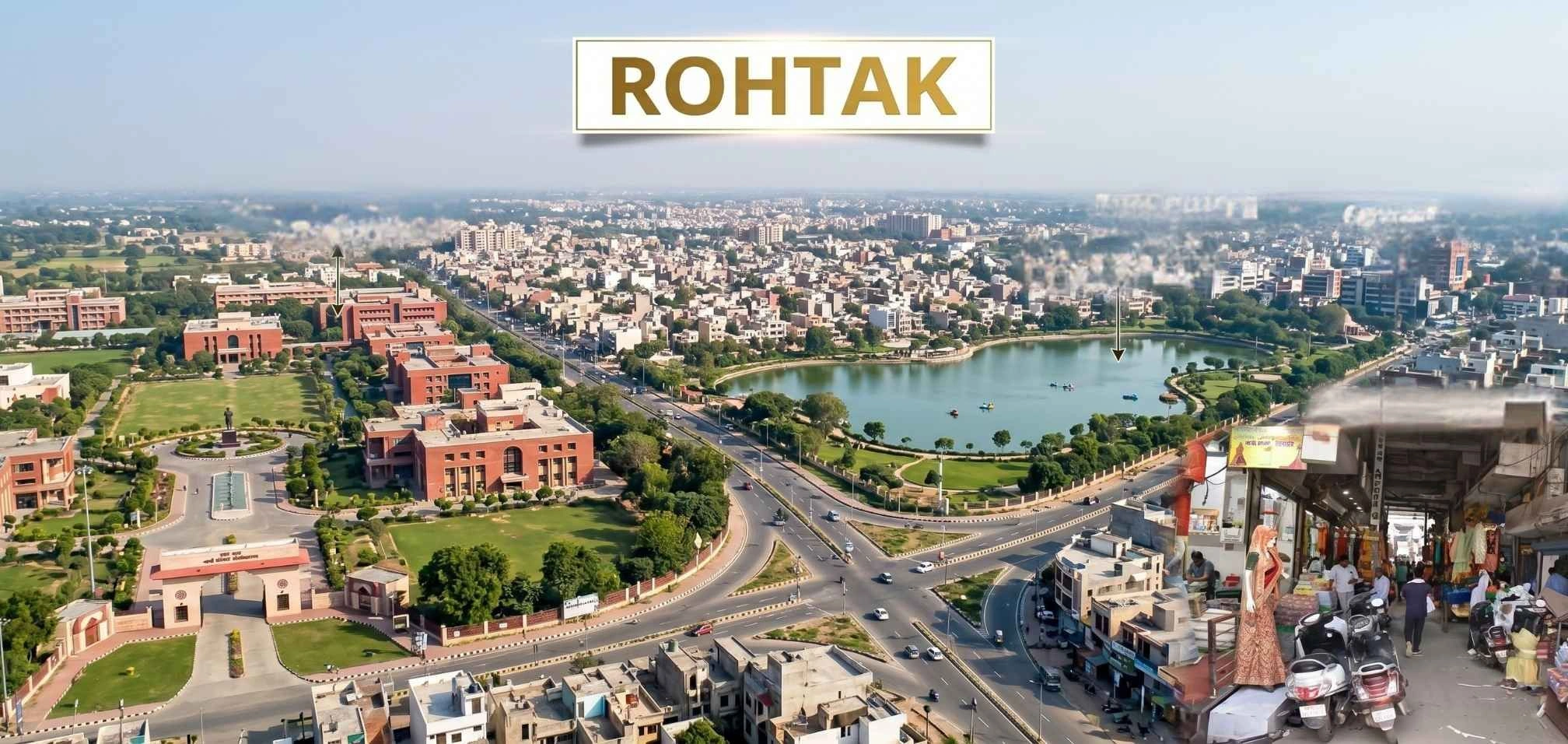
A lot of investors chase already-discussed NCR pockets and miss Rohtak until prices start moving faster. That is usually late. Rohtak deserves attention because it sits on a clear growth logic: proximity to Delhi, improving regional movement, and an established industrial base through IMT Rohtak. HSIIDC identifies IMT Rohtak as a large Industrial Model Township on the Delhi–Rohtak–Hisar axis, developed in multiple phases over substantial acreage. NCRTC also lists Delhi–Bahadurgarh–Rohtak as a planned regional corridor, which adds another long-term mobility signal.
This is why land for sale in Rohtak keeps showing up in serious investor conversations. Rohtak is not just a “cheap alternative.” It has a genuine regional growth case. Markets like this often reward patient investors who enter before full-scale demand matures. If your strategy is to buy earlier in a corridor that still has room to expand, Rohtak looks stronger than many people assume.
Rohtak is especially suitable for buyers who want larger parcels, lower entry pressure than core NCR, and a holding story tied to industrial and corridor-led expansion rather than pure speculation.
3. Yamuna Expressway–Jewar Belt: Airport-led growth is changing the map
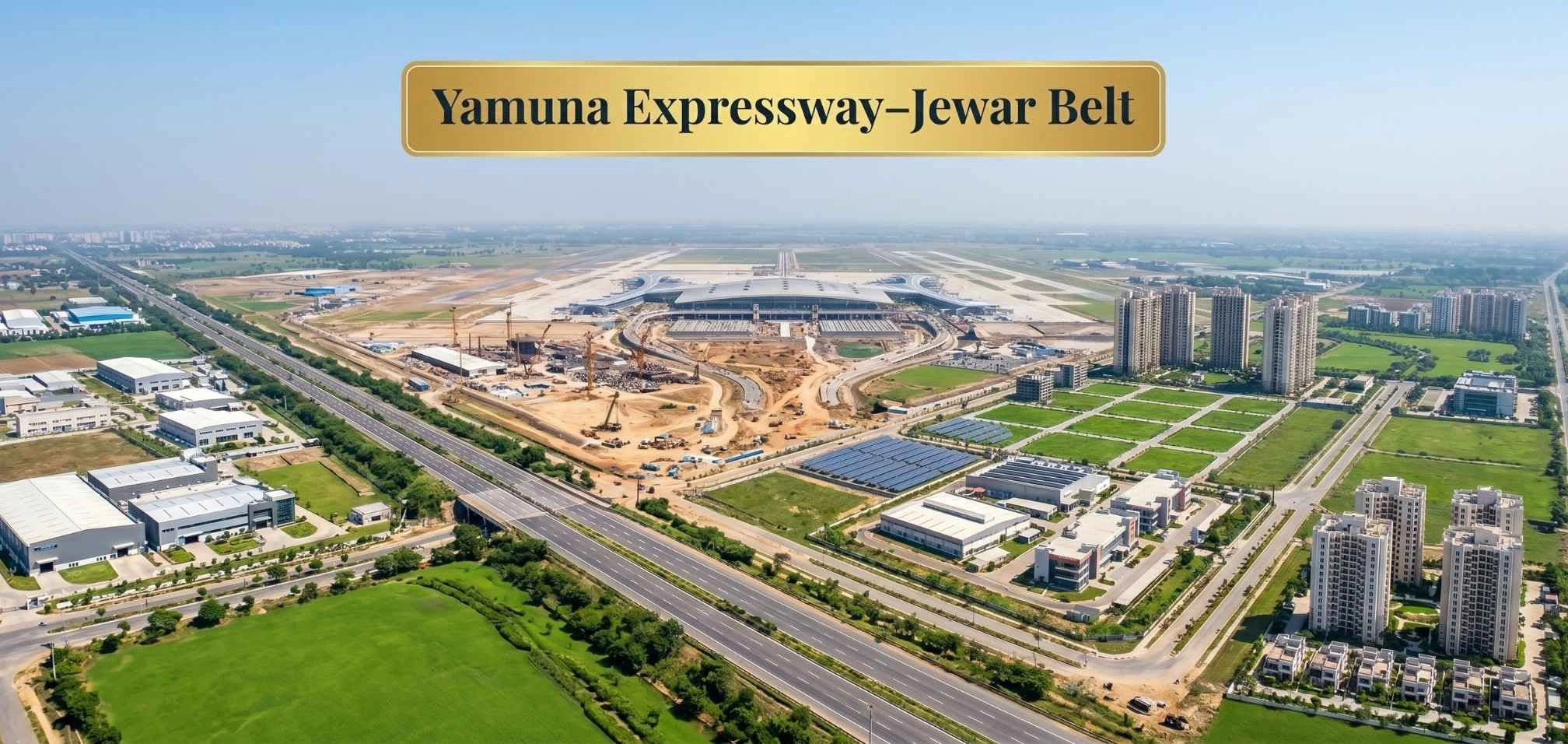
If one zone has changed the conversation around NCR investment, it is the Jewar side of the market. The Noida International Airport project has become a major anchor for long-term development, and official government communication has described it as a multi-modal hub. The government also approved a major road corridor to improve direct connectivity from South Delhi, Faridabad, and Gurugram to Jewar International Airport. That is the kind of infrastructure trigger that can reshape surrounding land demand over time.
For buyers who missed early Noida and Greater Noida appreciation cycles, the broader Yamuna belt offers a second chance, though with location-specific selection risk. Not every parcel near a headline project becomes a good investment. You still need to check approach roads, land use, surrounding development, title clarity, and actual on-ground activity. But as a macro story, this belt is one of the strongest near Delhi right now.
This zone suits investors who are comfortable with a future-facing play and who want exposure to infrastructure-led growth rather than only current habitation.
4. Sonipat–Kundli–Kharkhoda: Strong industrial and manufacturing logic
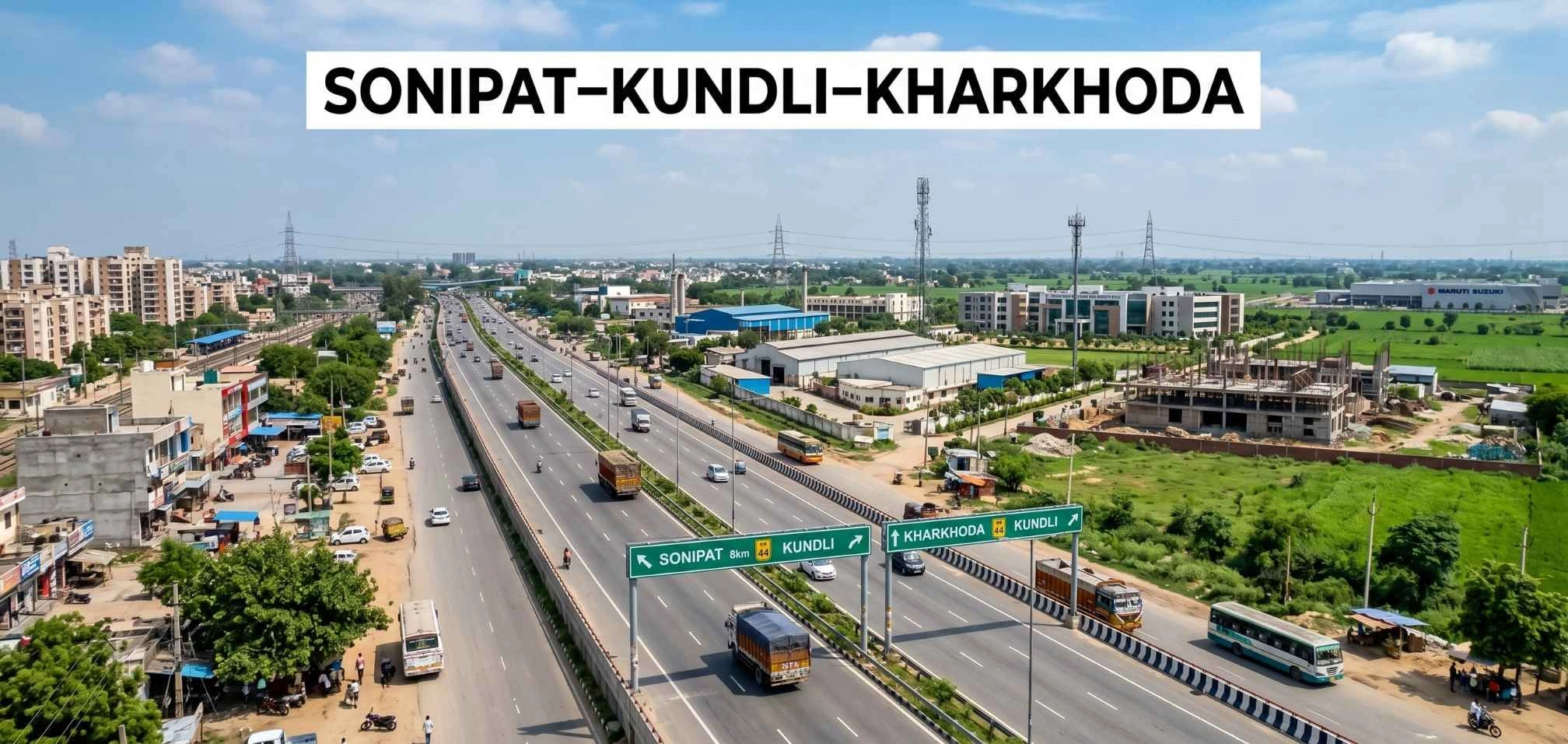
North of Delhi, Sonipat’s broader belt has become much more interesting because the story is no longer just about highway access. It is now tied to manufacturing, industrial planning, and structured development. Maruti Suzuki began commercial production at its Kharkhoda facility in February 2025, and the company has publicly stated the project’s large scale and production capacity.
That matters for investors because manufacturing-led regions create layered demand: worker housing, warehousing, service businesses, supporting commercial use, and eventually stronger social infrastructure. A market backed by employment tends to be more durable than a market backed only by marketing.
If your goal is to move beyond expensive land in Delhi and enter a belt where industrial demand can support long-term value creation, the Sonipat–Kharkhoda–Kundli side deserves a serious look.
5. Bhiwadi–Neemrana: The Delhi-to-Rajasthan growth corridor still has weight
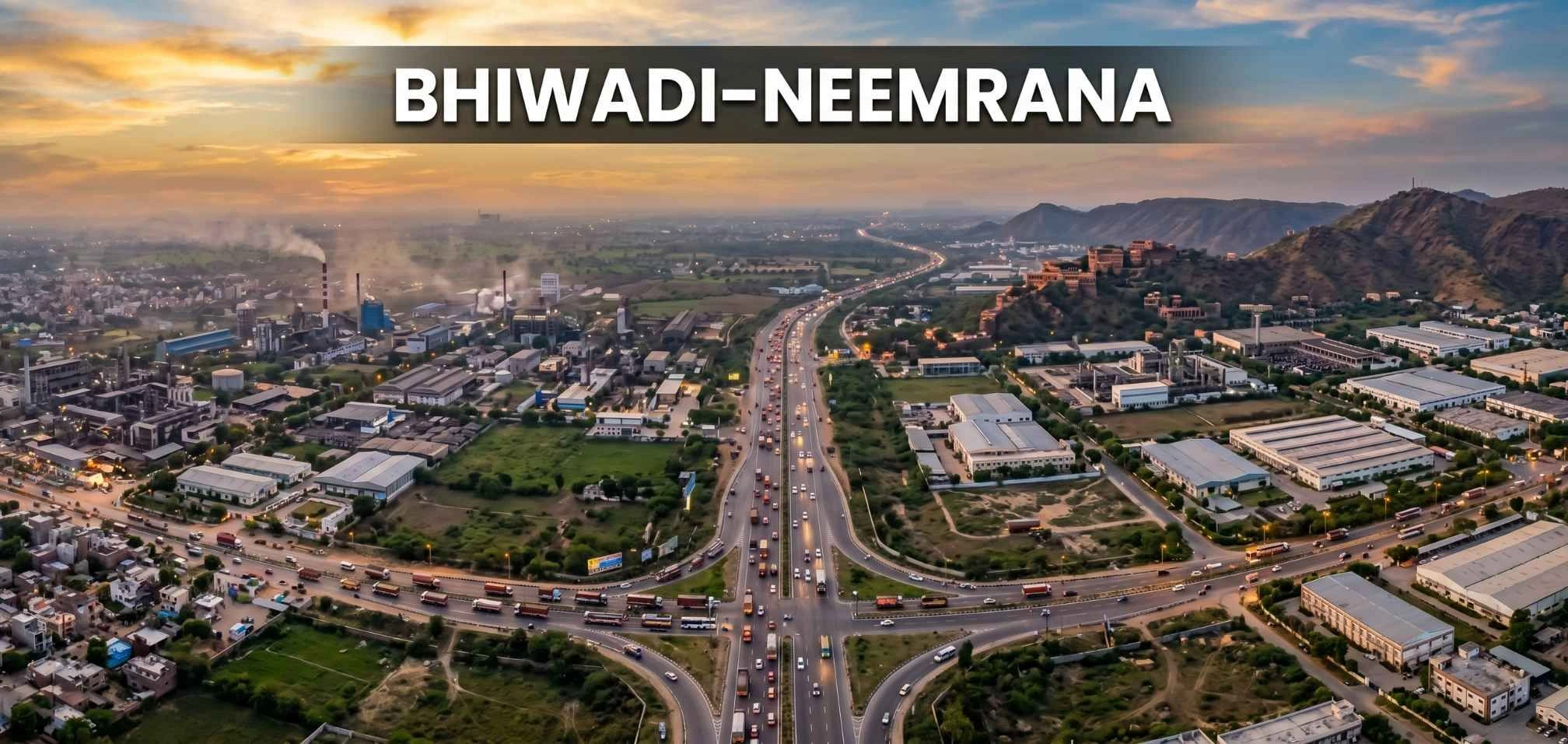
Many NCR investors focus only on Haryana and western UP, but the Rajasthan side remains important too. The Khushkhera–Bhiwadi–Neemrana region has long been part of the wider Delhi–Mumbai Industrial Corridor conversation, and Invest India continues to identify it as a key industrial zone. NCRTC’s corridor overview also highlights that the Delhi–Gurugram–SNB–Alwar line is expected to benefit commuters and economic activity through industrialised areas including Manesar, Bawal, and Neemrana.
Why does this matter for investors near Delhi? Because this belt combines industrial relevance with corridor-based mobility potential. It appeals to buyers who want to position themselves on a long arc of regional expansion rather than only chasing short-term residential buzz. If you are comparing growth narratives, this side still holds value because it links Delhi-region demand with Rajasthan’s industrial development story.
6. Ghaziabad–Meerut Belt: The transit story is now real, not theoretical
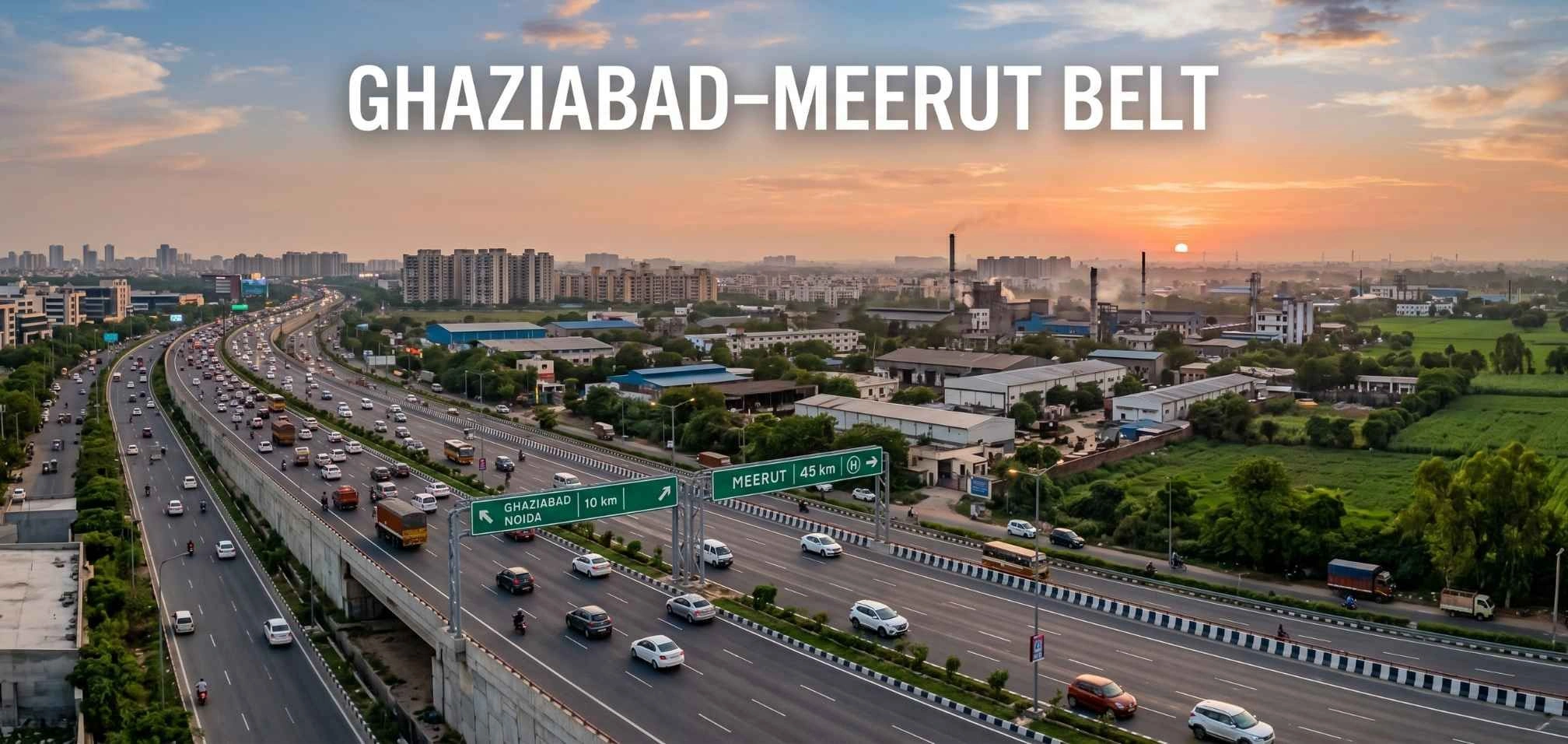
For years, buyers heard about the Delhi–Meerut rapid corridor as a future benefit. In 2026, that benefit became much more tangible. The full 82 km Delhi–Meerut Namo Bharat corridor was dedicated in February 2026, and NCRTC states that the corridor connects Delhi to Uttar Pradesh while supporting planned townships and centres of economic activity along the route.
This matters because transit-backed land markets usually gain more credibility once the system is operational, not just announced. For investors, that shifts the conversation from “future promise” to “visible mobility advantage.” If you want a corridor where public transport is already changing perception, the Ghaziabad–Meerut belt is worth studying.
Also Read: Nearest Gateway Locations Near Delhi for Land Investment (2026 Guide)
Which Location is Best
There is no single answer. The right pick depends on what kind of investor you are.
- If you want a more established, lower-uncertainty market, Faridabad stands out.
- If you want a relatively undervalued long-term corridor, Rohtak looks strong.
- If you want airport-led future growth, the Jewar–Yamuna side is hard to ignore.
- If you want industrial and manufacturing momentum, Sonipat–Kharkhoda–Kundli is compelling.
- If you want a corridor linked to NCR plus Rajasthan industrial expansion, Bhiwadi–Neemrana deserves attention.
- If you want an already-operational transit story, Ghaziabad–Meerut is attractive.
What you Should Check Before Buying
Do not buy land only because a location is trending. A strong investment depends on basics: clear title, land-use compliance, road access, ownership chain, nearby development, and realistic exit demand. Buyers often lose money not because the city was wrong, but because the plot was wrong.
That is why local due diligence matters more than social media hype. A well-located parcel in a good corridor can perform better than a random cheap parcel in a famous area.
How 2Bigha helps you in Buying Land
This is where 2Bigha becomes useful. The platform positions itself as a place to search and invest in land anywhere, explore current land prices, view mapped land options, and access property insights. Its public pages also mention tools such as interactive land discovery, locality insights, Khasra and digital land-map access where available, and buyer-seller connection tools.
In practical terms, 2bigha can help buyers in four ways. First, it makes discovery easier when you want to compare multiple NCR and near-NCR locations in one flow. Second, it helps with shortlisting because mapped listings and locality context reduce blind searching. Third, it supports better screening by bringing price context and property details into one place. Fourth, it saves time for serious buyers who want to move from “I want land near Delhi” to “I am now comparing Faridabad, Rohtak, and the Jewar belt with clear filters.”
That said, no platform replaces legal verification. Use 2Bigha to discover, compare, and shortlist faster, then verify title, zoning, and documentation before you close any deal.
Final Word
If you are chasing land in Faridabad, you may be limiting your upside. The smarter play in 2026 is to study the wider 200 km growth belt around the capital. Faridabad offers familiarity and strong access. Rohtak offers early-entry potential. Jewar offers airport-led momentum. Sonipat and Kharkhoda offer industrial logic. Bhiwadi and Neemrana offer corridor depth. Meerut offers transit-backed confidence.
The best investment location near Delhi is not the one with the loudest marketing. It is the one where infrastructure, demand, legality, and timing come together. That is exactly where smart buyers should focus now.