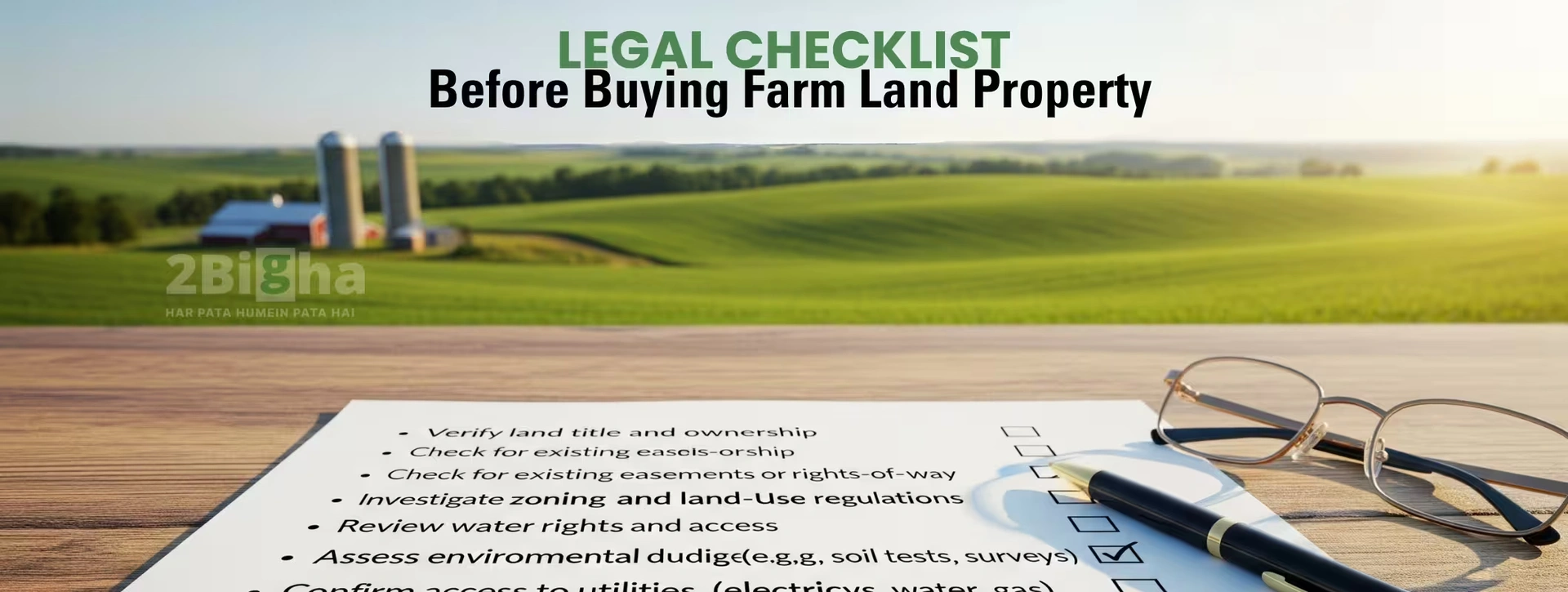
The purchase of the right farm land for sale is significant. If you're looking to plant the land, construct a farm, or are planning to invest in a long-term venture and make a long-term investment, the legal element of the transaction is something you should not be able to overlook. In contrast to urban properties, farms are subject to specific legal safeguards to protect the rights of buyers.
This blog will offer an entire legal checklist required before purchasing any farm land property for sale. If you're thinking of buying land properties, working with a property agent, or even selling property online, this guide will keep you secure and well-informed.
1. Verify the Title Deed of the Farm Land Property for Sale
A Title deed is the most crucial document to be included in any deal for property. It demonstrates that the buyer is the owner of the title to the farm land property for sale and also has the legal right to dispose of it. The title must be in the name of the seller and not subject to disputes.
Get a copy of the title deed and check it with a legal expert. It is also possible to cross-check the title with the local sub-registrar's office. If you're looking to buy land properties through property-selling websites, make sure to verify all title-related claims before making a final decision.
2. Check for Encumbrance Certificate
An encumbrance document indicates whether it is true that land property for sale is subject to any legal obligations or loans tied to it. The certification is provided by the registration office in your locality. It assists in ensuring that the property is not secured by a mortgage or other legal right.
If the land is subject to financial obligation, you could be able to inherit the liability following the purchase. It is better to stay clear of land properties unless the dues are paid in advance.
3. Confirm the Land Type and Zoning Regulations
It is not the case that all land properties are legally able to be used for agriculture. It is essential to make sure that you are sure that the farm land property for sale is considered agricultural land under the law in the area. Every State in India has rules that differ on who can purchase agricultural land and for what purposes.
Some states, for instance, permit only farmers or those who have a background in farming to purchase land for agriculture. Also, make sure you know if the land could be converted into non-agricultural uses if it is part of your plans.
Your property agent should likely be able to supply the certificate of zoning; however, it's recommended that you get it checked by an independent party.
4. Check for Land Use Permissions
Before purchasing the farm land property for sale, be sure to consult with the local panchayat or municipal authorities to verify the land's use. Certain land properties may be in the midst of restrictions on the environment or within protected zones.
Beware of land that falls under government-acquired zones or forest land. This is particularly important if you intend to sell property online later on or construct something on the property.
5. Inspect the Mutation Record
Its change record confirms that the owner of the land was changed in the government's documents. It's required for the payment of taxes on property and to establish legal ownership following the sale.
Request the most recent modification certificate issued by the seller. If they don't have it, then ask your property agent to help you obtain it before making any decisions about the deal.
6. Check Tax Receipts and Bills
The seller should provide the most recent taxes on the property. This will show that the seller is paying tax regularly and there aren't any pending taxes on the farm land property for sale.
Taxes not paid may be transferred to the next owner, which could lead to legal problems or even penalties. If you've found the property on property selling websites, make sure to request these documents before going to the website.
7. Verify the Land Measurement and Boundaries
It is essential to physically examine the land and compare the exact measurements with documents. Land disputes in India result from unclear or conflicting boundaries.
Employ a licensed surveyor to confirm the precise area on your farmland property for sale. This will help avoid any future disputes over boundary lines with local authorities or neighbors. Certain land properties listed online look great in photographs, but they may not be legal in terms of measurements.
8. Check Water Access and Irrigation Rights
In the case of any land for sale, water accessibility is essential to its use. Make sure the land has access to borewells, groundwater, as well as irrigation canals. Also, be sure that there aren't any legal restrictions on the use of water.
In some areas where water rights are in question, they may be controlled or shared by local bodies. If the property agent cannot confirm this, go to the location and speak to the local landowners or farmers.
9. Verify Ownership History and Chain of Title
Request a copy of the previous sale deeds to make sure you are sure that your land has a clear ownership record. It should have an obvious and legally valid chain that runs from the initial owner to the present owner.
Incomplete connections in your chain of ownership could create problems when selling the property or when applying for bank loans. If you're planning to own the land for a long period of time or list it for sale on property selling websites, having an undisputed title will help.
10. Check Access Roads and Legal Entry Points
Certain land properties are located on private land and do not have direct access to roads. This could be a major problem in the future, particularly when it comes to construction, transportation, or resales.
Check that you are sure that your farmland or agriculture land for sale is accompanied by clearly and legally documented access and exit routes. It must be accessible through public roads or via easement rights registered.
11. Cross-checking with Local Authorities and Village Office
Local authorities usually have up-to-date information regarding the land issue. Visit the panchayat or office of the village to find out whether you can be sure that the land property is free of any legal or community disputes.
This is a great choice if you're dealing with unfamiliar sellers or buying from a property agent you haven't previously worked with.
12. Look for Approved Layout Plans (If Applicable)
If the plot is part of an agricultural layout or farming project, ensure that the layout has been approved by the local authorities. In townships with farming, plots that are not authorized are risky and could be razed or removed in the future.
Make sure you can verify that the plan layout has been properly registered and is within the local development regulations. This is a good step to take in the event that you intend to selling property online shortly as part of a larger project.
13. Get a No Objection Certificate (NOC)
In certain states, a Non-Objection Certificate is required at the local Tehsildar, or district collector, specifically in the case of large area farm land property for sale. This proves that the land isn't subject to any restrictions by the government or tribal protection dispute.
This is particularly important if you're not a farmer who is looking for investment opportunities in land properties. If you don't have the proper NOCs, you may lose the land you purchase.
14. Understand State-Specific Rules
The requirements for purchasing the farm land property for sale differ between states in India. Certain states have regulations on the minimum and maximum size of land held, laws on land ceilings, and restrictions on conversion.
For instance, in Maharashtra, the only people who can purchase land for farming, but there are no restrictions on buying land in Rajasthan or Punjab; the restrictions are less. Restrictions. Always check with a local lawyer or a reputable property agent before making any payment.
15. Avoid Cash Deals Without Documentation
Numerous deals involving land properties still occur in part with cash, particularly in rural regions. Although this may appear to be faster, it's dangerous and illegal if it is not documented properly.
Always insist on the full legal documents and payment through identifiable channels such as bank transfers or demand drafts. This safeguards buyers as well as sellers and ensures that the transaction is legal should it be necessary.
If you're purchasing from the services of a property agent or property selling websites, ensure that the transaction is completely clear.
Final Thoughts
The process of buying the farm land property for sale isn't only about picking a gorgeous parcel of property. It's also about making sure that your investment is secure legally, legal and secure for the future. By following this checklist of legal requirements, you can avoid the most common mistakes that buyers encounter when purchasing land properties.
When you're working with a property agent, looking at property selling websites and selling property online in the future, being aware can give you a distinct advantage. Take your time and ask the appropriate questions, and seek legal advice in the event of need.