List Your Land
Key Takeaways
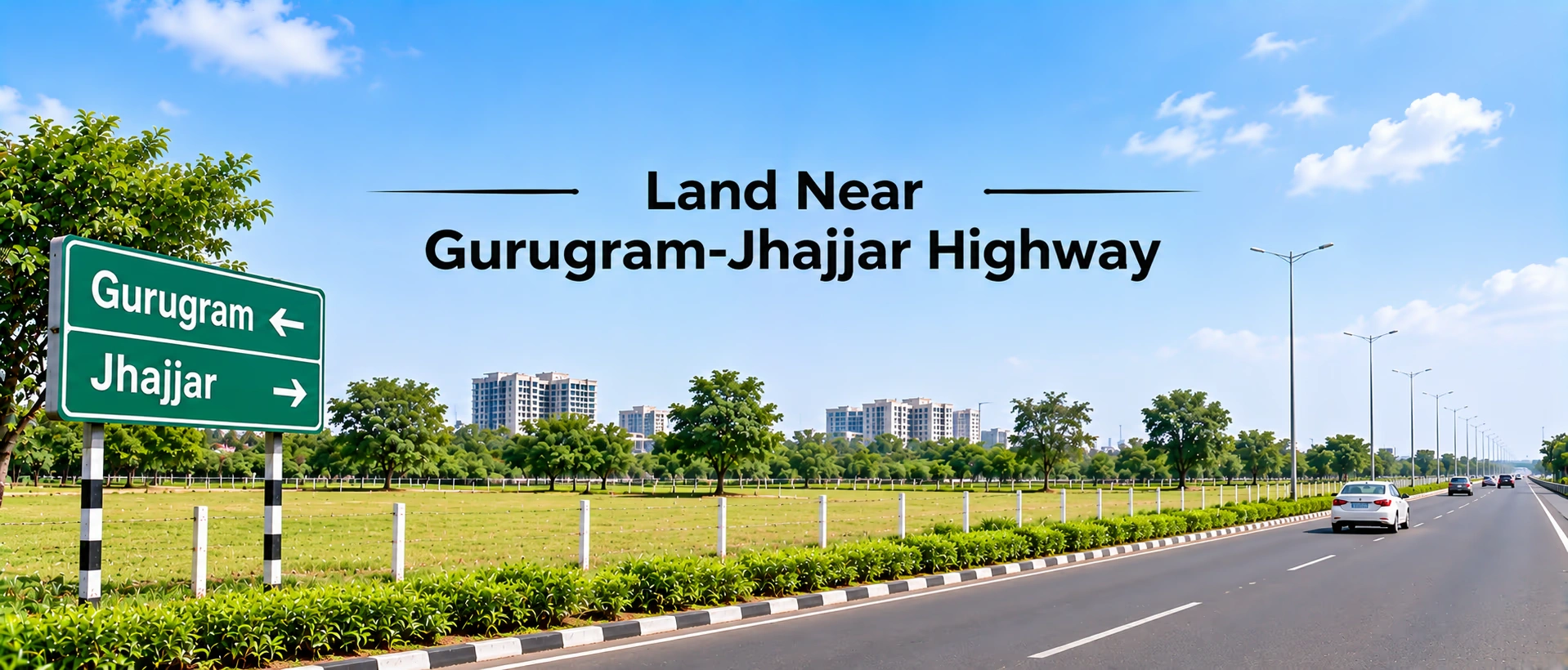
- Land near Gurugram-Jhajjar highway is attracting buyers because of better roads, nearby institutions and rising prices inside Gurugram.
- Prices differ a lot from village to village. Road width, land use and approvals matter more than distance alone.
- Agricultural land is cheaper, but you need a Change of Land Use (CLU) before building anything other than farm structures.
- Check Jamabandi, Khasra number, mutation and encumbrance before paying any token money.
- Holding land for five to ten years has usually worked better than quick flipping.
- Sellers with clean documents and realistic pricing close deals faster.
Introduction
Delhi-NCR is growing outward, and land near Gurugram-Jhajjar highway is now on the radar of many buyers and investors. Good roads, new institutions and rising prices in the city have pushed people to look beyond Gurugram's busy sectors. Some want a plot for sale in Gurgaon at a lower budget. Others search for agriculture land for sale in Jhajjar Haryana or farm land for sale in Gurgaon to build a farmhouse or hold for the long term. Many also explore agricultural land for sale in Haryana to compare rates and rules. If you own a parcel, you may even want to sell land in Jhajjar while demand is rising. This guide explains prices, legal checks and investment options in simple words, and shows how platforms like 2Bigha help you research land records and property insights before you decide.
Why Land Near the Gurugram-Jhajjar Highway Is Getting Attention?
Better Connectivity Is the Biggest Driver
Roads move land prices more than anything else. This belt sits close to the Kundli-Manesar-Palwal (KMP) Expressway and the Dwarka Expressway, and it connects to the wider NCR road network. Together these routes reduce travel time to Gurugram, Delhi airport and the industrial areas of Manesar and Bahadurgarh.
For a buyer, this means a parcel that once felt "too far" is now a manageable drive. Saved travel time is one of the main reasons people pay more for land near a well-connected highway.
Institutions and Jobs Nearby
Jhajjar has seen several large public projects, including AIIMS Jhajjar at Badsa and the National Cancer Institute. Hospitals, colleges and industrial units bring jobs, and jobs bring housing demand. When workers and students settle in an area, demand for plots, rentals and shops usually follows.
Gurugram Is Running Out of Affordable Space
Residential plots in established Gurugram sectors are costly, and fresh supply is limited. Because of this, a buyer looking for a plot for sale in Gurgaon often ends up widening the search to the district's edges and then into Jhajjar. This "spillover" pattern is common around growing cities. Land on the fringe tends to rise first, because it is where buyers can still afford larger sizes.
Land Near Gurugram-Jhajjar Highway: Understanding Price Trends
What Decides the Price?
There is no single rate for this entire belt. Prices depend on these factors:
- Distance from the highway: Roadside land costs more than land deep inside a village.
- Road width and access: A parcel with a proper approach road is worth more than a field with no clear path.
- Land use: Agricultural, residential, commercial and industrial land are all priced differently.
- Approvals: Land inside a licensed colony or a planned zone usually gets a premium.
- Nearby projects: News of a new road, metro link or industrial park lifts price expectations.
- Plot size: Small plots often have a higher per-square-yard rate than large farm parcels.
Indicative Price Comparison by Land Type
The table below gives a general idea of how land types compare. It is a guide only, not a market quote. Rates change often, so confirm current prices locally before you decide.
| Land Type | Typical Use | Relative Price Level | Key Point to Check |
| Roadside commercial land | Shops, warehouses, showrooms | Highest | CLU and highway access permission |
| Plot in licensed residential colony | Home construction | High | HRERA registration, licence status |
| Plot in unapproved colony | Home construction | Medium, but risky | Legal status, future regularisation |
| Agricultural land near highway | Farming, farmhouse, long-term holding | Medium | CLU needed for non-farm use |
| Interior agricultural land | Farming, long-term holding | Lower | Road access, water availability |
A helpful term here is the collector rate. It is the minimum rate set by the government for calculating stamp duty. It works as a price floor, but the real market price is usually higher. Always ask for recent registry rates in the same village and compare them with what sellers are quoting.
A Real-World Example
Think of a buyer who purchased one acre of farmland a few kilometres off the highway several years ago. Later, a nearby road was widened and a logistics unit opened. Access improved, and buyers began approaching the owner without any listing. Stories like this are common in the NCR. The lesson is not that prices always rise. It is that infrastructure news and good access matter far more than guesswork or broker promises.
Agricultural Land vs Residential Plot: Which Suits You?
Farmland Near Jhajjar: Low Entry Price, More Space
Interest in agriculture land for sale in Jhajjar Haryana keeps growing because farmland gives you more area per rupee. It suits buyers who can wait, want a future farmhouse or want a family land asset.
Keep these points in mind:
- Farmland is meant for farming. Building a house, resort or warehouse needs the right permission.
- Soil quality and water availability matter if you plan to cultivate.
- Land far from a main road can take longer to resell.
Residential Plots: Simple and Ready to Build
If your aim is to build a home, a residential plot is the easier route. Plots in planned layouts usually have fixed sizes, internal roads and clearer approvals. The trade-off is a higher price per square yard compared with raw farmland.
Farmhouse and Weekend Retreat Land
Many buyers want green space within driving distance of the city. This can work well, but farmhouse rules are strict and the permitted built-up area is limited. Before you pay, check what the local planning authority allows on that exact parcel. People who search for farm land for sale in Gurgaon are often surprised by these limits, so ask first and buy later.
Government Rules and Initiatives You Should Know
Haryana's Rules for Buying Land
Haryana has been comparatively open to non-farmers buying agricultural land, which is why searches for agricultural land for sale in Haryana come from all over India. Even so, rules on land ceiling, land use and registration still apply. Reading the state's land and town planning rules, or asking a local advocate, is a smart step before any purchase.
HRERA
The Haryana Real Estate Regulatory Authority (HRERA) works under the Real Estate (Regulation and Development) Act, 2016. Larger plotted projects must be registered with it. If you are buying in a colony, check the project's registration number on the official website. It adds a layer of legal protection for buyers.
Change of Land Use (CLU)
CLU is the official permission to change land from one use, such as agriculture, to another, such as residential or commercial. Building on farmland without it can lead to penalties or sealing. Ask the seller whether CLU already exists or whether the land falls in a zone where it can be obtained.
Development Plans and Zoning
The Department of Town and Country Planning, Haryana, prepares development plans that mark areas as agricultural, residential, industrial or green. Check where your parcel falls on the plan. Land inside an urbanisable zone has a very different future from land marked only for agriculture.
Land Records and Digital Services
Haryana has digitised many land records, including Jamabandi, which is the record of ownership and cultivation. Using the state's official land record portal, you can check owner names, area and mutation status. Verified records greatly reduce the chance of buying disputed land.
Stamp Duty and Registration
Stamp duty and registration charges apply when you buy land. Rates can vary by category and are revised from time to time. Confirm the latest figures with the sub-registrar's office or an advocate.
How to Check Land Before Buying?: A Practical Checklist
Skipping checks is the most expensive mistake in land buying. Whether you are looking at agricultural land for sale in Haryana or a residential plot near the highway, follow these steps one by one.
1. Verify Ownership
Ask for the sale deed, Jamabandi and mutation. Mutation is the entry that updates the revenue record in the new owner's name. The seller's name must match the record.
2. Match Khasra and Khewat Numbers
The Khasra number identifies the exact parcel. The Khewat number identifies the ownership holding. Match both with the physical land.
3. Look for Loans or Disputes
Get an encumbrance certificate and, where possible, a legal search report. These show loans, court cases or claims against the land.
4. Visit the Site
Do not rely only on maps or photos. Visit in person, check boundaries, confirm road access and speak to neighbouring owners.
5. Confirm Land Use and Approvals
Find out whether the land is agricultural, has CLU or sits inside a licensed colony. Ask for copies of every approval.
6. Use Proper Paperwork and Payments
Pay by bank transfer, not large cash amounts. Keep receipts and sign a written agreement to sell before the final registry.
Online platforms like 2Bigha can support the early research stage by putting land information, property insights, and investment ideas in one place. Still, verify every document with official sources before you pay.
Investment Opportunities Near the Highway
Long-Term Land Holding
The classic approach is to buy land and hold it while the area develops. This suits investors who do not need quick returns and can wait.
Building on a Residential Plot
Buying a plot and building a home gives you both an asset and a place to live. If jobs keep growing nearby, rental demand can also support returns.
Warehousing and Logistics
Locations close to expressways suit storage and logistics. This use needs the correct CLU and highway access approvals, so check them first.
Risks to Keep in Mind
- Prices can stay flat for years.
- Land may be tied up in legal disputes or acquisition plans.
- Resale can be slow if the parcel lacks road access.
- Some colonies are unapproved and carry future legal risk.
A sensible investor buys only clear-title land, spreads risk and never puts all savings into one parcel.
Tips for Landowners Who Want to Sell
If you want to sell land in Jhajjar, preparation makes a big difference.
- Update your documents. Make sure Jamabandi, mutation and tax records are current.
- Settle disputes first. Buyers stay away from land with family or court issues.
- Know your price. Check recent registry rates and nearby sales instead of guessing.
- List it properly. Add clear photos, area, location and road access. Listing on trusted platforms such as 2Bigha helps you reach serious buyers.
- Be honest. Clear details on land type and approvals build trust and speed up talks.
- Take legal help for the deed. A local advocate can prevent errors in the final registry.
Common Mistakes Buyers Should Avoid
- Paying a token amount before checking records.
- Trusting verbal promises about future approvals.
- Buying only because a broker said prices will double.
- Ignoring the master plan and zoning.
- Forgetting extra costs such as stamp duty, fencing and development charges.
Conclusion
Land near Gurugram-Jhajjar highway offers a mix of connectivity, relative affordability and long-term growth potential. Expressways, hospitals, industries and the pressure on Gurugram's city sectors all support interest in this belt. At the same time, prices differ widely, and legal points such as CLU, zoning, records and approvals can make or break a deal.
Take your time. Compare prices within the same village, verify every document, visit the site and speak to a local advocate before you commit. Tools like 2Bigha can make research easier by bringing land records, investment insights and property information together. Whether you want to buy a plot, explore farmland or sell your own parcel, an informed decision always beats a rushed one.
Disclaimer: This article is for informational purposes only and should not be considered investment, legal, financial, or property advice. Real estate regulations, infrastructure plans, market conditions, and government policies may change over time. Readers are advised to verify information with relevant authorities and consult qualified professionals before making any investment or property-related decisions.