List Your Land
Key Takeaways
- Chitrakoot land records are available free online through the Uttar Pradesh Bhulekh portal, so you can check a plot before paying any advance.
- Khasra (or Gata) tells you which plot it is. Khatauni tells you who owns it and in what share.
- Always match the name, plot number, area and land type in the record with the seller's papers.
- Online records are a first check. They do not replace a title search by a lawyer or a visit to the tehsil office.
- Farmland in Chitrakoot comes with special rules, so check the type of ownership and any restrictions before you buy.
Introduction
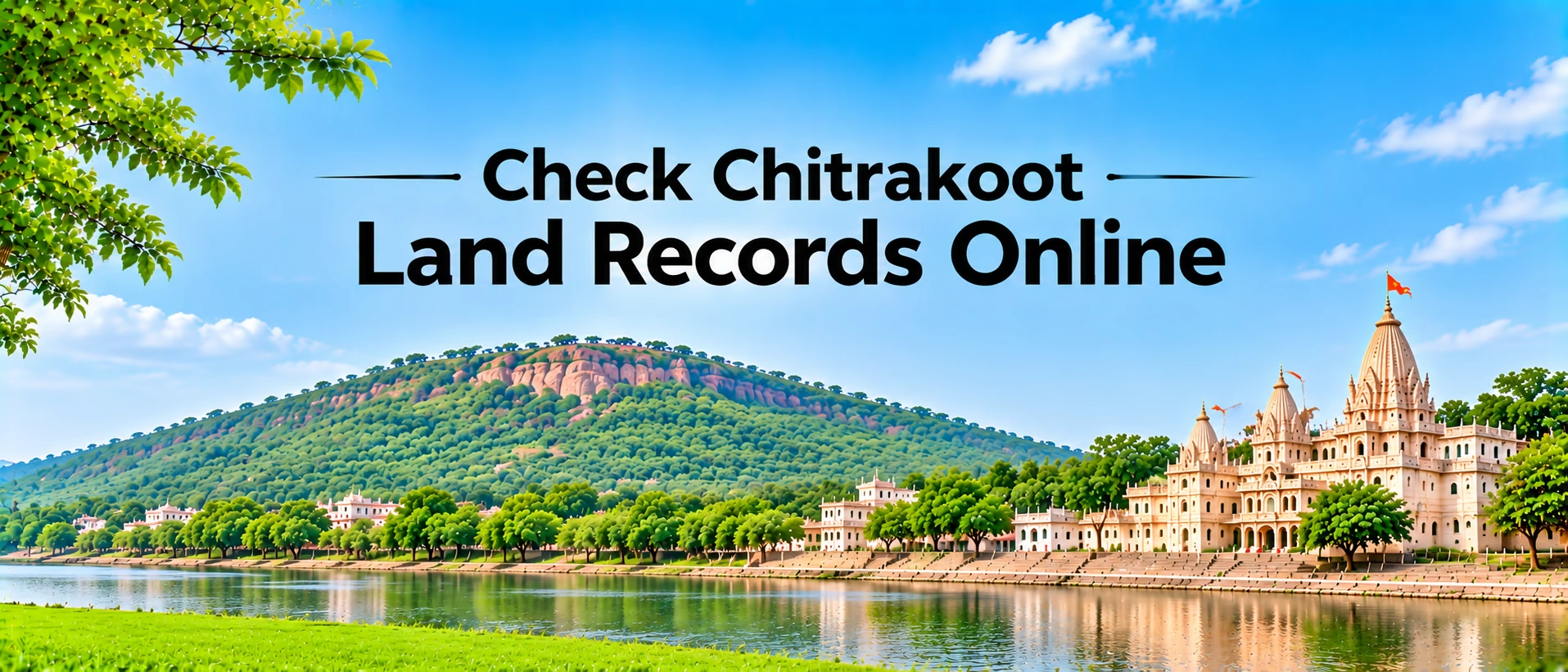
Chitrakoot land records are the first thing every buyer should check before paying for a plot or farmland. Chitrakoot is known for its temples, forests and calm surroundings, and in recent years it has also caught the eye of investors, especially after the Bundelkhand Expressway improved road links in the region. But before you pay any money, you need clear proof of who owns the land. The good news is that you no longer have to stand in a queue at the tehsil office. Uttar Pradesh has moved its revenue records online, and anyone can view Khasra and Khatauni details from a phone or laptop. This guide explains what these papers mean, how to check them step by step, and what mistakes to avoid.
What Are Chitrakoot Land Records and Why Do They Matter?
Chitrakoot land records are the official revenue papers kept by the Uttar Pradesh Revenue Department for every piece of land in the district. They show who owns a plot, how big it is, how it is used, and whether anyone else has a claim on it. If you are planning to buy a plot in Chitrakoot, these records are the first thing you should check.
Think of them as the "biography" of a piece of land. Village accountants, known as lekhpals, keep the first-level records, and the tehsil office updates them when land is sold, inherited or divided.
These records matter for four reasons:
- Proof of ownership: They show whose name is on the land today.
- Safe buying: They help you spot disputes, loans or double sales before you pay.
- Bank loans: Banks often ask for a Khatauni copy before approving a loan against farmland.
- Government benefits: Farmers use the same papers for schemes like PM-KISAN and crop support.
Understanding Khasra, Khatauni and Other Land Terms
Many first-time buyers get confused by the words used in land papers. Here is a simple guide.
| Term | Simple Meaning | Why It Matters to a Buyer |
| Khasra / Gata Sankhya | The number given to a single plot in a village | Helps you identify the exact piece of land |
| Khata Sankhya | An account number grouping all land held by one owner or family | Shows the total land held under one account |
| Village / Tehsil | The revenue area where the plot is located | You must pick the right village to find the record, especially for land near Chitrakoot in smaller villages |
| Khatauni | A record listing owners (khatedars), their shares and land details | Confirms who owns the land and in what share |
| Rakba | Total area of the plot | Must match the area the seller claims |
| Naksha (Map) | The village map showing plot boundaries | Helps confirm location and boundaries |
| Fard / Nakal | An official copy of the record | Accepted as a record copy for many purposes |
| Dakhil Kharij (Mutation) | The process of changing the owner's name after a sale or inheritance | Proves the new owner is recorded |
What Is Khasra in UP?
Khasra in UP is the plot-wise record. In many villages of Uttar Pradesh, the plot number is also called the Gata number. It shows the plot's area, land type and the crops grown. If a village has 500 plots, each one has its own number.
What Is Khatauni in UP?
Khatauni in UP is the owner-wise record. It lists the names of the landowners, their father's or husband's name, and each person's share. If three brothers own a field together, the Khatauni will show all three names.
Khasra vs Khatauni: The Short Difference
Khasra answers "which plot is this?" and Khatauni answers "who owns it?" You need both to understand a property properly.
Where to Check Chitrakoot Land Records Online?
The main source is the Bhulekh UP portal (upbhulekh.gov.in), run by the Revenue Department of Uttar Pradesh. People often search for it as "bhulekh in UP", "UP land records" or "bhulekh Chitrakoot". All mean the same thing: the state's online land record system.
Uttar Pradesh began digitising its records under the national Digital India Land Records Modernization Programme (DILRMP). The central government has pushed this programme to cut disputes, make buying and selling easier, and bring more transparency. Many states, including UP, now also use the Unique Land Parcel Identification Number (ULPIN), often called Bhu-Aadhaar, a 14-digit ID for each plot.
Using the official portal is safer than using random third-party sites, because the data comes straight from government records. The same method works for any land for sale in Uttar Pradesh, so you can use it again if you compare Chitrakoot with other districts.
How to Check Chitrakoot Land Records Online?: Step by Step
Portal menus can change a little over time, but the basic process is the same.
Step 1: Open the Official Portal
Visit the Bhulekh UP website on your phone or computer. Make sure the web address ends in "gov.in".
Step 2: Choose Your Option
Look for options such as "Khatauni", "Khasra" or "Land Records". Pick the one that matches what you want to see.
Step 3: Select District, Tehsil and Village
Choose Chitrakoot as the district. Then pick the tehsil (such as Karwi, Mau or Manikpur) and the village where the plot is located. Spelling matters, so check the village name in the seller's papers.
Step 4: Search the Record
You can usually search in one of these ways:
- By Khasra or Gata number
- By Khata number
- By the owner's name
If you are checking a specific plot, the Khasra or Gata number gives the most accurate result.
Step 5: View and Download
The record will open on your screen. Many users save it as a PDF for their files. Remember, a printout from the portal is for information. For legal or bank use, you may need a certified copy from the tehsil office.
How to Read Ownership Details Correctly?
Getting the record on your screen is only half the job. Here is what to check.
Check the Owner's Name
The name must match the seller's Aadhaar and sale papers exactly. A small spelling difference can sometimes signal an old error that needs correction.
Check the Area
Compare the area in the record with the area the seller tells you. If the seller says 2 bigha and the record shows a much smaller area, ask why.
Check the Number of Owners
If the Khatauni shows several co-owners, every one of them must agree to the sale. This is a very common problem in family-owned farmland.
Check the Land Type
The record shows whether land is agricultural, residential or something else. Buying farmland for a house without the right change in use can create trouble later.
Look for Remarks
Some records show notes about disputes, government claims or loans. Read these carefully.
A Real-World Example
Imagine Ramesh from Delhi wants to buy 1 acre of farmland near Karwi. The seller says he is the only owner. Ramesh checks the Khatauni online and finds three names listed, the seller and his two brothers. The seller had not mentioned them.
Without this check, Ramesh might have paid an advance and later faced a legal fight when the brothers objected. Because he checked first, he asked all three owners to sign the sale deed, and the deal went through cleanly. A 10-minute online search saved him months of stress.
Rules to Know Before You Buy Farmland in Chitrakoot
Interest in farmland for sale in Chitrakoot is growing, but farmland has its own rules. These points are general guidance, so confirm with a local lawyer.
- Type of ownership: Under the UP Revenue Code, 2006, most farmers are bhumidhars. Some hold land with the right to sell it, while others have limits on transfer. Check which applies.
- Land belonging to Scheduled Castes and Scheduled Tribes: Sale of such land to others is restricted and usually needs government permission.
- Land ceiling: Uttar Pradesh limits how much agricultural land one person or family can hold. Check the current ceiling before buying a large area.
- Agricultural use: Farmland generally cannot be used for building without proper permission and change of land use.
- Stamp duty and registration: A sale is only complete once the deed is registered. The state's registration department publishes circle rates and stamp duty details, so check the latest figures.
Why Land Records Matter for Plot Buyers and Investors?
Chitrakoot's location in the Bundelkhand region, along with better road connectivity like the Bundelkhand Expressway, which opened in 2022 and begins in Chitrakoot district, has drawn more attention to the area. Tourism and pilgrimage traffic also support demand for hotels, homestays and small residential projects.
Chitrakoot land records are your first filter when you look at any plot. They help you remove risky options early, so you spend time only on clean properties. Investors who plan to hold land for the long term benefit the most, because clear records make resale much easier.
Common Problems Found in Land Records
Records are not always perfect. Here are the issues buyers meet most often.
- Name errors: Spelling mistakes in the owner's or father's name.
- Pending mutation: The seller bought the land but the name was never changed in the records.
- Area mismatch: The recorded area differs from the actual area on the ground.
- Joint ownership: Several heirs on the record, but only one is selling.
- Boundary disputes: The village map and ground reality do not match.
If you find any of these, do not panic. Many can be fixed through the tehsil office, usually through a correction or mutation application, but sort them out before you pay in full.
How to Sell Land in Chitrakoot With Clear Records?
If you want to sell land in Chitrakoot, your records can speed up the sale or slow it down. Before listing, do these things:
- Check that your name is correctly shown in the Khatauni.
- Fix any spelling or area errors.
- Complete pending mutation if you inherited the land.
- Pay all land revenue dues.
- Keep copies of the sale deed, Khatauni and map ready.
Buyers trust sellers who share clean documents upfront, and well-documented land often sells faster and at a better price.
How 2Bigha Can Help?
Platforms such as 2Bigha help buyers and sellers explore property insights, land records, investment opportunities and real estate information in one place. If you are comparing a plot in Chitrakoot with other options in Uttar Pradesh, such a platform can save time and help you ask better questions. Even then, always confirm the final papers on the official portal and with a local legal expert.
(Suggested internal links: "farmland for sale in Chitrakoot", "UP land records guide", "how to read a sale deed", "stamp duty in Uttar Pradesh".)
Practical Tips Before You Pay
- Visit the land in person. Meet neighbours and ask who farms or uses it.
- Check the record at least twice, once before the deal and once just before registration.
- Pay by bank transfer, not cash.
- Ask a local lawyer to do a title check for at least the last 30 years.
- Never rely only on a photocopy or screenshot given by the seller.
- Register the sale deed and get the name changed in the records soon after.
Conclusion
Chitrakoot land records give every buyer, seller and investor a simple way to check the truth about a property. With the Khasra number you can find the exact plot, and with the Khatauni you can confirm the owner and their share. A few minutes on the Bhulekh UP portal can protect you from disputes, hidden co-owners and unclear titles. Use the steps in this guide, match every detail with the seller's papers, and take legal advice before you sign. Whether you want a small plot, farmland or a long-term investment, clean records are the base of a safe deal. Explore options on trusted platforms like 2Bigha, verify everything, and take your time. A careful buyer is always a confident buyer.
Disclaimer: This article is for informational purposes only and should not be considered investment, legal, financial, or property advice. Real estate regulations, infrastructure plans, market conditions, and government policies may change over time. Readers are advised to verify information with relevant authorities and consult qualified professionals before making any investment or property-related decisions.