Key Takeaways
- The Ring Road belt — mainly the Harhua–Rajatalab corridor — is now Greater Varanasi's biggest planned growth zone, backed directly by the Varanasi Development Authority (VDA).
- Four townships are planned along this belt across roughly 1,000 acres, under the Chief Minister's Urban Expansion / New City Promotion scheme.
- Flagship projects — Anand Kashi Township, Rudra Vihar Township, and Sports City, Ganjari — are moving from planning to on-ground execution.
- In August 2026, the Union Cabinet approved two national highway projects worth over ₹24,000 crore, both directly linking national highways to the Ring Road, a major fresh boost for the belt.
- Average property rates in Varanasi stand around ₹6,927/sq.ft citywide, but outer Ring Road localities remain far cheaper, offering room to buy land in Varanasi at lower entry points.
Introduction
Varanasi's growth story is changing shape. For years, the city expanded inward, cramming more development into an already dense, historic core. That pattern is now shifting outward — toward the Ring Road belt, the corridor connecting Harhua, Rajatalab, Ganjari, and Madhni. This shift isn't accidental. The Varanasi Development Authority has planned four mega townships here, the state government has committed real funding, and in August 2026, the central government approved a massive ₹24,000-crore highway package directly linked to the Ring Road. Together, these moves are turning what was once agricultural land into the city's next planned urban frontier. Here's a detailed, research-backed look at where this belt is headed and what it means if you're planning to buy land in Varanasi.
What Is the Greater Varanasi Ring Road Belt?
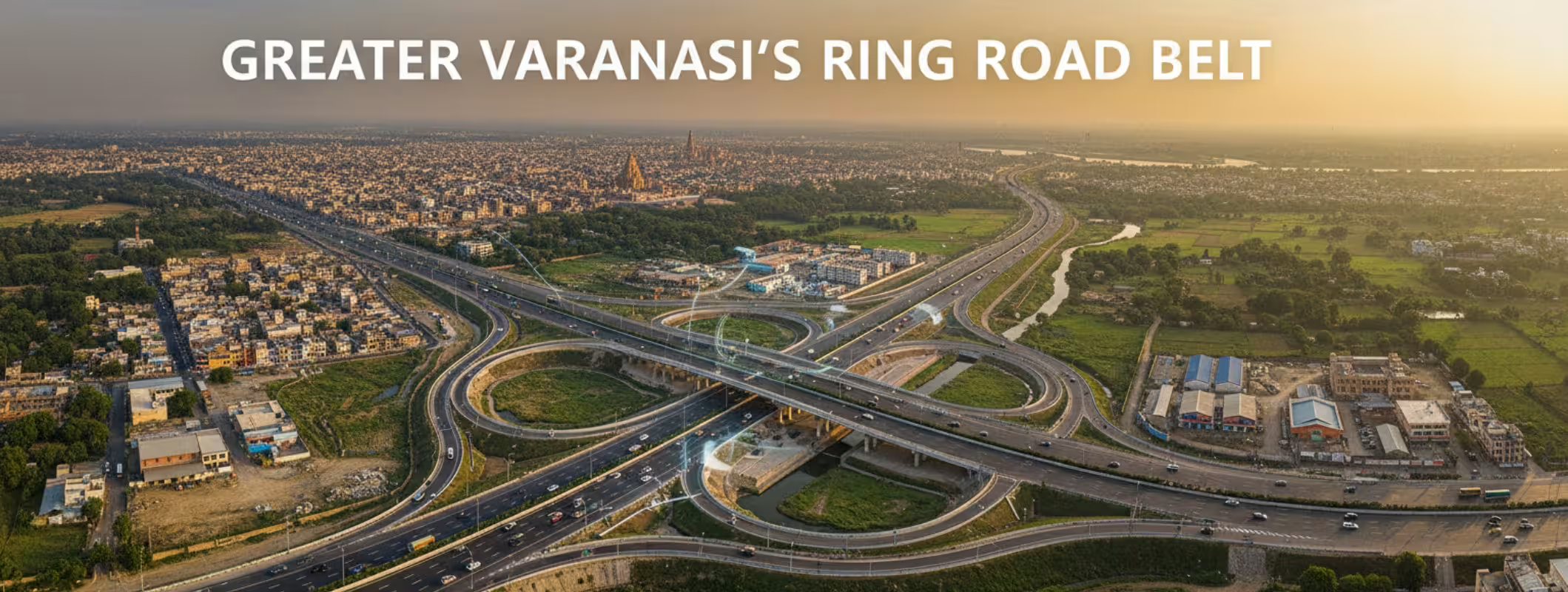
The Varanasi Ring Road is a peripheral highway built to route heavy and through-traffic away from the crowded city core. The project was originally conceived by NHAI in the year 2000 with a budget of around ₹3,400 crore, though construction only began in 2015 and has since progressed in multiple phases connecting Harhua, Bariyasanpur, Muhammadpur, Chandauli-side areas, Mohansarai, and Khewasipur in a loop around the city.
What started as a traffic-decongestion project has now become something bigger: a real estate corridor. Once a functional bypass exists alongside regulated town planning, growth naturally shifts to the edges, where land is cheaper and connectivity keeps improving. The VDA has openly positioned this Ring Road corridor as the backbone of "Greater Banaras" style expansion — a model broadly similar to how Greater Noida developed along the Noida-Greater Noida Expressway.
Why This Shift Is Accelerating Right Now
Several developments are converging at the same time:
- VDA's township programme is active again after a three-decade gap.
- Ring Road Phase II upgrades are improving movement across outer corridors.
- A ₹24,000+ crore highway package, approved in August 2026, will directly connect national highways to the Ring Road.
- Big public investment is flowing citywide — from sewage treatment plants to new rail bridges — improving overall liveability in outer zones too.
VDA's New Township Programme: The Core Driver
After a gap of roughly three decades since the 1994 Lalpur Awas Yojana, the Varanasi Development Authority is developing major townships again — and this time, with clear state backing.
A comprehensive VDA masterplan outlines an integrated development spanning 575 acres, supported by ₹400 crore in state seed capital, and featuring three flagship townships: Anand Kashi (heritage and lifestyle-focused), Rudra Vihar (modern residential), and Sports City near the international cricket stadium in Ganjari. Combined with a fourth planned township along the belt, the total footprint stretches to nearly 1,000 acres between Harhua and Rajatalab.
Anand Kashi Township
Anand Kashi is Varanasi's first theme-based, culturally inspired gated township, and it's the most advanced of the three flagship projects.
- The heritage township spans approximately 250 acres at Kallipur, with the first phase covering about 150 acres.
- As of July 2026, VDA was accelerating infrastructure work for the project — wide roads, water and sewerage systems, electricity networks, and green spaces were reported as underway.
- The first phase includes over 300 residential plots, ranging from roughly 72 sq m to 450 sq m, allotted through a transparent lottery system at base rate pricing.
- Planned facilities include hotels, hospitals, schools, group housing, and commercial establishments.
- Its RERA registration process was underway as of mid-2026, adding a layer of regulatory oversight for buyers.
Rudra Vihar Township, Madhni
Spanning about 165 acres, Rudra Vihar is designed for modern residential demand, offering a more contemporary alternative to Anand Kashi's heritage theme.
Sports City, Ganjari
Covering roughly 160 acres, Sports City sits near the under-construction international cricket stadium. Proximity to large-scale sporting infrastructure typically drives long-term footfall and commercial demand, which is expected to add value to nearby residential pockets over time.
The Funding Behind the Push
The state government has committed ₹400 crore in seed funding for these townships. VDA has already disbursed close to ₹950 crore to farmers participating in land-pooling arrangements, and infrastructure spending of over ₹200 crore per township is planned. This scale of investment signals a genuine long-term commitment, not just an announcement on paper.
The August 2026 Highway Boost: A Fresh Game-Changer
This is the most significant recent update for the belt. In August 2026, the Union Cabinet approved two national highway projects worth over ₹24,000 crore for Varanasi, aimed squarely at easing traffic congestion:
- One project will connect NH-31 with the Ring Road along the River Varuna.
- The other will connect NH-19 with the Ring Road along the Ganga.
These aren't small local road upgrades — they're national-highway-scale investments that will materially strengthen how the Ring Road belt connects to the rest of the region. For property buyers, projects of this size typically translate into faster travel times, better commercial viability along the corridor, and stronger long-term appreciation potential for land near the improved stretches.
This comes on top of other major public investments already rolled out in the city — including over ₹6,350 crore worth of rail, road, water, healthcare, and tourism projects inaugurated in April 2026, and a further ₹1,050 crore in completed projects — such as the widening of the Varanasi–Azamgarh road and a new sewage treatment plant — inaugurated in May 2026.
Where New Townships Are Likely to Take Shape
Based on official VDA statements, the most important stretch to watch remains the Harhua–Rajatalab corridor along the Ring Road — this is the belt VDA's own coverage directly calls out for the proposed townships.
Here's a simple breakdown of the key micro-markets:
| Area / Zone | What's Coming Up | Connectivity Advantage |
| Kallipur (Harhua side) | Anand Kashi Township (heritage-themed, RERA in progress) | Ring Road + Airport Road access |
| Madhni | Rudra Vihar Township (modern residential) | Ring Road proximity, outer-city access |
| Ganjari | Sports City, near international cricket stadium | Ring Road + upcoming stadium infrastructure |
| Rajatalab | Ring Road Phase II corridor | Six-lane connectivity to Harhua & city core |
| Rohania | Active residential project zone (e.g., Rudra Aadharshila Phase 1) | Links to BHU, Manduadih, Prayagraj Road |
| Harhua | Active project zone (e.g., Ganpati Galaxy Phase 1) | Direct Ring Road frontage |
(Prices, phases, and final boundaries may change as VDA finalises brochures — always verify with official sources before making a decision.)
Ring Road Connectivity: The Ground-Level Reality
Township announcements only matter if connectivity backs them up — and here, the numbers support the story.
- Ring Road Phase II is improving movement between Rajatalab, Harhua, Sandaha, and other outer-city corridors, with the Rajatalab–Bajidpur Harhua package running roughly 16.98 km as a six-lane corridor.
- Locations such as Harhua, Ganeshpur, Rohania, and other outer-township areas stand to benefit from the completed network — though the actual advantage depends heavily on each specific plot's approach road.
- A new railway bridge near Namo Ghat, running parallel to the old Malviya Bridge, is under construction, featuring four railway lines below and a six-lane highway above — expected to meaningfully improve both rail and road capacity across the Ganga.
- Long-distance rail connectivity has also improved, with new Amrit Bharat Express trains linking Varanasi to Pune and (via Ayodhya) Mumbai, launched in April 2026.
Understanding Circle Rates and Market Prices in the Belt
Before you buy land in Varanasi, it's worth understanding circle rates — the government-notified minimum value at which a property must be registered in a given area. These rates directly affect stamp duty and registration cost, and indirectly signal how the government currently values a locality.
West Varanasi — covering Rohania, Rajatalab, Lohta, Manduadih, and Lahartara — currently carries a residential circle rate range of roughly ₹12,000–₹28,000 per sq.m, compared to Central Varanasi zones like Sigra and Bhelupur, where rates run ₹35,000–₹65,000 per sq.m. That's a wide gap, and it matters for two reasons:
- Affordability — Outer Ring Road zones remain significantly cheaper than the city core, giving buyers more space and better long-term value per rupee.
- Appreciation runway — As infrastructure and townships mature, circle rates in outer belts typically catch up, a pattern seen in most Indian cities where ring roads triggered outward growth (Greater Noida and Bengaluru's Outer Ring Road being classic examples).
On actual market listings, the citywide average sale price in Varanasi currently sits around ₹6,927 per sq.ft, with a modest year-on-year rise of about 0.41%. Individual plot listings near the Ring Road, meanwhile, show wide variation — some peripheral plots near Babatpur trade as low as ₹1,200–₹1,650/sq.ft, while established, better-connected pockets near Sandaha or Rajatalab command ₹1,900–₹2,700/sq.ft, reflecting how proximity to the Ring Road itself directly shapes pricing. Given how quickly these numbers shift as new phases launch, buyers who are seriously comparing multiple pockets often find it worth using a 2Bigha subscription plan on a property research platform to track price movement over time instead of relying on one-off checks.
Why Investors and Homebuyers Are Watching This Belt
1. Lower Entry Cost Compared to Central Varanasi
Land and plots in the Ring Road belt remain priced well below central localities like Sigra, Bhelupur, and Godaulia, giving buyers considerably more space for the same budget — one of the biggest reasons more people are choosing to buy land in Varanasi's outer zones rather than the congested core.
2. Planned Development, Not Random Growth
Unlike much of the older city, townships here are being built around defined layouts — roads, sewerage, electricity networks, schools, and hospitals planned in advance rather than added later.
3. Government Backing Adds Credibility
Because these projects run through official VDA channels with state funding and central highway investment behind them, buyers get a layer of assurance that's often missing in unauthorised colonies. This is also encouraging existing landowners in the belt to reconsider their own plans — some are exploring whether to sell land now, ahead of expected price appreciation, while others are holding on for the long term.
4. Growing Interest in Farmlands and Peripheral Plots
Alongside township plots, there's rising interest from people searching for farmlands near me around the Varanasi periphery — areas just outside the immediate township zones that are still primarily agricultural but likely to see conversion demand as the belt matures. Several listings for agriculture land for sale in villages like Sandaha, Chiraigaon, and Babatpur already highlight Ring Road proximity as a key selling point, showing how this demand is already visible on the ground.
5. Regulatory Protections Are Improving Too
Buyer protection in Uttar Pradesh has also strengthened recently — UP RERA capped the processing fee for transferring unregistered inherited properties among blood relations at just ₹1,000 in June 2026, reducing friction for families navigating inherited land, a relevant detail for anyone buying older plots in this belt.
Practical Example: How the Shift Plays Out on Ground
Consider two buyers with a similar budget. One buys a compact plot in central Bhelupur — dense, established, but with little room for further infrastructure change. The other buys a larger plot in the Rajatalab-Harhua belt, near the Ring Road, where road-widening and utility upgrades are actively underway and a new highway package worth ₹24,000 crore is about to improve regional connectivity.
Neither choice is automatically "better" — central Varanasi still offers proximity to established markets, ghats, and daily conveniences many buyers value highly. But for someone prioritising long-term appreciation, planned infrastructure, and lower entry cost, the Ring Road belt makes a strong case.
What Buyers Should Verify Before Investing
Before you decide to buy land in Varanasi within this belt, keep these checks in mind:
- Land title and ownership records — confirm there's no dispute or pending litigation.
- RERA registration status — for any township or group housing project.
- Land-use classification — residential, agricultural, or under conversion.
- Approach road and utility connections — benefits from Ring Road upgrades vary sharply by exact plot location.
- Circle rate vs. market rate — helps estimate registration costs accurately.
- VDA documentation — allotment letters, lottery results, and payment schedules for VDA-led townships specifically.
This is exactly where a platform like 2Bigha becomes genuinely useful — it helps buyers explore land records, project-level insights, and location data in one place rather than relying only on broker claims. Some property-research platforms also offer a subscription plan for ongoing access to updated land records, price trends, and project tracking, which can help if you're comparing multiple locations across this belt at once.
What If You Want to Sell Land in This Belt?
The same growth story works both ways. If you already hold land in Harhua, Rajatalab, Rohania, or nearby, rising developer and buyer interest — especially after the ₹24,000-crore highway approval — could make the coming years a favourable window if you're considering how to sell land here. Getting an updated, fair valuation (rather than relying on outdated circle rates) matters before listing any parcel for sale.
Risks and Things to Watch Out For
No growth corridor is risk-free, and this belt is no exception:
- Project delays — large government-led townships can face timeline slippage; treat announced dates as indicative, not final.
- Unclear final pricing — as of mid-2026, some official brochures and price lists were still pending; avoid relying on unofficial rate estimates.
- Uneven connectivity benefits — not every plot in the belt gains equally from Ring Road or highway upgrades; the exact approach road matters more than the general area.
- Speculative pricing — in any emerging corridor, some sellers quote inflated rates based on future potential rather than current infrastructure status.
Cross-checking information across multiple sources — not just one broker or one listing — remains the safest approach.
Conclusion
Greater Varanasi's Ring Road belt is shaping up to be the city's most significant real estate story in decades. With VDA-backed townships like Anand Kashi, Rudra Vihar, and Sports City now moving into execution, and a fresh ₹24,000-crore highway package directly strengthening the corridor's connectivity, the Harhua-Rajatalab stretch is steadily transitioning from agricultural land into a planned urban extension. For buyers and investors, this presents a real opportunity — but one that still calls for careful research, document verification, and realistic expectations around timelines. Whether you're looking to buy land in Varanasi, exploring farmlands near me in the outer belt, or planning to eventually sell land as values mature, staying informed through verified data and platforms like 2Bigha will help you make decisions based on facts rather than speculation.
Disclaimer: This article is for informational purposes only and should not be considered investment, legal, financial, or property advice. Real estate regulations, infrastructure plans, market conditions, and government policies may change over time. Readers are advised to verify information with relevant authorities and consult qualified professionals before making any investment or property-related decisions.