$581.7 million was invested by institutional investors in real estate in Delhi NCR from January through September 2026, compared to $209.6 million investment made during the corresponding period last year, representing an increase of 178% due to the efforts made by Colliers India. Most investments were attributed to the office segment. This type of headline would have a lot of people reaching out for land for sale in Delhi the very next day. It is all right, although it is important to realize the distinction between the two investments.
What do the numbers say?
- Investments into India reached $5.93 billion during the first nine months of 2026. It was an increase of 39% compared to last year, and Delhi NCR experienced the largest growth compared to other cities.
- Almost one-third of the institutional investments in India during the period were made in the three cities - Bengaluru, Chennai and Delhi NCR.
- Sixty-five percent of the third quarter's investments came from domestic investors, which means that this is not only foreign investments.
- Kotak Realty Fund invested $83.7 million in Smartworld Developers, which develops residential properties in Delhi NCR.
The residential market seems to be more complex. During the third quarter, house price growth in Delhi NCR reached 12% and was the highest among the seven largest cities in India. However, the number of transactions decreased by 1%, which shows that buyers become pickier when prices grow, and sales decrease at the same time. It looks like the market is not very crowded.
Does institutional money reach land?
Not directly. Funds mostly buy finished, rent-earning assets such as offices. Land is bought by developers and by individuals like you. The effect still travels, slowly: new offices bring jobs, jobs bring demand for housing, and that demand pushes up what developers will pay for land at the edge of the city. The chain can take years, and it doesn't reach every locality equally. A 178% jump in office money doesn't mean a 178% jump in your plot.
Read More: Complete Guide to Buying Agricultural Land in Delhi: Rules & Eligibility
What does "land in Delhi" really mean?
The land in Delhi is not one commodity, and the description conceals a lot of details:
- Freehold plot in an approved or regularized colony. This is the easiest to buy and sell, as well as the most expensive per square yard.
- DDA or another type of leasehold. Examine the terms of the lease, and check if the conversion to freehold is either completed or pending, as resale will become more difficult without it.
- Lal Dora or village abadi land. This one has its own documents, and bank funding might be more complicated.
- Plot in an unauthorized colony. This aspect needs verification as it plays a significant role.
- Agricultural or rural area land. The usage is limited by the Master Plan.
A plot in Delhi that seems suspiciously cheap almost always has some trick, and the trick is usually in the documents. Obtain the title, the land usage, and the colony status first, and then discuss prices.
Farm land inside Delhi and farm land near Delhi
Farm land for sale in Delhi does exist, mostly in the rural villages on the outskirts. It sits under Master Plan land use rules and the Delhi Land Reforms Act, so what you can build and who can buy are both limited. Farmhouse use is a grey area on some of these plots, and many buyers only find out after paying. Check the khasra number, the land use, and whether any structure on it is actually allowed.
| Point | Farmland inside Delhi | Farmland near Delhi |
|---|---|---|
| Price | Higher, with very little supply | Lower, with more choice |
| Rules | Master Plan and Delhi Land Reforms Act | State rules of Haryana or UP, with conversion routes that vary |
| Use | Mostly farming; farmhouse use restricted | Farming, farmhouse, and sometimes later conversion if zoning allows |
| Buyers | Few | Many more |
| Hold period | Long | Medium to long |
Most ordinary buyers end up looking at farm land for sale near Delhi, and that is not a bad thing. Sonipat, Jhajjar, Sohna, Palwal and the Greater Noida side all have farm plots within a few hours of the city, and new expressways and rail links have pushed some of them up. Pick a plot by road access, water, and clean title, not by the brochure.
Thinking of selling land in Delhi?
The inflow news helps sentiment, but remember the 1% dip in sales volume. Buyers are around, and they are careful. A few things that help:
- Sort out the papers first: title chain, land use proof, mutation, property tax receipts, and no-dues.
- If you want to sell land in Delhi without it dragging on, price it near recent registered deals in your area, not near what a broker told you.
- Get every co-owner and legal heir on board before you list. One missing signature can freeze a deal late.
- List with clear photos, the khasra or plot number, and scanned documents. Serious buyers go for complete listings.
- Speak to a CA about capital gains before you fix a price, since agricultural land is treated differently from other property.
What should buyers check right now?
- Do not get influenced by the news reports on how the Delhi NCR area is going. Most of it has been invested in offices. Request a copy of the title documents and land-use certificate during your first interaction, and not your last.
- Compare at least three sale deeds of the locality before fixing a price.
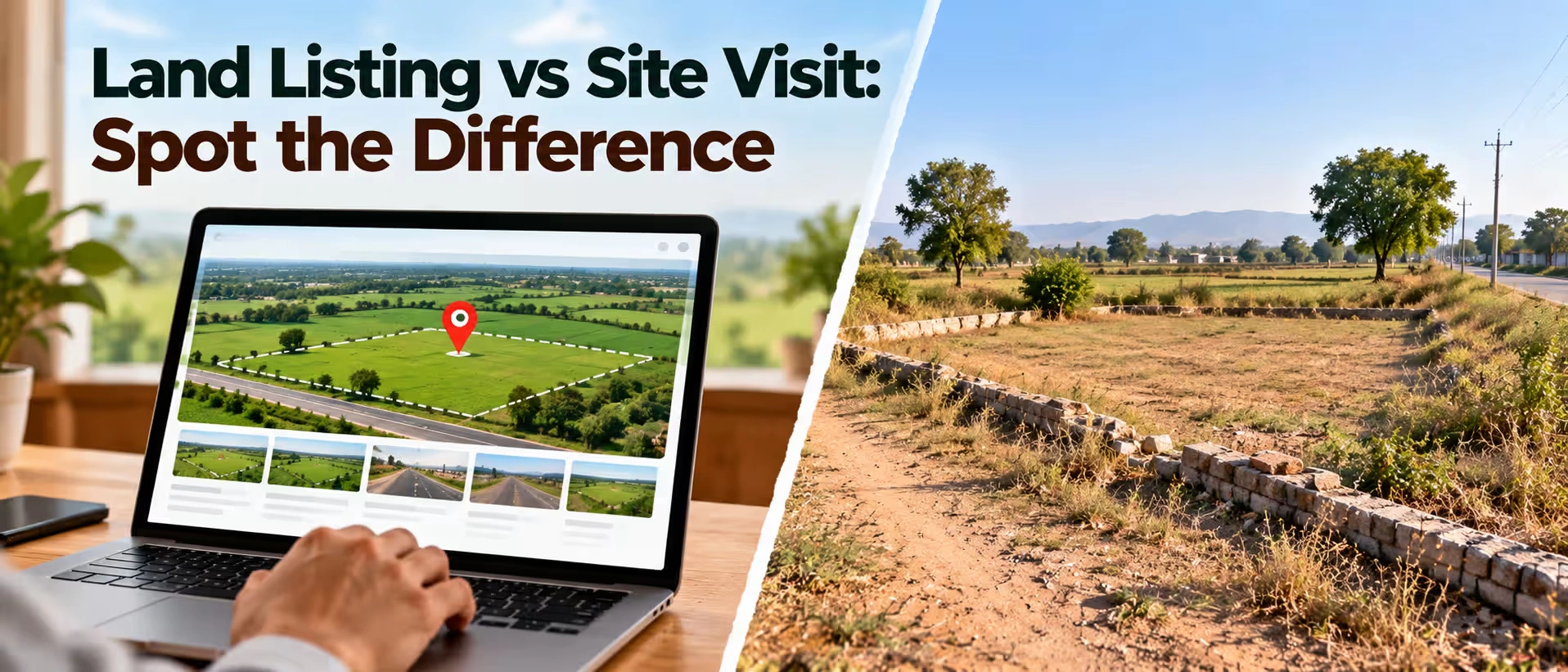
- Make visits in different weather; what looks good in October may flood in July.
- Avoid people who insist on a token payment on the very same day.
Find and Check Land with 2Bigha
2Bigha provides a platform for the sale and purchase of agricultural land and farms in India.
- Search for farm land and agricultural land around Delhi NCR.
- Get a land report and get yourself prepared with all the important details.
- Schedule an appointment when you have selected your choices.
- If you own any land and wish to sell it, list your land and connect with buyers looking for it.
Disclaimer: This article is for informational purposes only and should not be considered investment, legal, financial, or property advice. Real estate regulations, infrastructure plans, market conditions, and government policies may change over time. Readers are advised to verify information with relevant authorities and consult qualified professionals before making any investment or property-related decisions.