Key Takeaways
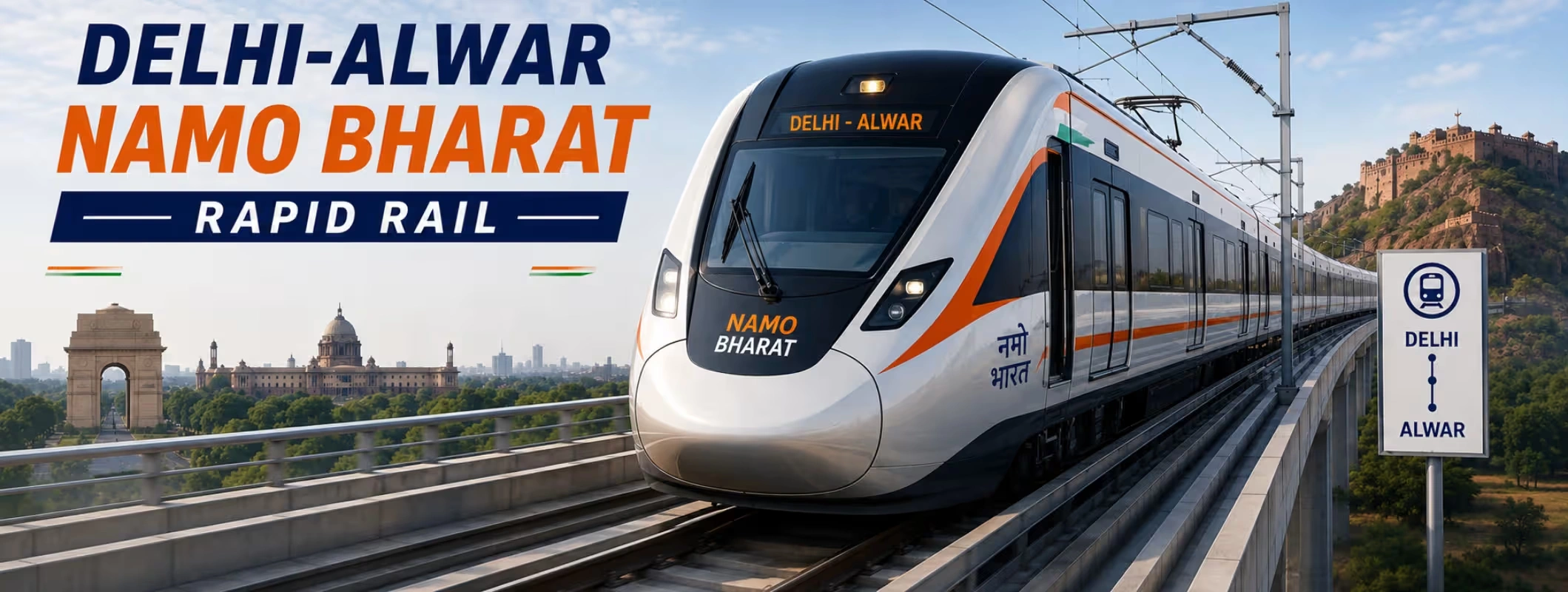
- The Delhi-Alwar Namo Bharat Rapid Rail is one of the most important upcoming connectivity projects for Delhi NCR, southern Haryana, and Rajasthan.
- Once completed, the corridor is expected to reduce Delhi to Alwar travel time to around 117 minutes, compared to the current 3–4 hours by road in traffic-heavy conditions.
- The corridor is planned to connect key growth belts such as Delhi, Gurugram, Manesar, Rewari, Bawal, Neemrana, Behror, and Alwar.
- NCRTC currently lists the Delhi–Gurugram–SNB–Alwar corridor under Phase 1 of the Namo Bharat network, with 22 mainline stations.
- For real estate buyers, the biggest opportunity may not be inside already expensive city pockets, but in well-connected land belts near future stations, industrial zones, highways, and upcoming urban nodes.
- Investors should avoid blind speculation. Before buying plots near the Delhi Alwar corridor, check land title, zoning, access road, mutation records, conversion rules, and actual distance from the planned route.
- Platforms like 2Bigha can help buyers and sellers explore land, plots, and property opportunities with better listing visibility, verified property discovery, and a simple subscription plan.
Delhi-Alwar Namo Bharat Rapid Rail Gains Pace: What it Means for Travel, Property, and Land Investment
The Delhi-Alwar Namo Bharat Rapid Rail is no longer just another infrastructure headline. It is becoming a serious growth signal for the Delhi NCR–Haryana–Rajasthan belt. For daily commuters, it promises faster travel. For industries, it can improve workforce movement. For real estate investors, it may open new land and property opportunities across the Delhi-Alwar growth corridor.
The project is part of India’s larger Regional Rapid Transit System, also known as RRTS. Unlike a metro, which mainly serves city-level movement, RRTS is designed for faster regional travel between major urban and industrial centres. The Namo Bharat system has a design speed of 180 kmph and is planned for high-frequency intercity commuting.
For people who regularly travel between Delhi, Gurugram, Rewari, Bawal, Neemrana, Behror, and Alwar, this corridor can be a game changer. At present, road travel between Delhi and Alwar can easily take 3 to 4 hours depending on NH-48 congestion, city traffic, and peak-hour delays. Recent reports suggest that once the corridor is operational, the journey may reduce to nearly 117 minutes, or just under 2 hours.
But the bigger question for buyers is this: will the Delhi Alwar Rapid Rail create real estate opportunities?
The practical answer is yes, but only for informed buyers. Rapid rail infrastructure can improve land demand, rental movement, commercial activity, and long-term urban expansion. However, not every plot near the corridor will automatically become valuable. Location quality, legal clarity, access, land use, station proximity, and surrounding development will decide the real return.
What is the Delhi-Alwar Namo Bharat Rapid Rail Project?
The Delhi Alwar Rapid Rail is a planned semi-high-speed regional rail corridor that will connect Delhi with important urban, commercial, and industrial zones in Haryana and Rajasthan.
NCRTC’s project page lists the Delhi–Gurugram–SNB–Alwar corridor as one of the Phase 1 Namo Bharat corridors. The route is planned to originate from Sarai Kale Khan in Delhi and move through areas such as Munirka, Aerocity, Gurugram, Sotanala, Rewari, and Alwar. NCRTC also lists the corridor with 22 mainline stations.
Recent real estate and news reports describe the corridor as a major NCR transport project connecting Delhi, Gurugram, Manesar, Rewari, Bawal, Neemrana, Behror, and Alwar. Some media reports mention the project length as 164 km, while NCRTC’s current project page lists the Delhi–Gurugram–SNB–Alwar corridor as 196 km. For buyers, the safest approach is to track official alignment updates before making any land purchase decision.
The route is important because it does not only connect cities. It connects job markets, industrial belts, logistics zones, residential areas, highways, and future urban expansion pockets. That is why the Delhi Alwar RRTS is being watched closely by commuters, developers, landowners, investors, and local businesses.
Also Read: Namo Bharat Rapid Rail: Connectivity & Real Estate Growth in NCR
Delhi-Alwar Rapid Rail Timeline: What is the Latest Update?
As of May 2026, the corridor is gaining attention because local-level preparation has started moving forward in Gurugram. The Municipal Corporation of Gurugram approved the transfer of 0.12 hectare of land in Dundahera village for a casting yard related to the Delhi-Alwar corridor. The Indian Express reported that the project still awaited final clearance from the central government at that time, but civic preparations were being accelerated so construction readiness could improve once approval comes through.
Recent reports also suggest that work is progressing on the Delhi-Bawal section, while groundwork for the Behror-Alwar stretch may begin later. Some reports indicate the full Delhi-SNB-Alwar Namo Bharat project could be completed around 2030, subject to approvals, construction pace, funding, land acquisition, and execution progress.
For real estate investors, this means one thing clearly: the corridor is promising, but it is still a developing infrastructure story. A smart buyer should not buy land only because a broker says “rapid rail aa rahi hai.” Check whether the plot is actually near the planned corridor, whether the access road exists, and whether the land use supports your purpose.
Quick Summary Table: Delhi-Alwar Namo Bharat Rapid Rail
| Factor | Details |
| Project Name | Delhi-Alwar Namo Bharat Rapid Rail / Delhi Alwar RRTS |
| Project Type | Regional Rapid Transit System |
| Key Route Belt | Delhi, Gurugram, Manesar, Rewari, Bawal, Neemrana, Behror, Alwar |
| Expected Travel Time | Around 117 minutes from Delhi to Alwar after completion |
| Current Road Travel | Around 3–4 hours depending on traffic |
| Planned Stations | 22 mainline stations listed by NCRTC |
| Major Real Estate Impact Zones | Gurugram outskirts, Manesar, Dharuhera, Rewari, Bawal, Neemrana, Behror, Alwar |
| Buyer Caution | Verify alignment, land title, zoning, road access, and government approvals |
| Investment Type to Watch | Plots, agricultural land with clear legal status, residential plots, warehousing land, commercial property near transit nodes |
Why the Delhi-Alwar RRTS Matters for Real Estate
Good connectivity changes buyer behaviour. When travel time reduces, people become open to living, working, investing, or operating businesses in locations that previously felt too far.
This is exactly why the Delhi Alwar transit investment story is gaining momentum. A buyer who earlier preferred only Delhi or Gurugram may start considering Manesar, Rewari, Bawal, Neemrana, Behror, or Alwar if the travel time becomes predictable.
The corridor can support real estate growth in five major ways.
First, it can improve daily commuting. If people can travel faster between Delhi NCR and Rajasthan, demand may rise for residential plots near RRTS stations and connected roads.
Second, it can support industrial expansion. The corridor passes through or near important industrial belts such as Manesar, Bawal, Rewari, Neemrana, and Behror. Better workforce mobility can make these locations more attractive for companies and workers.
Third, it can improve commercial demand. Areas near future stations may see demand for retail spaces, food outlets, office support services, warehouses, budget hotels, and rental housing.
Fourth, it can strengthen land liquidity. Owners who want to sell land in Alwar or nearby growth belts may find better buyer attention if the land is legally clean and located near future infrastructure.
Fifth, it can create long-term appreciation potential. However, appreciation is never guaranteed. It depends on actual project execution, local development control rules, road connectivity, market demand, and property documentation.
Best Real Estate Locations to Watch Near the Delhi-Alwar Corridor
The rapid rail real estate opportunities will not be equal across the full route. Some pockets may see faster interest because they already have industries, highways, townships, employment centres, or tourism demand.
1. Gurugram and Cyber City Belt
Gurugram is already expensive, but the Namo Bharat corridor may improve regional movement from Cyber City, IFFCO Chowk, Rajiv Chowk, and nearby employment hubs toward southern Haryana and Rajasthan. The Tribune reported that the corridor route is expected to pass through key Gurugram locations before moving toward Manesar, Dharuhera, Rewari, Bawal, Neemrana, Behror, and Alwar.
For investors, central Gurugram may not offer affordable entry. The better opportunity may lie in connected outer belts where future transit, highway access, and employment movement overlap.
2. Manesar
Manesar is already a major industrial and warehousing belt. With better rapid rail connectivity, it may become more attractive for workers, rental housing, logistics support, and commercial services.
Buyers looking for property near Delhi Alwar corridor should study Manesar carefully, especially areas with existing road access and clear land use. Avoid disputed village land or plots with unclear conversion status.
3. Dharuhera and Rewari
Dharuhera and Rewari are important because they sit between Gurugram and Rajasthan’s industrial belt. If the Delhi Alwar RRTS improves travel predictability, these areas may benefit from both residential and industrial demand.
For buyers, these locations may offer a balance between affordability and connectivity. But due diligence is critical. Check sector plans, master plans, access roads, industrial influence, and future civic infrastructure.
4. Bawal
Bawal is one of the strongest industrial nodes on this route. It already has manufacturing activity and highway relevance. Reports suggest that passengers from Rewari and Bawal may see travel time to Delhi reduce significantly once the rapid rail becomes operational.
This can support demand for worker housing, rental rooms, small commercial plots, and logistics-related land.
5. Neemrana and Behror
Neemrana and Behror are already known for industrial and investment interest due to their location on the Delhi-Jaipur side. The Namo Bharat corridor can strengthen their position if the project moves as planned.
People looking to invest near Delhi Alwar RRTS often shortlist Neemrana and Behror because these locations offer a mix of industrial growth, highway connectivity, and comparatively lower land prices than core NCR.
6. Alwar
Alwar has a different kind of appeal. It has industrial relevance, tourism value, educational presence, and access to Rajasthan’s developing property market. If Delhi to Alwar travel time drops below 2 hours, Alwar may attract more attention from end-users, weekend home buyers, long-term investors, and local businesses.
For sellers, this can be a good time to prepare clean property documents and list land properly. For buyers, Alwar may offer opportunities in residential plots, agricultural land, farmhouse-style properties, and commercial land near connected zones.
How the Delhi-Alwar Rapid Rail Can Change Land Buying Behaviour
In India, land investment is emotional and practical at the same time. Buyers want appreciation, but they also want safety. The Delhi Alwar rapid rail project can influence both.
Earlier, many buyers avoided land far from Delhi because travel was tiring and uncertain. A 3–4 hour road journey made regular visits difficult. If the Delhi to Alwar travel time drops below 2 hours, buyers may feel more comfortable purchasing land in Alwar, Behror, Neemrana, Bawal, or Rewari.
This matters especially for:
- Farmhouse buyers who want land near Delhi but not inside overcrowded NCR.
- Investors looking for plots near Delhi Alwar corridor before prices become too high.
- Local landowners planning to sell land in Alwar or nearby areas.
- Businesses looking for commercial property near Delhi Alwar route.
- Families looking for affordable residential plots near RRTS-linked towns.
- NRIs and metro-city investors who want long-term land assets in north India.
Still, buyers must understand one thing clearly. Infrastructure creates attention, but legal clarity creates real value. A cheaper plot with unclear title can become a headache. A slightly costlier plot with clean records, road access, and correct zoning can be a better investment.
Investment Checklist Before Buying Land Near Namo Bharat Corridor
Use this checklist before buying plots near Delhi Alwar Rapid Rail or any property near Delhi Alwar corridor.
| Checklist Point | Why It Matters |
| Check title ownership | Confirms whether the seller has legal rights |
| Verify mutation and revenue records | Helps confirm updated land ownership |
| Check land use | Agricultural, residential, commercial, or industrial use affects future value |
| Confirm road access | Landlocked property is difficult to use and sell |
| Measure actual distance from planned route | Broker claims can be misleading |
| Check master plan and zoning | Ensures the land fits your investment purpose |
| Verify encumbrance or loan status | Protects against legal disputes |
| Check nearby infrastructure | Roads, power, water, schools, markets, and industries affect demand |
| Avoid only-rumour buying | Buy on documents, not hype |
| Compare similar land prices | Prevents overpaying in speculative pockets |
Should You Invest Near Delhi-Alwar Namo Bharat Corridor?
Yes, the corridor deserves attention. But the right answer depends on your budget, purpose, holding period, and risk appetite.
If you want quick resale within a few months, this may be risky because infrastructure timelines can shift. If you are a long-term buyer with a 5–10 year view, the Delhi-Alwar corridor may offer strong potential, especially in locations where transit, industry, highways, and urban growth meet.
The best approach is to divide your investment thinking into three zones.
Zone 1: High-Cost, High-Demand Urban Belt
This includes parts of Delhi and Gurugram. These areas already have demand, but prices are high. Returns may be stable but entry cost is heavy.
Zone 2: Industrial Growth Belt
This includes Manesar, Dharuhera, Rewari, Bawal, Neemrana, and Behror. These locations may benefit strongly from workforce movement, logistics, and industrial expansion.
Zone 3: Long-Term Land Growth Belt
This includes Alwar and nearby developing areas. These may offer better affordability, but buyers must study documents carefully and avoid overhyped locations.
For most retail investors, Zone 2 and Zone 3 may provide better entry opportunities than already saturated urban pockets.
Why 2Bigha Matters for Land Buyers and Sellers
The biggest problem in land buying is not lack of options. It is a lack of trust.
Many buyers struggle with unclear listings, incomplete photos, wrong location claims, missing documents, and inflated pricing. Sellers also face problems because serious buyers are hard to find, and genuine property visibility is limited.
That is where 2Bigha can create value.
2Bigha helps land buyers and sellers explore land and plot opportunities with better discovery, location-focused property search, and a more transparent listing experience. For someone looking to buy land near rapid rail, explore property in Alwar, compare plots in NCR, or sell land in Alwar, a platform like 2Bigha can reduce confusion and improve decision-making.
For sellers, it can help present land with better visibility. For buyers, it can support smarter shortlisting before site visits. For agents and landowners, it offers a structured way to reach people searching for land investment near Namo Bharat and nearby growth corridors.
Real Estate Opportunities Near Delhi-Alwar RRTS
The Delhi Alwar rapid rail update has created interest across multiple property categories. Here are the main opportunities buyers and sellers should watch.
Residential Plots Near RRTS
Residential plots near future transit points may attract families, working professionals, and long-term investors. Demand can rise if civic infrastructure also improves.
Commercial Property Near Delhi Alwar Route
Commercial plots near stations, industrial belts, and highway junctions can become useful for retail, small offices, food outlets, service centres, and rental-led businesses.
Agricultural Land Near Growth Corridors
Agricultural land in India remains a popular investment category, especially near expanding infrastructure corridors. But buyers must check state rules, eligibility, land use, and conversion possibilities before purchasing.
Farmhouse and Weekend Land
If Delhi to Alwar travel time reduces, some buyers may prefer land for weekend homes, farm stays, or long-term lifestyle investment. Alwar’s natural surroundings and tourism appeal can strengthen this segment.
Industrial and Warehouse Land
The corridor passes through several industrial belts. Better connectivity may increase demand for warehousing, worker housing, logistics support, and allied commercial activity.
Who Can Benefit from the Delhi-Alwar Namo Bharat Corridor?
The Delhi Alwar connectivity project can benefit more than just train passengers.
Daily commuters can save travel time and reduce dependence on congested highways.
Industrial workers may get better access to jobs across Gurugram, Manesar, Rewari, Bawal, and Neemrana.
Businesses may find it easier to attract employees from a wider region.
Property owners may see improved buyer interest if their land is legally clear and well located.
Developers may explore plotted development, affordable housing, rental housing, and mixed-use projects near future growth nodes.
Local economies may benefit from footfall, station activity, retail movement, and better intercity access.
This is why the corridor is not just a transport project. It is a regional development trigger.
What Buyers Should Avoid
The biggest mistake is buying only because of future news. Infrastructure-led land investment can be profitable, but it can also trap buyers who enter without verification.
Avoid these mistakes:
- Do not buy land only because someone says a station is “coming nearby.”
- Do not trust WhatsApp maps or unofficial route images without checking reliable sources.
- Do not ignore land title, mutation, and zoning.
- Do not buy landlocked plots without legal road access.
- Do not overpay in areas where prices have already jumped only on speculation.
- Do not assume every plot near the Delhi-Alwar Namo Bharat will be appreciated equally.
A good land investment is not just about location. It is about clean documents, usable access, realistic pricing, and long-term development potential.
Final Thoughts
The Delhi-Alwar Namo Bharat Rapid Rail can become one of the most powerful infrastructure upgrades for the Delhi NCR–southern Haryana–northern Rajasthan belt. If the project moves as planned, it can reduce travel time, improve regional mobility, support industrial growth, and create new real estate opportunities across the corridor.
For buyers, this is the right time to study the market carefully. The best opportunities may come in locations where future rapid rail connectivity meets highways, industrial zones, planned urban development, and clean land records.
For sellers, especially those who want to sell land in Alwar, Behror, Neemrana, Bawal, or Rewari, this is the time to prepare proper documentation, improve listing quality, and reach serious buyers.
For investors, the message is simple: do not chase hype, but do not ignore infrastructure. The Delhi-Alwar corridor has long-term potential, and platforms like 2Bigha can help buyers and sellers explore land opportunities with more confidence and clarity.
FAQs - Delhi-Alwar Namo Bharat Rapid Rail
1. What is the Delhi-Alwar Namo Bharat Rapid Rail project?
The Delhi-Alwar Namo Bharat Rapid Rail is a planned RRTS corridor connecting Delhi with Gurugram, Manesar, Rewari, Bawal, Neemrana, Behror, and Alwar. It is designed to improve high-speed regional connectivity between Delhi NCR, Haryana, and Rajasthan.
2. What will be the Delhi to Alwar travel time after the rapid rail starts?
Recent reports suggest that the Delhi to Alwar travel time may reduce to around 117 minutes, or just under 2 hours, after the corridor is completed. Current road travel can take around 3–4 hours depending on traffic.
3. Is investing near Delhi Alwar RRTS a good idea?
It can be a good long-term opportunity if the land has clear title, proper access, correct zoning, and realistic pricing. Buyers should focus on growth locations near future stations, industrial belts, highways, and planned urban areas.
4. Which areas may benefit from the Delhi Alwar Rapid Rail?
Gurugram, Manesar, Dharuhera, Rewari, Bawal, Neemrana, Behror, and Alwar may benefit due to better connectivity, industrial movement, commercial demand, and possible land value growth.
5. Can I buy or sell land near the Namo Bharat corridor through 2Bigha?
Yes. 2Bigha can help buyers explore land and plot opportunities and help sellers improve visibility for properties near growth corridors like Delhi-Alwar RRTS, Alwar, Neemrana, Behror, Bawal, Rewari, and nearby NCR-linked locations.