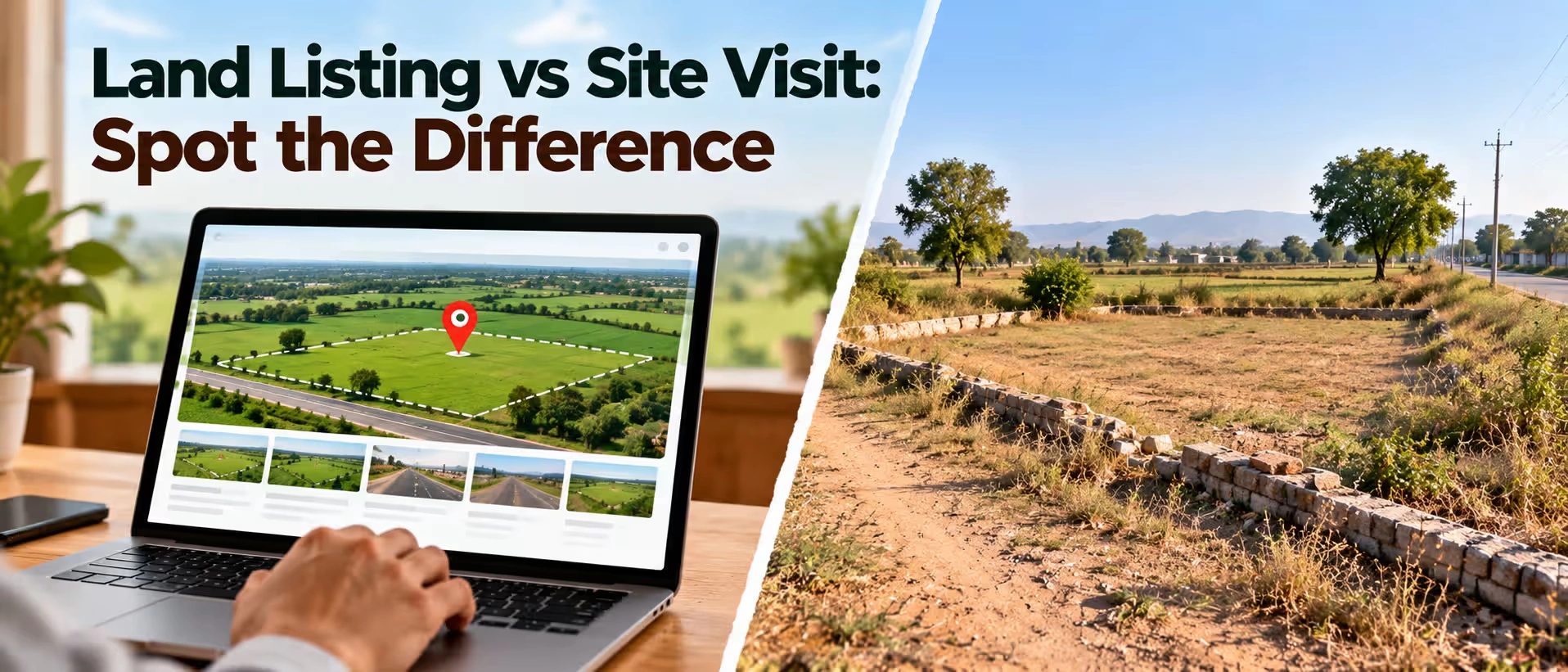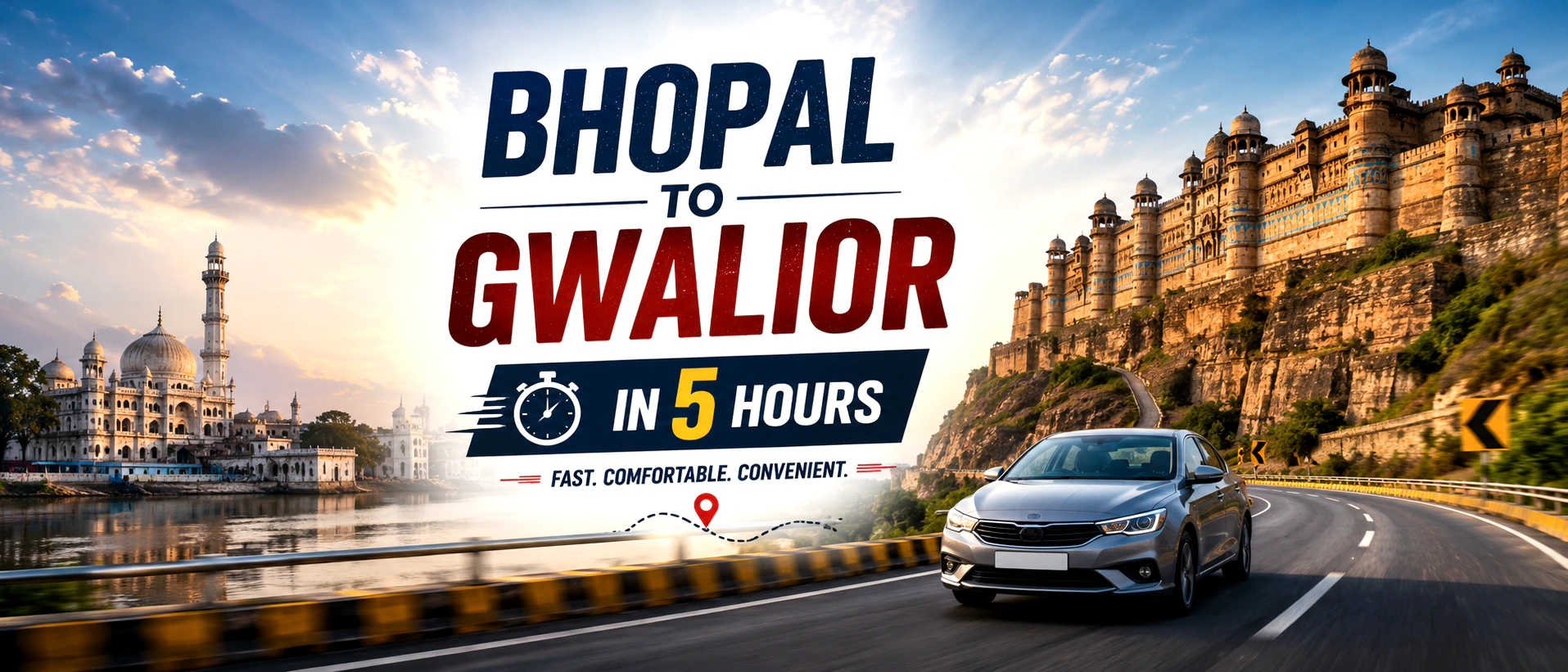
The journey between Bhopal and Gwalior could become considerably faster if the proposed greenfield highway connecting the two cities moves from planning to construction.
Recent infrastructure announcements and media reports indicate that a four-lane, access-controlled road is being planned between Bhopal and Gwalior as part of the larger Gwalior–Bhopal–Nagpur Greenfield Corridor. The project is expected to connect important economic and population centres across central and northern Madhya Pradesh, including the Rajgarh, Guna and Shivpuri regions.
The biggest headline is the possibility of completing the journey from Bhopal to Gwalior in 5 hours. That would bring the political capital of Madhya Pradesh much closer to Gwalior’s commercial, industrial and tourism economy. The project could also enhance the appeal of rural land investment in Bhopal and surrounding regions by improving connectivity and access to emerging growth corridors.
For land buyers, farmers, developers and logistics businesses, however, the announcement must be viewed practically. The project is still at a proposal and planning stage. Its final alignment, interchange locations, land-acquisition boundaries and construction schedule will determine where the real opportunities eventually emerge.
Key Takeaways
- The proposed Bhopal to Gwalior Expressway is expected to be developed as an access-controlled, four-lane greenfield corridor.
- The road is being discussed as part of a larger Gwalior–Bhopal–Nagpur corridor extending approximately 650 kilometres.
- The broader corridor has been associated with an estimated investment of around ₹40,000 crore. This should not be interpreted as the confirmed cost of the Bhopal–Gwalior portion alone.
- The expected Bhopal to Gwalior travel time is approximately five to five-and-a-half hours once the road is completed and fully operational.
- The broader influence belt may include Bhopal, Rajgarh or Biaora, Guna, Shivpuri and Gwalior.
- A final official route map, village list and completion deadline have not yet been publicly confirmed.
- Guna could become one of the most important intermediate logistics and agricultural distribution points on the corridor.
- Land close to a confirmed interchange may gain more practical value than land simply advertised as “expressway-facing.”
- Buyers should verify title, legal access, land use, acquisition notifications and official alignment before investing.
Bhopal–Gwalior Expressway Project at a Glance
Project detail | Current understanding |
| Proposed project | Bhopal–Gwalior Greenfield Highway |
| Road configuration | Four-lane, access-controlled greenfield corridor |
| Larger network | Gwalior–Bhopal–Nagpur Greenfield Corridor |
| Broader corridor length | Approx. 650 km |
| Estimated investment | Around ₹40,000 crore |
| Expected travel time | Approx. 5 to 5.5 hours |
| Main influence regions | Bhopal, Rajgarh, Guna, Shivpuri, Gwalior |
| Current status | Announced/proposed; execution details awaited |
| Final route map | Not officially available in public domain |
| Completion date | Not officially confirmed |
What Is the Bhopal–Gwalior Greenfield Expressway?
The proposed Bhopal Gwalior 4-lane expressway is intended to create a faster road connection between Madhya Pradesh’s capital and the northern part of the state.
Unlike the widening of an existing road, a greenfield highway is generally developed on a largely new alignment. This allows planners to avoid crowded settlements, sharp turns, narrow market roads and other constraints that reduce average travel speed on older highways.
An access-controlled road also limits random entry and exit. Vehicles normally enter through designated interchanges rather than directly from every village road or roadside property. This structure can improve travel speed and safety, but it also has an important real estate implication: land touching the expressway may not necessarily have direct access to it.
The corridor also appears to be part of an even larger highway plan for Central India which will link Gwalior, Bhopal, and Nagpur. With the completion of the entire system, it would help better facilitate connections between Northern Madhya Pradesh, the state capital, Maharashtra, and eventually to Hyderabad.
Is It Really Madhya Pradesh’s Sixth 4-Lane Expressway?
Recent reports have referred to the project as the Madhya Pradesh sixth expressway or the state’s sixth major high-speed road corridor.
That description should be treated as a media classification rather than the formal name of the project. Many corridors are already being proposed in the state of Madhya Pradesh such as the Narmada Corridor, Vindhya Corridor, Bundelkhand Corridor, Atal Pragati Corridor, Malwa-Nimar and Madhya Bharat Corridor.
Hence, it does not matter much whether the number is 18 or not for the Bhopal-Gwalior corridor.
Serious buyers should focus on:
- whether the detailed project report has been completed;
- whether the alignment has received approval;
- whether land-acquisition notifications have been issued;
- whether construction packages have been tendered;
- and whether work has started on the ground.
Until these stages become visible, the project should be treated as an important infrastructure proposal rather than a finished investment corridor.
Also Read: Bhopal’s ₹10,000-Crore EKAI City: Location, Master Plan & Property Impact
Why Is the Existing Bhopal–Gwalior Journey So Time-Consuming?
The existing road journey generally follows the Bhopal–Biaora–Guna–Shivpuri–Gwalior belt, with substantial movement taking place along NH-46 and connecting roads.
The geographical distance is only one part of the journey. Travel becomes slower because the route carries a combination of:
- private cars and buses;
- agricultural vehicles;
- long-distance freight trucks;
- local traffic near towns;
- and vehicles entering or leaving roadside settlements.
Congestion near urban sections, junctions, toll points and mixed-traffic areas can reduce the average speed considerably. Weather, road repairs, commercial traffic and the time of travel also affect the actual Bhopal to Gwalior travel time by road.
A greenfield corridor can reduce these delays by creating a straighter road, separating high-speed traffic from local movement and bypassing busy town centres.
How Could the Journey Be Reduced to Five Hours?
The proposed travel-time reduction would depend on three main improvements.
A straighter alignment
Existing highways often follow older settlement and trade routes. They bend around towns, agricultural boundaries and developed areas. A new greenfield alignment can shorten the effective journey by creating a more direct path.
Controlled access
An access-controlled expressway does not allow unrestricted entry from every roadside property. Fewer interruptions can increase the average driving speed, even when the legal speed limit remains controlled.
Town and city bypasses
Passing through urban areas such as Biaora, Guna or Shivpuri can add significant time to a long-distance journey. A new corridor can divert through-traffic away from congested markets and city roads.
The five-hour estimate should still be viewed as a projected driving time under suitable operating conditions. The complete door-to-door journey will depend on how far a traveller lives from the nearest interchange, traffic conditions and rest stops.
What Is the Expected Gwalior-to-Bhopal Expressway Route?
The broad Gwalior to Bhopal expressway route is expected to connect the following influence belt:
Bhopal → Rajgarh/Biaora region → Guna → Shivpuri region → Gwalior
Some media reports place the Bhopal-side beginning near the city’s northern or north-eastern outskirts and the Gwalior-side connection near the bypass network. However, these locations should not be treated as final until government agencies publish an approved alignment and land-acquisition plan.
A proposed line drawn on a news graphic is not the same as a legally notified route.
The final alignment may shift because of:
- engineering surveys;
- forest and environmental considerations;
- railway lines and water bodies;
- settlement density;
- land-acquisition costs;
- soil and terrain conditions;
- and connections with existing national highways.
Anyone searching for a Bhopal to Gwalior expressway route map should therefore check the publication date and source. Older conceptual maps may become inaccurate after detailed surveys.
How Will the Corridor Connect with the Agra–Gwalior Expressway?
The importance of the Gwalior terminal point of the corridor would be due to the proposed Agra-Gwalior Greenfield Expressway, which is a separate project.
The Agra-Gwalior project is an 88 km, six-lane, access controlled expressway proposed from Deori, near Agra to Susera, near Gwalior bypass. After the development of the north and south termini points of the corridor, the road connectivity of Gwalior towards Agra, Delhi NCR, Bhopal, Nagpur, and other central India markets improves.
For businesses, such a network may support:
- longer freight movements;
- regional distribution centres;
- tourism circuits;
- manufacturing supply chains;
- agricultural transportation;
- and inter-state passenger movement.
The strength of the corridor will ultimately depend on how efficiently its individual highways, bypasses and interchanges connect with one another.
Why Guna Could Become the Most Important Mid-Corridor Location
Guna is positioned halfway between Bhopal and Gwalior and acts as an agricultural, business and transport hub.
The development of road networks to connect Guna may render the district more suitable for firms seeking to do business in Northern and Central parts of Madhya Pradesh without being completely situated in an expansive and costly urban center.
Potential demand may develop around:
- agricultural collection and sorting centres;
- grain and commodity storage;
- cold-storage facilities;
- transport yards;
- warehouses;
- food-processing units;
- roadside commercial services;
- and regional distribution facilities.
However, this development will not happen equally across the district. The strongest locations are likely to be where the confirmed expressway interchange meets an existing district road, industrial area, mandi route or urban expansion corridor.
A remote agricultural parcel located several kilometres from a usable junction may not receive the same benefit.
Regional Impact of the Proposed Expressway
Bhopal: Expansion Beyond the Existing Urban Edge
Bhopal is the largest demand centre on the route. Its government institutions, educational centres, healthcare facilities, residential population and commercial economy already generate substantial regional movement.
The proposed Bhopal expressway project may improve the attractiveness of selected northern and north-eastern outskirts, particularly where the new corridor connects with existing bypasses and arterial roads.
Possible demand could include:
- logistics and distribution facilities;
- organised plotted development;
- employee housing;
- institutional campuses;
- warehousing;
- and highway-oriented commercial activity.
Nevertheless, land buyers must differentiate between genuine connectivity and marketing language. A property may be advertised as being “near the expressway” even when the nearest legal interchange is 15 or 20 kilometres away.
Rajgarh and Biaora: Better Positioning Between Major Cities
The Rajgarh–Biaora belt already benefits from its location between Bhopal, Guna and routes leading towards western Madhya Pradesh.
A faster corridor could improve the movement of agricultural goods, construction materials and regional trade. Bypassing congested sections may also make commercial land near established junctions more useful.
The strongest opportunities may emerge around existing towns rather than isolated roadside parcels because towns already offer labour, utilities, local demand and supporting services.
Guna: Agricultural and Logistics Potential
The Gwalior Guna Bhopal connectivity created by the project may allow Guna to develop as a mid-route storage and distribution hub.
Buyers looking for plots for sale near Guna highway should evaluate whether the property has:
- an all-weather approach road;
- sufficient road width for commercial vehicles;
- suitable land use;
- access to electricity and water;
- and a realistic connection to a planned interchange.
For warehouse or cold-storage development, the turning radius, truck access and distance from agricultural production centres can matter more than simple expressway frontage.
Shivpuri: Tourism and Regional Trade
Shivpuri has tourism value, regional market activity and strategic connections towards Gwalior, Guna and the Chambal region.
Improved road access could support hotels, restaurants, transport services and tourism-related businesses. It may also make nearby industrial or agricultural clusters more accessible.
At the same time, Shivpuri has environmentally sensitive and forest-influenced areas. Buyers should not assume that every parcel can be freely converted or developed. Forest boundaries, eco-sensitive conditions, water bodies and local planning regulations require careful checking.
Gwalior: A Northern Madhya Pradesh Gateway
Gwalior already functions as a major commercial, educational, industrial and tourism centre. Its location close to Rajasthan and Uttar Pradesh gives it a wider regional influence.
The proposed corridor, along with the Agra–Gwalior Expressway and bypass improvements, could strengthen Gwalior’s position as a gateway between northern and central India.
Demand for investment land near Gwalior expressway may develop around confirmed junctions, industrial areas and bypass connections. But investors should avoid paying a large premium merely because a broker claims that a future road will pass nearby.
How Could the Expressway Affect Real Estate?
Expressways influence property markets by changing travel time, accessibility and the economic purpose of a location. They do not automatically increase the value of every nearby parcel.
The most likely real estate effects are discussed below.
Logistics and warehousing demand
Fast roads allow companies to move goods over a larger area within the same working day. This may encourage warehouses, distribution hubs and truck facilities near major interchanges.
The best logistics plots usually have access to both the expressway and the existing local road network. Expressway access alone is not enough because trucks must still reach factories, mandis, shops and towns.
Agricultural supply-chain development
The corridor passes through or influences major agricultural districts. Better transportation can reduce travel time between farms, storage facilities, processing centres and consumer markets.
This may create demand for:
- cold-chain infrastructure;
- grain warehouses;
- food-processing facilities;
- packaging centres;
- and agricultural equipment businesses.
That does not mean every piece of agricultural land in Madhya Pradesh is suitable for commercial development. Land-use conversion and local approvals may be required before non-agricultural activity can begin.
Growth of urban fringe locations
Locations on the outer edges of Bhopal, Guna and Gwalior may attract residential and plotted development where the corridor connects with existing city roads.
Urban-fringe locations can be less speculative than remote land because they already have visible demand, public transport, employment centres and utility networks.
Roadside hospitality and services
Fuel stations, restaurants, hotels, repair centres and rest facilities may develop near permitted access points.
Because the proposed road is expected to be access-controlled, businesses cannot assume they will receive a direct entry from the main carriageway. They may need to locate near service roads, interchanges or officially designated amenity zones.
Expressway Frontage Versus Expressway Access
This distinction is one of the most important considerations for land investors.
A parcel may physically touch the expressway boundary but still have no direct entry. In contrast, land located two or three kilometres away may have better commercial potential if it sits on a wide connecting road leading to an interchange.
| Type of location | Possible advantage | Main risk |
| Land near a confirmed interchange | Stronger movement and commercial visibility | Early price inflation |
| Land touching an access-controlled road | Physical proximity | No direct legal entry |
| Land on an existing district road linked to an interchange | Local and highway connectivity | Junction plan may change |
| Urban-fringe land | Existing demand and utilities | Higher purchase cost |
| Remote agricultural parcel | Lower entry price | Weak access and uncertain demand |
| Land inside a proposed acquisition boundary | Potential compensation, subject to law | May not remain available for development |
In practical real estate terms, connectivity creates value only when people and vehicles can legally reach the property.
Which Properties Could Benefit Most?
The following property categories may receive stronger attention if the project moves into construction:
- Land near confirmed interchanges and feeder roads
- Warehouse-compatible parcels near Guna and Gwalior
- Industrial or commercial land with existing road access
- Urban-fringe plots near Bhopal and Gwalior
- Agricultural land suitable for storage or processing, subject to approvals
- Land near mandis, industrial areas and established transport routes
- Tourism-related commercial locations near Shivpuri and Gwalior
People searching for land for sale near Bhopal Gwalior Expressway should prioritise legal and physical access over straight-line distance from the proposed corridor.
Which Properties Carry Greater Risk?
Not every low-priced parcel near an announced project is an opportunity.
Higher-risk properties include:
- land without a registered approach road;
- parcels falling inside a possible acquisition boundary;
- disputed or jointly owned land;
- agricultural land marketed as residential plots without diversion;
- unauthorised plotting projects;
- land in forest, drainage or environmentally restricted areas;
- properties whose price has already increased sharply based only on rumours;
- and parcels located far from any realistic interchange.
The biggest risk in infrastructure-led land buying is paying tomorrow’s expected price before today’s legal and physical conditions justify it.
Land-Buyer Due-Diligence Checklist
Before purchasing property near Gwalior Guna Bhopal Expressway, complete the following checks:
Project and location checks
- Ask for the source of the route information.
- Confirm whether the map is conceptual, proposed or officially notified.
- Check the distance to the nearest planned interchange by road, not in a straight line.
- Look for land-acquisition or highway notifications affecting the khasra number.
- Verify whether the property will retain legal access after construction.
Ownership checks
- Match the seller’s name with the current Khasra and B-1 records.
- Review mutation entries and the ownership history.
- Check whether the land has multiple owners or inherited claims.
- Search for mortgages, court disputes, restrictions and unpaid dues.
- Get the title documents reviewed by an independent property lawyer.
Physical checks
- Visit the site personally.
- Ask a licensed surveyor to confirm the boundaries.
- Match the physical parcel with the official land map.
- Check approach-road width and right of way.
- Inspect drainage, topography, soil condition and seasonal access.
- Speak to neighbouring landowners rather than relying only on the seller.
Development checks
- Verify the current land-use category.
- Check whether diversion is required for residential, industrial or commercial use.
- Verify layout and RERA details when buying a plot from a developer.
- Confirm electricity, water and drainage availability.
- Check local development plans and building restrictions.
Financial checks
- Compare the quoted price with the government guideline value.
- Study actual nearby transactions rather than online asking prices alone.
- Include stamp duty, registration, brokerage, legal review and development expenses.
- Avoid paying a premium based solely on an unconfirmed route map.
- Define an investment period and exit strategy before buying.
What Does the Project Mean for Farmers?
A greenfield highway can affect farmers in two very different ways.
Some agricultural land may be acquired for the road, interchanges, service facilities or supporting infrastructure. In such cases, compensation and legal acquisition procedures become the main concern.
Land outside the acquisition boundary may benefit from improved market access. Farmers could reach mandis, processors, storage facilities and urban markets faster. Reduced transportation time is particularly valuable for perishable produce.
However, farmers should avoid selling based only on early rumours. They should first verify:
- whether their khasra number is affected;
- the officially notified width of acquisition;
- the applicable compensation process;
- access to the remaining land after acquisition;
- and whether the parcel may become divided or landlocked.
A road may increase regional value while still creating practical access problems for an individual farm.
How the Corridor Could Support Madhya Pradesh’s Economy
The project forms part of the broader improvement in Madhya Pradesh road infrastructure.
Better north–south connectivity may help the state in several ways.
Faster movement of agricultural produce
The Bhopal, Rajgarh, Guna and Shivpuri belts produce and trade agricultural commodities that need efficient access to storage, processing and consumption markets.
Stronger district-level business activity
A faster highway can allow smaller cities to serve larger geographical markets. A manufacturer or distributor in Guna may be able to supply both Bhopal and Gwalior more efficiently.
Greater labour mobility
Reduced journey times can improve movement between education, healthcare, government, industrial and employment centres.
Tourism integration
Bhopal, Shivpuri and Gwalior each attract visitors for different reasons. Faster travel can make multi-city circuits more practical for domestic tourists.
Better interstate connectivity
The Gwalior side can connect towards Agra and northern India, while the broader corridor towards Nagpur can improve access to Maharashtra and southern routes.
This wider network effect makes the proposal more significant than an ordinary new expressway in Madhya Pradesh.
Announcement Is Not the Same as Construction
Infrastructure projects normally pass through several stages:
- Political or policy announcement
- Preliminary feasibility study
- Detailed project report
- Alignment approval
- Environmental and statutory clearances
- Land-acquisition notification
- Contractor or concessionaire selection
- Construction
- Testing and opening
Property speculation often begins at the first stage, while actual connectivity arrives only at the last stage.
That gap can last several years. Routes can also change during surveys and approvals. Investors should track official progress instead of depending on social-media videos, broker messages or outdated maps.
What Is the Expected Completion Date?
There is currently no dependable official Bhopal Gwalior expressway completion date in the public domain.
The eventual schedule will depend on:
- completion of the DPR;
- final alignment approval;
- environmental and forest permissions;
- land acquisition;
- funding and project structure;
- tendering;
- and construction-package progress.
Even after an indicative date is announced, large road projects may face delays caused by land disputes, utility shifting, environmental approvals, contractor performance and monsoon conditions.
A responsible investment decision should therefore not depend on a single expected opening year.
How Can Buyers Track Genuine Project Updates?
People searching for the Bhopal to Gwalior expressway latest news should monitor:
- Ministry of Road Transport and Highways announcements;
- NHAI project and tender publications;
- Madhya Pradesh government information releases;
- district collector and land-acquisition notices;
- official gazette notifications;
- environmental-clearance documents;
- and on-ground construction activity.
A genuine project update will normally include identifiable details such as package length, chainage, tender number, district, contractor, acquisition notification or project cost.
Vague statements such as “expressway coming soon near this land” are not enough.
How 2Bigha Can Help Land Buyers
Infrastructure announcements create interest quickly, but buyers still need a practical way to compare locations, understand surrounding development and identify documented land opportunities.
2Bigha helps buyers explore land through map-based discovery, compare listings across emerging locations and connect with sellers. This can be useful for people evaluating commercial land near Bhopal expressway, agricultural holdings around Guna or longer-term land opportunities near Gwalior.
For buyers and owners who live away from the property location, 2Bigha also provides a subscription plan and property management service.
The platform can support initial property discovery, but buyers should still complete independent legal verification, physical measurement and official record checks before making payment.
Should You Buy Land Near the Proposed Corridor?
Land near the corridor may offer long-term potential, but only when the property has value beyond the expressway announcement.
A stronger investment usually has several supporting factors:
- clear ownership;
- legal road access;
- proximity to an existing town or economic centre;
- usable topography;
- realistic development potential;
- nearby utilities;
- and an affordable entry price.
A weak property remains weak even when an expressway is proposed nearby.
Buyers with a long investment horizon and tolerance for project delays may consider well-documented land near established growth centres. Buyers who need quick resale or guaranteed appreciation should be more cautious.
Final Outlook
The proposed Gwalior Guna Bhopal Expressway has the potential to reshape intercity travel in Madhya Pradesh by bringing Bhopal and Gwalior within a much shorter driving window. Its impact could extend beyond passenger convenience. Guna may gain stronger logistics relevance, Bhopal and Gwalior may see new activity around their outer road networks, and agricultural districts may receive better access to storage and consumer markets. The project could also strengthen the appeal of rural land in Gwalior, particularly in areas that benefit from improved connectivity and easier access to major economic centers.
But the project is still an evolving infrastructure story. The final route, interchange locations, acquisition boundaries and construction progress will decide which areas genuinely benefit. Buyers should not confuse a broad corridor announcement with confirmed access to a specific property. The sensible strategy is straightforward: follow the official alignment, buy only after legal verification and choose land that has independent utility even if the expressway takes longer than expected.
Disclaimer: This article is for informational purposes only and should not be considered investment, legal, financial, or property advice. Real estate regulations, infrastructure plans, market conditions, and government policies may change over time. Readers are advised to verify information with relevant authorities and consult qualified professionals before making any investment or property-related decisions.