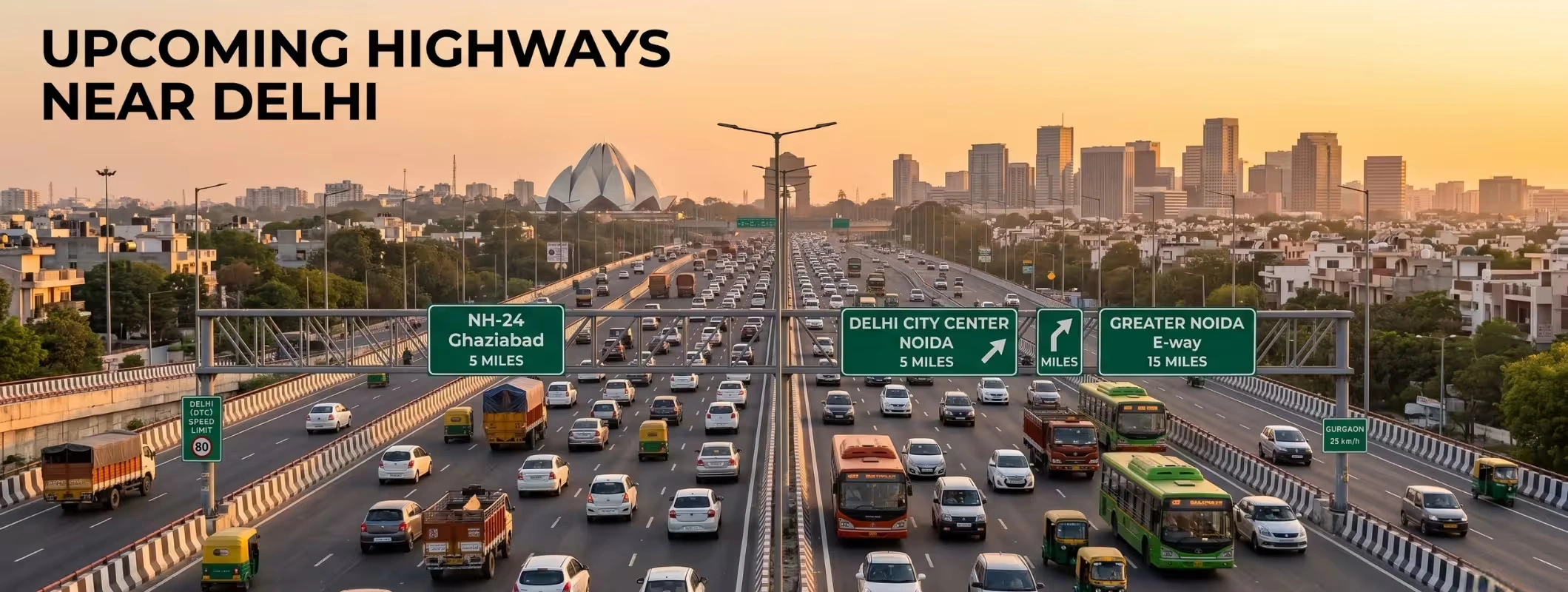
Delhi NCR has always been one of India’s strongest real estate markets, but the next phase of land growth is not only happening inside Delhi. In fact, the smarter investment story is moving towards the highways, expressways, airport-linked corridors, logistics belts, and fast-growing peripheral regions around the capital.
For investors searching for Land near Delhi, the big question is no longer “Where is land available?” The better question is, “Which corridor will improve access, reduce travel time, and create future demand?” Because in real estate, connectivity often becomes the first signal of appreciation.
Delhi is already dense, expensive, and limited in terms of fresh land supply. That is why many buyers looking for land for sale in Delhi are now expanding their search to nearby NCR zones such as Gurgaon, Sohna, Faridabad, Jewar, Sonipat, Meerut, Bahadurgarh, and Yamuna Expressway-side locations. These areas are gaining attention because major infrastructure projects are changing how people travel, work, build, and invest.
India’s road infrastructure push is also strong at the national level. For 2026–27, the Ministry of Road Transport and Highways has been allocated ₹3,09,875 crore, which shows continued government focus on roads, highways, bridges, and NHAI-led development.
Why Highways Matter So Much in Land Investment
Land does not grow in value only because it is vacant. It grows when access improves, demand enters, and future use becomes clearer. A highway can change a village, a farmland belt, or an outer-city location into a future residential, warehousing, logistics, farmhouse, or commercial zone.
When a new expressway opens, three things usually happen. First, travel time is reduced. Second, builders, warehouses, institutions, and industries start studying the route. Third, early land buyers begin entering before the location becomes fully mainstream.
This is why highway-led land investment near Delhi is becoming popular among long-term buyers. Many investors are not buying only for immediate construction. They are buying because they expect the corridor to mature over the next 5 to 10 years.
However, every corridor is not equal. Some areas are better for plotted development, some for farmhouses, some for warehousing, and some for long-term agricultural holding. Before buying agriculture land for sale, buyers must check land title, zoning, mutation, access road, master plan, conversion rules, and state-specific land laws.
1. Delhi–Mumbai Expressway and Sohna–Gurgaon Growth Belt
The Delhi–Mumbai Expressway is one of the most important infrastructure projects influencing land demand near Gurgaon, Sohna, Nuh, and parts of South Haryana. The Delhi–Dausa–Lalsot section of the expressway is already operational, and the 246 km stretch was developed at a cost of more than ₹12,150 crore. It reduced Delhi–Jaipur travel time from around 5 hours to nearly 3.5 hours.
For investors looking for land for sale in Gurgaon, this corridor is important because Gurgaon is no longer growing only around Cyber City, Golf Course Road, and Golf Course Extension. The next layer of growth is moving towards New Gurgaon, Dwarka Expressway, SPR, Sohna Road, and Sohna-side belts.
Sohna has become a serious investment discussion because it connects Gurgaon’s employment base with the Delhi–Mumbai Expressway route. This can support future residential townships, plotted communities, farmhouses, logistics parks, and institutional development. The early advantage is still stronger in areas where land is not yet priced like central Gurgaon.
For land buyers, the smart approach is to study distance from expressway entry/exit points. Land that is close enough to benefit from connectivity but not directly affected by acquisition, noise, or access restrictions can be more practical. Expressways are access-controlled, so a parcel touching the road does not automatically mean direct entry. Always check official access points before paying a premium.
2. Dwarka Expressway and Urban Extension Road-II
Dwarka Expressway has already changed the Gurgaon–Delhi investment conversation. It improves connectivity between Delhi, Dwarka, Gurugram, and New Gurgaon. Along with this, Urban Extension Road-II, commonly called UER-II, is creating a strong decongestion and connectivity network around Delhi’s western and north-western side.
In August 2025, the Prime Minister inaugurated the Delhi section of Dwarka Expressway and the Alipur to Dichaon Kalan stretch of UER-II, along with links to Bahadurgarh and Sonipat. The UER-II package was developed at around ₹5,580 crore and is expected to ease pressure on Delhi’s Inner and Outer Ring Roads while improving access to Bahadurgarh and Sonipat.
This matters for investors because western Delhi, Dwarka, Najafgarh-side belts, Bahadurgarh, and Sonipat-linked areas can become more attractive as travel routes improve. For someone searching for Land near Delhi, these corridors offer a practical alternative to expensive land inside Delhi.
The future potential is not only residential. UER-II can support warehousing, logistics movement, industrial connectivity, and smoother goods transport across NCR. The government has also discussed a Delhi Decongestion Plan that includes extension of the Delhi–Amritsar–Katra Expressway from KMPE to UER-II, extension of UER-II towards the Delhi–Dehradun Expressway, and a road tunnel from Dwarka Expressway near Shiv Murti to Nelson Mandela Marg.
For early investors, this means the west and north-west NCR belt should not be ignored. But the buying decision must be location-specific. A village near a planned link road may perform differently from land that has poor internal road access or unclear land use.
3. Faridabad–Jewar Corridor and Noida International Airport Belt
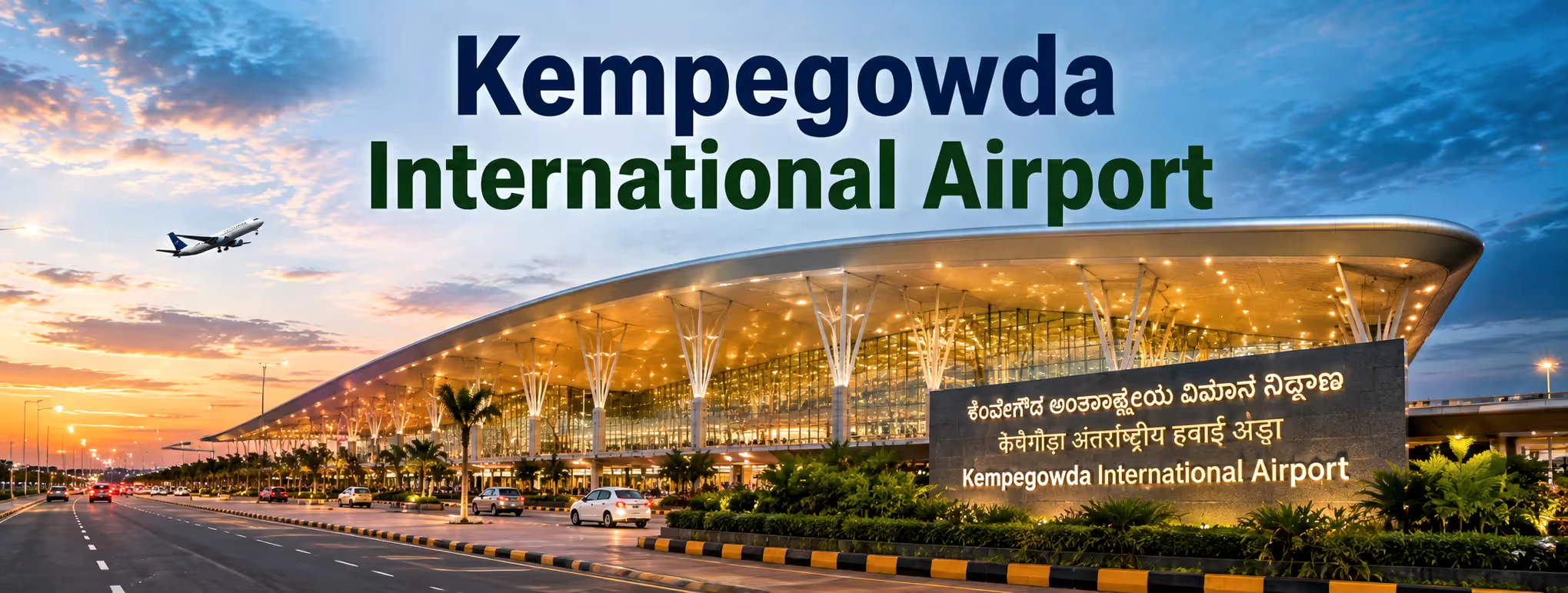
Jewar is one of the biggest long-term land stories near Delhi NCR. The reason is simple: airport-led development changes demand. It brings aviation-linked logistics, hotels, warehouses, commercial activity, rental housing, worker housing, and supporting services.
Noida International Airport Phase I was inaugurated in March 2026 with an investment of around ₹11,200 crore. The airport is planned as a multi-modal transport hub with road, rail, metro, and regional transit integration, along with a cargo hub designed to handle over 2.5 lakh metric tonnes annually in its first major capacity structure.
The Faridabad–Jewar connectivity story adds more strength to this region. A 31.42 km corridor has been planned to provide direct and high-speed connectivity from South Delhi, Faridabad, and Gurugram to Jewar International Airport.
This is important because it connects three powerful demand zones: South Delhi, Faridabad, and Gurgaon with Jewar. Land around Faridabad, Ballabhgarh, Palwal-side belts, Jewar, and Yamuna Expressway villages may benefit from this movement over time.
For buyers searching for agriculture land for sale, this belt can look attractive, but it also requires extra caution. Airport influence zones often come with zoning controls, authority regulations, acquisition risk, and master-plan restrictions. Do not buy only because someone says “airport ke paas hai.” Check whether the land is legally saleable, whether it falls under authority-notified areas, and whether it has proper road access.
4. Delhi–Dehradun Expressway and North-East NCR Belt
The Delhi–Dehradun Expressway is another major corridor that can influence land demand on Delhi’s north-east side and towards Baghpat, Shamli, Saharanpur, Haridwar, and Dehradun-linked movement. The Delhi–Dehradun Economic Corridor was inaugurated in April 2026, with the government calling it a major connectivity and regional economic project.
Earlier updates also stated that the expressway starts from Akshardham Temple in Delhi and passes through Baghpat, Baraut, Muzaffarnagar, Shamli, and Saharanpur before reaching Dehradun.
For investors near Delhi, this corridor is important for two reasons. First, it improves travel from Delhi towards western UP and Uttarakhand. Second, it can create demand for weekend homes, farm stays, warehousing, roadside commercial services, and long-term land holding.
This does not mean every land parcel on the route will appreciate equally. The best-performing pockets are usually those with legal clarity, local demand, good approach roads, and proximity to towns or interchanges. Purely remote land may take longer to mature.
5. Ganga Expressway and Meerut-Side Land Opportunity
The Ganga Expressway is a major development for Uttar Pradesh and has become relevant for Delhi NCR investors because it starts from Meerut-side western UP and connects towards Prayagraj. The 594 km access-controlled greenfield expressway was inaugurated in April 2026 and is expected to boost connectivity and development across Uttar Pradesh.
For people based in Delhi, Noida, Ghaziabad, and Meerut, this corridor can open new interest in western UP land markets. Meerut already benefits from Delhi–Meerut Expressway and rapid regional connectivity, and the Ganga Expressway adds a stronger eastward development angle.
Recent updates also mention a planned 14 km link road connecting the Delhi–Meerut Expressway to the Ganga Expressway, expected to improve high-speed movement from Ghaziabad and Noida towards eastern UP districts.
For land investors, Meerut-side areas may attract demand from logistics, plotted development, warehousing, and future township-style expansion. But early buyers should avoid blind speculation. Study whether the land is close to actual growth nodes or simply marketed as “near expressway.”
6. Delhi–Amritsar–Katra Expressway and Sonipat–Bahadurgarh Side
The Delhi–Amritsar–Katra Expressway is important for north and north-west connectivity from Delhi NCR. The original project was described as a 669 km expressway to be developed at a cost of about ₹39,500 crore, aimed at reducing travel time towards Amritsar and Katra.
The Delhi Decongestion Plan now brings this corridor closer to the NCR investment discussion because it focuses on extending the Delhi–Amritsar–Katra Expressway from KMPE to UER-II, giving direct connectivity to Delhi and Gurugram through UER-II and Dwarka Expressway. n improve the importance of Bahadurgarh, Sonipat, Kundli, and other north-western NCR belts. These areas already have industrial and warehousing activity, and better corridor integration can strengthen long-term land demand.
For buyers, the best approach is to focus on land parcels near existing economic activity, industrial areas, logistics routes, and planned connectivity points. Buying too far away from real demand may lock capital for many years.
Which Corridor Looks Best for Early Land Investment?
There is no single answer because every buyer has a different goal. If your goal is long-term appreciation with Gurgaon influence, the Sohna and New Gurgaon belt deserves attention. If your goal is airport-led growth, Jewar and Faridabad–Jewar connectivity can be important. If you want land near Delhi with western access, Dwarka Expressway and UER-II-linked areas may be practical. If you are looking at weekend homes and tourism-driven movement, Delhi–Dehradun and Delhi–Katra-side corridors may be relevant. If you want western UP growth, Meerut and Ganga Expressway-linked locations can be studied.
For Land for sale in Delhi, the supply is limited and expensive. That is why many smart buyers are studying NCR land within 1 to 3 hours of Delhi instead of forcing a purchase inside city limits. The opportunity is usually better where the location is still developing but the infrastructure trigger is visible.
Land Buying Checklist Before Investing Near Highways
Before finalizing any land deal near a highway or expressway, check the basics properly. Do not rely only on broker promises or future appreciation claims.
Check the land title, ownership chain, mutation, khasra details, zoning, master plan, road width, litigation status, acquisition risk, and land use permission. If you are buying agricultural land, confirm whether you are legally eligible to buy it in that state. Rules can differ between Haryana, Uttar Pradesh, Rajasthan, and Delhi NCR zones.
Also check whether the land has a proper approach road. Many parcels are marketed as “near expressway,” but the actual access may be from a narrow village road. This affects resale value, construction potential, and future usability.
Most importantly, check the difference between distance and connectivity. A land parcel may be only 2 km from an expressway on Google Maps, but if the nearest official interchange is 15 km away, the practical value changes.
Conclusion: Invest Early, But Invest Carefully
Upcoming highways and corridors near Delhi are creating fresh opportunities for land buyers. Delhi NCR is expanding through expressways, airport corridors, logistics routes, and decongestion roads. This is why interest in Land near Delhi, land for sale in Gurgaon, Jewar-side land, Sohna land, Meerut-side land, and agricultural land for sale is increasing.
But early investment does not mean careless investment. The best land deals are not always the cheapest ones. The best deals are legally clear, well-connected, future-ready, and located near real demand drivers.
If you are planning to invest, study the corridor, visit the site, verify documents, check authority plans, and understand the timeline. Highway-led land growth can be powerful, but only when the location, legality, and access are right.
FAQs - Corridors Near Delhi
1. Is land near Delhi a good investment in 2026?
Yes, land near Delhi can be a good long-term investment if it is located near strong infrastructure corridors such as Dwarka Expressway, UER-II, Delhi–Mumbai Expressway, Jewar Airport, Delhi–Dehradun Expressway, or Ganga Expressway-linked zones. However, buyers must verify land title, zoning, access road, and local development plans before investing.
2. Which area is better for land investment: Gurgaon or Jewar?
Gurgaon-side land, especially near Sohna and New Gurgaon, is better for buyers who want proximity to an existing employment hub. Jewar-side land is more suitable for investors looking at airport-led long-term growth. Both can perform well, but the risk, timeline, and buyer profile are different.
3. Should I buy agricultural land near expressways?
Agricultural land near expressways can offer long-term appreciation potential, but it requires careful legal checking. Confirm ownership, mutation, land use, conversion rules, acquisition risk, and state-specific eligibility before buying. Never buy only because the land is marketed as “near highway.”
4. Why are highways increasing land prices near Delhi NCR?
Highways reduce travel time and improve access between cities, industrial zones, airports, and residential markets. When connectivity improves, demand from buyers, builders, warehouses, and businesses often increases. This can support land appreciation over time, especially near interchanges and growth nodes.