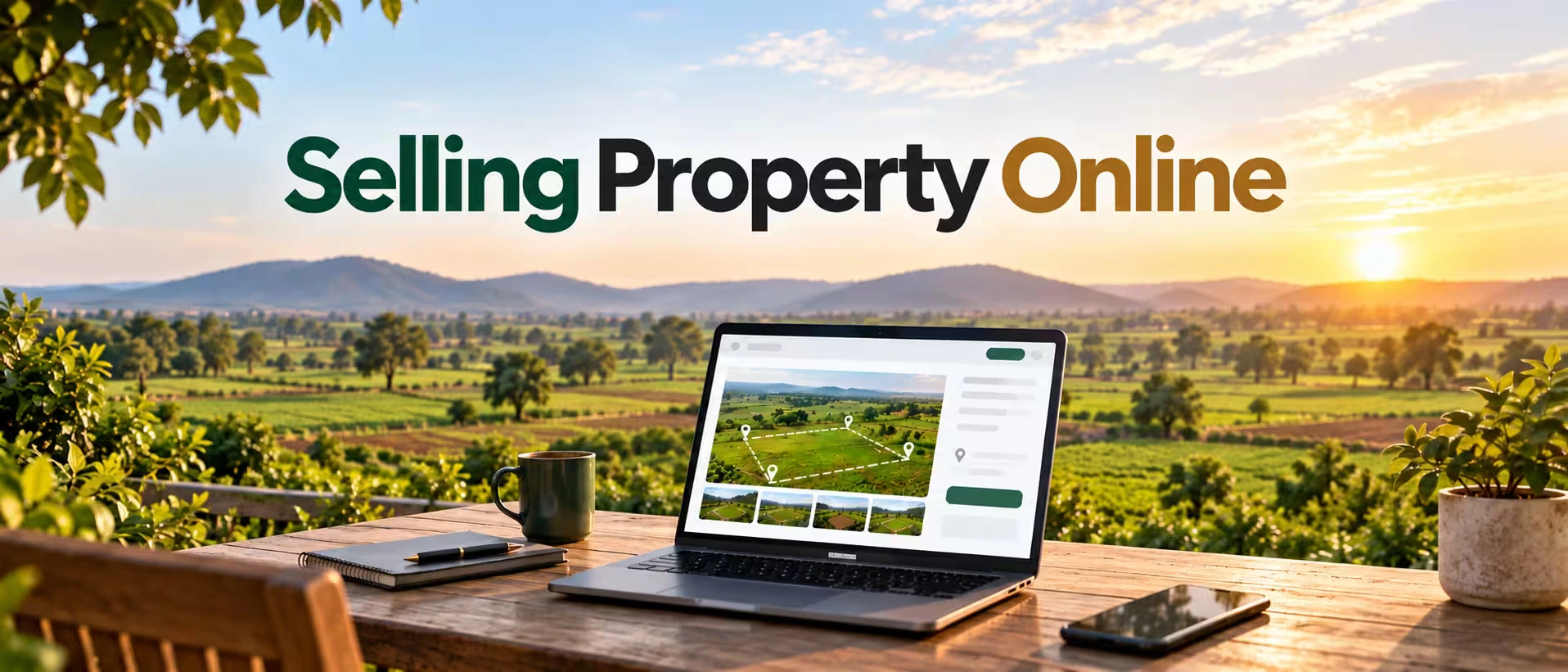
Ten years ago, selling a plot of land meant one thing: call the local broker, put up a signboard, and wait. Sometimes for months. That old way hasn't vanished completely, but it's not where most buyers show up first anymore. These days, someone looking for land opens their phone and types things like "farmlands near me" or "plots for sale near me" before they ever pick up a phone to call anyone. If your land isn't listed where that search happens, you're simply not in the running for a large chunk of buyers.
Selling property online has gone from being a backup option to being the main road most sellers take. This guide breaks it down in plain language: what actually works, what wastes your time, and where most people go wrong when they list land for the first time.
Why the Old Way Is Losing to the Online Way?
Brokers aren't useless. In small villages where everyone knows everyone, a good local broker can still close a deal fast. But for anyone trying to reach buyers beyond their own neighbourhood, the numbers tell a different story.
| What Matters | Local Broker | Online Listing |
|---|---|---|
| Who sees your land | People in the broker's circle | Buyers across the district, state, or country |
| How fast you get inquiries | Can take weeks | Often within a few days |
| Proof of documents | Usually just the broker's word | Records checked before listing goes live |
| Price comparison | Hard to know if you're pricing fairly | You can see similar plots and their asking price |
| What it costs you | Commission, usually 1-2% of sale value | Free or a flat listing fee on most platforms |
| Buyer trust | Depends on broker's reputation | Depends on platform's verification |
The honest takeaway here: online listing doesn't replace good local knowledge; it just adds a much bigger audience on top of it.
What People Are Actually Typing Into Google?
Before you write a single word of your listing, it helps to know how buyers actually search. This matters more than people think, because your listing needs to match the words buyers use, not fancy real estate language. Here's what that search behaviour usually looks like:
- Nearby searches — things like "farmlands near me" or "plots for sale near me", where the buyer already has an area in mind and just wants to see what's available close by
- Type-specific searches — a buyer typing something like farmland for sell land for sale near me, which tells you they want agricultural land specifically, not a residential plot
- Money-focused searches — buyers comparing price per acre, or checking if land values are going up in a certain area
- Paperwork-focused searches — buyers checking whether land has clear title or is tied up in a family dispute, before they even message the seller
If your listing skips the first two, a lot of buyers will simply never find you.
Step-by-Step: How to Actually List Your Land Online?
- Collect your papers before you do anything else. Record of rights, mutation entry, survey number, and conversion papers if the land is no longer purely agricultural. Buyers skip listings that look incomplete.
- Get the plot measured properly and mapped. A listing with the exact boundaries and a map pin gets far more serious inquiries than one with a vague "near the highway" description.
- Check what similar land nearby is selling for, and price close to that. Overpricing is, by far, the number one reason land sits unsold for a year or more.
- Lead with the location in your description. Mention the nearest town, main road, or well-known landmark first — that's what people are searching by.
- Use real, clear photos. Wide shots, close-ups of the boundary, and an aerial photo if you can manage one. Stock photos or blurry pictures make buyers scroll past.
- List your land on more than one platform. One buyer might see your plot on one site and miss it on another — cover more ground.
- Reply quickly. A buyer who doesn't hear back in a day or two often just moves on to the next listing on their list.
The Numbers Behind a Good Listing
Here’s a simple breakdown of what tends to help you sell land faster, rather than ending up with a listing that drags on for months:
| What Matters | Local Broker | Online Listing |
|---|---|---|
| Who sees your land | People in the broker's circle | Buyers across the district, state, or country |
| How fast you get inquiries | Can take weeks | Often within a few days |
| Proof of documents | Usually just the broker's word | Records checked before listing goes live |
| Price comparison | Hard to know if you're pricing fairly | You can see similar plots and their asking price |
| What it costs you | Commission, usually 1-2% of sale value | Free or a flat listing fee on most platforms |
| Buyer trust | Depends on broker's reputation | Depends on platform's verification |
None of these numbers are magic. They just reflect what buyers actually respond to when they're comparing dozens of listings in one sitting.
Land Selling: The Paperwork Buyers Now Expect Upfront
Land selling used to run on trust and a broker's word. A buyer would hear about a plot, visit once, shake hands, and the paperwork would get sorted out later at registration. That's changing fast, especially with online buyers who can't physically check anything before they make the first call. They now expect to see this kind of information before they'll even reach out:
- Updated record of rights (or the equivalent state land record)
- Mutation certificate showing who currently owns the land
- Encumbrance certificate confirming there's no loan or legal dispute on the property
- Tenancy status, which matters a lot for agricultural land specifically
- Conversion or NA approval, if the land has already been reclassified from agricultural to non-agricultural use
Listings that mention even a short summary of this tend to get faster, more serious replies. It removes the one thing that makes most buyers hesitate — not knowing if the land is actually clean to buy.
Mistakes That Quietly Kill a Sale
- No survey number listed, which makes serious buyers assume something's being hidden
- Only one dark or blurry photo
- Pricing based on what a neighbour "claims" they were offered, instead of real nearby sale prices
- Not answering common buyer questions like road access or tenancy status upfront
- Taking days to reply to inquiries, while other listings answer within hours
- Listing on just one site and expecting that to be enough
Why Buyers Trust Verified Listings More?
Someone searching "farmlands near me" or comparing several "plots for sale near me" today has usually been burned before, or knows someone who has. That's made buyers far more cautious about listings on open classifieds where literally anyone can post anything with zero checks. Platforms that verify ownership, check for pending loans, and confirm survey details before a listing goes live are seeing far more genuine buyer interest than the old free-for-all listing sites.
How 2Bigha Makes This Easier?
2Bigha checks land records, confirms title and tenancy status, and verifies survey details before your listing ever goes live — so buyers see your plot already backed by real documentation, not a question mark they have to figure out themselves. If you're done relying on word-of-mouth land selling and broker networks that only reach so far, listing on 2Bigha puts your land in front of buyers who are actively searching for exactly what you're offering, whether that's a residential plot or open farmland.
Disclaimer: This article is for informational purposes only and should not be considered investment, legal, financial, or property advice. Real estate regulations, infrastructure plans, market conditions, and government policies may change over time. Readers are advised to verify information with relevant authorities and consult qualified professionals before making any investment or property-related decisions.