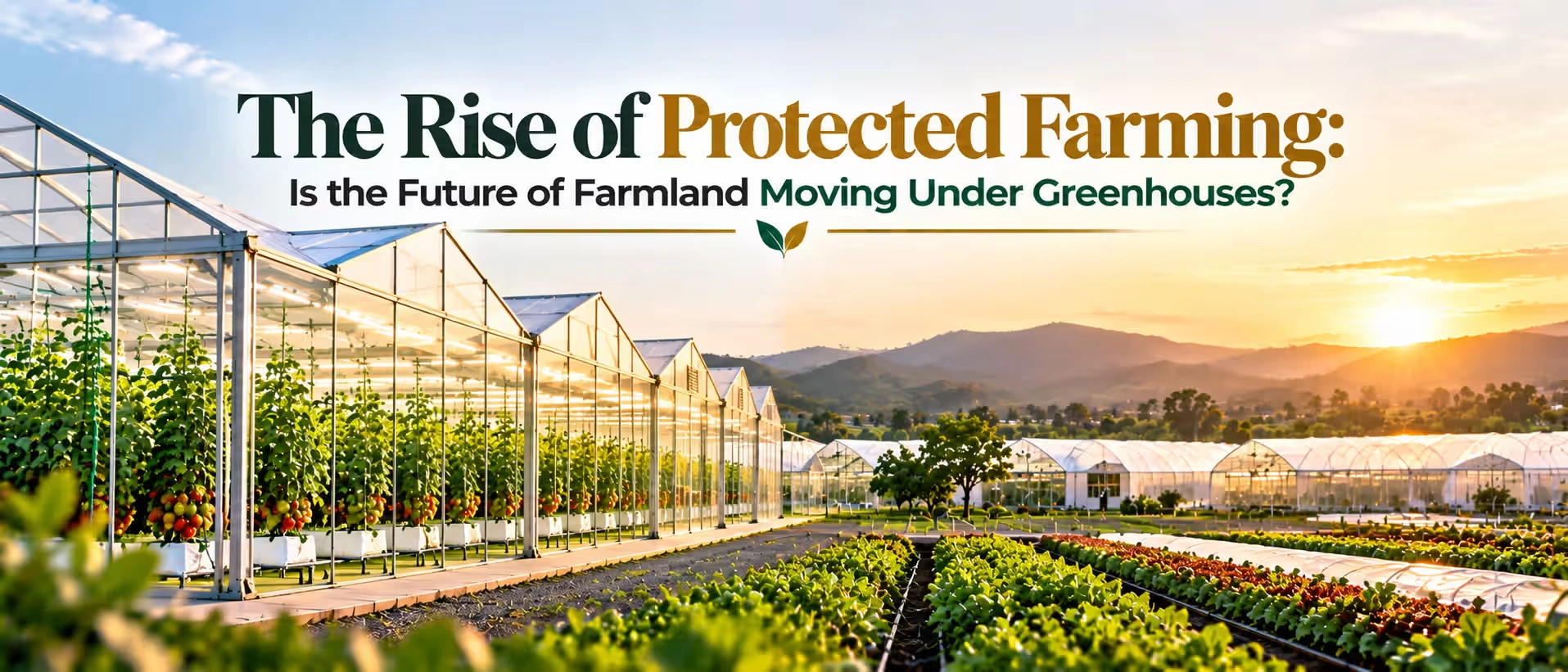
Walk through any agricultural belt in India today, and you'll notice something that wasn't common even five years ago: rows of polyhouses and greenhouses standing where open fields used to be. This isn't a passing trend. Protected farming is quietly becoming one of the biggest shifts in Indian agriculture, and it's starting to change how people think about farmland itself.
If you're in the middle of a farmland search, or just keeping an eye on where agricultural land is headed, this shift is worth understanding. It affects pricing, it affects demand patterns, and it affects what buyers are actually looking for when they browse plots for sale.
What Exactly Is Protected Farming?
Protected farming basically means cultivating crops in an enclosed environment rather than exposing them to the open environment. This includes greenhouses, poly-houses, shade nets, and hydroponics, among others. This allows one to control temperature, humidity levels, pest infestations, and even water usage in a manner that cannot be achieved by conventional farming methods.
This is definitely not a new concept throughout the world. The Netherlands, for example, has based its agricultural economy around it. In India, on the other hand, it has graduated from being practiced only by a select few innovative farmers to becoming government-backed through subsidies and schemes. What could have led to this sudden initiative? Here are a few possible reasons:
- The increasing unpredictability of the monsoon rains makes it increasingly dangerous
- There is an increasing shortage of water resources, which pushes farmers towards more efficient methods of irrigation
- Increasing urban and semi-urban demand for exotic crops such as vegetables and flowers
- Greater productivity when cultivated under controlled conditions
How Protected Farming Is Changing What "Good Farmland" Means?
Soil fertility, water table level, and access to roads and markets have long been the determining aspects when valuing farm lands in India. These things are important, but the introduction of protected farming is giving a different perspective and has changed the way potential buyers analyze farmland near me.
| Traditional Farmland Priorities | Emerging Priorities With Protected Farming |
|---|---|
| Natural soil fertility | Land flatness, suitable for structure installation |
| Rainfall dependency | Reliable electricity and water connection |
| Open-field crop suitability | Access roads for transporting perishable produce |
| Large contiguous acreage | Smaller, well-connected plots can also work |
| Seasonal yield expectations | Year-round, climate-independent yield potential |
This matters because it opens up land that might have been considered average under old standards, but could actually work very well for polyhouse or shade-net farming, provided the infrastructure basics are in place.
Why This Matters If You're Buying or Selling Farmland?
For Buyers
If you are looking to buy agricultural land for sale, keeping in mind your future profits, then protected farming alters your checklist. Land with the ability to use drip irrigation techniques, a stable supply of electricity, and proximity to urban areas is gaining popularity over conventional soil tests. Here are some things you should look out for when buying land with protected farming in mind:
- Power supply stability – greenhouses and polyhouses require electricity to operate the climate control system
- Water supply and purity – drip irrigation and misting techniques require a constant and pure water supply
- Land leveling – level lands are easy to build greenhouses or polyhouses on
- Eligibility for subsidies – 50 to 75 percent subsidy for constructing polyhouses can be availed in many states but varies from region to region
- Market proximity – the produce from protected farms is highly perishable and needs transportation to nearby cities
For Sellers
If you own farmland and are exploring selling property online, protected farming trends can actually work in your favour, especially if your land has good road connectivity and access to power and water. Buyers who understand this shift are increasingly willing to pay a premium for land that's "greenhouse-ready," even if it wasn't traditionally considered prime agricultural land.
Subsidy Support Across States (Illustrative)
Government support has been one of the biggest accelerators for protected farming adoption. While exact figures vary by state and scheme, the general pattern looks like this:
| Component | Typical Subsidy Range |
|---|---|
| Polyhouse/Greenhouse construction | 50% to 75% |
| Shade net structures | 50% to 65% |
| Drip irrigation systems | 55% to 90% (higher for small/marginal farmers) |
| Planting material for high-value crops | 25% to 50% |
Farmers and investors should always confirm current rates with their state horticulture department, since schemes are revised periodically.
Is This a Passing Trend or a Long-Term Shift?
The question here, however, is whether protected farming is merely a bubble created by subsidies or whether it is restructuring the demand for farmland in the long run. There are a number of indications that point to the latter:
- The growing demand from the urban population for exotic vegetables, berries, and flowers persists
- Water stress will remain a problem for the largest agricultural states for some time yet
- Growing export demand for high-value horticultural products exists
- Younger farmers and agri-entrepreneurs are selecting protected farming as opposed to traditional farming
This is not necessarily right for all lands and all buyers. Protected farming does involve initial investments and ongoing care and an understanding of economic issues related to crop production. However, it is not necessarily the quick path to higher land prices, but definitely one of the factors shaping demand for "good farmland" starting in 2026.
What This Means for Land Selling Decisions?
If you're weighing land selling options right now, it helps to look at your land through this newer lens rather than only the traditional one. A plot that seemed average for open-field crops might be genuinely appealing to a buyer planning a protected farming setup, particularly if it's well-connected and has basic infrastructure nearby. Similarly, if you're a buyer comparing plots for sale, don't rule out land just because it doesn't fit the old checklist. Ask about power access, water source, and road connectivity before writing it off.
Find Verified Farmland With 2Bigha
From investigating a piece of land for conventional farming to opting for a change in the form of protected farming, it is vital to have authenticated information about the land available. 2Bigha can help you conduct an effective search of farmlands in India through authenticated listings, and it also provides complete information related to its connectivity, location, and legal status, so that you won’t be taking any risk regarding the accessibility of power, water, and roads. For those sellers who wish to sell their lands online, 2Bigha offers a simple platform to do so.
Disclaimer: This article is for informational purposes only and should not be considered investment, legal, financial, or property advice. Real estate regulations, infrastructure plans, market conditions, and government policies may change over time. Readers are advised to verify information with relevant authorities and consult qualified professionals before making any investment or property-related decisions.