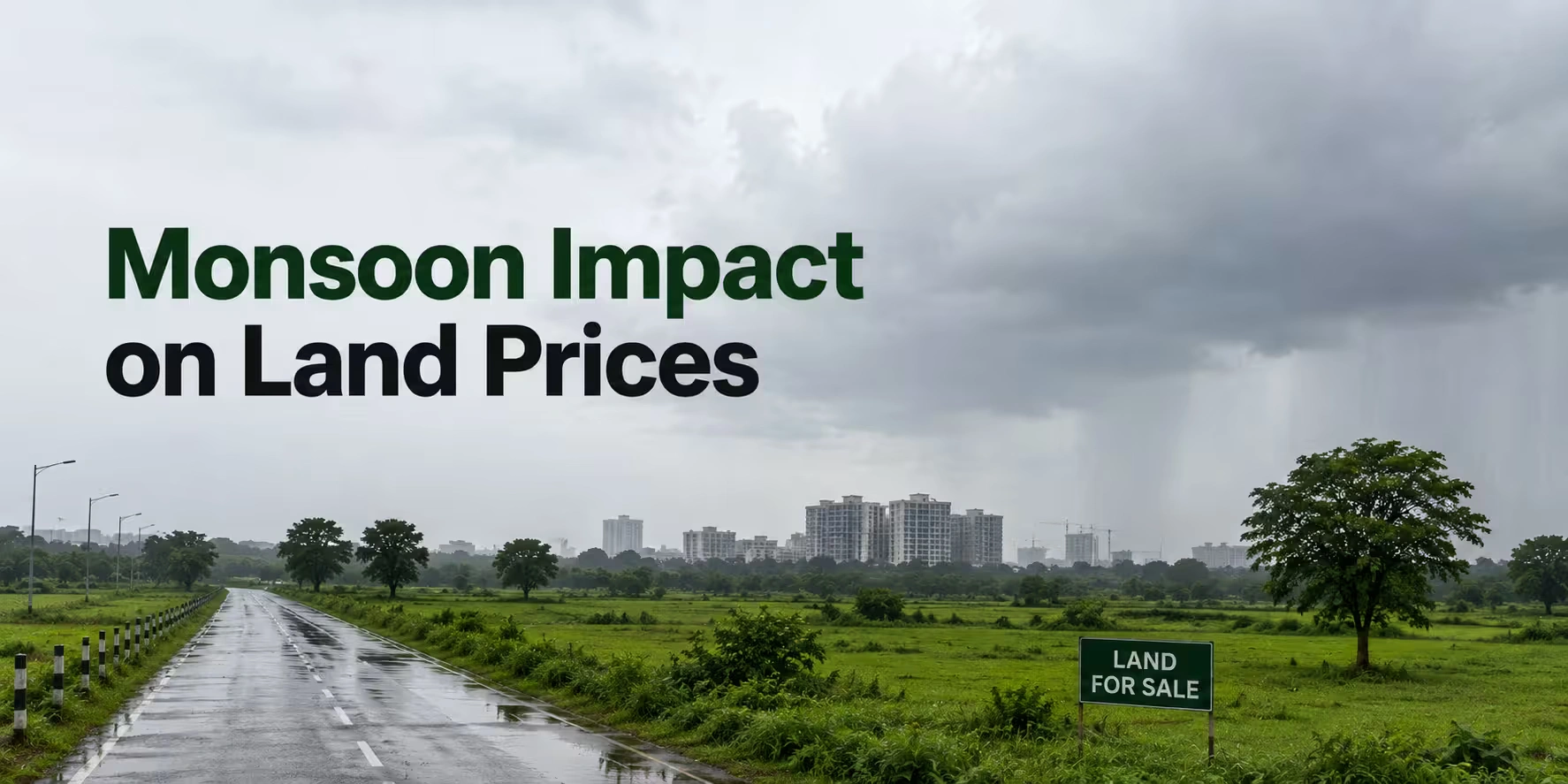
Something strange has been happening in the farmland market this year. Ask a broker in Punjab how things are going, and he'll shrug and say business as usual. Ask someone in a rain-fed pocket of Madhya Pradesh, and you'll get a very different answer: hesitant buyers, sellers willing to cut deals just to close fast. The story is similar in parts of Odisha, where changing rainfall patterns are influencing buyer confidence and the availability of Land for Sale in Odisha. Same country, same season, wildly different stories. The common thread is rain, or rather, the lack of it in some places and the surplus of it in others. By now, most people have heard that June was a washout. What's less talked about is what that actually does to land prices, and why it doesn't hit every state the same way.
Why Does Rain Decide Land Value More Than You'd Think?
Here's the thing about Indian farmland: nearly half of it has no irrigation to fall back on. So when the sky doesn't deliver, it's not an abstract inconvenience. It shows up directly in yield, then in income, then in whether a farmer can even hold onto land or needs to sell it off.
June this year was brutal. Rainfall came in around 40 percent below normal, and parts of east and northeast India logged their driest June since records began back in 1901. That's not a minor blip in a data table somewhere; that's the kind of number that gets ministries scrambling.
July hasn't offered much relief either. IMD's outlook puts the month below the long-period average overall, though "below average" is doing a lot of work in that sentence, because the picture underneath is patchy. Bihar, West Bengal, Odisha, and parts of the northeast are actually tracking normal to above-normal. Meanwhile, Rajasthan, Gujarat, Punjab, Haryana, and Madhya Pradesh are looking at deficits. So no, this isn't one big national story. It's dozens of smaller, contradictory ones playing out at the same time, which is exactly why land prices are moving in opposite directions depending on where you look.
Where the Pressure Is Actually Showing Up?
Rain-Fed Districts Are Feeling It First
Places with no canal backup and no serious groundwater cushion are where the strain shows fastest. Over 300 districts have already been flagged as vulnerable to this year's shortfall, and more than a hundred of those have less than a quarter of their land under irrigation. In practice, that means buyers slow down. Nobody's rushing to purchase land right after a rough kharif season if the yield outlook is shaky. And sellers, especially smaller landholders who need cash before the next sowing cycle, sometimes take a lower offer just to get the deal done.
Irrigated Land Is Barely Blinking
Compare that to land with a dependable water source, borewells, canal access, a river nearby. It's holding up fine. People still searching for farmland for sale in Punjab or a plot for sale in Haryana this season aren't finding a dead market. Demand hasn't disappeared, because irrigation takes most of the monsoon risk off the table. If there's one lesson buyers keep relearning every dry year, it's this: water access matters more than soil quality when it comes to how a plot holds its price.
A Regional Snapshot
| Region | Monsoon Status (2026) | What It's Doing to Prices |
|---|---|---|
| Punjab & Haryana | Below normal, strong irrigation cover | Prices remain fairly stable as demand to buy land continues despite weaker monsoon conditions. |
| Madhya Pradesh & Rajasthan | Below normal, higher vulnerability | Prices are softening in rain-fed areas, while irrigated farmland remains relatively unaffected. |
| Maharashtra (Vidarbha & Marathwada) | Mixed, coastal areas wetter than interior | Buyers are more cautious in cotton-growing regions that rely heavily on rainfall. |
| Bihar & West Bengal | Near normal to above normal | Improved monsoon conditions are boosting buyer inquiries and farmland activity. |
| Odisha & Northeast | Above normal in parts | Healthy rainfall is increasing buyer interest and supporting farmland demand. |
| Gujarat | Below normal, drought risk | Market activity is slower, with sellers becoming more willing to negotiate prices. |
Even this table oversimplifies things a bit. Two plots ten minutes apart can behave completely differently if one sits near a canal and the other doesn't.
What July's Sowing Numbers Mean for You?
July decides how much of the kharif crop actually gets into the ground: rice, pulses, oilseeds, cotton. A delayed monsoon means delayed sowing, and delayed sowing usually drags yields down later in the year. For buyers, that creates a window worth paying attention to. Land in badly hit regions tends to dip in price during a weak monsoon year, then bounce back once the next season normalizes. Some investors deliberately use a soft year like this to buy land in a location that's normally out of budget, betting that sentiment and price recover once the rain does. That said, it's not a free lunch. Before acting on that logic, it's worth checking:
- Groundwater depth and how well it recharges historically
- Whether irrigation infrastructure exists or is even planned nearby
- Crop yield data for that plot over the last five years
- Reservoir and canal release schedules for the area
Don't Skip the Reservoir Check
Rainfall numbers get all the headlines, but reservoir levels tell you more about what happens next. A weak June followed by a so-so July can still leave dams under-filled heading into the dry months, which affects irrigation-dependent land well into the following rabi season. Anyone eyeing Farmland for Sale in Madhya Pradesh right now should look at nearby dam storage percentages, not just rainfall charts.
So, Should You Buy Land in a Weak Monsoon Year?
Depends what you're buying for, honestly. If it's a long-term investment, a rough monsoon year can actually work in your favor, especially in irrigated or semi-irrigated zones, where a single bad season isn't going to erode the land's underlying value. If you need income from cultivation right away, be more careful. A cheap rain-fed plot might look tempting, but this year's yield risk is real, not theoretical. And if you're selling, timing matters. Owners in irrigated zones generally don't need to panic-price anything. Owners in rain-fed belts might do better waiting it out, or at least flagging any water access the plot has, rather than accepting the first lowball offer.
Cutting Through the Noise
A dry June doesn't erase a district's long-term farming potential. But it does open up short windows, some risky, some genuinely good deals, and the difference between the two usually comes down to whether you checked the local details or just went off a headline about a "40 percent rainfall deficit."
How 2Bigha Fits Into This?
It is just such a time when the proven value of a marketplace comes into play. 2Bigha is a marketplace for buying and Selling Agricultural Land and farmland in India, and the details provided in their listings go well beyond basic things like soil information, connectivity, and documentation, because you do not want to make any decision regarding buying land based on guesses during a time when water makes all the difference for your plot of land. If you are looking to sell your land quickly in a monsoon-hit area or looking to buy land during a bad monsoon in an irrigated area, then 2Bigha's marketplace will come in very handy.
Conclusion
No single monsoon tale can be told this time around; instead, there are only many tales that vary in nature from being disturbingly threatening to encouragingly quiet. It is for this very reason that the prices of land vary drastically not only across states but also sometimes within districts within those states. When it comes to buying land, selling land, or simply observing the status of any farmland for sale, forget the national news and head straight to the irrigation statistics, reservoir figures, and previous yield statistics.
Disclaimer: This article is for informational purposes only and should not be considered investment, legal, financial, or property advice. Real estate regulations, infrastructure plans, market conditions, and government policies may change over time. Readers are advised to verify information with relevant authorities and consult qualified professionals before making any investment or property-related decisions.