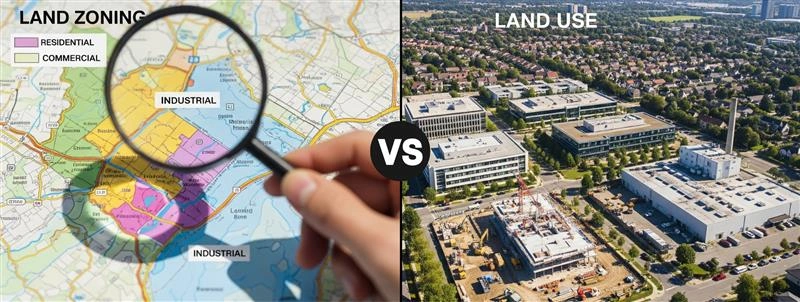
Investment in real estate is more than buying land and waiting for the value of the land to increase. The other important aspect that may influence the extent of the success of your investment is land use regulations and land zoning. These two terms are confused with each other, but they differ in meaning and connotations among investors. Being familiar with the difference may save you from costly mistakes and lead you in making informed investment decisions.
In this post, we will discuss what land zoning is, how land use differs from land use, and why the concepts are significant regarding property investors.
What is Land Zoning?
Zoning of the land is the manner in which local governments parcel out the land into zones so that they can determine how the land will be utilized. They establish how the land should be zoned with rules that outline what activities or what kind of structures are allowed per zone.
Such as the plot of land can be marked as:
- Residential use – Individual houses, flats, or town houses.
- Commercial use – Restaurants, offices, or stores.
- Industrial use – Industrial units, warehouses, or factories.
- Agricultural use – Farming, ranching, or forestry.
Zoning also includes more specific rules like:
- Building height limits
- Small lot requirements
- Needs parking
- Environmental protections
- Setbacks from roads or property lines required
These land-use laws are established so that development is organized, negates conflicting uses of the land, and keeps the community healthy and safe. You wouldn't, for example, want a loud factory so near a silent neighborhood.
Example: After you buy land that is considered commercial in nature, you cannot just build an apartment complex on top of it unless you get special permission or rezone the property.
What is Land Use?
Land use refers to what the land is being used for now regardless of what the zoning is. It considers what is occurring presently or what the land is used for.
Example:
- A vacant plot of land may be zoned as business but currently, there is no structure and the parcel is only a field.
- A building can be on land zoned residential so that its use is the same as its zone.
- A farm can continue on land that is zoned for future development, which would reveal conflict between current use and potential future use.
Land use policies are general laws or plans enacted by local or regional governments as the way to indicate future uses of land. They guide how communities will evolve over the long run and may influence future changes in the use of zones.
Key Differences Between Land Zoning and Land Use
Although the two terms are related, land zoning and land use serve different purposes. Here are the main differences every investor should know:
Factor
| Land Zoning
| Land Use
|
Definition
| A legal system that divides land into zones and sets rules for allowed activities.
| The actual, current use of the land.
|
Set by
| Local government through land zoning regulations.
| Property owner or occupant, following local rules.
|
Focus
| Future development and planning.
| Present activity or function of the land.
|
Example
| A lot zoned for residential housing.
| A house currently built and occupied on the lot.
|
Simply put, zoning is the "Rulebook," while land use is what’s happening in real life.
Why is Land Zoning Important to Investors?
Knowing something about land zoning is important if you're considering buying or building on land. The following are the best reasons why.
1. Avoiding Legal Issues
If you build on property in an illegal way against the zoning regulations, you can be assessed penalties, stop construction, or even remove the structures. It is helpful, then, if you know the zoning before you buy and can avoid expensive errors.
2. Investment Value Maximizing
Some areas might have a better chance to make money than others. For instance, land allowed for multi-family homes could earn more money than land for single-family homes.
3. Planning Ahead for Future Development
Zoning charts frequently reflect locations of future expansion. Purchasing within a parcel that is being considered for rezoning may result in dramatic appreciation as the demand rises.
4. Understanding Community Growth
Subdivision regulations aid equitable growth. If you examine the rules of zonings, you will know how new roads, schools, or businesses will be constructed, which will influence the values of your property.
How to Check Zoning Before Making an Investment?
Before purchasing property or land, follow these procedures in order to verify information concerning zoning:
- Proceed to the Local Planning Department.
- Most city or county planning offices have zoning maps and workers who can explain zoning rules.
- Review the Zoning Code Online Many towns share their zoning rules on their websites.
- Review Prospective Plans for Land Use
- Review land use policy to see how the landscape will be in the next 5-10 years.
- Get Yourself an Estate Lawyer
- If the zoning situation is complicated, a lawyer can help you deal with possible problems.
- Inquire About Variations or Special Authorization
- In some instances, you may request special allowance in altering the prevailing zoning regulations.
Publicly Expressed Concerns Investors Often Face
Even experienced investors may have some troubles with zoning. The following are some typical troubles:
- Surprise changes in the zones: Municipalities can change the zone maps that touch your own property's value or building potential.
- Neighbor conflict: If your plans don't align with what the community is anticipating, you may receive public opposition.
- Environmental Regulations: Flood zones, wetlands, or protected zones can place restrictions on what you can build.
- Mixed-use confusion: Certain areas have various zones that intersect with one another, which only confuse the issue.
By keeping informed and working with community leaders, you are well-equipped to deal with these challenges.
Final Thoughts
Real estate investors should be familiar with the definition of land zoning vs land use. Land zoning regulations determine what is constructed, whereas land use policies provide guidance on how the community plans in the long run. If you investigate and learn the regulations prior to purchasing with the help of platforms like 2Bigha, you can have better options, no legal conflicts, and more profits. If you're buying one bare piece of land or shopping for an expansive development opportunity, comprehension of the principle of zoning is certainly the ultimate tool in your investment strategy, and 2Bigha makes this process simpler and more reliable.