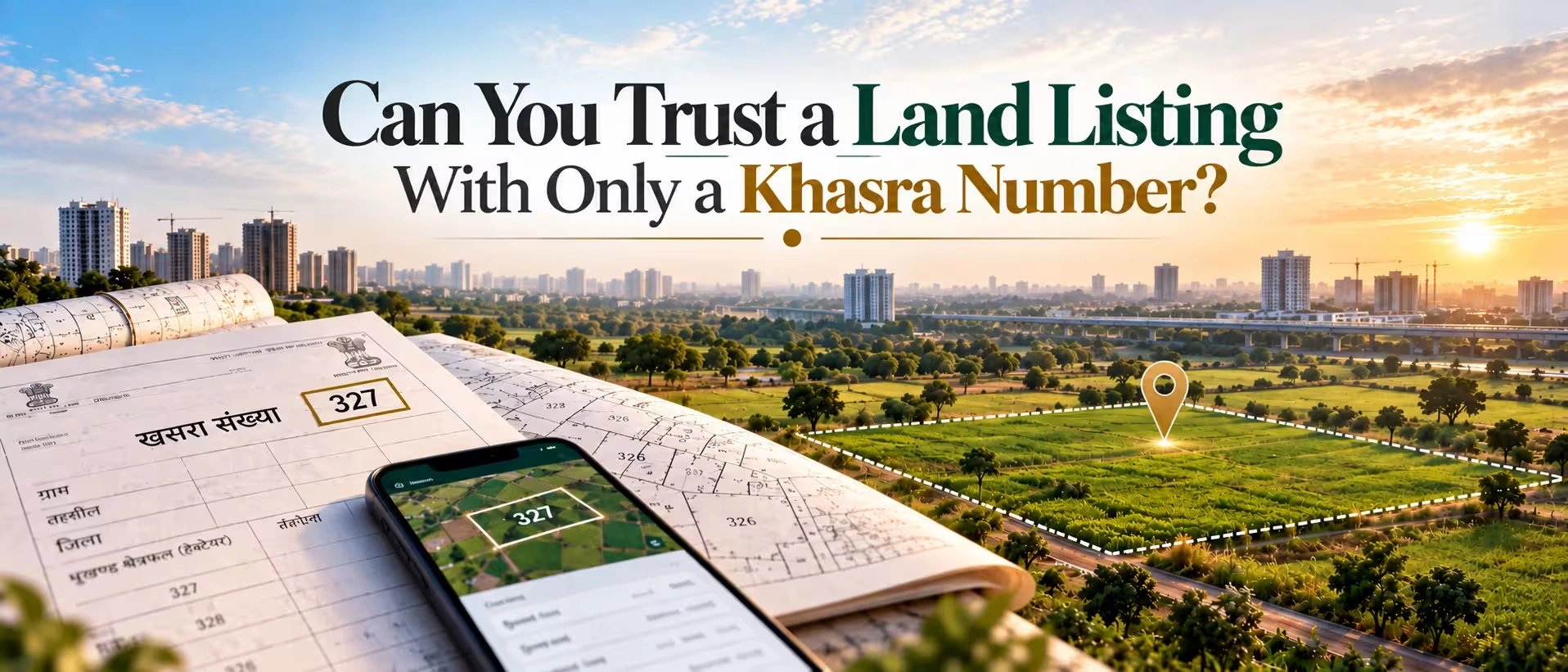
You're scrolling through listings, you find a piece of land that looks promising, and the description mentions a Khasra number as if that settles everything. It sounds official. It sounds verified. But here's the honest answer: a Khasra number alone tells you very little about whether that land is actually safe to buy.
If you've been searching for farmlands near me or browsing plots for sale near me, you've probably seen this pattern a hundred times. A single number gets treated like proof of ownership, clear title, and a spotless legal history, all at once. It isn't any of those things by itself. Let's break down what a Khasra number really is, what it can and can't tell you, and what you should actually be checking before you trust a listing.
What a Khasra Number Actually Is?
A Khasra number is a unique identification number assigned to a specific plot of agricultural land in the revenue records, mainly used across northern and central India. Think of it as an address for the land within government records, not a certificate of ownership. Here's what it typically helps you find:
- The plot's location within a village or revenue block
- Basic details of the land's area and boundaries as recorded
- A reference point to pull related documents like Jamabandi or mutation records
That's genuinely useful. But on its own, a Khasra number is just a pointer. It tells you where to look, not what you'll find when you get there.
What a Khasra Number Does Not Confirm?
This is where a lot of buyers get caught out, especially first-timers looking at agricultural land on sale for the first time.
| What Buyers Assume | What's Actually True |
|---|---|
| The seller listed is the current legal owner | Ownership can change without the listing being updated |
| There's no dispute over the land | Litigation history isn't visible from the Khasra number alone |
| The boundaries match what's shown on the ground | Physical boundaries and paper records sometimes don't align |
| There's no loan or mortgage against the land | Encumbrance details need a separate check |
| The land is free for sale | Some land is under government acquisition or restricted categories |
A Khasra number is a starting point for verification, not the finish line. Anyone treating it as final proof is skipping several important steps.
Documents You Should Actually Ask For
If you're serious about a piece of land, whether it's farm land for sale on the edge of a city or a smaller agricultural plot in a village, here's what should be on your checklist alongside the Khasra number.
- Jamabandi or Record of Rights, which shows current ownership details
- Mutation record, confirming the transfer of ownership was updated after the last sale
- Encumbrance certificate, to check for any existing loan or legal claim on the land
- Latest revenue receipts, showing land revenue has been paid up to date
- A physical boundary verification, ideally with a local surveyor or through the land records portal's map feature
None of these take more than a few days to arrange, and together they give you a genuinely clear picture instead of relying on one number that sounds convincing but proves very little on its own.
Why This Matters More With Online Listings?
The shift toward selling property online has made land buying faster in a lot of ways, but it's also made it easier for incomplete or misleading information to spread. A listing can look polished, mention a Khasra number, add a few photos, and still leave out the parts that actually matter.
- Photos show the land, not its legal status
- A Khasra number shows a location reference, not a clean title
- A price tag shows what the seller wants, not what the land is actually worth once you factor in disputes or access issues
This is true whether you found the listing through a broker, a classifieds site, or a dedicated land selling platform. The medium doesn't change the due diligence you need to do; it just changes how easy or hard that due diligence is to complete.
A Quick Reality Check for Buyers
Before you get emotionally attached to a plot you found while browsing plots for sale near me, run through this short list.
- Ask the seller directly for the Jamabandi and mutation documents, not just the Khasra number
- Cross-check the seller's name on these documents against their ID proof
- Visit the land in person if at all possible, or send someone you trust to verify boundaries
- Check whether the land falls under any government acquisition notice for the area
- If financing is involved, let your bank's legal team run their own verification too; banks are usually thorough here
A seller who's genuinely transparent won't hesitate to share these documents. Hesitation or vague answers are usually a bigger red flag than anything you'll find in the paperwork itself.
What This Means If You're Selling?
If you're the one selling agricultural land, this same gap works against you too. Buyers today are far more cautious than they used to be, and listing your land with nothing but a Khasra number and a price will likely slow your sale down, not speed it up.
| What Helps Your Listing | Why It Works |
|---|---|
| Uploading Jamabandi and mutation copies upfront | Builds trust before the buyer even asks |
| Mentioning clear title status directly | Saves back-and-forth negotiation time |
| Adding accurate boundary and access details | Reduces surprises during site visits |
| Being upfront about any pending dues | Avoids deals collapsing late in the process |
Buyers respond well to sellers who make verification easy rather than something they have to chase down themselves.
How 2Bigha Fits Into This?
This whole problem, listings that look complete but aren't, is exactly what 2Bigha was built to solve. Every farmland and agricultural plot listed on the platform goes through background verification covering title, mutation status, and boundary details before it ever reaches a buyer.
If you've been searching for farmlands near me or scrolling through agricultural land on sale, wondering which listings you can actually trust, 2Bigha removes most of that guesswork. And if you're on the selling side, listing through the platform means your land selling process comes with verification built in, which tends to attract serious buyers faster than a bare-bones listing ever will.
Disclaimer: This article is for informational purposes only and should not be considered investment, legal, financial, or property advice. Real estate regulations, infrastructure plans, market conditions, and government policies may change over time. Readers are advised to verify information with relevant authorities and consult qualified professionals before making any investment or property-related decisions.