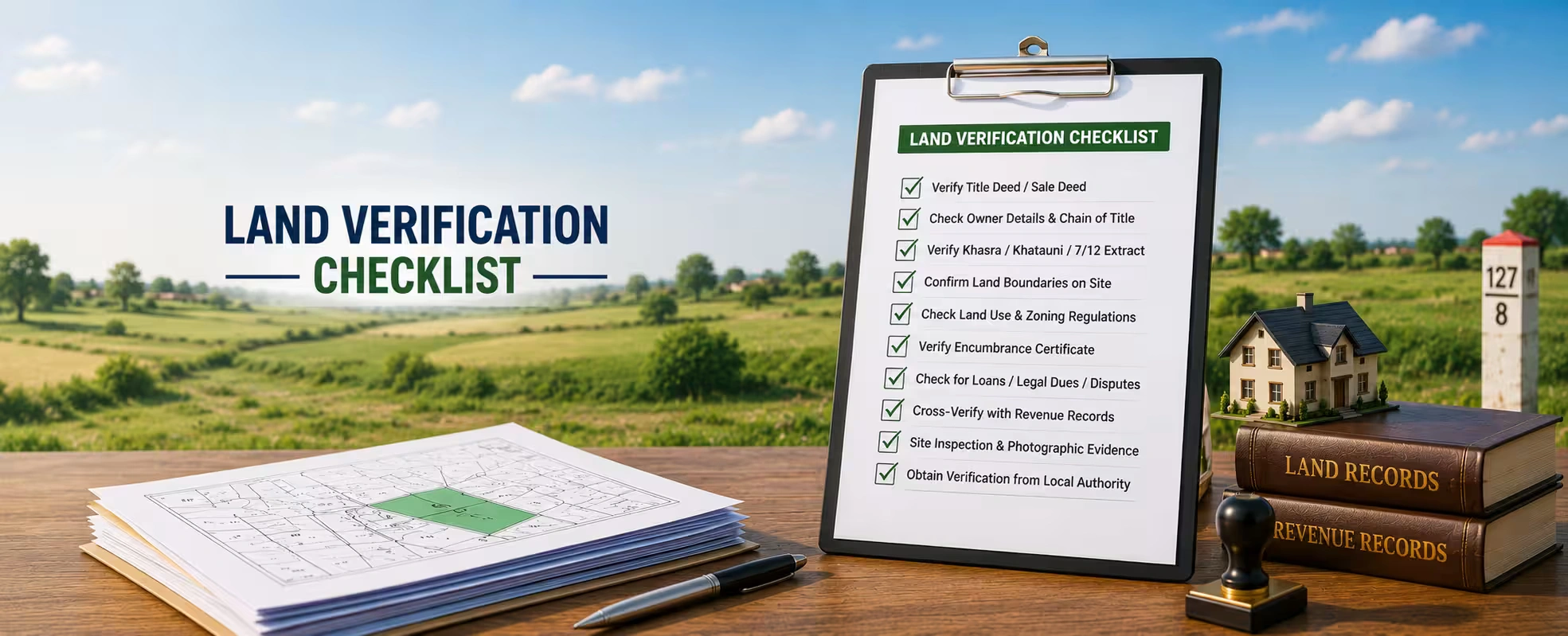
Buying land is one of the most important financial decisions you will ever make. And yet, so many people try to make this decision fast even without checking the basics. That is where things go wrong. A proper land due diligence checklist is what stands between you and a costly mistake. Whether you want to Buy Land in India for the purpose of farming, building a home, or investment, verifying the land before you pay is not optional. It is the smartest thing you can do. This guide covers every step of the process. Make sure to read it before making any big decision.
Why Land Due Diligence Cannot Be Skipped?
India has one of the highest rates of property disputes in the world. Changed documents, unclear titles, unpaid dues, and boundary conflicts are not rare. They happen all the time, even in well-known areas. When you purchase land in India without checking properly, you could end up with land you cannot use, sell, or build on. You might also inherit someone else's debt. A land verification checklist protects you from all of this before it becomes your problem.
1. Legal Document Verification
This is the foundation of agricultural land due diligence. Without valid legal documents, nothing else matters.
Title Deed: The title deed proves ownership. Make sure to check the original, not a photocopy. Trace the ownership history for at least 30 years. Look for gaps, disputes, or multiple names on the same land.
Encumbrance Certificate (EC): Get this from the Sub-Registrar's office. It shows every registered transaction on the land, loans, mortgages, and legal claims. Get the EC for at least 13 to 30 years. This is one of the most important legal documents for land purchase.
Sale Deed: The sale deed is what transfers the land from the seller to you. It must be registered at the Sub-Registrar's office. All parties must sign it in front of witnesses. The land details in the deed must match what you see on the ground.
Revenue Records / RTC: For farmland for sale in India, the Record of Rights, Tenancy, and Crop (RTC) or Pahani is critical. It tells you the current owner's name, land type, water source, and any government restrictions.
| Document | Purpose | Where to Get It |
| Title Deed | Proves ownership | Seller / Sub-Registrar |
| Encumbrance Certificate | Shows loans and claims | Sub-Registrar Office |
| Sale Deed | Transfers ownership | Registered with Sub-Registrar |
| RTC / Pahani | Agricultural land record | Revenue Department |
| Survey / Sketch Map | Shows land boundary | Survey Department |
| Tax Receipts | Confirms dues paid | Municipal / Panchayat |
2. Physical Verification
Documents alone are not enough. You must visit the land and see it with your own eyes.
Survey and Boundary Check: Hire a licensed government surveyor. They will measure the actual land and confirm the boundaries. This is how you catch encroachment from neighbors or roads eating into your plot.
Soil and Land Condition: If you are looking at Farmland for Sale in India, check the soil quality. Is it fertile? Is it waterlogged? Does it flood during monsoon? These things directly affect how useful the land will be.
Road Access and Utilities: Check if there is a proper road leading to the land. Confirm electricity lines and water access nearby. A plot for sale in India with no road access or utilities is hard to develop and hard to resell.
3. Zoning and Land Use Check
Before you buy land in India, you must know what that land is legally allowed to be used for. Many buyers skip this and get stuck with land they cannot build on or farm.
| Land Use Type | What Is Allowed | Who Approves |
| Agricultural | Farming only, no construction | Revenue Department |
| Residential | Houses and apartments | Local Authority / RERA |
| Commercial | Shops, offices, warehouses | Municipal Corporation |
| Mixed Use | Combination of residential + commercial | Local Master Plan |
If you want to change how the land is used, say, build a house on agricultural land, you need a conversion certificate from the local authority. Without this, any construction is illegal.
4. Financial and Tax Clearances
Financial problems tied to the land become your problem the moment the sale is done. Run these checks before you finalise anything.
- Confirm all property tax payments are up to date
- Check for any government dues or penalties
- Verify no active bank loan or mortgage using the Encumbrance Certificate
- For a plot for sale in India in a new layout, confirm RERA registration
- Check that the approved layout plan is from the local development authority
- Calculate stamp duty and registration fees before signing
If someone is selling the land using a Power of Attorney, verify that the POA is valid, registered, and not expired. Fraudulent POA documents are one of the most common tricks in land scams.
5. Seller Verification
It is not just the land you need to check. You need to verify the person selling it too.
| Check | Why It Matters |
| Confirm identity with government ID | Prevents fraud and impersonation |
| Verify legal right to sell | POA or inheritance papers must be valid |
| Search for active court cases | Pending litigation can block your ownership |
| Check for co-owners or family claims | Others may have legal rights over the land |
| Confirm no government acquisition | Land under acquisition cannot be freely sold |
Do not rush this part. Spending a few days on seller verification can save you years of court battles.
Buy and Sell Agricultural Land Easily with 2Bigha
Finding genuine land listings in India is harder than it sounds. That is exactly the problem 2Bigha solves. 2Bigha is a real estate platform built for agricultural land and farmland transactions across India. It connects verified buyers and sellers, making it easier to find farmland for sale in India, list a plot for sale in India, or sell land in India without the usual headaches.
| Feature | What It Does for You |
| Verified Listings | Reduces risk of dealing with fraud |
| Pan-India Coverage | Find land for sale in India across all states |
| AI-Powered Recommendations | Matches your needs with the right properties |
| Expert Support | Get help from real estate and land experts |
| Market Insights | Access price trends and location data |
Whether you want to buy land in India for farming, purchase land in India for investment, or simply list your property for genuine buyers, 2Bigha makes the process straightforward and secure. Visit 2bigha.ai to get started.
Full Due Diligence Quick Checklist
| Category | Item to Verify |
| Legal | Title deed verified |
| Legal | Encumbrance Certificate obtained |
| Legal | Sale deed reviewed by lawyer |
| Legal | RTC / Pahani records checked |
| Physical | Site visit completed |
| Physical | Survey and boundary confirmed |
| Physical | Road access and utilities checked |
| Zoning | Land use certificate obtained |
| Zoning | Conversion certificate checked if needed |
| Financial | Property tax receipts verified |
| Financial | No active mortgage confirmed via EC |
| Financial | Stamp duty calculated |
| Seller | Identity verified with government ID |
| Seller | No active court cases confirmed |
| Seller | No government acquisition pending |
Conclusion
Land transactions in India involve real money and real risk. Whether you want to buy land in India, invest in farmland, or Sell Land in India, following a proper land due diligence checklist is what keeps you safe. Go through every step. Hire a local property lawyer. Verify every document in person. A few extra days of checking are far better than years of legal trouble after the fact. And when you are ready to find land for sale in India or list your own agricultural land, trust a verified platform like 2Bigha to connect you with the right people, quickly and safely.
Disclaimer: This article is for informational purposes only and should not be considered investment, legal, financial, or property advice. Real estate regulations, infrastructure plans, market conditions, and government policies may change over time. Readers are advised to verify information with relevant authorities and consult qualified professionals before making any investment or property-related decisions.