Key Takeaways
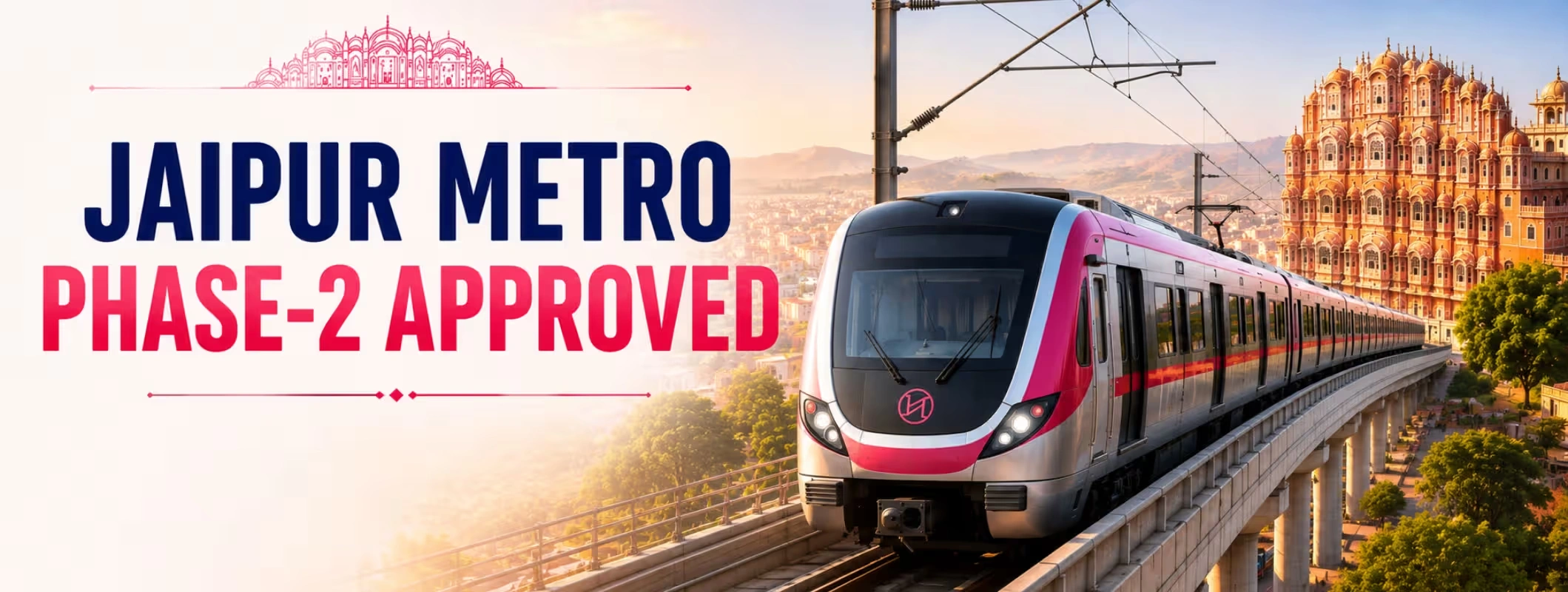
- Jaipur’s real estate market is entering a strong infrastructure-led growth phase after the Union Cabinet approved Jaipur Metro Phase-2, a ₹13,037.66 crore project covering a 41 km North–South corridor from Prahladpura to Todi Mod with 36 stations.
- The strongest Jaipur Metro Phase 2 real estate impact is expected around Sitapura, Sanganer, Jaipur Airport, Tonk Road, Durgapura, Gopalpura, SMS Hospital, Ambabari, Vidhyadhar Nagar, VKIA, Harmada and Todi Mod because these locations fall along major residential, commercial, industrial and institutional movement corridors.
- For investors, the best opportunity is not simply “near the metro.” The better strategy is to identify approved plots, clean-title land, JDA/RERA-compliant projects, road-access parcels, and localities where employment + transport + housing demand meet.
- 2Bigha can help buyers and sellers discover land opportunities with location-led property search, verified listing focus, and a simple subscription plan for visibility.
Why Jaipur Metro Phase-2 Matters for Real Estate
Jaipur Metro Phase-2 can push the Jaipur real estate boom 2026 because it improves daily connectivity between industrial zones, hospitals, airport areas, commercial corridors, residential pockets and upcoming outskirts. In Indian cities, metro-led growth usually increases demand around walkable station zones, main roads, feeder routes and mixed-use corridors. However, price growth will depend on project execution, station access, road width, land title, approvals, and actual buyer demand.
Jaipur Metro Phase-2: What Has Been Approved?
The approved Jaipur Metro Phase-2 is one of the biggest urban infrastructure decisions for Rajasthan’s capital. The project will create a long North–South public transport spine across Jaipur, connecting growth points that were earlier dependent mainly on road traffic.
As per official approval, the corridor will run from Prahladpura to Todi Mod, cover 41 km, include 36 stations, and cost ₹13,037.66 crore. The government statement also highlights connectivity to key activity nodes such as Sitapura Industrial Area, VKIA, Jaipur Airport, Tonk Road, SMS Hospital and Stadium, Ambabari, and Vidhyadhar Nagar.
Recent execution movement has also started. A Ceigall India–SAM India JV secured a ₹918.04 crore contract from Jaipur Metro Rail Corporation for part of Phase-II works, including an elevated viaduct and ten elevated metro stations over around 10.8 km, with an execution timeline reported as 34 months.
That is why this is not just a transport story. It is a property-market story.
Why Metro Connectivity Changes Property Demand
Metro does not automatically make every nearby property valuable. But it changes how buyers judge location.
Earlier, many Jaipur buyers looked at distance from main markets, road access, colony reputation, and price per sq. yard. After metro expansion, investors will also ask:
- Can I reach the airport faster?
- Can tenants commute without depending only on personal vehicles?
- Is the plot close to an upcoming station or feeder road?
- Will offices, hostels, PGs, retail shops, clinics or warehouses find demand here?
- Will resale buyers value this location five years later?
- This is where connectivity driven property growth begins.
India’s National Transit Oriented Development policy framework supports compact, planned and transit-linked urban development around public transport corridors. In simple words, when a city builds reliable mass transport, nearby land often becomes more useful for residential, rental, commercial and mixed-use activity.
For Jaipur, this could improve the value perception of both central areas and outer corridors.
Jaipur Metro Phase-2 Route and Key Localities
The proposed station list includes locations such as Prahladpura, Manpura, Bilwa Kalan, Bilwa, Goner Road, Sitapura, JECC, Kumbha Marg, Haldighati Gate, Pinjrapole Gaushala, Sanganer PS, Jaipur Airport, B2 Bypass, Durgapura, Gopalpura, Gandhi Nagar Railway Station, Rambagh Circle, Narayan Singh Circle, SMS Hospital, Ashok Marg, Government Hostel, Khasa Kothi, Collectorate, Ambabari, Panipench, Chomu Puliya, Vidhyadhar Nagar, VKIA, Harmada, Harmada Ghati and Todi Mod. This route gives Jaipur something it badly needed: a stronger North–South movement corridor.
Locality-Wise Metro Impact Table
Locality / Corridor | Why it Matters | Real Estate Impact | Best Fit For |
|---|---|---|---|
Prahladpura, Bilwa, Goner Road | Southern expansion belt near industrial and outer growth zones | Long-term land banking, affordable plots, plotted development | Buyers looking for early-stage growth |
Sitapura, JECC, Kumbha Marg | Industrial, institutional and event-driven demand | Rental housing, working professional demand, commercial support services | Investors, landlords, small commercial buyers |
Sanganer, Airport, B2 Bypass | Airport connectivity, traffic movement, established residential demand | Strong end-user and rental value potential | Homebuyers, rental investors, shop owners |
Tonk Road, Durgapura, Gopalpura | One of Jaipur’s most active urban corridors | Higher resale value, commercial frontage demand, apartment demand | Mid-to-premium buyers |
Rambagh, Narayan Singh Circle, SMS Hospital | Institutional, medical, sports and central-city demand | Limited supply, high utility, strong rental pull | Premium investors, commercial buyers |
Ambabari, Panipench, Chomu Puliya | North Jaipur movement and old residential catchment | Better connectivity may improve resale liquidity | End-users and small investors |
Vidhyadhar Nagar | Planned locality with residential and commercial base | Stable demand, better future connectivity | Families, long-term investors |
VKIA, Harmada, Todi Mod | Industrial belt and northern edge expansion | Warehousing, workforce housing, land appreciation potential | Land investors, industrial-linked buyers |
1. Sitapura and Prahladpura: The Industrial Growth Belt
Sitapura is already one of Jaipur’s important employment and industrial zones. With Metro Phase-2 directly connecting the Sitapura side, the area can become more attractive for workers, small business owners, rental housing operators and commercial support services. The real estate opportunity here is practical. People working in industrial areas want daily convenience. Businesses want better staff mobility. Landowners want better buyer attention. This combination can support Jaipur property investment near the metro over the next few years.
For investors, the Sitapura–Prahladpura belt is not only about flats. It can also support:
- Small residential plots
- Rental rooms and PG-style housing
- Local retail spaces
- Warehousing support pockets
- Service apartments near institutional/event areas
- Land banking in approved zones
But buyers should be careful. Do not buy only because someone says “metro aa rahi hai.” Check land title, approach road, JDA status, conversion status, drainage, electricity access and actual distance from the planned station.
2. Sanganer and Jaipur Airport: High-Utility Real Estate Zone
The Sanganer–Airport belt is one of the biggest winners in this plan. Airport connectivity increases the value of a location because it supports business travel, hospitality, rental demand and commercial visibility.
The approved corridor is expected to connect Jaipur Airport as one of the key activity nodes. That makes this zone important for investors tracking Jaipur upcoming property hotspots.
For buyers, the opportunity is stronger in:
- Residential plots near approved colonies
- Small commercial spaces near high-footfall roads
- Rental housing for airport, hospitality and service workers
- Properties with strong road access to Tonk Road and B2 Bypass
- Ready to sell plots in investment zones with clean paperwork
The airport belt will likely remain more competitive than far-out outskirts because it has both current demand and future infrastructure benefit.
3. Tonk Road and Durgapura: The Established Corridor Gets Stronger
Tonk Road is already one of Jaipur’s busiest property and business corridors. Metro Phase-2 can make it more powerful because it connects residential, commercial, airport and institutional movement.
Listing-platform data shows Tonk Road continues to attract buyer attention, with Square Yards reporting an average asking price of around ₹5,397 per sq. ft. as of March 2026; such portal numbers should be treated as indicative asking-price signals, not guaranteed transaction values.
For Jaipur property investment 2026, Tonk Road is attractive because it is not purely speculative. It already has schools, offices, hospitals, residential colonies, hotels, retail and road connectivity.
Metro can improve:
- Office commute
- Apartment demand
- Commercial rental demand
- Resale confidence
- Retail frontage value
- End-user convenience
However, entry prices may already be higher than outer corridors. So investors must compare price with rental potential and resale liquidity.
4. Gopalpura, Gandhi Nagar and Rambagh: Central Connectivity Premium
Central Jaipur has limited supply. That is why any improvement in public transport can create a premium around key nodes like Gopalpura, Gandhi Nagar, Rambagh Circle, Narayan Singh Circle and SMS Hospital.
These locations are already close to education, healthcare, government offices, sports infrastructure and established residential pockets. Metro access can make them more attractive for families, professionals, students, doctors, consultants and office-goers.
This is where public transport's impact on land value becomes visible. People pay more for time-saving locations.
Still, investors should not expect cheap deals in these zones. The better opportunity may be in resale units, small commercial properties, redevelopment potential, rental housing and mixed-use pockets where rules allow.
5. SMS Hospital and Narayan Singh Circle: Medical and Institutional Demand
The Phase-2 corridor is expected to improve connectivity to SMS Hospital and Stadium. This is important because hospital-driven locations create consistent demand.
Patients, attendants, doctors, students, nurses, medical suppliers, diagnostic labs and service businesses all need nearby access. Better metro connectivity can reduce travel friction for thousands of daily visitors.
Real estate demand here may grow in:
- Rental rooms
- Small hotels and guest houses
- Medical retail
- Clinics and diagnostic spaces
- Food outlets
- Parking-linked services
- Premium residential resale
For investors, this zone is more about utility and rental depth than cheap land appreciation.
6. Ambabari, Panipench and Chomu Puliya: North Jaipur Gets Better Linked
North Jaipur has many established residential pockets, but connectivity pressure has been a challenge. Metro Phase-2 can improve movement between the northern side and Jaipur’s airport, industrial and central areas. Ambabari, Panipench and Chomu Puliya may benefit because they sit between old residential demand and future north-side growth. With better connectivity, resale plots and residential units in these areas may become more liquid. For buyers searching best localities in Jaipur for investment, this belt is worth tracking because it offers a mix of old-city proximity, residential demand and metro-led future improvement.
7. Vidhyadhar Nagar: Planned Locality with Future Metro Advantage
Vidhyadhar Nagar already has a strong residential identity. Metro connectivity can add another layer of value by improving mobility for families, professionals and businesses. The area may not behave like a low-cost speculative market. It is more suitable for buyers who want a balance of livability, resale value and long-term stability. For end-users, Vidhyadhar Nagar can become more attractive if station access, feeder roads and parking are planned well. For investors, the opportunity lies in quality residential units, approved plots, and commercial pockets near movement corridors.
8. VKIA, Harmada and Todi Mod: Industrial + Outskirts Investment Play
VKIA, Harmada and Todi Mod represent the northern expansion and industrial-linked side of Jaipur’s metro growth. Since the Phase-2 corridor extends toward Todi Mod and connects VKIA-side activity nodes, this belt can gain attention from land investors and businesses.
This is where Jaipur outskirts investment zones become relevant.
Possible demand drivers include:
- Industrial workforce housing
- Warehousing support
- Small logistics activity
- Budget plots
- Commercial roadside development
- Long-term land banking
- Rental demand from workers and small business operators
The biggest caution: outskirts can take time. Investors should not buy in unauthorized layouts or unclear-title parcels just because prices look low.
Jaipur Real Estate Price Growth Forecast: What to Expect?
A practical Jaipur real estate price growth forecast should be based on stages, not hype.
Short Term: 2026–2027
Search interest, broker activity and investor enquiries may rise around proposed stations. Sellers may start quoting higher prices in metro-linked corridors.
Medium Term: During Construction
Locations where actual work begins, barricading starts, stations become visible and access roads improve may see stronger demand.
Long Term: After Operations Begin
The biggest value normally comes when daily commuters start using the metro and rental demand becomes visible. At that stage, properties near usable stations, feeder roads and mixed-use zones can command better liquidity.
The smart investor should track execution, not only announcements.
Also Read: Jaipur Airport Metro Update: Underground Tunnels to T1, T2 & T3
What Type of Property Can Perform Well Near Jaipur Metro Phase-2?
1. Approved Residential Plots
Approved plots near upcoming metro corridors can attract buyers who want flexibility. These are useful for families, small builders and long-term investors.
2. Rental-Focused Homes
Areas near Sitapura, Sanganer, Durgapura, SMS Hospital and VKIA may support rental demand from workers, professionals, students and business travellers.
3. Small Commercial Units
Metro stations create movement. Movement creates demand for food, pharmacy, stationery, repair, daily needs, clinics and service businesses.
4. Land Banking Parcels
Outer zones like Bilwa, Prahladpura, Harmada and Todi Mod may interest investors looking for lower entry prices. But due diligence matters more here.
5. Resale Properties in Established Areas
Tonk Road, Durgapura, Gopalpura, Vidhyadhar Nagar and Ambabari may offer better resale confidence because they already have livability and infrastructure.
Buyer Checklist Before Investing Near Jaipur Metro Phase-2
Use this checklist before buying plots or property near upcoming metro stations:
Checklist Point | Why it Matters |
Check JDA/RERA approval | Avoid illegal or risky projects |
Verify land title | Prevent ownership disputes |
Confirm actual station distance | “Near metro” should not mean 5–7 km away |
Check road width and access | Narrow roads reduce resale and commercial value |
Review land-use zoning | Residential, commercial and mixed-use rules matter |
Check drainage and utilities | Poor civic services reduce livability |
Compare current price with nearby localities | Avoid overpaying because of metro hype |
Ask about possession and development timeline | Delayed projects reduce returns |
Visit during peak traffic hours | Real commute experience matters |
Use verified platforms and local experts | Reduces misinformation and broker pressure |
How Sellers Can Benefit from the Jaipur Metro Phase-2 Boom
If you own land or plots near the proposed corridor, this is the right time to prepare your property for serious buyers.
Do not simply increase the price blindly. Instead:
- Keep ownership documents ready
- Get land maps and boundaries verified
- Mention distance from proposed metro station clearly
- Add road width, nearby landmarks and approval status
- Use good photos and location pins
- Highlight resale, rental or commercial potential
- List on discovery platforms like 2Bigha for better buyer visibility
- A buyer will pay more only when your property looks trustworthy.
How 2Bigha Fits into Jaipur’s Metro-Led Property Market
Jaipur’s metro expansion will create more buyer searches like buy plots in Jaipur near metro, plots for sale Jaipur metro Phase 2, buy land low price Jaipur outskirts, and resale plots Jaipur metro connectivity areas.
2Bigha can support this shift by helping buyers discover land and plot options through a location-first experience. For sellers, agents and property owners, it creates a better way to present land with clearer details, better visibility and stronger trust signals.
In a market where metro news can create hype, verified information becomes the real advantage.
Best Localities in Jaipur for Investment After Metro Phase-2 Approval
Based on connectivity, future demand and real estate usability, these are the key localities to track:
- For Affordable Plot Investment: Prahladpura, Bilwa, Goner Road, Harmada, Todi Mod
- For Industrial and Rental Demand: Sitapura, VKIA, Harmada, JECC belt
- For Airport and Commercial Growth: Sanganer, Jaipur Airport, B2 Bypass, Tonk Road
- For Established Residential Demand: Durgapura, Gopalpura, Ambabari, Vidhyadhar Nagar
- For Premium Utility and Resale: Rambagh, Narayan Singh Circle, SMS Hospital, central Jaipur pockets
This is not a guarantee of price appreciation. It is a practical locality map based on infrastructure alignment and demand potential.
Final Thoughts
The approved ₹13,000 crore Jaipur Metro Phase-2 can become a turning point for Jaipur’s property market. It connects the city’s industrial, residential, airport, institutional and commercial zones into one stronger mobility corridor.
For investors, the real opportunity is not in chasing rumours. It is in buying the right property at the right price, with clean paperwork, strong access, and genuine future demand.
The Jaipur infrastructure growth effect will reward informed buyers more than emotional buyers. Metro proximity is powerful, but only when combined with legal clarity, road access, livability and resale demand.
Jaipur’s next real estate cycle will likely favour corridors where metro connectivity meets employment, housing and planned urban growth.