The institutional investments in Indian real estate from January to September 2026 stood at $5.9 billion, a 39% increase compared to the same period last year, and the best nine months in recent times, says Colliers India. The important thing here for any landowner or new buyer is who invested that money. It was done mainly by domestic investors and not by any foreign investment funds. This is discussed in the following sections for anyone who owns farmland or is planning to buy one.
Quick snapshot
- Domestic investments stood at around $3.5 billion, accounting for about 60% of the total.
- Domestic investments were up by 59% year-over-year.
- Office space saw the largest share at 37% of the nine-month investments.
- Bengaluru, Chennai, and Delhi NCR alone accounted for almost a third of the investments.
- Not much of this was invested in agricultural land, where most investors need to realign their expectations.
What did the report find?
The third quarter gives the clearest picture of the direction. Inflows in Q3 rose 12% year-on-year to $1.42 billion, and domestic investors drove that growth. They put in $926.3 million, 21% more than a year earlier, which made up 65% of the quarter's total. Foreign investment dipped 3% to $490 million.
Colliers India's chief executive said local investors keep preferring core assets, with residential and office segments taking 46% of the domestic capital in the quarter. Residential money went mostly into development projects, while office money went into buildings that already earn rent.
Why does it matter that domestic investors are leading?
Domestic currency tends to be less affected by the conditions in international markets; therefore, a market that is dominated by domestic currency tends to be more stable. This is a trend and not an assurance. Colliers stated that the strengthening of the domestic capital would be the most prominent feature of the period, and this would be sustained by more domestic pools as well as increased foreign amounts in the next quarters. For a land investor, the reading is quite easy. The confidence in Indian real estate is currently high, and the investors are primarily Indian.
Do these inflows reach farmland?
Institutional investment does not directly make land selling easier. Most institutional funds prefer assets that are easy to value, resell, and generate steady rental income, such as commercial office properties. Farmland is different because its resale potential depends on location, road access, water availability, legal clearances, and local buyer demand. Landowners looking to sell land should focus on clear ownership documents, competitive pricing, and highlighting the plot's practical advantages to attract serious buyers.
| Point | Institutional real estate | Farmland plot |
|---|---|---|
| Who buys | Funds, REITs, large developers | Individuals, families, small investors |
| What they buy | Office towers, projects, warehouses | A few bighas or acres of land |
| Income | Regular rent | Crops, or a later sale |
| Ease of selling | Easy to price and trade | Depends on papers, location, buyer |
| Paperwork | Standardised and audited | Varies by state and by record quality |
The link is indirect and slow. Developers who receive this money need land for their next projects, and that demand shows up first at the edges of big cities, then gradually in the villages around them. It takes years, it favours places with good roads and approvals, and it skips plenty of areas completely. A record quarter for office investment tells you nothing about the price of a plot three hours from the nearest city.
How should buyers read the signal?
Treat it as a confidence signal, not a price forecast. A few practical points:
- Start your farmland search with a purpose, whether that is farming, a weekend farmhouse, or holding for ten years. The purpose decides everything else.
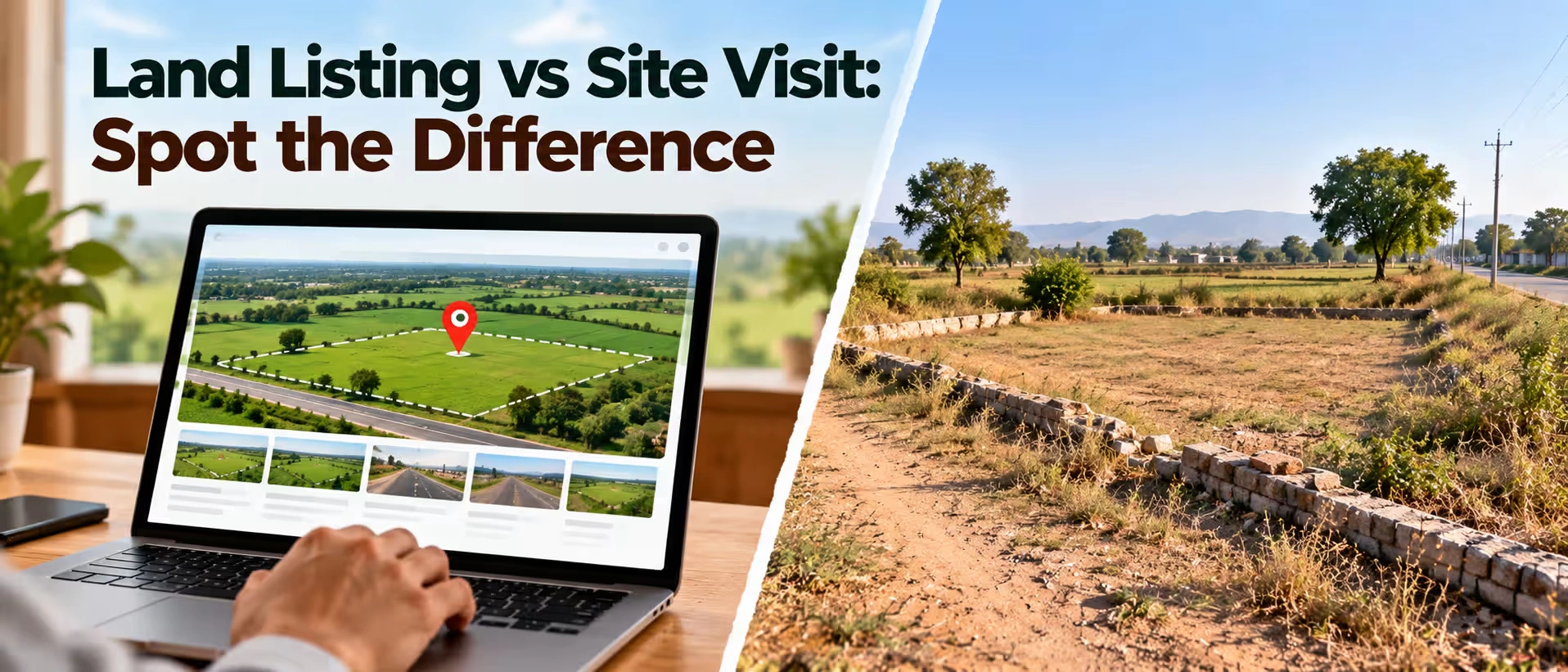
- Results for farmlands near me are only a starting list. Near by pin location can mean a long drive on a bad road, so check the actual travel time.
- A plot for sale near me looks good in a listing, but check the land use, access, and water yourself before you fall for the photos.
- Compare prices with recent registered deals around the plot, not with what the agent quotes.
- Be careful about any pitch that links a plot to "institutional investment in the area" without naming a project.
One more thing worth keeping in mind. The money is concentrated, since a few big cities and a few asset types take most of it. If your land is in a district that has no new roads, jobs, or approvals coming, a headline like this won't change much for you.
What should you check before buying?
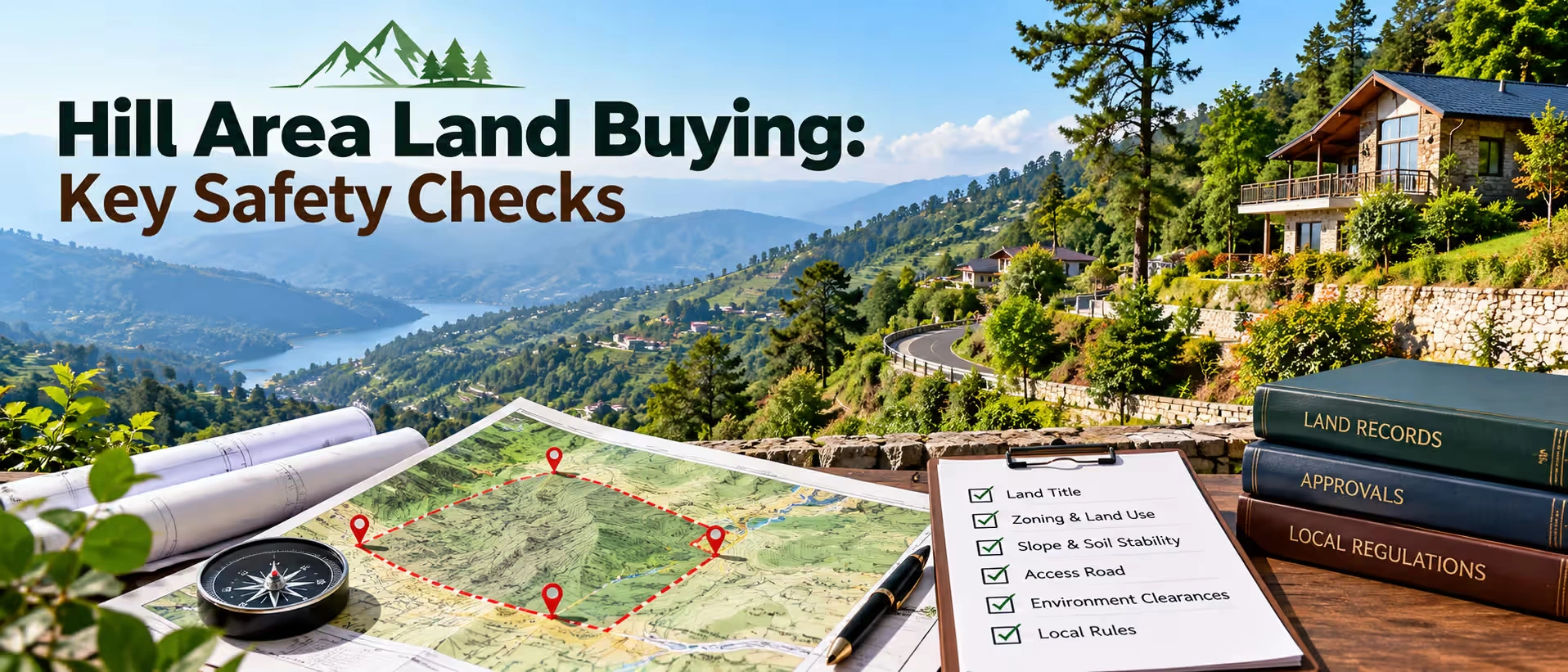
Plenty of agriculture land for sale looks identical on paper, so the checks below separate good deals from bad ones:
- Title chain for the last few owners, with all legal heirs accounted for.
- Land use status and whether conversion is needed for what you plan to do.
- A road that actually reaches the plot, with a written right of way if it crosses someone else's field.
- Water source, and its condition in summer, not only in the monsoon.
- Encumbrance and loan records, so nothing is pledged.
- Who is physically in possession, and whether a tenant or sharecropper is on it.
- A soil test, especially pH and salt levels.
What does it mean for sellers?
Strong investor sentiment helps land selling in general, but buyers still ask for clean papers and a fair price. If you plan to sell land, spend your effort where it moves the deal:
| Your situation | What helps |
|---|---|
| Land at the edge of a growing town | Clean title, neighbours willing to sell together, clear map |
| Inherited land | Every heir's signature and updated mutation before listing |
| Farmland far from town | Show water, road access and crop history |
| Conversion pending | Settle it first, or disclose it clearly in the listing |
Sellers who attach papers and photos to the listing tend to waste less time on casual enquiries. Also compare two or three offers before you commit, and keep your tax receipts and record extracts in one folder.
Find and Check Land with 2Bigha
The 2Bigha is a market for land and agricultural land in India. Explore land listings through the trusted listings.
- Search through the listings of farming and agricultural land.
- Generate your land report to ensure all important aspects are covered.
- Schedule your visit after shortlisting the listing.
- If you have any land, then list and connect with genuine buyers.
Disclaimer: This article is for informational purposes only and should not be considered investment, legal, financial, or property advice. Real estate regulations, infrastructure plans, market conditions, and government policies may change over time. Readers are advised to verify information with relevant authorities and consult qualified professionals before making any investment or property-related decisions.