Key Takeaways
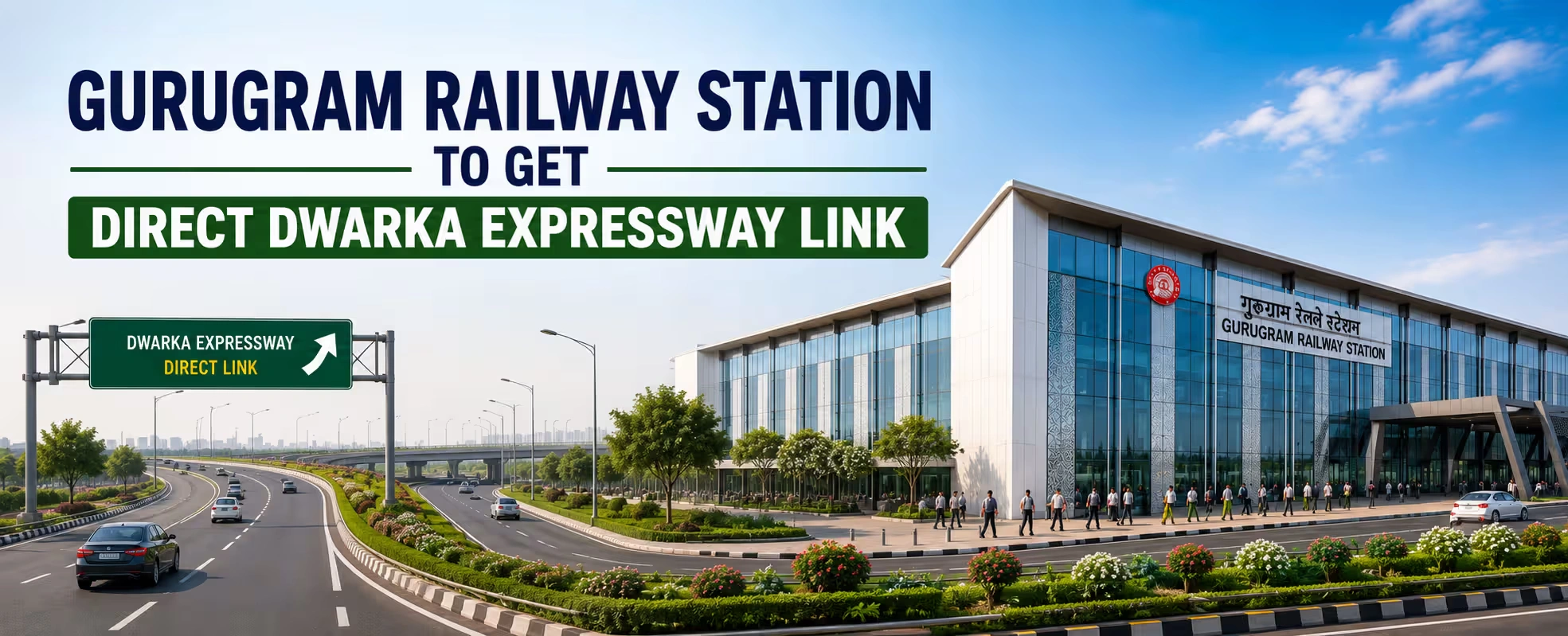
- The proposed Gurugram Railway Station to Dwarka Expressway link is being studied as part of a larger plan to improve access to the redeveloped railway station.
- Authorities are examining the Sector 104–105 dividing road as an important connection point between the expressway and the station side of Gurugram.
- Daultabad Road currently provides a broad connection towards Old Railway Road, but congestion, dense habitation and limited road space make major alterations challenging.
- Elevated, dedicated and direct-access corridors have been discussed, but the final alignment has not yet been approved.
- No officially confirmed Gurugram Railway Station direct road opening date has been announced.
- Better road access could benefit commuters and strengthen the attractiveness of Sectors 103, 104, 105, Rajendra Park, Daultabad, Basai and surrounding neighbourhoods.
- Property buyers should treat the proposal as a long-term connectivity advantage, not as a guarantee of immediate price appreciation.
What Is the Latest Update on the Gurugram Railway Station–Dwarka Expressway Link?
Gurugram authorities are planning better road connectivity between the redeveloped railway station, Dwarka Expressway, Sector 5 and the surrounding city road network. One of the main options under consideration involves strengthening access through the Sector 104–105 dividing road.
Officials are expected to study whether this road can support increased traffic once the railway station redevelopment becomes fully operational. The assessment may cover road redesign, land availability, pedestrian movement, traffic circulation and the feasibility of a more direct connection.
A consultant is also expected to examine possible elevated or dedicated road solutions. One idea discussed involves a left-turning elevated corridor carrying vehicles from the expressway side towards the railway station area. However, this remains an option under study rather than a sanctioned construction plan.
The proposed connectivity improvements could also influence land purchase in Gurugram, particularly in areas located near the railway station, Dwarka Expressway and adjoining sectors. Improved accessibility often becomes an important consideration for buyers evaluating long-term land investment opportunities, although actual market movement will depend on the project's final approval and execution.
The most important point for commuters, land purchase in Gurugram, and property buyers is simple: the Gurugram Railway Station direct link is currently a connectivity proposal under assessment. It should not yet be treated as a completed, tendered or operational road.
Quick Answer: Is Gurugram Railway Station Directly Connected to Dwarka Expressway?
Gurugram Railway Station does not currently have a purpose-built, signal-free direct corridor from Dwarka Expressway. Travellers can use the existing local road network, including Daultabad Road and Old Railway Road, to reach the station.
Authorities are now studying a more efficient connection through the Sector 104–105 side. The final design could involve road strengthening, junction improvements, land acquisition or an elevated connection, depending on technical feasibility.
Therefore, anyone searching for how to reach Gurugram Railway Station from Dwarka Expressway should continue using the existing road network and live navigation until an officially approved route becomes operational.
Current Project Status at a Glance
| Project Component | Present Position | What It Means for Commuters |
| Direct expressway-to-station road | Under feasibility assessment | No final route or opening date yet |
| Sector 104–105 road improvement | Identified as an important option | Could become a key approach corridor |
| Daultabad Road connection | Existing road access | Available but affected by local congestion |
| Elevated or dedicated corridor | Discussed as a possible solution | Subject to technical study and land availability |
| Sector 5 junction redesign | Under consideration | May improve drop-off and pick-up movement |
| Railway station redevelopment | Construction underway | Better surrounding access will become increasingly important |
| Pedestrian and local access planning | Part of wider discussions | Necessary to prevent station traffic from affecting residents |
| Project Component | Present Position | What It Means for Commuters |
| Direct expressway-to-station road | Under feasibility assessment | No final route or opening date yet |
| Sector 104–105 road improvement | Identified as an important option | Could become a key approach corridor |
| Daultabad Road connection | Existing road access | Available but affected by local congestion |
| Elevated or dedicated corridor | Discussed as a possible solution | Subject to technical study and land availability |
| Sector 5 junction redesign | Under consideration | May improve drop-off and pick-up movement |
| Railway station redevelopment | Construction underway | Better surrounding access will become increasingly important |
| Pedestrian and local access planning | Part of wider discussions | Necessary to prevent station traffic from affecting residents |
Why Does Gurugram Railway Station Need a Better Approach Road?
The station is being transformed from a conventional suburban railway facility into a larger urban transport hub. A modern station building alone cannot solve passenger movement problems if travellers remain stuck on narrow or congested roads outside it.
The proposed railway station approach road improvements matter for five practical reasons.
1. Passenger Traffic Is Expected to Increase
A redeveloped station with improved passenger amenities, parking and circulation is likely to attract more travellers. Without wider and better-organised access, additional vehicles may place pressure on Old Railway Road, Sheetla Mata Road, Daultabad Road and nearby residential streets.
2. Existing Roads Serve Local Neighbourhoods
Daultabad Road and nearby internal roads do not serve railway passengers alone. They also support residents, shops, schools, small businesses, delivery vehicles and local public transport.
Any new station traffic plan must therefore separate through traffic from neighbourhood movement wherever possible.
3. The Station Needs Organised Drop-Off and Pick-Up Areas
Railway stations usually experience concentrated traffic before major train departures and immediately after arrivals. Random stopping by private cars, taxis, autorickshaws and buses can quickly block an approach road.
Authorities have discussed more organised drop-off and pick-up arrangements around the Sector 5 side. A properly designed circulation system would allow vehicles to enter, drop passengers and exit without creating unnecessary conflict with local traffic.
4. Pedestrian Safety Requires Equal Attention
Many passengers reach Gurugram Railway Station by foot, autorickshaw or shared transport. Wider roads without footpaths, crossings, lighting and safe access points would simply shift the problem rather than solve it.
The project must consider pedestrian subways, footpaths, shaded waiting areas, cycle access, bus bays and safe crossings along with vehicle capacity.
5. Dwarka Expressway Has Changed Gurugram’s Movement Pattern
The operational expressway has shifted residential and commercial growth towards western and north-western Gurugram. A large number of residents now live in sectors that are geographically closer to the railway station than to New Delhi or Delhi Cantonment railway stations.
Improved Dwarka Expressway railway station connectivity could allow these residents to use Gurugram Railway Station more conveniently instead of travelling deeper into Delhi to board suitable trains.
Also Read: 3 New Industrial Hubs Planned on 1,800 Acres in Gurugram
What Could the Proposed Route Look Like?
The exact alignment has not been finalised. Based on the road network being examined, the proposed connection is likely to focus on the western side of the railway station and the roads linking it with Sectors 104 and 105.
At present, the broad Dwarka Expressway to Gurgaon Railway Station route can involve:
Dwarka Expressway → Sector 104–105 area → Daultabad Road or connecting local roads → Old Railway Road → Gurugram Railway Station.
This is not a newly approved direct corridor. It represents the general existing movement pattern through local roads.
The future alignment could take one of several forms:
- Widening or strengthening parts of the existing approach network
- Improving intersections and traffic signals
- Creating a dedicated station-bound road
- Building an elevated section over congested neighbourhood stretches
- Redesigning access around Sector 5
- Creating separate entry and exit movements for station traffic
- Developing a direct elevated turn from the expressway side
Technical studies will determine which option is practical. Land acquisition could become the most difficult part because the present corridor passes close to densely populated neighbourhoods and established commercial activity.
Why the Sector 104–105 Dividing Road Matters
The connecting road from sectors 104 & 105 can play a pivotal role being located between Dwarka Expressway and the railway station side. In other words, this road has the potential to act as a feeder road and not make station bound cars use the old roads.
Improved connectivity of Sector 104 Gurgaon road can result in traffic diversion in favor of a better network connectivity. It can be a better solution for people living in Sector 102, 103, 104, 105, 106 and adjoining areas.
Sector 105 is of particular importance due to its proximity to the railway station and Dwarka Expressway. Sector 105 Gurugram Railway Station access and Dwarka Expressway access will make it an important micro-market in terms of future transport connectivity.
Nevertheless, proximity on the map doesn’t imply ease in commute as road quality, drainage, traffic junctions, encroachments and public transport connectivity will determine the commute experience.
Areas Likely to Experience the Most Direct Impact
Sector 104
Sector 104 lies directly along the Dwarka Expressway corridor and includes high-rise apartments, plotted communities, independent housing and developing commercial activity.
A stronger station link could make the sector more practical for residents who travel frequently by train. It could also improve access for domestic workers, service staff and small businesses that depend on public transport.
From a real estate perspective, property investment in Sector 104 Gurgaon may gain from improved multimodal connectivity. Still, buyers should examine project quality, possession status, road access, water availability, maintenance charges and developer credibility before paying a connectivity premium.
Sector 105
Sector 105 is already positioned relatively close to the railway station. Better approach infrastructure could strengthen its value as a residential location connecting older Gurugram with the expressway corridor.
Demand for apartments near Sector 105 Gurugram may benefit if actual travel time to the station becomes more predictable. The strongest advantage would be for end-users who need both expressway access and frequent railway travel.
Rajendra Park
Rajendra Park is an established, densely populated area near the railway station approach network. Any road redesign could improve connectivity, but it may also bring construction disruption and increased traffic.
The proposed Rajendra Park railway station entrance or nearby access improvements must protect residential movement. Authorities would need to prevent station-bound vehicles from using narrow colony streets as shortcuts.
Daultabad
Daultabad Road currently performs an important linking function. It connects the expressway side with Old Railway Road but passes through developed neighbourhoods where widening may be difficult.
The quality of junction improvement, enforcement and pedestrian planning will decide whether Daultabad experiences smoother movement or greater traffic pressure.
Basai
The reason why Basai is becoming an increasingly critical node in terms of connectivity is due to its proximity to Dwarka Expressway, metro development and western part of Gurugram.
Improved Basai-Gurgaon connectivity can lead to the development of a system where people can move from road, metro and rail transport systems. This would be a bigger accomplishment than a simple road connectivity project.
Sectors 102, 103 and 106
These sectors may receive an indirect advantage because they can access the proposed station corridor through the expressway and internal sector roads. Their benefit will depend on the completion and maintenance of local connecting roads rather than the main link alone.
How Will the Link Affect Daily Commuters?
The biggest benefit will not necessarily be a dramatic reduction in distance. It will be a more reliable travel time.
Today, a short journey can take much longer when local roads become congested near residential colonies, markets, schools or railway crossings. A properly designed new road to Gurugram Railway Station could give commuters:
- A clearer route from western Gurugram
- Fewer unpredictable bottlenecks
- More organised taxi and autorickshaw access
- Better drop-off and pick-up movement
- Improved pedestrian safety
- Easier access for buses and shared transport
- Reduced dependence on narrow colony roads
The road could also help passengers arriving from Delhi, Manesar, New Gurugram and the wider NCR. However, benefits will depend on traffic management after completion. Even a wide road can become congested when roadside parking, encroachment and unplanned commercial activity are not controlled.
Gurugram Railway Station Redevelopment: What Is Being Built?
The ongoing Gurugram Railway Station redevelopment is designed to create a larger and better-organised passenger facility.
Major elements associated with the project include:
- A new main station building
- An air concourse connecting passenger areas
- A modern foot overbridge
- Multi-level vehicle parking
- Improved platform surfaces and roofing
- Better external circulation
- Water and sewage management systems
- Rainwater harvesting
- Energy-efficient and sustainability-focused design
- Improved natural light and ventilation
A larger parking structure can reduce random roadside parking, but only when entry and exit roads are properly designed. Similarly, a modern concourse can handle passengers inside the station, but the overall experience will remain incomplete without reliable last-mile access.
This is why station redevelopment and road connectivity must move together.
Is There a Confirmed Opening Date?
No confirmed Gurugram Railway Station direct road opening date has been publicly announced.
Authorities first need to complete the feasibility assessment, identify the alignment, examine land requirements, prepare the detailed project report, secure approvals, allocate funding and award construction work.
An infrastructure project of this nature normally passes through the following stages:
- Preliminary concept and inter-agency consultation
- Traffic and feasibility study
- Alignment selection
- Land and utility assessment
- Detailed project report
- Administrative and financial approval
- Tendering and contractor appointment
- Construction
- Safety inspection and opening
The project should not be described as “opening soon” unless authorities publish a formal construction schedule.
People searching for when will Gurugram Railway Station direct link open should track announcements from GMDA, the Haryana Government, Northern Railway and RLDA rather than relying on marketing claims circulated by property brokers.
What Has Been Confirmed and What Remains Uncertain?
Confirmed
- Gurugram Railway Station is undergoing major redevelopment.
- Authorities have discussed improving station approach roads.
- The Sector 104–105 side is being considered for stronger expressway connectivity.
- Daultabad Road currently links the expressway side towards Old Railway Road.
- Sector 5 traffic circulation and station drop-off arrangements require improvement.
- Elevated or dedicated access options are being examined.
Not Yet Confirmed
- The final road alignment
- The total project cost
- The exact land acquisition requirement
- Whether the corridor will be fully elevated
- The construction start date
- The completion or opening date
- Final entry and exit points
- Tolling, if any
- Traffic restrictions on surrounding roads
This distinction matters because speculative real estate advertisements often present proposed infrastructure as approved infrastructure.
Real Estate Impact: Will Property Prices Increase?
The proposed link is positive for surrounding real estate, but its effect will vary by location and property type.
Dwarka Expressway has already witnessed substantial price appreciation. A PropEquity assessment reported that average launch prices along the corridor rose from approximately ₹9,434 per sq. ft. in 2020 to ₹18,668 per sq. ft. in 2024.
That historical rise does not mean prices will continue increasing at the same rate. Much of the expressway benefit is already reflected in current asking prices, especially in established and premium projects.
A railway station connection can add another layer of accessibility, but buyers should differentiate between three stages of infrastructure value:
Announcement Stage
At this stage, the market reacts to news, proposals and early planning. Price expectations may rise before any physical work begins. Risk is highest because the alignment can change or the project can face delays.
Construction Stage
Once contracts are awarded and visible work starts, confidence generally improves. Construction can also cause temporary inconvenience, road diversions, noise and dust.
Operational Stage
The real benefit becomes measurable only after opening. Buyers can then assess actual travel time, road quality, public transport availability and congestion.
The smartest approach is to evaluate property near Dwarka Expressway on its existing merits. Treat the proposed station link as an additional future advantage rather than the only reason to purchase.
Which Property Segments May Benefit?
Residential Apartments
Ready-to-move and well-managed residential developments near Sectors 103, 104, 105 and 106 may attract end-users seeking both Delhi access and railway connectivity.
Plotted Developments
Plots can benefit from infrastructure-led demand, but they also carry higher due-diligence requirements. Buyers must verify title, land use, road access, mutation, zoning and development permissions.
Independent Floors and Houses
Independent properties in established neighbourhoods may receive better access, although increased traffic could affect noise, parking and privacy.
Commercial Property
Convenience retail, small offices, hotels, food outlets and passenger services may gain from increased station footfall. Commercial investment should still depend on legal land use, frontage, parking and actual pedestrian movement.
Rental Housing
Employees, frequent travellers and workers associated with nearby commercial areas may prefer rental housing with affordable access to the station. Rental growth, however, will depend on neighbourhood quality and usable public transport, not distance alone.
Buyer Due-Diligence Checklist
Before buying property based on the proposed connectivity project, check the following:
- Is the road shown in an approved development plan or only in a promotional map?
- Has a detailed project report been approved?
- Does the property have legal and practical access to the main road?
- Is the project registered under Haryana RERA where required?
- Are the title documents and ownership chain clear?
- Does the site fall near a proposed acquisition or road-widening area?
- Are water, sewerage, drainage and power connections functional?
- How long does the journey take during morning and evening traffic?
- Is the quoted price based on registered transactions or only asking prices?
- Is the developer charging a premium for infrastructure that remains unapproved?
- Are schools, hospitals and daily retail facilities already operational?
- Would the property remain suitable even if the road project is delayed?
A site visit during peak hours often reveals more than a brochure. Buyers should test the route to the railway station, expressway, workplace and essential services before making a decision.
What Should Existing Property Owners Expect?
Existing owners may benefit from stronger accessibility, but they should also prepare for changes in traffic patterns.
Properties directly facing an improved road could gain commercial visibility. At the same time, residential properties may experience more traffic, roadside parking and noise.
Owners should follow official notices relating to road widening, utility shifting, access control and land acquisition. They should not make structural changes near the road boundary without checking local regulations.
For people exploring land opportunities around Gurugram, 2Bigha provides a map-based way to understand location context instead of judging a property only through promotional claims. Owners can also explore its subscription plan and property management service for structured support after acquiring or managing a property.
How the Project Fits into Wider Gurugram Development
The proposed road is not an isolated project. It forms part of a wider shift towards integrated transport in Gurugram.
The city is developing around several major infrastructure systems:
- Dwarka Expressway
- The Delhi–Gurugram Expressway
- Urban Extension Road-II
- The proposed expanded Gurugram Metro network
- Railway station redevelopment
- New sector roads in western Gurugram
- Improved airport connectivity
- Commercial and residential growth in New Gurugram
Effective Gurugram transport development requires these systems to connect rather than operate separately.
For example, a railway passenger living along Dwarka Expressway should ideally be able to reach the station by bus, metro, taxi, private vehicle, cycle or a safe pedestrian route. A road connection alone will not create a genuinely integrated transport system.
The project can therefore become an important part of New Gurgaon infrastructure, but only when it includes last-mile mobility and neighbourhood-level planning.
Practical Challenges That Could Delay the Project
Land Availability
The existing approach passes through or near developed areas. Acquiring land in densely occupied neighbourhoods can become expensive and socially difficult.
Utility Shifting
Water pipelines, sewer lines, electricity cables, telecom networks and drainage infrastructure may need relocation before road construction.
Traffic Diversions
Construction near an active railway station and established colonies will require carefully planned diversions.
Encroachments
Roadside encroachments, unauthorised extensions and informal parking can reduce usable road width. Long-term enforcement will be as important as construction.
Coordination Between Agencies
The project may require cooperation between GMDA, Municipal Corporation of Gurugram, PWD, traffic police, Northern Railway, RLDA and state-level departments. Delayed decisions between agencies can slow implementation.
Drainage and Flooding
Western Gurugram has faced waterlogging in several locations during heavy rainfall. Any new corridor must include adequate stormwater drainage rather than simply adding more paved surface.
Unplanned Development
If commercial activity grows without parking and access control, the new link could eventually face the same congestion it was designed to remove.
Will the Link Reduce Traffic Congestion?
It could reduce pressure on existing access roads, but the outcome will depend on design and enforcement.
The project can support traffic decongestion in Gurugram by distributing station traffic across multiple routes and creating organised entry and exit movements.
However, congestion may simply shift towards the Sector 104–105 junction if connecting roads remain incomplete or unmanaged. Authorities need to study the entire traffic chain:
Dwarka Expressway exit → sector road → station approach → entry gate → drop-off zone → parking → exit corridor.
Every section must carry the expected traffic volume. Improving only one section will create a new bottleneck at the next junction.
What Should Commuters Do Until the Direct Link Opens?
Travellers should continue using live navigation because the fastest route can change depending on traffic, construction and local diversions.
Before starting the journey:
- Check the train platform and departure status.
- Allow extra time during office hours.
- Avoid depending on a single local road.
- Confirm the station entry point with the driver.
- Use authorised parking or drop-off spaces.
- Check road conditions during the monsoon.
- Avoid following unverified “new direct road” routes through narrow residential lanes.
The most practical Gurgaon Railway Station connectivity improvement in the short term may come from better enforcement, traffic circulation and local road maintenance even before a completely new corridor is constructed.
What Developments Should Readers Track Next?
Readers should watch for the following milestones:
- Appointment of the technical consultant
- Publication of the feasibility study
- Announcement of the preferred alignment
- Land acquisition or right-of-way notices
- Approval of the detailed project report
- Financial sanction
- Tender announcement
- Contractor appointment
- Utility-shifting activity
- Physical construction near Sectors 104 and 105
- Redesign of the Sector 5 station approach
- Official construction and completion schedule
These milestones will provide a more reliable Gurugram Railway Station connectivity project status than property advertisements or social-media claims.
Final Assessment
The proposed connection between Gurugram Railway Station and Dwarka Expressway is a logical and necessary infrastructure move.
The station is being redeveloped into a larger transport facility, while a major share of Gurugram’s new residential population has shifted towards the Dwarka Expressway corridor. Connecting these two systems can improve daily mobility, strengthen western Gurugram’s transport network and reduce pressure on older approach roads.
However, the project remains at a planning and feasibility stage. The route, design, budget and completion date are not final.
For residents, the proposal offers the possibility of shorter and more predictable station access. For property buyers, it strengthens the long-term connectivity story of Sectors 103, 104, 105 and nearby areas. Buyers can also explore online land listings in Gurugram to compare available plots, assess location advantages and evaluate current market opportunities alongside upcoming infrastructure developments. But responsible buyers should invest based on current habitability, legal clarity and existing infrastructure—not solely on a future road announcement.
Disclaimer: This article is for informational purposes only and should not be considered investment, legal, financial, or property advice. Real estate regulations, infrastructure plans, market conditions, and government policies may change over time. Readers are advised to verify information with relevant authorities and consult qualified professionals before making any investment or property-related decisions.