It used to be the case that farming meant owning land and working it. If you did not own any land, then you would just do something else. This is no longer always the case. More people are farming rented land, and many people who own farmland are very willing to let it out rather than sell it. Is farming rented land the new way to go? Let us take a look at how things are changing and why.
What is Farm Leasing?
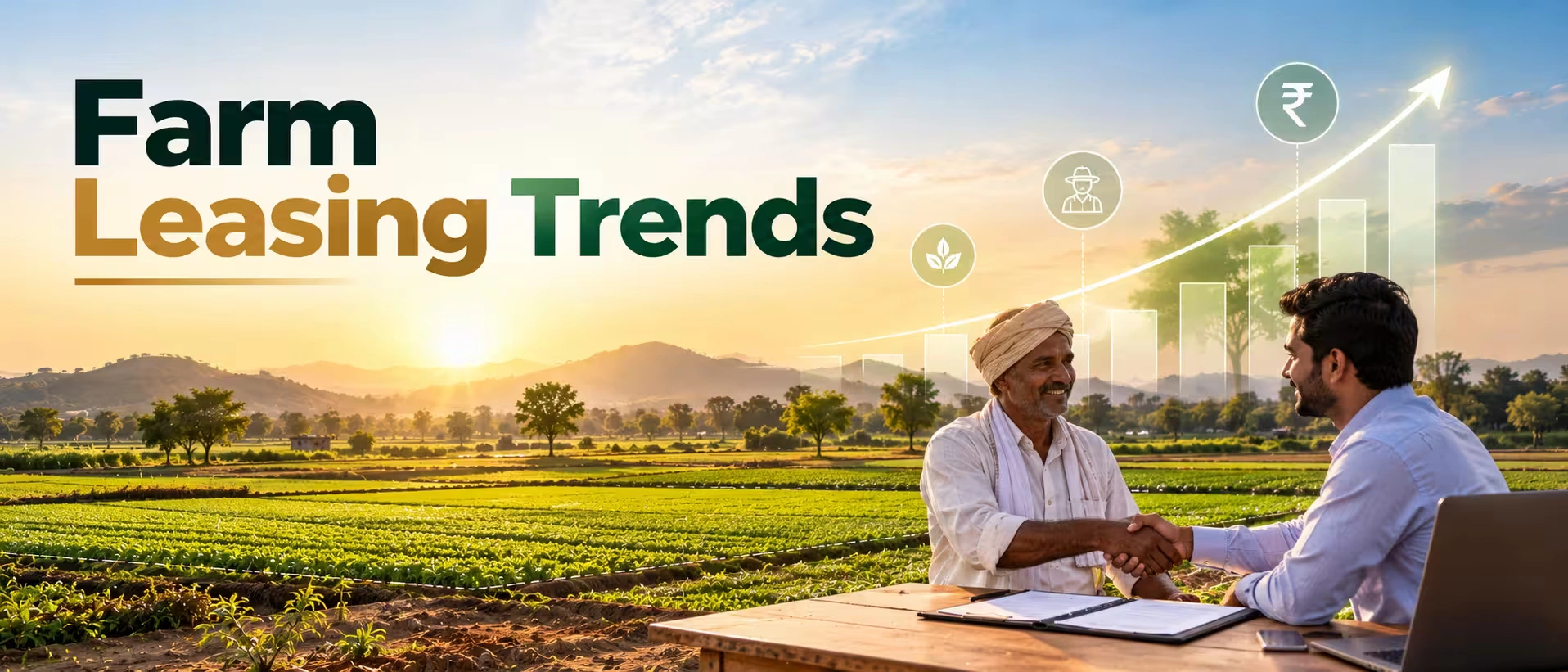
Farm leasing means an owner allows someone else to use their agricultural land for a fixed time. In return, the owner gets rent, a share of the crop, or another agreed benefit. The land stays in the owner's name. The person who leases it gets to farm it. Here are the common ways it works:
| Type of lease | How it works |
| Fixed cash rent | The farmer pays a set amount every year or season |
| Crop sharing | The owner and farmer split the harvest in an agreed ratio |
| Long-term lease | The land is rented for several years, often for orchards or plantations |
| Contract farming | A company or buyer arranges the land and crop, and the farmer works on it |
Why Leasing is Growing?
There is no single reason. A few things are pushing it forward, from changing farming patterns to growing interest in farm land for sale and more flexible ways of accessing agricultural land.
- Land is expensive. Buying is out of reach for many young farmers, so renting is the only way in.
- Farms are small. Many holdings are too small to be profitable, so farmers lease more land to expand.
- Owners live elsewhere. Many families have moved to cities and no longer farm, but they do not want to give up the land.
- New farmers are coming in. Agri-startups, growers of specialty crops, and people returning to farming often prefer to try before they buy.
- Awareness is improving. People now talk more openly about clearer lease rules and written agreements.
The government has also looked at this. NITI Aayog put forward a model law on agricultural land leasing in 2016 to make renting clearer and safer for both sides. Land is a state subject in India, so the rules differ from one state to another.
Owner or Tenant: Who Gains What
| Details | Land owner | Tenant farmer |
| Benefit | Regular income without selling | Access to land without a large purchase |
| Benefit | Keeps ownership for the future | Freedom to grow the area they farm |
| Risk | Disputes if there is no written agreement | Losing the land when the lease ends |
| Risk | Land may not be well cared for | Investing in the soil with no long-term security |
Both sides gain when the terms are clear and honest. Problems usually start when the agreement is only verbal.
Leasing vs Buying: What Should You Choose?
This is a common question, and the answer depends on your goal.
Leasing may suit you if:
- You are starting out and want to test farming first
- You do not have a large budget
- You want to expand without a big loan
- You need land only for a few seasons
Buying may suit you if:
- You want a permanent asset
- You plan to build a farmhouse or invest for the long term
- You want full control over how the land is used
- You are thinking about future value
Many people begin by leasing and later decide to buy. If you are in that second group and searching for farm land for sale, it helps to have a clear budget and a clear purpose before you begin. Some buyers look at crop land for sale because they want productive land that is ready to farm. Others prefer open plots for a farmhouse or a weekend retreat. Knowing which one you are makes the search much easier.
For Owners: Lease, or Sell?
If you own agricultural land, you have more than one option, and neither is wrong.
Option | Good for | Watch out for |
Lease it out | Steady income while you keep the land | Clear agreement and trusted tenant |
Sell it | A large amount now, or a fresh start | Fair price, clean papers |
Keep and farm it yourself | Those who want to stay involved | Time, labour and cost |
Some owners decide to list a farm for sell because the land is too far from where they live, or the family no longer farms. Others prefer to lease it and wait for a better time. Land selling is a big step, so it helps to know the current value of your area, keep your documents ready, and compare offers before saying yes. If you decide to sell, listing the land online can reach more buyers than word of mouth alone.
How to Lease Land the Right Way?
A lease should protect both sides. Whether you are the owner or the tenant, keep these points in mind, especially when land selling may be part of your future plans:
- Put everything in writing, and get the agreement registered where the law requires it
- Write down the exact land area, location, and survey details
- Fix the lease period, the rent, and the payment dates
- Agree who pays for water, electricity, and repairs
- State clearly what crops can be grown
- Decide what happens if either side wants to leave early
- Check the local rules, because they can vary by state
A short chat with a local lawyer before signing is well worth it.
Common Mistakes to Avoid
- Relying on a verbal deal because "we know each other"
- Not checking who actually owns the land
- Ignoring the state's leasing rules
- Leaving out payment dates and rent increases
- Taking land with no water or road access
- Investing heavily in soil or equipment on a very short lease
Is Renting the New Normal?
The honest answer is that it is becoming more common, but it is not replacing ownership. Leasing gives farmers a way in, and it gives owners a way to earn from land they might otherwise leave idle. At the same time, many people still want to own land, and demand for buying has not gone away. So the future is probably a mix. Some people will lease. Some will buy. Many will do both at different times in their lives.
How Can 2Bigha Help?
2Bigha is a land platform in India and one of the verified listing platforms dealing in land. Whether you are thinking of buying after leasing, or selling instead of leasing, here is what you can do on it:
- Buy: Browse land on a map and compare locations. If you type land for sale near me in a search engine, the map view helps you see what is actually available around you.
- Sell: List your land and reach buyers across the country
- Farms: Explore farm projects, like Palms & Pebbles near Alwar
- Land Report: Check a land before you lease or buy it
Our verified section has hand-checked listings, which is useful if you want extra comfort before you commit.
Final Words
Farm leasing is changing how people use land in India. It gives new farmers a way in and gives owners more choices. It works best when the paperwork is clear, and both sides trust each other. Whichever path you choose, do your homework first. And when you are ready to explore land, visit 2Bigha.
Disclaimer: This article is for informational purposes only and should not be considered investment, legal, financial, or property advice. Real estate regulations, infrastructure plans, market conditions, and government policies may change over time. Readers are advised to verify information with relevant authorities and consult qualified professionals before making any investment or property-related decisions.