Key Takeaways
- Dwarka Mor sits at the crossroads of the Outer Ring Road and the Blue Line metro corridor, which is the single biggest reason land here keeps finding new buyers every year.
- Developed residential rates in the belt currently move between roughly ₹3,477 and ₹5,382 per sq ft, with pockets near the metro pulling appreciation of around 8% in just six months.
- If you want to buy land in Delhi without paying South Delhi prices, the micro-pockets around Dwarka Mor, Nawada, Ashok Nagar, and Nangloi deserve a serious look in 2026.
- Farmers and landowners who want to sell agricultural land in Dwarka Mor are sitting on an asset whose government circle rate is being revised upward for the first time since 2008 — a shift that changes the negotiation math completely.
- Verified title documents, correct land-use zoning, and a trustworthy digital platform matter more than ever, because selling property online in Dwarka Mor has become the norm, not the exception.
Dwarka Mor doesn't get the same glossy brochures that Dwarka Sector 21 or Sector 23 get. No shiny sample flats, no rooftop infinity pools in the marketing pitch. And yet, ask any broker who's been working this belt for over a decade, and they'll tell you the same thing — this is where the real volume happens. Ordinary families, small investors, and first-time land buyers keep coming back to this stretch of southwest Delhi because it still offers something increasingly rare in the capital: a genuine entry point into land ownership without needing a crore-plus budget to get started.
I've spent time walking through these lanes — from the congested but lively main Dwarka Mor market to the quieter, semi-developed patches near Nawada and Ashok Nagar — and the pattern is consistent. Every year, a little more concrete replaces a little more open land, and every year, prices inch up in response. If you're weighing whether 2026 is the right window to enter, or whether you should finally cash out a family plot, this piece walks through what's actually happening on the ground, not just what the listings say.
Why Dwarka Mor Keeps Pulling Buyers Back
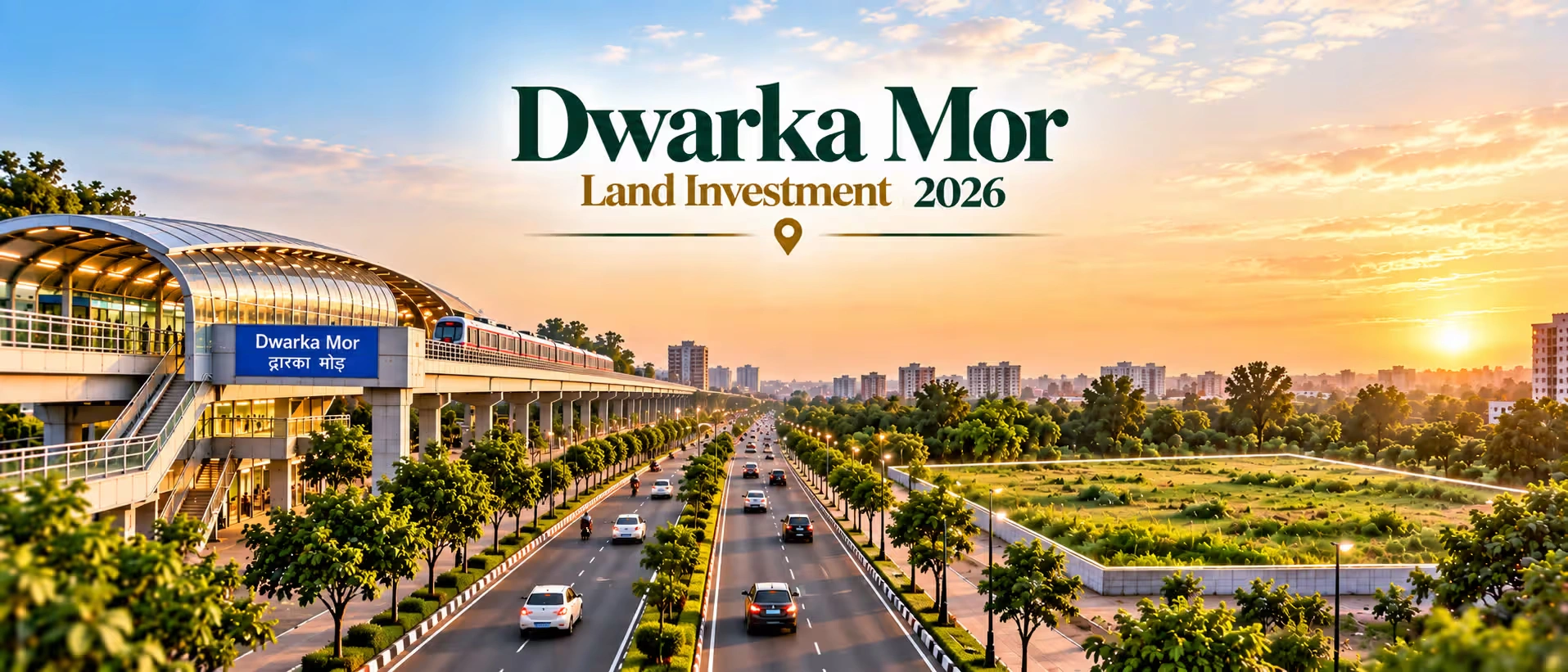
Location does most of the heavy lifting here. Dwarka Mor sits right where the Outer Ring Road meets the western edge of Dwarka Sub-City, and that single junction has quietly turned this neighbourhood into one of the busiest transit points in West Delhi. The Blue Line metro station here connects commuters straight to Rajiv Chowk on one side and Dwarka Sector 21 (and onward to the airport) on the other, which means someone working in Connaught Place or Gurugram can still consider owning a plot in Dwarka Mor without giving up on convenience.
Then there's IGI Airport, barely 20–25 minutes away on a clear day. For a city where "close to the airport" often adds a real premium to property listings, Dwarka Mor manages to offer that proximity while still staying comparatively affordable — at least for now.
Add to this the everyday infrastructure that actually makes a neighbourhood livable: government and private schools scattered through the area, hospitals like Triveni, Balaji, and RR Hospital handling local healthcare needs, and a dense network of banks, ATMs, and markets. None of this is glamorous, but it's exactly the kind of civic infrastructure that supports long-term residential demand — and long-term demand is what actually moves land prices, not one season of hype.
What Land Prices Look Like Right Now
Numbers tell their own story here. Developed residential plots in and around Dwarka Mor are currently trading in a fairly wide band, roughly ₹3,477 to ₹5,382 per sq ft, depending on the exact pocket, road width, and how close you are to the metro corridor. In the last six months alone, the area has seen appreciation of close to 8%, which isn't explosive, but it's steady — and steady is usually the kind of growth that holds up rather than corrects sharply.
Walk a little further into specific micro-markets and you'll see the spread more clearly. A resale residential plot near Tihar Village recently changed hands around ₹20,000 per sq ft, largely because it faced a park and carried the "lake-facing, low-pollution" tag that buyers pay extra for. Compare that to a plot in Nangloi at roughly ₹5,000 per sq ft, and you start to understand how much micro-location within this belt actually matters — two plots barely a few kilometres apart can differ in price by four times.
For those who buy land in Delhi who assume the whole city is priced the same, this is the real lesson: Delhi's land market isn't one market. It's dozens of small, hyperlocal ones stitched together, and Dwarka Mor alone contains several of them.
Quick Price Snapshot (Approximate, for reference only)
| Type | Typical Range (per sq ft) | Notable Factor | |
|---|---|---|---|
| Dwarka Mor (near metro) | Residential plot | ₹14,000 – ₹24,500 | Metro + market proximity |
| Sector 3, Dwarka | Residential plot | ₹40,000+ | Well-planned DDA sector |
| Tihar Village | Residential plot | ₹18,000 – ₹22,000 | Park/lake-facing premium |
| Ashok Nagar | Residential plot | ₹13,000 – ₹15,000 | Corner plots, wide roads |
| Nangloi | Residential plot | ₹5,000 – ₹6,500 | Developing, budget-friendly |
| Rural/agricultural belt | Farmland | Government rate under revision | L-Zone land pooling potential |
Prices vary by exact street, plot size, and seller — always verify current rates before negotiating.
Areas Around Dwarka Mor Worth Watching in 2026
Dwarka Mor Main Belt — Still the anchor of the whole micro-market. Anything within walking distance of the metro station commands a genuine premium, and rightly so — footfall here rarely dips, and commercial rents around the market have stayed resilient even during slower property cycles.
Nawada and Ashok Nagar — These two neighbouring pockets have quietly become the "value buy" zone. Prices sit meaningfully below the core Dwarka Mor rates, but the connectivity barely suffers. If you're patient and willing to hold for five to seven years, this is where a lot of seasoned local investors are actually putting their money.
Nangloi — Still developing, still a little raw around the edges, but this is exactly the kind of area that looked like Dwarka Mor did fifteen years ago. Lower entry cost, decent road width in newer layouts, and enough population growth to suggest infrastructure will keep catching up.
Tihar Village and Mohan Garden — Smaller, tighter pockets, but they carry an appeal of their own — green patches, lower density in parts, and proximity to the metro without sitting directly on the main commercial stretch. Corner plots here, especially L-corner properties with dual road access, tend to move faster and fetch better resale value.
L-Zone (Dwarka Sub-City extension) — This is the one to genuinely watch. Under DDA's land pooling policy, landowners in L-Zone are required to hand over roughly 40% of their land for roads, drainage, sewerage, and civic infrastructure, while retaining rights over the rest for planned development. It's a slower, more bureaucratic route, but it's also how large tracts of raw land eventually become tomorrow's residential sectors. Anyone thinking long-term — a ten-year horizon, not a two-year flip — should keep an eye on how this policy unfolds through 2026.
The Agricultural Land Angle: A Story Worth Understanding
Here's something a lot of new investors miss: Delhi still has agricultural land within its municipal boundaries, and the pockets around Dwarka Mor's outer edges are part of that story. For decades, this land was valued on paper at a single flat government rate of around ₹53 lakh per acre — a figure that was last revised way back in 2008. Meanwhile, the actual market value of that same land, driven by road connectivity and encroaching urbanisation, moved far beyond that outdated number.
That gap is finally closing. The Delhi government has been working on a major revision of agricultural land circle rates, with reports suggesting new rates could touch as high as ₹5 crore per acre in well-connected locations — nearly an eight-fold jump in some cases. For anyone who owns inherited or ancestral farmland near this belt and has been sitting on the fence about whether to sell, this shift changes the entire conversation. A revised circle rate doesn't just affect stamp duty calculations; it directly strengthens your negotiating position when you finally decide to sell.
If your family owns a parcel and you're exploring how to sell agricultural land in Dwarka Mor, timing this against the circle rate revision is worth discussing with a local property consultant before you finalise a price. On the flip side, if you're someone looking to buy farmland in Dwarka Mor for future appreciation rather than immediate construction, this is arguably the window — prices haven't yet caught up fully to what the revised rates will eventually reflect, and land pooling policies could unlock formal development potential down the line.
One honest caveat here: agricultural land inside Delhi's urban extension zones comes with its own layer of complexity — land-use conversion, DDA approvals, and zoning restrictions aren't optional paperwork, they're the difference between a legitimate asset and a legal headache. Don't skip this step no matter how attractive the price looks.
What to Check Before You Buy Land in Delhi
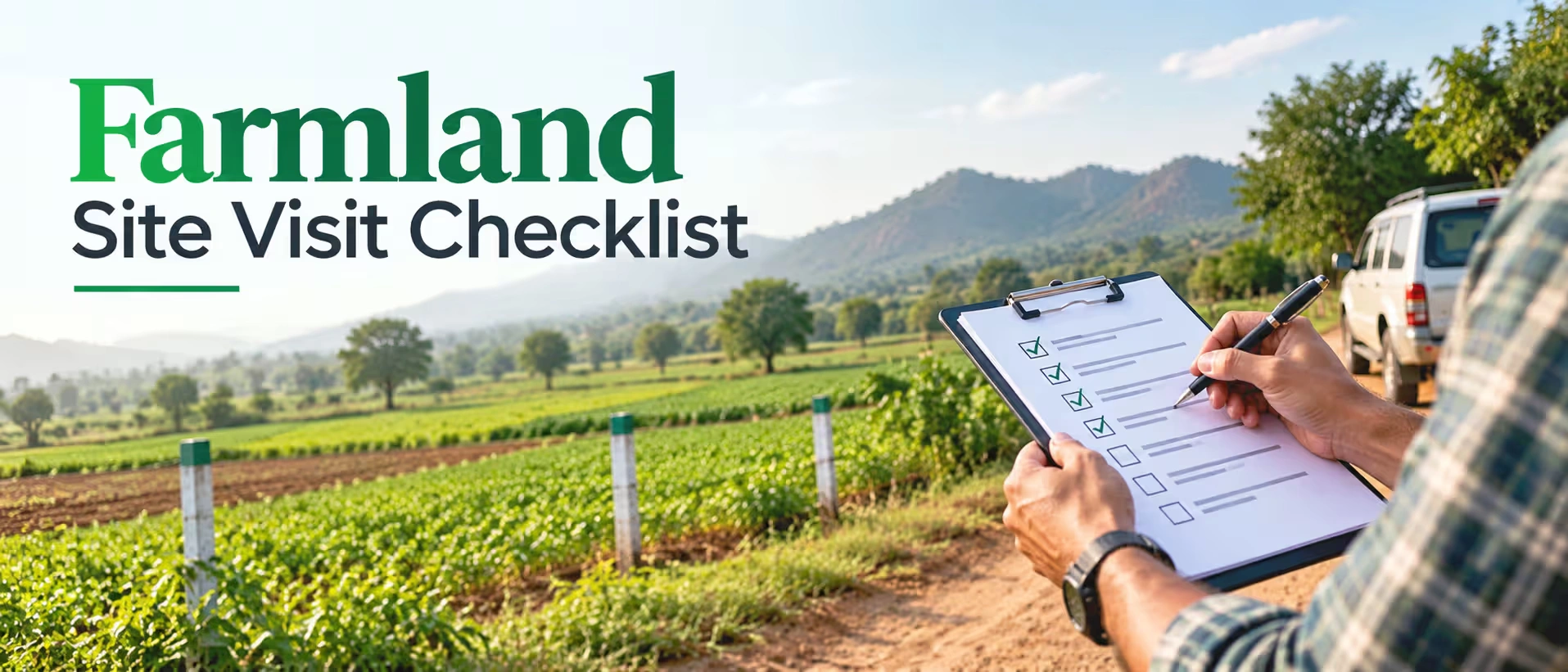
Delhi's land market has more informal transactions than most buyers realise, and that's exactly where trouble tends to hide. Before you commit to any plot in Dwarka Mor or nearby pocket, run through this checklist without exception:
- Confirm the title chain. Ask for at least the last 12–13 years of ownership records, and get a lawyer to verify there's no pending litigation.
- Check land-use classification. Residential, agricultural, and L-Zone pooled land all carry different rules — confirm which category you're actually buying into.
- Verify DDA/MCD approvals. Unauthorised colonies exist throughout this belt, and while some get regularised over time, plenty don't. Know exactly what you're walking into.
- Cross-check the circle rate. Compare the seller's asking price against the current government circle rate for that specific zone — a huge mismatch is often a red flag, not a bargain.
- Physically inspect road width and access. Listings can exaggerate. A plot described as "30-ft road facing" should actually be walked and measured, not taken on faith.
- Ask about encumbrance and loan status. A simple Encumbrance Certificate from the sub-registrar's office can save you from inheriting someone else's debt.
None of this is unique to Dwarka Mor — it's good practice anywhere you plan to buy land in Delhi — but the mix of authorised colonies, urban villages, and agricultural pockets in this specific belt makes due diligence a little more layered than it would be in a fully planned DDA sector.
Selling Property Online in Dwarka Mor: What's Changed
A decade ago, selling a plot meant putting up a hand-painted board, calling three or four local brokers, and waiting. That world hasn't disappeared entirely, but it's shrinking fast. Today, selling property online in Dwarka Mor is how most serious transactions start — even if they eventually get finalised over a cup of chai with a broker in the loop.
The shift makes sense once you think about who's actually buying land here now. A software engineer in Gurugram scrolling listings at 11 pm, an NRI family member trying to help close a deal for their parents back home, a small investor comparing five different pockets before deciding where to put their money — none of these buyers are walking Dwarka Mor's lanes first. They're searching online, filtering by budget and location, and shortlisting before they ever step foot on the plot.
This is exactly why choosing the right platform matters as much as pricing the plot correctly. Among the many real estate sites in India, most are built around ready flats and builder projects — search filters designed for 2BHKs and amenities, not for raw land, agricultural parcels, or plot dimensions. That's a real gap, and it's one that 2Bigha has been built to close specifically. Rather than getting your plot lost in a sea of apartment listings, a land-focused platform surfaces it to buyers who are actually searching for exactly that — a residential plot, a farmhouse-sized parcel, or agricultural acreage near the city. For sellers dealing with inherited agricultural land or investors managing multiple plots across different sectors, that kind of targeted visibility, paired with support like a property management service for owners who aren't locally based, genuinely shortens the time between listing and closing.
If you're on the selling side, a few things noticeably improve your odds online:
- Clear, well-lit photographs of the actual plot boundaries — not stock images or old pictures that don't match current condition.
- Accurate dimensions and facing direction, since serious buyers filter by exactly this.
- Honest disclosure of road width, corner status, and any nearby landmarks that add value.
- A transparent asking price benchmarked against current circle rates and recent resale deals in the same pocket.
Buyers today are more informed than they were even five years ago. They're cross-checking your listing against three other real estate sites in India before they even call you. Listings that feel padded or vague get scrolled past; listings that feel honest get the first phone call.
Investment Outlook: Is 2026 the Right Time?
No investor should expect Dwarka Mor to double in value overnight — that's not this market's character. What it does offer is consistency: infrastructure that keeps improving in small, cumulative ways, a metro line that isn't going anywhere, and a buyer base that renews itself every year as young families priced out of core Dwarka look for the next best alternative.
The bigger opportunity, honestly, sits in the transition zones — Nawada, Ashok Nagar, Nangloi, and the L-Zone extension — where prices haven't fully caught up to the connectivity these areas already enjoy. That gap between current price and underlying potential is usually where patient investors do best, rather than in already-mature pockets where most of the appreciation has already played out.
For agricultural landowners, the circle rate revision is the story to track closely through the rest of 2026. It won't just affect what new buyers pay — it recalibrates the entire value baseline for every farmland transaction in the belt going forward.
Final Word
Dwarka Mor isn't trying to be Dwarka Sector 21, and that's precisely its strength. It's a working, growing, occasionally chaotic neighbourhood where ordinary buyers can still find land that fits a realistic budget — something increasingly hard to say about most of Delhi. Whether you're eyeing a residential plot, sitting on ancestral farmland, or simply trying to understand where the next five years of growth in this belt is headed, the fundamentals here remain genuinely sound. Do the paperwork properly, compare pockets rather than settling for the first listing, and treat this as the steady, long-term asset it has historically been — not a quick flip.
Disclaimer: This article is for general informational purposes only and does not constitute financial, legal, or investment advice. Property prices, circle rates, and government policies mentioned here are indicative and subject to change. Please consult a qualified property lawyer, registered valuer, or financial advisor, and verify all figures independently before making any real estate decision.