List Your Land
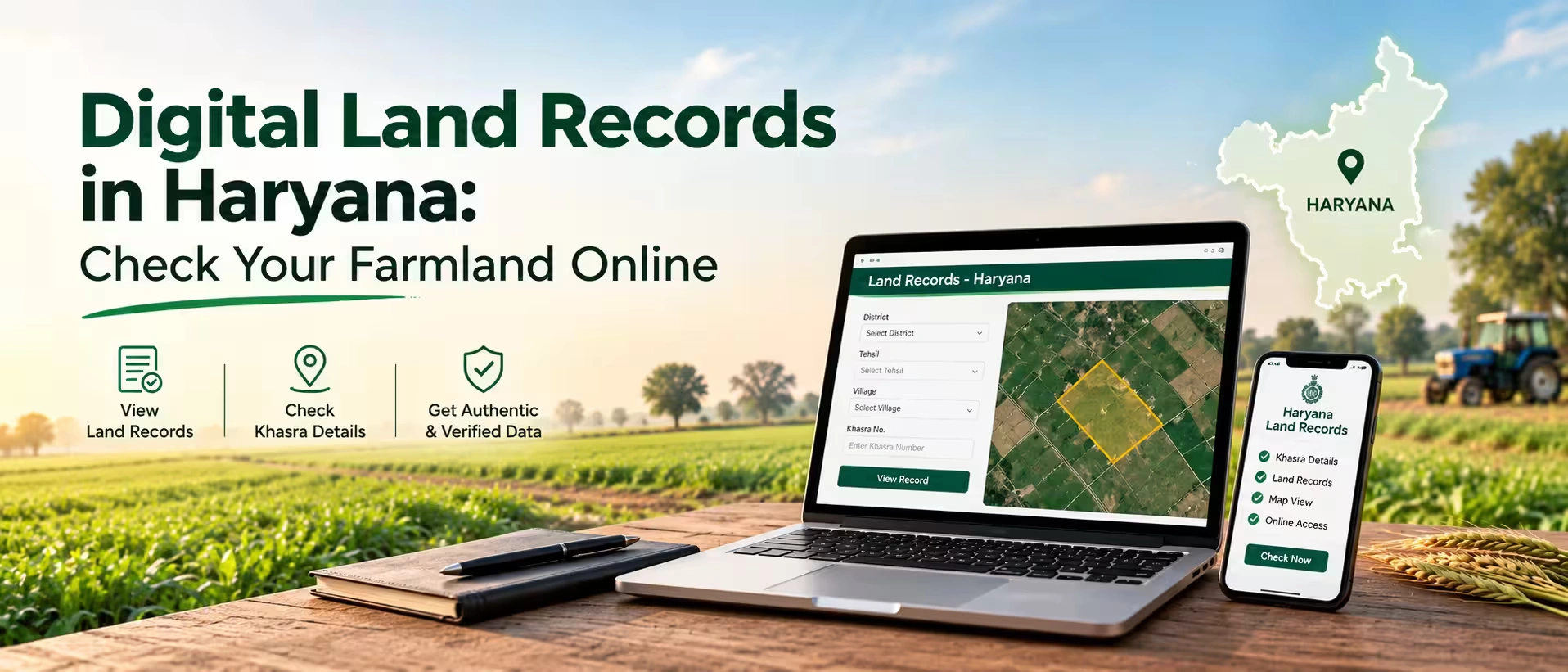
Most land fraud stories in Haryana begin the same way. Someone buys on the strength of a photocopy and a friendly seller, and a few months later a second "owner" turns up, or a bank claims a mortgage, or the field turns out smaller than promised. Almost all of it can be caught beforehand, because the state put its revenue records online years ago. This Haryana Jamabandi Guide shows you how to pull those records yourself, read them without a patwari standing over your shoulder, and decide whether a piece of land deserves your money. It works the same whether you're browsing agriculture land for sale in Haryana or just checking what your family already owns.
What Jamabandi Actually Is?
The Jamabandi is the record of rights pertaining to a village and gives the name of the individual owner, his share in land, the numbers of the fields, the area, and land use. The Jamabandi is updated every few years, so the year of opening of the book was opened is important to know. An out-of-date Jamabandi may have a person who is no longer alive listed as the owner.
The measurement of Area is in terms of Kanal and Marla. Eight kanals equal one acre, while twenty marlas equal one kanal. Killas and Murabbas are also used. These measurements come from the old survey system of the villages. One killa equals one acre, and twenty-five killas equal one Murabba. Lots of vocabulary, but only a few will explain almost everything you see.
| Term | What it means | Why it matters to a buyer |
| Khewat | Number for a group of co-owners holding land jointly | Shows who shares the land with whom |
| Khatauni | Cultivation record inside a khewat | Shows who actually farms it |
| Khasra | Number of one individual field | Pins down the exact piece you're buying |
| Rehan | A mortgage entry | Someone has a claim on the land |
| Nehri, Chahi, Barani | Canal fed, well or tubewell fed, rain fed | Tells you about water, and water drives price |
| Gair Mumkin | Land that can't be cultivated, like paths or ponds | Check what the "land" really is |
How to Check It Online?
The state's land records portal at jamabandi.nic.in is where this happens, as explained in the Haryana Jamabandi Guide. Menus get reshuffled now and then, so treat the exact button names below as a rough map.
- Open the portal and look for the Jamabandi or Nakal option.
- Pick the district, tehsil, and village.
- Choose the most recent Jamabandi year.
- Search by khewat number, khasra number, or owner name.
- Read the result on screen. For an official copy, apply for a certified nakal and pay the small fee.
A screen view is fine for your own research. If the paper will go to a bank, a lawyer, or a court, get the certified copy.
How to Read What You Find?
Begin with the names. Six names on a khewat mean joint ownership. You cannot get a proper "one acre" unless the others agree. This is the reason behind ownership of an ambiguous piece of land, a portion of the field.
Then, find the rehan. It would not affect the transaction until it is removed. Thirdly, see who holds the property. Girdawari papers showing cultivation from year to year may reveal that it is actually someone else – not the seller – that cultivates the land.
Lastly, the mutation. In Intkal, the seller had the land through inheritance, but there was no mutation. In this case, the records still reflect the name of the father. Although nothing serious, this problem needs to be settled before making the payment and not afterward. These points should raise red flags:
- There's a mismatch between the name of the seller and the Jamabandi
- Six names on a khewat, and not everyone wishes to sell
- Mortgage entries that were forgotten by the seller to mention
Farmland: What to Think About Before You Commit?
Searching for farm land in Haryana, you'll see how different the state is from one end to the other. Karnal and Kurukshetra lean toward paddy and basmati. Sirsa and Fatehabad are known for cotton and wheat. Hisar and Rohtak sit in a mixed belt, and the southern districts get drier. Groundwater has been falling in several districts, so a plot marked Nehri or Chahi can be worth noticeably more than a Barani one. Visit the land, ask about the water in summer, and don't take the broker's word for it.
One rule that catches people out: NRIs and OCIs can't buy agricultural land in India under FEMA rules. Everyone else should confirm the current position on non-farmers buying farmland with a local revenue lawyer before paying a token.
Buying a Plot in Haryana
The Jamabandi is just the beginning if your desired property is within Haryana. Plots within colonies need to go through various tests before you finalize a purchase. Ensure the colony has an active license, find out whether there’s an approved layout plan, and make sure that the plot is registered with the Haryana RERA, if applicable. If it is still used as agriculture land to date, then ask for a Change of Land Use document. This plot is not easy to construct on and difficult to resell due to the lack of such a document. Remember to get information regarding stamp duty and registration fee before making any plan. These fees differ according to locations and buyers.
Selling Your Land the Clean Way
If you want to sell land in Haryana, prepare your paperwork before you list anything. Get any inheritance mutated, clear every mortgage, pull a fresh nakal, and make sure the area matches the ground. Talk to your co-sharers early. A deal that collapses because one cousin objects wastes everyone's time. And be straight with buyers about water, access roads, and any dispute. Serious buyers check anyway, and they respect honesty.
On tax, rural agricultural land that sits beyond the prescribed distance from a municipality is generally not treated as a capital asset. Land near a city can be treated differently, so ask a chartered accountant before you sign.
Find Verified Land on 2Bigha
Checking out all the forwards on WhatsApp and making phone calls to brokers consumes time, and you never know whom to trust. 2Bigha is an online marketplace that focuses solely on agricultural land and farmland in India. You can easily compare all the listings in one place, check the Background Verification Reports to know the background of the listing, and use Book a Visit when you find the right plot. You can even check what a 2Bigha Land Report includes before buying the property. Land owners can also post their land, which comes in handy if you plan to sell the property.
Disclaimer: This article is for informational purposes only and should not be considered investment, legal, financial, or property advice. Real estate regulations, infrastructure plans, market conditions, and government policies may change over time. Readers are advised to verify information with relevant authorities and consult qualified professionals before making any investment or property-related decisions.