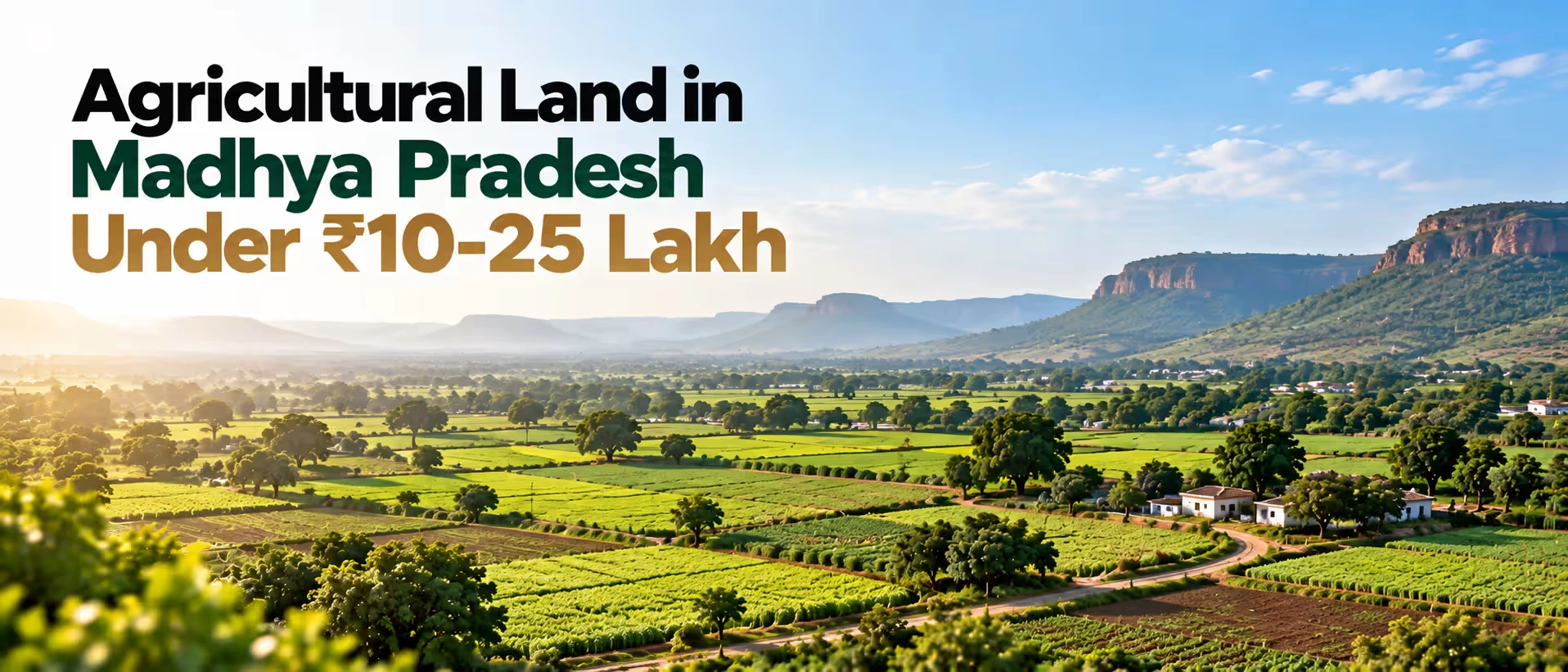
Dewas has quietly become one of Madhya Pradesh's most talked-about industrial towns, and if you've been following property conversations in the Indore-Bhopal belt, you already know why. Sitting right on the Agra-Bombay highway and barely an hour from the Pithampur auto cluster, Dewas has turned from a sleepy district headquarters into a serious manufacturing address. And wherever factories go, land follows. This piece breaks down what's actually driving the industrial boom, why it's pushing land prices and demand upward, and what it means if you're sitting on a plot, farmland, or just exploring the market as a buyer.
Key Takeaways
- Dewas's industrial base is expanding fast, with pharma, textile, and automotive-ancillary units leading the charge, backed by state-level investment pushes.
- The city's strategic location on NH-3 (Agra-Bombay Road) and proximity to Pithampur, Indore, and Bhopal is the single biggest reason industries keep choosing Dewas.
- Rising industrial activity is tightening land availability inside city limits, pushing demand outward to peripheral and semi-urban pockets.
- Both agricultural land for sale in Madhya Pradesh and residential/commercial plots in Dewas are seeing renewed buyer interest from end-users and investors alike.
- If you're planning to sell land in Dewas, now is a reasonable window, but due diligence on land-use classification still matters more than ever.
Dewas: A City That Industry Quietly Rediscovered
Ask anyone who's driven through Dewas in the last five years, and they'll tell you the change isn't subtle anymore. New factory sheds along the highway, truck traffic that wasn't there before, and a visible uptick in rental housing near the industrial belt — these are the ground-level signs of a town absorbing serious capital.
The groundwork for this was laid decades ago. The Madhya Pradesh Industrial Development Corporation (MPIDC) set up the Dewas Industrial Area with engineering, textile, and chemical units in mind, and that early framework gave the city a head start when newer waves of investment started looking for land outside the already-saturated Pithampur-Indore corridor. Dewas offered what Pithampur increasingly couldn't: available land, lower input costs, and still-excellent connectivity.
Pharmaceutical manufacturing is a good example of how this played out. Companies producing formulations and bulk drugs found Dewas attractive because of its road access and because land here, while rising, still comes at a fraction of what you'd pay closer to Indore. Textile and automotive-ancillary units followed a similar logic — Dewas gives them proximity to the Pithampur ecosystem without the premium that comes with being inside it.
What's Actually Driving the Current Wave
A few forces are converging here, and none of them is temporary.
State-level investment pushes: Madhya Pradesh has been actively courting large industrial groups through investor meets and interactive sessions, and Dewas keeps coming up as a preferred location — not just as an afterthought next to Indore or Dhar. Textile players have committed to setting up units at locations like Barlai near Dewas as part of broader multi-crore investment packages spread across the state, alongside parks in Dhar and Indore. These aren't isolated announcements; they're part of a coordinated effort to build out Madhya Pradesh's textile and manufacturing base using the state's land availability and central logistics position as the pitch.
Road and rail connectivity: The NH-3 corridor connecting Dewas to both Indore and Bhopal remains the backbone of why industries keep choosing this city. For any manufacturer, the calculation is simple: can raw material come in and finished goods go out without friction? Dewas answers that question well, and that's not something that changes with policy cycles — it's structural.
Pharma and engineering clusters maturing: Units that set up operations in Dewas a few years ago for pharma manufacturing and auto-component engineering have largely stayed and expanded, which tells its own story. When an existing industry scales up rather than relocating, it signals confidence in the location, and that confidence tends to pull in fresh investment behind it.
Land scarcity within city limits: Here's the twist, though — Dewas is actually running into a space problem. Local reporting has flagged that the city hasn't seen a major new industry move in for a while, precisely because there isn't enough contiguous land left within the existing industrial area to accommodate new, larger setups. Efforts to develop a new industrial cluster have been discussed but haven't moved as fast as industry demands. This scarcity is exactly what's pushing demand outward into peripheral villages and semi-urban stretches around the city — which is where the land market gets interesting for ordinary buyers and sellers.
How Industrial Growth Actually Translates into Land Demand
It helps to think of this in layers, because industrial expansion doesn't just affect land immediately next to a factory gate.
The first layer is direct industrial land — plots MPIDC or private developers acquire for setting up new units. This demand is the most visible but also the most restricted, since it requires specific zoning and large contiguous parcels.
The second layer, and the one that matters most to individual landowners, is the ripple effect. Every factory that opens needs workers, and workers need housing. Contractors, suppliers, logistics operators, and ancillary businesses all need a base nearby. This is what quietly converts farmland on the city's outskirts into sought-after residential and mixed-use plots. A farmer who owned three acres on the Dewas-Indore stretch five years ago, growing soybean or wheat, is often sitting on land that developers and individual buyers now actively chase for plotted development.
The third layer is speculative demand — investors who buy early, anticipating that today's farmland will be tomorrow's residential colony or commercial strip once the industrial corridor matures further. This is the layer where you see the sharpest price appreciation, but also where risk is highest if the underlying growth assumptions don't play out on schedule.
Where the Demand Is Concentrated
| Location Type | Demand Driver | Buyer Profile |
| Land along NH-3 (Indore-Dewas-Bhopal stretch) | Logistics, warehousing, highway-facing commercial use | Developers, institutional investors |
| Villages bordering the Dewas Industrial Area | Worker housing, small rental units, local businesses | End-users, small investors |
| Peripheral agricultural belts | Future plotted development, land banking | Mid-size investors, NRIs |
| Interior Dewas city plots | Existing residential/commercial demand | Local families, first-time buyers |
This kind of spread is typical of any industrial town going through a growth phase — the city core fills up first, then demands fans outward along the main roads, and finally seeps into the villages that were, until recently, purely agricultural.
Agricultural Land vs Plotted Land: What's the Real Difference for Sellers
This is where a lot of first-time sellers get confused, so it's worth spelling out clearly.
If you own agricultural land for sale in Madhya Pradesh, you're generally selling under different revenue-record classifications than someone selling a converted residential or commercial plot. Agricultural land usually comes with restrictions on who can buy it and how it can be used, until it goes through a formal land-use conversion (diversion) process with the local authorities. Buyers interested purely in farming — or in holding farm land for sale in Madhya Pradesh as a long-term asset — are fine with this. But buyers looking to build, develop, or flip the land for plotted sale will usually want conversion completed, or at least a clear path to it, before they commit.
A quick comparison helps:
| Factor | Agricultural Land | Converted/Plotted Land |
| Buyer eligibility | Often restricted to farmers/agriculturists in that state | Open to general buyers |
| Typical price range | Lower per sq. ft. | Higher, reflects development potential |
| Use permitted | Farming, allied agricultural activity | Residential, commercial, mixed-use |
| Documentation needed | Khasra, khatauni, revenue records | Conversion certificate, approved layout, NOCs |
| Ideal for | Long-term land banking, actual farming | Immediate resale, construction, quick appreciation |
If you're sitting on farmland near Dewas industrial belt and wondering whether to sell as-is or push for conversion first, the honest answer depends on your timeline. Conversion adds real value but takes time and paperwork. Selling as agricultural land moves faster but usually at a lower price point.
What This Means If You're Looking to Sell Land in Dewas
If you've been holding land in or around Dewas and are weighing whether to sell now, the industrial momentum genuinely works in your favour — but only if you approach the sale correctly.
First, get your documentation in order before you list anything. Buyers today, especially those coming through verified online channels, are far more cautious about title clarity, encumbrance certificates, and land-use status than they were a decade ago. A clean paper trail alone can shave weeks off your sale timeline.
Second, understand your land's realistic category. A plot two kilometres from the industrial area with road frontage commands a very different price than interior agricultural land three villages away, even if both are technically "near Dewas." Pricing it accurately from the start avoids the back-and-forth that kills deals.
Third, don't underestimate visibility. Word-of-mouth and local brokers still work in Madhya Pradesh's tier-2 markets, but they reach a limited pool of buyers. Listing on a credible online property listing platform puts your land in front of serious investors from Indore, Bhopal, and even outside the state who are specifically searching for opportunities tied to this industrial growth story.
What This Means If You're Buying a Plot in Dewas
For buyers, the calculus is about timing entry before the next phase of industrial expansion is fully priced in. A plot in Dewas along the highway or near the industrial area today reflects current, not future, demand. Once new clusters or expanded units actually come online, prices in the surrounding belt tend to move quickly — often faster than buyers expect.
That said, don't buy on hype alone. Visit the site physically if you can, check whether the area has basic infrastructure access (road, electricity line proximity, drainage), and verify that the seller's title is clean. A good local lawyer or a trusted platform that does preliminary verification is worth the fee.
A Quick Checklist Before You Buy or Sell Land in Dewas
- Firstly, find out whether the land is agricultural land or converted one and confirm whether it suits your purpose.
- Look into the khasra/khatauni register and check for any litigation or dispute associated with it.
- Check how close the land is to the real industrial zone, not the boundary of the Dewas district.
- Demand an encumbrance certificate of at least 12-13 years old.
- If you are planning to buy agricultural land with intention to resell or convert, know about the procedure and timeline in advance.
- Compare the asking price with the current prices in the same village or ward where the property is located.
- Find an intermediary who can verify ownership documents before paying any token money.
Why Verified Online Listings Matter More in a Growth Market
Here's something worth being honest about: fast-growing land markets attract fast-moving scams too. As more buyers chase land near Dewas's industrial belt, the number of dubious listings, inflated claims, and unclear-title plots also rises. This is exactly where a structured online property listing platform earns its keep — by standardising information, flagging incomplete documentation, and giving both buyers and sellers a transparent space to transact.
2Bigha has positioned itself around solving precisely this problem for land and plot transactions across smaller Indian cities, including markets like Dewas where industrial-driven demand is reshaping what land is worth. Instead of relying solely on a local agent's word, buyers can browse listings with clearer details on land type, location, and pricing, while sellers get access to a wider, genuinely interested buyer base beyond their immediate network. For sellers managing land from a distance — which is increasingly common as families move to bigger cities for work — having access to a reliable property management service alongside the listing itself can also take a lot of the operational hassle out of holding and eventually selling land online in Dewas.
The Road Ahead for Dewas
Industrial towns don't grow in a straight line, and Dewas is no exception. The coming two years should see further pressure on the available industrial lands within the existing notified area, which all but ensures that the peripheral villages continue to get into new demands. Whether these come from new textile and pharma units, logistic parks catering to the Indore-Bhopal belt, or other ancillary industries, there seems to be a clear trend here - activity, employment, and appreciation of land in the Indore-Bhopal belt.
In terms of the market, patience backed by good documentation is key for land owners while getting in before the next obvious wave of investment is a winner for buyers. Either way, looking at land in the belt as something serious, backed up by documents, makes the difference between success and regret.
Disclaimer: This article is for general informational purposes only and should not be treated as legal, financial, or investment advice. Land classifications, conversion rules, and regulations in Madhya Pradesh can change, and buyers/sellers should independently verify all documentation and consult a qualified legal or property professional before entering into any transaction.