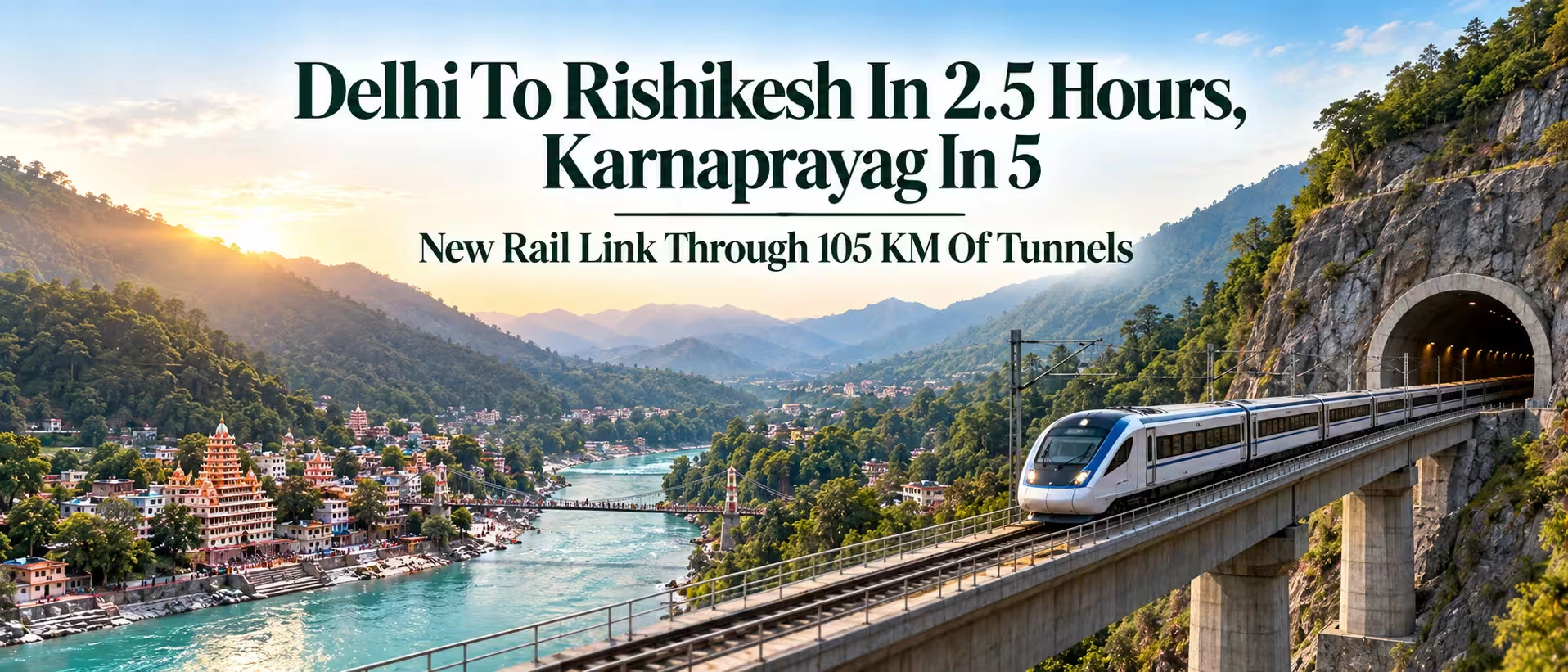
Key Takeaways
The proposed Delhi to Palwal Namo Bharat rapid rail corridor can become one of the most important public transport links between Delhi and South Haryana.
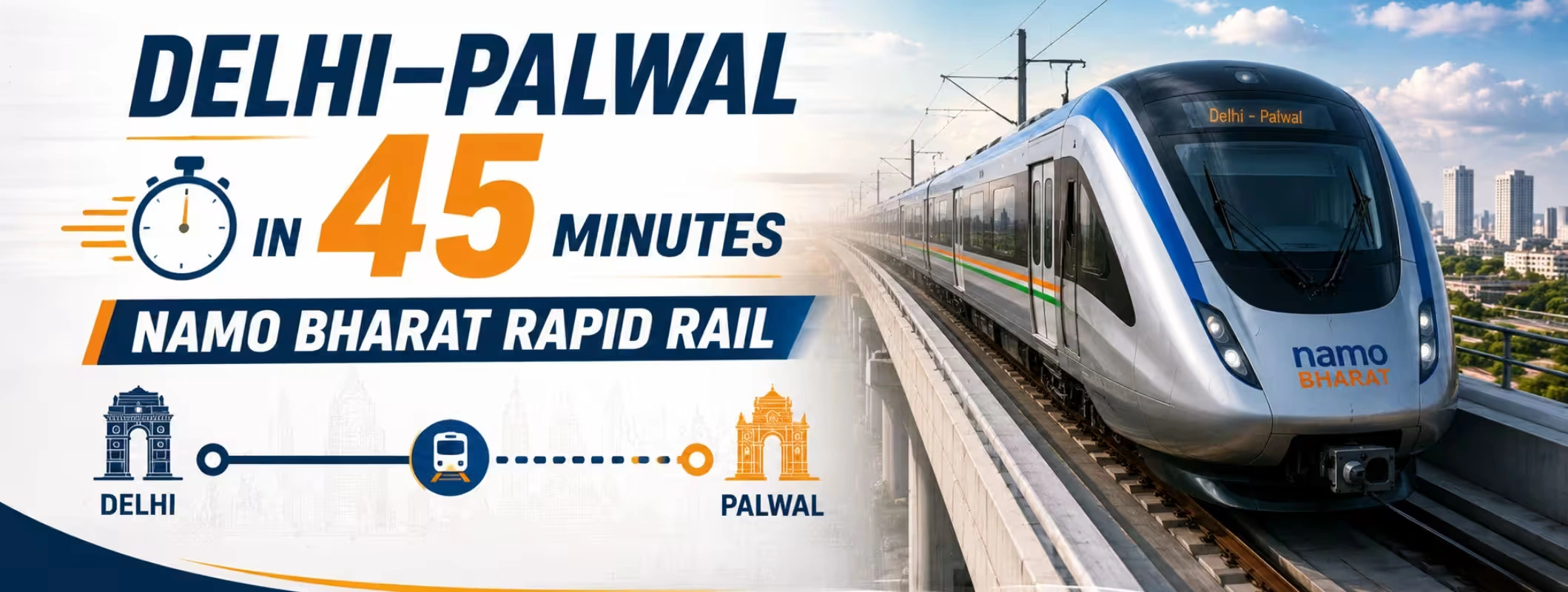
Once developed, the Delhi Palwal rapid rail route may reduce travel time from nearly 1.5–2 hours to around 45–50 minutes, depending on final operations, station stops and connectivity.
The expected Namo Bharat Delhi Palwal route may start from Sarai Kale Khan in Delhi and move towards Faridabad, Ballabhgarh and Palwal.
Possible stations being discussed include Sarai Kale Khan, Okhla/Badarpur side, Sarai Khwaja, Bata Chowk, Ballabhgarh/Raja Nahar Singh, Prithla and Palwal.
Sarai Kale Khan is likely to play a major role as an interchange hub because it connects with other Namo Bharat corridors, metro, railway and ISBT movement.
The corridor can improve Delhi NCR connectivity, reduce pressure on NH-44 and Mathura Road, and support real estate demand around Faridabad, Ballabhgarh, Prithla and Palwal.
For land buyers, areas near proposed stations, industrial belts, expressways and airport-linked routes may offer better long-term potential, but investment should always depend on land title, zoning, road access and verified documents.
Platforms like 2Bigha can help buyers and sellers explore land near Palwal, agricultural land near Palwal and other land opportunities with better map-based discovery and property visibility through a subscription plan.
Introduction: Why Delhi to Palwal Rapid Rail Is Getting So Much Attention
Delhi to Palwal has always been an important travel belt. Thousands of people move daily between Delhi, Faridabad, Ballabhgarh and Palwal for work, business, education, trade and family travel. But anyone who has travelled on this route knows the real problem: traffic pressure, uneven travel time, crowded trains, road congestion on NH-44 and delays around peak hours.
This is where the proposed Namo Bharat train Delhi to Palwal route becomes important.
The Delhi to Palwal Namo Bharat rapid rail corridor is being discussed as part of the wider Delhi NCR rapid rail vision. The idea is simple but powerful: connect Delhi with major NCR towns through a faster, more reliable regional rapid transit system. For daily commuters, it means less travel stress. For industries, it means better workforce movement. For real estate buyers, it means a stronger reason to study land and property corridors around Faridabad, Ballabhgarh and Palwal.
The headline promise is bold: Delhi to Palwal in 45 minutes. That does not mean trains are running today. The corridor is still at the planning and approval discussion stage. But if the final route, funding, DPR and construction move ahead smoothly, this rapid rail corridor can change the way people see Palwal and the South Haryana growth belt.
For real estate investors, this is the stage where serious research begins. Good opportunities are usually noticed before the crowd arrives, but smart buyers never invest only on news. They verify the location, land records, approach road, master plan, infrastructure timeline and future demand.
What Is the Delhi to Palwal Namo Bharat Rapid Rail Corridor?
The Delhi to Palwal Namo Bharat corridor is a proposed regional rapid transit route that may connect Delhi with Faridabad, Ballabhgarh and Palwal through a high-speed commuter rail system.
Unlike a normal metro, Namo Bharat is designed for longer-distance regional travel. It connects cities and major regional nodes with fewer stops and higher speed. That is why it is more relevant for routes like Delhi to Meerut, Delhi to Panipat, Delhi to Alwar, and now the proposed Delhi Faridabad Palwal corridor.
In simple words, Namo Bharat is not just another city metro. It is a fast regional mobility system for people who travel between cities in the NCR belt.
For the Delhi Palwal rapid rail route, the expected benefit is clear:
- People living in Palwal may reach Delhi faster.
- Workers from Delhi may travel more easily to Faridabad and Palwal industrial areas.
- Students, employees and business owners may get better daily movement.
- Industrial and logistics belts may gain stronger connectivity.
Property near Palwal rapid rail and land near the proposed corridor may attract more attention from long-term buyers.
This corridor can also support Delhi Haryana connectivity by creating a faster alternative to road and conventional rail travel.
Proposed Delhi to Palwal Namo Bharat Route
The proposed Namo Bharat Delhi Palwal route is expected to begin from Sarai Kale Khan in Delhi and move towards Faridabad, Ballabhgarh and Palwal.
Based on current public discussions, the broad route may look like this:
Delhi → Sarai Kale Khan → Okhla/Badarpur side → Sarai Khwaja → Faridabad → Bata Chowk → Ballabhgarh/Raja Nahar Singh → Prithla → Palwal
This route matters because it follows an already busy urban and industrial belt. Faridabad and Ballabhgarh are not just residential locations. They have industries, commercial activity, metro connectivity, railway movement and strong road links. Palwal, meanwhile, is emerging as a more affordable real estate and land market with links to logistics, warehousing, apparel clusters and upcoming regional infrastructure.
However, buyers should remember one important point: the final station names, exact alignment and project timeline may change after DPR approval, technical studies, land requirements and government-level decisions.
So, instead of treating every proposed station as final, investors should treat the current route as an early-stage infrastructure signal.
Delhi to Palwal Namo Bharat Route Summary
| Route Factor | Current Understanding |
| Proposed corridor | Delhi–Faridabad–Ballabhgarh–Palwal |
| Expected starting point | Sarai Kale Khan, Delhi |
| Expected terminal area | Palwal |
| Key belt covered | Delhi, Faridabad, Ballabhgarh, Prithla, Palwal |
| Estimated travel benefit | Delhi to Palwal may reduce to around 45–50 minutes |
| Project stage | Planning/DPR discussion stage |
| Real estate impact zone | Faridabad, Ballabhgarh, Prithla, Palwal and nearby land pockets |
| Main buyer interest | Residential plots, industrial land, farm land, agricultural land and long-term investment land |
| Key caution | Final route, station list and timeline may change |
Proposed Namo Bharat Stations Between Delhi and Palwal
The Namo Bharat stations Delhi Palwal route may include a mix of interchange hubs, city stations, industrial area stations and terminal points. The following station locations are being discussed publicly, but they should be treated as proposed until official approval.
1. Sarai Kale Khan
Sarai Kale Khan can become the most important interchange point on this route. It already has strong transport relevance because of nearby railway, metro and inter-state bus movement. It is also expected to connect with other Namo Bharat corridors.
For commuters, this means better access to Delhi, Meerut side, Panipat side and Alwar side once the larger network matures.
For real estate, Sarai Kale Khan is not a land investment market like Palwal or Prithla, but it can improve the value of the entire corridor because it works as the Delhi-side gateway.
2. Okhla or Badarpur Side
The Okhla-Badarpur belt can act as a transition zone between Delhi and Haryana. This part already handles heavy traffic and daily movement towards Faridabad. A rapid rail station or transit point here can reduce pressure on Mathura Road and improve last-mile access for South Delhi commuters.
For users searching “Namo Bharat station near me” in South Delhi or “rapid rail connectivity Delhi,” this belt may become highly relevant after final station confirmation.
3. Sarai Khwaja
Sarai Khwaja may become one of the early Haryana-side access points on the corridor. It sits near the Delhi-Faridabad border influence zone and can support commuters entering Faridabad from Delhi.
From a property angle, Sarai Khwaja is more of an urban transit node. Its impact may be stronger on rental demand, commercial movement and daily commute convenience rather than large-scale agricultural land buying.
4. Bata Chowk
Bata Chowk is a major Faridabad location with business, commercial and metro relevance. If it becomes part of the Delhi Palwal rapid rail route, it can strengthen Faridabad’s role as a serious transit and employment hub.
This matters for buyers because strong interchange locations usually attract better commercial activity. Shops, offices, rental housing, paying guest accommodation and small business spaces often benefit from improved station connectivity.
5. Ballabhgarh or Raja Nahar Singh
Ballabhgarh already has strong road, rail and metro connectivity. A Namo Bharat station around this belt can make it even more important because it sits between Faridabad and Palwal.
For property buyers, Ballabhgarh has two advantages. It is closer to Faridabad’s existing urban base, and it also opens towards Palwal and Jewar-side connectivity. This makes it a practical midpoint for people who want access to Delhi NCR without entering the most expensive property zones.
6. Prithla
Prithla is one of the most interesting points from a real estate and industrial growth perspective. It is not just a normal location on the map. It has industrial activity, warehousing potential and connectivity relevance.
If the Namo Bharat Palwal route includes Prithla, land near this area may gain more visibility among buyers looking for industrial plots, logistics-linked land, investment land near Delhi Palwal corridor and long-term commercial potential.
7. Palwal
Palwal is expected to be the terminal or one of the final major stations on the corridor. This is where the real estate conversation becomes stronger.
Palwal offers more affordable land compared to core Delhi NCR locations. It also has highway access, railway connectivity and emerging industrial relevance. If the Delhi to Palwal 45 minute rail vision moves ahead, Palwal can become more attractive for buyers who want land within a reasonable travel distance from Delhi.
Searches like land near Palwal, buy land near Palwal, farmhouse land near Palwal and agricultural land near Palwal may increase as the corridor gets more clarity.
Why Sarai Kale Khan Matters as an Interchange Hub
Sarai Kale Khan is not just another station name. It is the most important Delhi-side interchange point in the Namo Bharat network.
A strong interchange station can change travel behaviour because it allows people to move from one corridor to another without depending too much on road travel. For example, a passenger may come from Meerut, change towards Faridabad-Palwal, or move towards other NCR corridors once the network expands.
This is why the Delhi Palwal rapid rail interchange plan matters.
A normal station serves nearby passengers. An interchange station serves the entire network.
For Delhi to Palwal travellers, Sarai Kale Khan can offer access to:
- Delhi Metro connectivity
- Indian Railways movement
- ISBT bus services
- Other Namo Bharat routes
- South Delhi and Central Delhi access
- Future NCR corridor movement
For real estate investors, the learning is simple: projects that connect with larger networks often create wider demand than isolated projects.
How Delhi to Palwal in 45 Minutes Can Change Daily Travel
Today, Delhi to Palwal travel can easily take 1.5 to 2 hours depending on traffic, train availability and starting point. During peak hours, road travel can become even more unpredictable.
A fast rail service can change this pattern.
If the Namo Bharat rapid rail route delivers a 45–50 minute travel experience, it can help three types of users:
Daily Commuters
People living in Palwal, Ballabhgarh or Faridabad may find it easier to work in Delhi without shifting closer to the city. This can reduce rental pressure in expensive Delhi areas and improve housing demand in connected towns.
Business Owners
Business owners and traders who move between Delhi, Faridabad and Palwal can save time. Better mobility usually improves local commerce because people can visit clients, suppliers and workplaces faster.
Industrial Workforce
Faridabad, Ballabhgarh and Palwal have industrial and warehousing relevance. Faster public transport can help companies attract workers from a wider area, especially when road travel becomes costly or tiring.
Why the Delhi Faridabad Palwal Corridor Matters for Real Estate
Infrastructure does not automatically increase land value everywhere. But it often changes buyer attention. When a new corridor improves travel time, more people start looking at nearby land, plots and housing markets.
The Delhi Faridabad Palwal rapid rail corridor may influence real estate in five ways.
1. Palwal May Become More Practical for Delhi-Linked Buyers
Many buyers avoid outer NCR locations because daily travel feels difficult. If Delhi to Palwal travel time reduces sharply, Palwal can become more practical for people who want affordable land but still need Delhi access.
This can support demand for land near Palwal, residential plots, farm land and long-term investment land.
2. Faridabad Can Gain Stronger Transit Value
Faridabad already has metro connectivity, industries and road access. Namo Bharat can add another layer of connectivity. Areas around proposed stations may see better footfall, rental interest and commercial activity.
3. Ballabhgarh Can Become a Stronger Midpoint
Ballabhgarh sits between Faridabad and Palwal. It already has metro and railway relevance. If rapid rail comes here, it can become a stronger midpoint for people who want access to Delhi, Faridabad, Palwal and future Jewar-side routes.
4. Prithla and Nearby Industrial Pockets May Gain Attention
Industrial areas benefit when people, goods and workforce can move faster. Prithla has the right ingredients for long-term interest: industrial activity, road movement and proximity to Palwal.
5. Land Searches May Shift from City-Centric to Corridor-Centric
Earlier, buyers searched only by city name. Now more buyers search by corridor, highway, expressway or station access. Queries like land for sale near Namo Bharat route, plots near Namo Bharat route and property investment near rapid rail show this shift.
This is where 2Bigha’s map-based land discovery can help users compare location, approach, nearby roads and local context before making a shortlist.
Impact on Agricultural Land Near Palwal
Agricultural land near Palwal may see stronger interest if the corridor moves forward, but buyers must be careful.
A rapid rail route can increase interest in nearby land, but agricultural land has rules, restrictions and location-specific conditions. A buyer should never purchase only because a station is proposed nearby.
Before buying agricultural land in India near a growing corridor, check:
- Title ownership
- Mutation records
- Khasra and khatauni details
- Land use classification
- Road access
- Zoning and master plan
- Conversion rules, if any
- Encumbrance status
- Distance from proposed station or highway
- Flooding or drainage issues
- Boundary clarity
- Local resale demand
In many cases, land just outside the main urban zone can offer better entry pricing than fully developed urban property. But it also needs deeper due diligence.
For long-term buyers, the smartest approach is to compare land based on access, legal clarity, infrastructure direction and actual usability.
What Buyers Should Check Before Buying Land Near Palwal Rapid Rail
Buying land near a proposed infrastructure corridor can be rewarding, but it can also be risky if buyers follow rumours blindly. Use this checklist before shortlisting any land near Palwal, Prithla, Ballabhgarh or Faridabad.
| Buyer Checklist | Why It Matters |
| Confirm land title | Avoid ownership disputes |
| Check revenue records | Verify actual land details |
| Review land use | Agricultural, residential, commercial or industrial use affects future value |
| Confirm road access | Land without proper access can be difficult to use or resell |
| Check distance from proposed route | Too far from the corridor may reduce impact |
| Study master plan | Understand future zoning and growth direction |
| Verify nearby infrastructure | Roads, expressways, industrial parks and utilities matter |
| Avoid verbal promises | Always depend on written documents |
| Compare local prices | Overpriced land can reduce returns |
| Use verified platforms | Better discovery reduces basic search risk |
Areas That May Benefit from the Namo Bharat Palwal Corridor
Faridabad
Faridabad is already a major industrial and residential city. It has metro connectivity, road access and strong employment activity. Namo Bharat can improve its regional value by connecting it faster with Delhi, Ballabhgarh and Palwal.
Best-fit buyers: end users, rental investors, commercial buyers, small business owners.
Ballabhgarh
Ballabhgarh has a strong location advantage because it sits between Faridabad and Palwal. It also has transport relevance due to metro, railway and bus connectivity.
Best-fit buyers: residential plot buyers, commercial investors, mid-budget buyers, long-term holders.
Prithla
Prithla may gain attention because of industrial and logistics activity. It can attract buyers looking at land for warehousing, industrial support, future commercial use or long-term appreciation.
Best-fit buyers: industrial land seekers, logistics-linked investors, long-term land buyers.
Palwal
Palwal is the biggest real estate story in this corridor because it combines affordability with future connectivity. It may attract buyers looking for land near Delhi NCR connectivity without paying Delhi or Gurugram-level prices.
Best-fit buyers: farmhouse buyers, agricultural land buyers, plot investors, long-term land holders, local businesses.
Namo Bharat and Jewar Airport Connectivity: Why It Adds More Weight
The Palwal-Ballabhgarh belt is not growing because of one project only. It is gaining attention because multiple infrastructure ideas are moving in the same direction.
One of the most important triggers is the Faridabad-Jewar connectivity. If Palwal and Ballabhgarh get stronger links to Noida International Airport, the real estate story becomes wider.
- A rapid rail corridor can support passenger movement.
- An expressway can support road travel and logistics.
- Industrial areas can support employment.
Airport connectivity can support warehousing, hospitality, commercial land and business movement.
When these factors come together, buyers start looking at land differently. A location that earlier looked “far” may start looking “strategic.”
That is why investment land near Delhi Palwal corridor is becoming a serious search theme.
Is This the Right Time to Buy Land Near Palwal?
There is no single answer for every buyer.
If you are buying for quick resale, this may still be an early and uncertain stage because the corridor is not operational yet. Final approvals, DPR, construction timelines and station locations matter.
But if you are a long-term buyer with a 5–10 year view, Palwal and nearby locations deserve attention. Early infrastructure-stage markets often reward patient buyers who choose the right land parcel with clean documents and good access.
The right time is not simply “before prices rise.” The right time is when you find a legally clear, well-located, fairly priced land parcel that matches your purpose.
For example:
- If you want farm use, check soil, water, fencing and road access.
- If you want future resale, check corridor distance and demand.
- If you want farmhouse use, check local construction permissions.
- If you want industrial use, check zoning and approach road width.
- If you want passive holding, check title clarity and local growth direction.
A smart buyer does not buy the headline. A smart buyer buys the right location after verification.
How 2Bigha Can Help Land Buyers and Sellers Around Palwal
As more people search for land near Palwal, land for sale near Namo Bharat route and agricultural land near Palwal, the biggest challenge is not only finding listings. The bigger challenge is finding relevant, visible and better-presented land information.
2Bigha helps buyers explore land through a more practical and location-first experience. Instead of depending only on random broker calls or unclear listings, users can discover land with better map-based understanding, location context and property details.
For sellers, 2Bigha helps present land to serious buyers who are already searching for corridor-linked opportunities. If someone owns land near Faridabad, Palwal, Ballabhgarh, Prithla or nearby villages, listing it properly can improve visibility. A subscription plan can support sellers who want better exposure for their property.
This is especially useful in fast-changing corridors where buyers want clarity, location confidence and easier comparison before visiting the site.
Real Estate Outlook: What May Happen After the Corridor Moves Forward
If the Delhi to Palwal rapid train project moves ahead, the real estate impact may happen in stages.
Stage 1: Search Interest Increases
People start searching for the route map, station names, Palwal rapid rail station, land near the proposed corridor and nearby investment options.
Stage 2: Local Enquiries Rise
Brokers, landowners and platforms start receiving more calls from Delhi NCR buyers. Palwal and Prithla may see more buyer visits.
Stage 3: Prices React Around Better Locations
Land closer to clean access roads, industrial nodes, highways and proposed station belts may see stronger attention. But weak land parcels without access may not benefit much.
Stage 4: End-Use Demand Improves
As construction progresses, people may consider living, working or investing in these areas more seriously.
Stage 5: Mature Market Formation
After operations begin, rental demand, commercial movement and local business activity may improve around selected stations and interchange points.
Common Mistakes Buyers Should Avoid
Many buyers make emotional decisions when a big infrastructure project is announced. Avoid these mistakes:
- Do not buy only because someone says “station yahin banega.”
- Do not pay extra without checking official records.
- Do not ignore land use rules.
- Do not assume every nearby village will become premium.
- Do not buy land without proper road access.
- Do not depend only on future appreciation.
- Do not skip legal verification.
- Do not ignore local resale demand.
- Do not compare Palwal blindly with Gurugram or Noida.
- Do not invest short-term money in a long-term corridor.
Infrastructure can support growth, but it cannot fix a bad land parcel.
People Also Ask Style Answers
Is Namo Bharat coming to Palwal?
Yes, the Delhi–Faridabad–Ballabhgarh–Palwal route is being discussed as part of the wider Namo Bharat rapid rail network. However, the corridor is still in the planning and approval stage, so final station names and timelines may change.
How much time will Delhi to Palwal take by Namo Bharat?
The proposed corridor may reduce Delhi to Palwal travel time to around 45–50 minutes, depending on final alignment, station stops and operational planning.
Which stations may come on the Delhi Palwal rapid rail route?
Possible stations may include Sarai Kale Khan, Okhla/Badarpur side, Sarai Khwaja, Bata Chowk, Ballabhgarh/Raja Nahar Singh, Prithla and Palwal. The final list will depend on official approval.
Will Palwal property prices increase after Namo Bharat?
Palwal may see stronger property interest if the corridor gets approved and construction progresses. However, price growth will depend on exact station location, road access, land title, zoning, local demand and project timeline.
Is buying land near the Namo Bharat route a good idea?
It can be a good long-term idea if the land has clear title, proper access, correct land use and realistic pricing. Buyers should verify documents and avoid investing only on rumours or proposed station claims.
Final Thoughts
The proposed Delhi to Palwal Namo Bharat Rapid Rail corridor can become a major turning point for South Delhi, Faridabad, Ballabhgarh, and Palwal. If the project moves ahead as expected, it may reduce travel time, improve NCR mobility, support industrial growth, and increase real estate interest along the corridor.
However, serious buyers should keep a practical approach. The corridor is promising, but not operational yet. Final route details, station names, approvals, and construction timelines still matter before making any investment decision.
For commuters, this project can make Delhi to Palwal travel faster and more comfortable. For businesses, it can improve workforce movement and trade efficiency. For land buyers, it can unlock new opportunities around Palwal, Prithla, and nearby emerging growth pockets.
The best strategy is simple: track infrastructure progress, study the route carefully, compare locations, verify documents, and choose land that has real access and long-term usability.
In real estate, connectivity creates attention—but clear land records, correct pricing, and smart timing create real value. If you are planning to invest, you can also list land online to explore verified buyers and better opportunities across growing NCR corridors.