Key Takeaways
- The upcoming Rajasthan to Delhi RRTS corridor is expected to make travel between Delhi NCR and parts of Rajasthan faster, safer and more predictable.
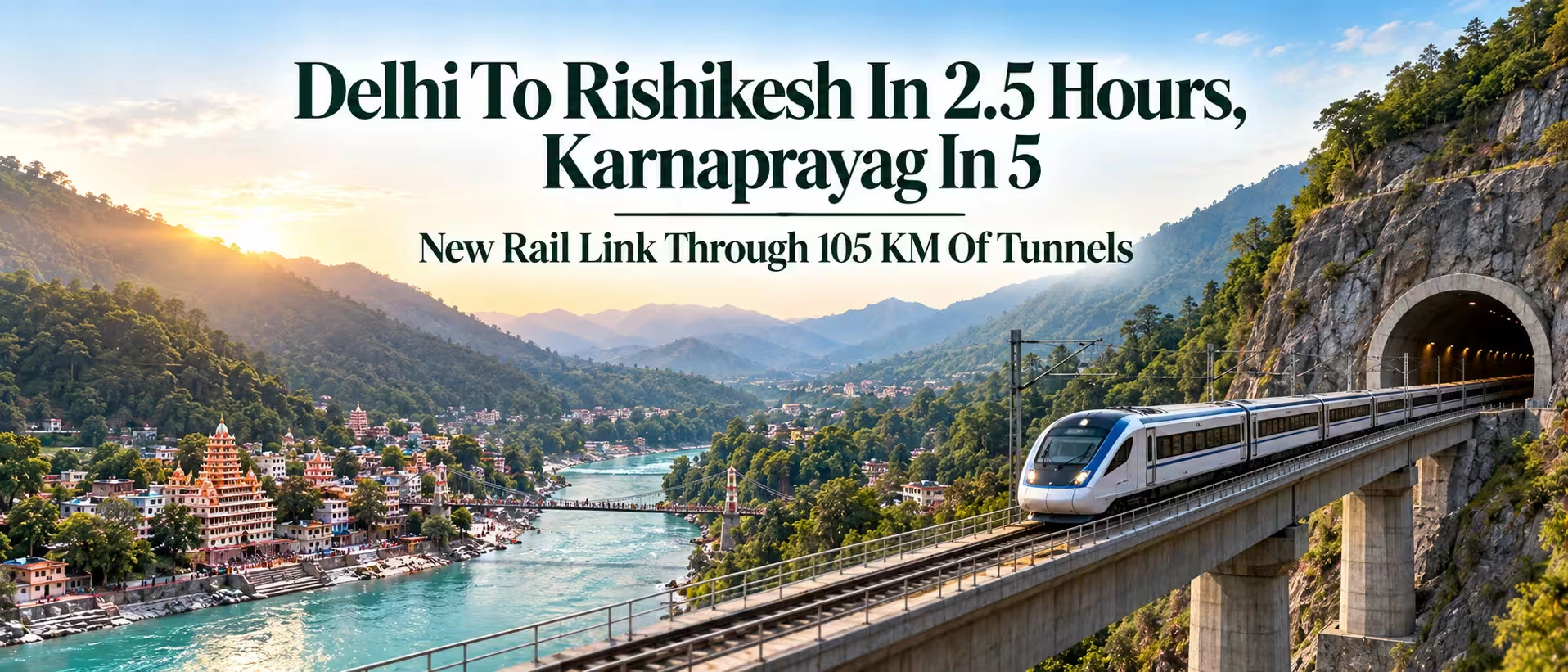
- The Delhi Behror RRTS corridor is being discussed as a major connectivity upgrade, with reported travel time from Sarai Kale Khan to Behror around 1 hour 50 minutes once operational.
- The broader Delhi Alwar RRTS project is planned to connect Delhi, Gurugram, Rewari, Neemrana, Behror and Alwar through a rapid regional rail network.
- This corridor can support daily commuting, industrial movement, logistics, job access and long-term real estate demand across Rajasthan’s NCR belt.
- Areas like Shahjahanpur, Neemrana, Behror, Rewari, Bawal, Manesar and Alwar may see stronger interest because infrastructure usually improves accessibility and buyer confidence.
- For land buyers, the opportunity is not only about “buying near a station.” The smarter approach is checking road access, zoning, land title, local development pattern and future usability.
Introduction: Why Everyone Is Talking About Rajasthan to Delhi in Under 2 Hours
For years, people travelling between Rajasthan and Delhi NCR have depended heavily on road routes such as NH-48. On paper, the distance looks manageable. In real life, traffic near Delhi, Gurugram, Manesar, Dharuhera, Rewari and highway toll points often makes the journey unpredictable.
That is why the upcoming Rajasthan Delhi RRTS project has become a serious topic for commuters, industrial workers, businesses, landowners and real estate investors.
The big promise is simple: faster regional travel.
The bigger impact is even more important: better connectivity can change how people live, work, invest and move between Delhi NCR and Rajasthan’s growing urban-industrial belt.
The proposed Delhi Gurugram Rewari SNB RRTS corridor is not just another train route. It is part of a larger regional transport vision where fast rail connects Delhi with important economic zones outside the capital. With the Namo Bharat system already changing the way people look at regional mobility in NCR, the Rajasthan side of the network is now gaining more attention.
For Rajasthan, this can be a major turning point. Places like Neemrana, Behror, Shahjahanpur, Bawal, Rewari and Alwar already have industrial, warehousing, tourism and residential importance. Better rail connectivity with Delhi can make these areas more practical for daily travel, weekend movement, business expansion and long-term land planning.
What Is the Rajasthan to Delhi RRTS Project?
The Rajasthan to Delhi RRTS is part of the planned Regional Rapid Transit System network that aims to connect Delhi with important regional centres through high-speed, high-frequency rail.
RRTS stands for Regional Rapid Transit System. It is designed for longer-distance regional travel, not just city-level metro movement. A metro is mainly useful for urban commuting within a city. RRTS is built to connect cities and fast-growing regional nodes.
In simple words, RRTS is meant for people who need to travel between Delhi and nearby cities faster than regular road or conventional rail travel.
The planned Delhi Alwar RRTS corridor is expected to connect Delhi with key locations in Haryana and Rajasthan. The broader alignment includes important nodes such as Sarai Kale Khan, Gurugram, Manesar, Dharuhera, Rewari, Bawal, Shahjahanpur, Neemrana, Behror and Alwar.
The route is also commonly discussed as the Delhi Behror RRTS corridor when people refer to the Rajasthan-facing phase that improves access up to Behror and the Shahjahanpur-Neemrana-Behror belt.
For a normal user, the biggest question is not technical. It is practical.
- Can I travel faster?
- Can I reach Delhi more easily?
- Will this improve local property demand?
- Will land near this route become more valuable?
- Will industrial towns around Rajasthan become stronger?
These are the real questions behind the rising search interest around the upcoming RRTS project Rajasthan.
Why the “Under 2 Hours” Claim Matters
The phrase “Rajasthan to Delhi in under 2 hours” creates strong interest because it makes regional travel feel realistic.
However, it is important to understand this correctly.
The strongest under-2-hour claim is currently linked with the Delhi-to-Behror/SNB-Behror section, where reported travel time from Sarai Kale Khan to Behror is around 1 hour 50 minutes after completion. For the full Delhi-to-Alwar stretch, the journey is generally discussed around two hours depending on the final route, phasing, stops and operational plan.
So, the smarter headline is:
Delhi to parts of Rajasthan, especially Behror and the Neemrana belt, may become possible in under 2 hours through rapid rail connectivity.
This is still a major shift.
Today, road travel between Delhi and Rajasthan’s NCR belt can vary heavily because of traffic, weather, toll queues, construction work and peak-hour congestion. A rapid rail corridor can reduce uncertainty. For office workers, factory employees, students, business travellers and families, predictable travel time can matter as much as total travel time.
That is the real value of the Rajasthan Delhi rapid rail project.
Quick Summary Table: What the Upcoming RRTS Means
| Point | What It Means for Users |
| Project Type | Regional rapid rail corridor for faster inter-city travel |
| Main Connectivity Belt | Delhi, Gurugram, Rewari, Neemrana, Behror, Alwar |
| Key Travel Benefit | Faster and more predictable Delhi-Rajasthan movement |
| Strongest Under-2-Hour Angle | Delhi to Behror/SNB-Behror section |
| Real Estate Impact | Better interest in land, plots, housing and commercial zones near connected nodes |
| Industrial Impact | Stronger access to Manesar, Bawal, Neemrana, Behror and Alwar belt |
| Buyer Caution | Check title, zoning, approach road, land use and actual station distance before investing |
| Best Fit For | Commuters, land buyers, investors, businesses, landowners and developers |
Planned Route: Delhi, Gurugram, Rewari, Neemrana, Behror and Alwar
The proposed route has one clear purpose: connect Delhi NCR with Rajasthan’s industrial and urban growth belt.
The Delhi to Rajasthan RRTS route is expected to start from Delhi’s Sarai Kale Khan side and move through major Delhi and Haryana nodes before entering Rajasthan’s NCR region.
The broader corridor is linked with:
- Sarai Kale Khan
- INA / Munirka / Aerocity side
- Gurugram
- Manesar
- Dharuhera
- Rewari
- Bawal
- Shahjahanpur
- Neemrana
- Behror
- Sotanala / Khairthal side
- Alwar
These station lists as well as their implementation can vary as the process of approval and execution of the plan progresses. Nevertheless, it is obvious that the goal is to integrate Delhi NCR more closely with the belt of industrial and residential zones of Rajasthan.
This explains why search phrases such as rapid rail from Delhi to Behror, rapid rail from Delhi to Alwar, Neemrana-Delhi connectivity, and rapid rail from Alwar to Delhi have become more popular.
Why Sarai Kale Khan Is Important in This Corridor
One of the most important things about Sarai Kale Khan is that the regional routes passing through this location will make it a very important transport hub in Delhi NCR.
The reason is that a quick train makes sense only when it connects well with other forms of transport.
If the passenger arrives at Sarai Kale Khan and gets connected to metro, bus, railway station or some other RRTS route, then this would make traveling much easier. And this will be the point where Namo Bharat network becomes much more effective than just a point-to-point railway line.
And for travelers who want to travel from Rajasthan to Delhi, it could help them reach places like central Delhi, south Delhi, Noida, Ghaziabad, Meerut, among others.
In real estate terms, it means increased regional accessibility.
And whenever the regional accessibility of a location increases, it tends to make the location attractive for residences, warehouses, office buildings, rentals, hospitality business, roadside business, and even property investments.
How RRTS Is Different From Metro and Normal Rail
Many people confuse RRTS with metro. Both are rail-based systems, but they solve different problems.
The metro is best for city movement. It stops frequently and connects neighbourhoods within a city.
RRTS is built for regional movement. It covers longer distances with fewer stops and higher speed.
Conventional rail connects cities too, but frequency, station access, waiting time and last-mile convenience may not always match daily commuter needs.
The Namo Bharat system is designed as a modern commuter-focused regional network. It focuses on speed, comfort, predictable movement and integration with other transport systems.
That is why the Namo Bharat Rajasthan route can become important for people who want to live outside Delhi NCR but still remain connected to employment, business and education opportunities.
Why This Corridor Can Change Rajasthan-Delhi Travel Behaviour
Connectivity does not only reduce travel time. It changes behaviour.
When a place becomes easier to reach, people start thinking differently.
- A person working in Gurugram may consider living farther away if travel becomes reliable.
- A business owner may look at warehousing near Rewari, Neemrana or Behror.
- A family may consider buying land near Rajasthan’s NCR region because weekend access improves.
- A developer may evaluate plotted projects or low-rise housing near future transit-linked locations.
- A landowner may get better buyer interest if the property has road access and legal clarity.
This is the real reason the Rajasthan Delhi connectivity project is important for real estate.
Infrastructure creates confidence. Confidence creates demand. Demand creates market movement.
But this does not mean every land parcel near the route will automatically become valuable. Real estate growth depends on exact location, land title, land use, road width, local demand, nearby development, water availability and government planning.
The corridor is a catalyst, not a guarantee.
Major Locations That May Benefit From the Rajasthan-Delhi RRTS
1. Neemrana: Industrial Growth Meets Better Connectivity
Neemrana is already known for its industrial base, Japanese Zone, educational institutions, hotels and highway-linked growth. It sits on the important Delhi-Jaipur industrial belt and has attracted attention from manufacturers, workers, professionals and land buyers.
With better Neemrana to Delhi connectivity, the area may become more attractive for people who want industrial access with improved regional mobility.
Land demand around Neemrana can come from multiple segments:
- industrial support services
- warehousing
- worker housing
- rental housing
- plotted development
- roadside commercial spaces
- farm and weekend land buyers
For buyers searching for agriculture land near Neemrana RRTS, the main focus should be legality and use case. Agricultural land can be attractive, but buyers must check conversion rules, approach roads, ownership records and local restrictions before making any decision.
2. Behror: A Strong Candidate for Transit-Led Attention
Behror is getting strong attention because the under-2-hour Delhi travel angle is closely linked with this belt. If the Delhi Behror RRTS corridor becomes operational as planned, Behror can gain stronger visibility among commuters, investors and businesses.
Behror already benefits from its position on the Delhi-Jaipur highway belt. RRTS can add a second layer of connectivity.
This may help:
- residential demand from working professionals
- logistics movement
- local commercial growth
- plotted land interest
- buyer confidence in the region
For people searching land for sale near Alwar RRTS or Behror-linked opportunities, it is better to compare Behror, Neemrana and Shahjahanpur based on actual access, not just distance from Delhi.
3. Shahjahanpur: Important for Rajasthan’s Entry Belt
Shahjahanpur is strategically placed near the Haryana-Rajasthan boundary. Because of its location, it can become an important connector between industrial Haryana and Rajasthan’s growth belt.
If the station planning and surrounding infrastructure develop well, this area may support industrial housing, rental rooms, logistics, dhabas, service centres, small commercial pockets and land demand.
However, buyers should avoid buying only on rumours. Always check the official route, proposed station distance and legal land status.
4. Rewari and Bawal: Logistics and Industrial Strength
Rewari and Bawal already play an important role in Haryana’s industrial and logistics network. Better rapid rail connectivity can make them more connected to both Delhi and Rajasthan.
The Rewari to Delhi rapid rail angle is important because many people travel between Rewari, Gurugram and Delhi for work, business and education.
For real estate, better connectivity can support:
- rental housing
- plotted development
- logistics parks
- warehouses
- industrial worker housing
- highway commercial projects
This also creates spillover interest toward Rajasthan-side locations like Neemrana and Behror.
5. Alwar: Tier-2 City With Stronger NCR Linkage
Alwar already has tourism, education, industrial and residential relevance. It is close enough to NCR to attract long-term interest but far enough to maintain a different cost structure compared to Delhi and Gurugram.
The Delhi Alwar RRTS can make Alwar more accessible for business and travel. This can improve interest in housing, land, hospitality, education-led development and second-home opportunities.
For investors, Alwar should not be seen only as a cheap alternative to NCR. It should be evaluated as a growing city with its own demand for drivers.
Real Estate Impact: What Can Change After RRTS?
The real estate impact of the upcoming rail project in Rajasthan can be understood in four layers.
1. Better Accessibility
The first and most direct impact is accessibility. When travel becomes faster, people become more willing to consider areas that were earlier seen as “too far.”
This can increase search demand for terms like property near Delhi Alwar RRTS, land near future stations and plots in corridor-linked areas.
2. Stronger Buyer Confidence
Infrastructure projects build confidence because buyers can see future growth potential. Even before a project becomes operational, land markets often start reacting to announcements, approvals, surveys and early construction activity.
But smart buyers should not depend only on hype. They should verify facts.
3. Industrial and Employment Pull
The Delhi-Gurugram-Rewari-Neemrana-Behror-Alwar belt has strong industrial relevance. Better transport can help workers, vendors, managers, suppliers and companies move more efficiently.
This may support residential and rental demand around industrial nodes.
4. Land Value Repositioning
Land near strong corridors can move from “remote land” to “connected land” over time.
This does not mean every parcel becomes premium. Land value depends on:
- road access
- distance from station or highway
- land title
- surrounding development
- water and electricity access
- permitted land use
- local master plan
- buyer demand
That is why land investment near Rajasthan RRTS should be done with research, not emotion.
How RRTS Can Influence Land Buying Near Rajasthan NCR
When a major transport project comes up, land buyers generally become active in three types of locations.
Near Stations
Station-area land can attract commercial, rental and residential interest. But it is usually expensive and may have regulatory restrictions.
Near Approach Roads
Land near connecting roads can become useful for shops, small warehouses, rental housing, service businesses and plotted development.
Near Industrial and Employment Nodes
Areas close to factories, logistics hubs, warehouses and offices often have steady demand because people need housing and services near jobs.
For Rajasthan’s NCR belt, this makes Neemrana, Behror, Shahjahanpur and Alwar worth tracking.
2Bigha can help buyers explore land options in emerging corridors and compare location potential with better clarity. For landowners, 2Bigha also supports visibility and management through its subscription plan and property management service.
Buyer Checklist Before Buying Land Near the RRTS Corridor
Before buying land near Delhi RRTS corridor, do not depend only on future connectivity claims. Use this checkli
| Checklist Point | Why It Matters |
| Check land title | Confirms legal ownership and reduces dispute risk |
| Verify land use | Agricultural, residential, commercial and industrial land have different rules |
| Check approach road | Poor road access can limit future usability |
| Confirm distance from actual route | Marketing claims may exaggerate station proximity |
| Review master plan | Future zoning can affect value and development scope |
| Check mutation and revenue records | Important for legal transfer |
| Verify electricity and water access | Basic services affect practical use |
| Avoid only-rumour buying | Wait for official route clarity where needed |
| Compare nearby rates | Prevents overpaying during hype cycles |
| Understand exit options | Good investment should have future buyer demand |
This checklist is especially useful for people searching to buy land near Delhi Rajasthan corridor, plots near RRTS corridor Rajasthan or investment property near Behror RRTS.
What Sellers Should Know
For land sellers, RRTS news can improve buyer attention. But selling land near an upcoming corridor requires clear presentation.
A serious buyer will ask:
- Where exactly is the land?
- Is the title clear?
- What is the road width?
- How far is it from the highway or proposed station area?
- Is it agricultural or converted land?
- Are there any disputes?
- Is the land suitable for farming, plotting, warehousing or long-term holding?
If sellers can answer these questions clearly, they will build trust faster.
For people planning to sell land near Alwar RRTS or in the Neemrana-Behror belt, location proof, documents, photographs and transparent details matter more than inflated promises.
A buyer may come because of RRTS. The deal closes because of trust.
Should You Buy Land Near the Delhi-Alwar RRTS Route?
Buying land near the Delhi Alwar RRTS route can make sense for long-term buyers who understand location risk and legal due diligence.
It may be suitable if:
- you are looking for long-term land appreciation
- you understand the local market
- the land has clean documents
- the location has good road access
- the area has real demand beyond only future rumours
- you are not expecting overnight returns
- you can hold the asset through the project development period
It may not be suitable if:
- the land has unclear ownership
- the seller cannot provide proper documents
- access road is weak or disputed
- price is already inflated without justification
- you are buying only because someone said “station is coming”
- you have not checked land use rules
Real estate around infrastructure corridors rewards patient and informed buyers. It punishes rushed decisions.
How RRTS Can Support Industrial Growth in Rajasthan
The Rajasthan side of NCR is already important for industries. Neemrana, Behror, Bhiwadi, Alwar and nearby belts have manufacturing, logistics and warehousing potential.
The Rajasthan rapid rail project can support this ecosystem in several ways.
- Workers can travel faster.
- Managers can move between Delhi, Gurugram and factory belts more easily.
- Vendors can access industrial clusters better.
- Businesses may find it easier to attract talent.
- Hotels, rental housing and local services may get stronger demand.
- Land near industrial corridors may gain better market visibility.
This is why the project is not only about passenger comfort. It is also about economic connectivity.
When transport improves, business confidence improves.
How This Project Can Affect Residential Demand
Residential demand around rapid rail corridors usually grows in stages.
- First, investors start tracking the area.
- Then, local land prices begin to react to announcements and route clarity.
- After visible construction begins, buyer confidence improves.
- Once operations begin, actual commuter demand becomes clearer.
- Finally, residential and rental markets mature around strong station-linked nodes.
For the Rajasthan-Delhi belt, this may create demand for:
- plotted housing
- low-rise residential colonies
- rental rooms for workers
- staff housing
- second homes
- farm-style living spaces
- small commercial shops
- service apartments in select pockets
However, not every location will grow equally. Areas with jobs, road access and planned development will perform better than isolated land parcels.
How This Project Can Affect Agricultural Land
Many buyers search for agricultural land near Neemrana RRTS or agricultural land near Behror and Alwar because they expect future appreciation.
Agricultural land can be attractive in emerging corridors, but it also requires extra caution.
Before buying agricultural land, check:
- whether non-farm buyers are allowed
- whether land conversion is possible
- whether the land falls under any acquisition or restriction zone
- whether the approach road is legal
- whether water access is available
- whether the seller has full ownership rights
- whether the land is under litigation
Agricultural land should not be bought only because of future RRTS news. It should fit your purpose, budget and legal eligibility.
Practical Example: Why Neemrana and Behror Are Getting Attention
Let us take a practical example.
A person working in Gurugram wants to invest in land but cannot afford prime Gurugram or Delhi NCR prices. Earlier, Neemrana or Behror may have felt too far for regular monitoring.
With better RRTS connectivity, that thinking can change.
If travel becomes faster and more predictable, the buyer may feel more comfortable exploring land in Rajasthan’s NCR belt. The same applies to business owners who want land for warehousing, staff housing or future expansion.
This is how infrastructure changes buyer psychology.
It does not only reduce travel time. It reduces mental distance.
What Makes This Corridor Important for Delhi NCR?
Delhi NCR has been expanding beyond traditional city boundaries for many years. Gurugram, Noida, Greater Noida, Ghaziabad, Sonipat, Faridabad and Meerut have already shown how connectivity shapes real estate demand.
The Rajasthan belt is the next important direction because it connects with industrial and highway-led growth.
The Delhi NCR rapid rail project can reduce pressure on Delhi and Gurugram by making nearby regional towns more practical for living and business.
This supports a larger idea: balanced regional growth.
Instead of forcing everyone into central Delhi or Gurugram, better transport allows growth to spread across connected towns.
Why Land Buyers Should Track RRTS But Not Chase Hype
Every major infrastructure announcement creates excitement. It also creates over-marketing.
Some sellers may say, “A station is coming next to this land.”
Some brokers may say, “The price will double soon.”
Some listings may use corridor names even when the land is far from the actual route.
This is where buyers must stay practical.
Track the project, but verify every claim.
- Ask for route proof.
- Ask for land documents.
- Visit the location.
- Check road access.
- Speak to local people.
- Compare prices.
- Check government records.
- Do not buy only because a keyword sounds attractive.
The smartest investors are not the fastest buyers. They are the best-informed buyers.
Best Areas to Watch Along the Rajasthan-Delhi Connectivity Belt
The most important locations to watch are not random villages. They are places where connectivity, employment, road access and future planning overlap.
Neemrana
Strong industrial base, Japanese Zone influence, highway access and future rapid rail attention.
Behror
Important for the under-2-hour Delhi travel angle and growing visibility in the Delhi-Rajasthan belt.
Shahjahanpur
Strategic Rajasthan entry point with potential industrial and logistics relevance.
Alwar
Established city with tourism, education, housing and industrial potential.
Rewari
Important logistics and commuter node between Haryana and Rajasthan.
Bawal
Industrial location that may benefit from better Delhi and Rajasthan movement.
Manesar
Existing industrial powerhouse with strong employment pull.
These locations should be evaluated through both current demand and future connectivity.
For End Users: Will Living Farther From Delhi Become Easier?
Yes, but only in selected locations.
A fast train can make living outside Delhi more practical if:
- station access is easy
- last-mile connectivity improves
- ticket pricing remains practical
- workplaces are near connected nodes
- local housing quality improves
- safety and civic infrastructure support daily life
For example, a person living near a future RRTS-connected belt may find it easier to reach Gurugram or Delhi compared to today’s road-based travel. But if the home is far from the station and local transport is poor, the benefit reduces.
So, buyers should think about full journey time, not only train time.
- Home to the station.
- Station waiting time.
- Train journey.
- Station to office.
- Return journey.
This complete calculation gives the real answer.
For Investors: What Is the Right Strategy?
The right strategy is not “buy anywhere near RRTS.”
A better strategy is:
- Identify confirmed or high-probability corridor locations.
- Shortlist areas with existing demand.
- Check land title and land use.
- Avoid overpriced hype pockets.
- Prefer locations with road access and nearby economic activity.
- Compare agricultural land, plotted land and commercial land separately.
- Plan for medium-to-long-term holding.
- Keep liquidity in mind.
For investors looking at real estate near the Namo Bharat corridor, the best approach is balanced optimism.
The corridor can improve long-term potential, but due diligence decides whether the purchase is safe.
For Businesses: Why This Corridor Can Improve Operations
Businesses across Delhi, Gurugram, Manesar, Bawal, Neemrana, Behror and Alwar can benefit from faster people movement.
This is important for:
- factory staff movement
- vendor coordination
- office visits
- logistics planning
- industrial recruitment
- regional sales teams
- warehouse operations
- site inspections
Better regional travel can reduce dependency on road congestion. It can also help companies access a wider talent pool.
For Rajasthan’s industrial belt, this can improve competitiveness.
What Makes RRTS Important for Local Economies?
A strong transport corridor creates many small economic changes.
Tea shops, food outlets, rental rooms, service centres, parking areas, repair shops, warehouses, offices and small commercial spaces often grow around strong mobility nodes.
This is not instant. It happens over time.
But when transport becomes reliable, local economies become more active. People visit more often. Workers move more easily. Businesses feel more confident. Developers start planning. Landowners become more active.
This is why the Rajasthan infrastructure project has importance beyond travel.
It can shape the next phase of local growth.
Risks and Challenges Buyers Should Understand
No infrastructure project should be treated as risk-free.
There can be:
- delays in construction
- changes in route alignment
- station location revisions
- land acquisition issues
- approval delays
- cost changes
- overpricing in nearby land markets
- speculative selling
- unclear local zoning
For buyers, this means one thing: do not invest based only on future news.
Buy land that makes sense even if the project takes longer than expected.
That is the safest mindset.
Final Thoughts: RRTS Can Make Rajasthan’s NCR Belt More Connected and More Valuable
The upcoming Rajasthan to Delhi RRTS is more than a transport project. It is a regional growth signal.
If implemented well, it can reduce travel time, improve Delhi-Rajasthan movement, support industrial towns and create stronger real estate interest in locations like Neemrana, Behror, Shahjahanpur and Alwar.
For buyers, this is a good time to study the corridor carefully. For sellers, it is a good time to prepare clear property details. For investors, it is a good time to avoid hype and focus on facts.
The future of land near major infrastructure corridors belongs to people who combine timing with due diligence.
RRTS can create opportunity.
Research protects your money.
Good location builds long-term value.