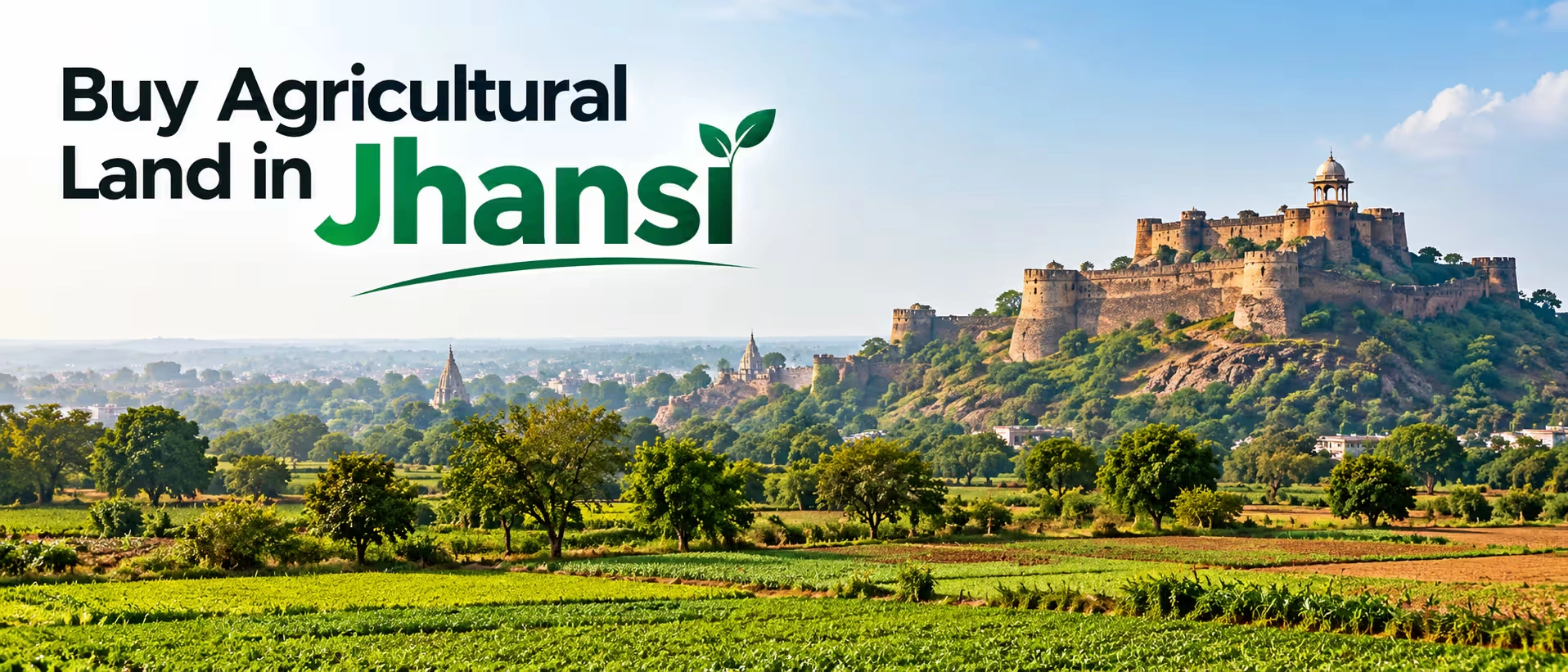
Jhansi was a place that used to be known only for its fort and its railway junction point. But now, Jhansi has become an important part of another discussion: land. It has been in the limelight recently due to some recent developments like setting up an industrial city, becoming part of the defense corridor, and getting the nod for a new expressway. This is quite good, but there is a catch too. Any time a district becomes hot, there are some things that usually tend to happen.
Why Buyers Are Looking at Jhansi Now?
Three developments explain most of the attention.
BIDA. The Bundelkhand Industrial Development Authority has Jhansi at its centre. As of March 2026, it had acquired about 24,201 acres, which is over 68% of its first phase target of roughly 35,298 acres. The project also received its environmental clearance in June 2026.
The defence corridor. The Jhansi node of the UP Defence Industrial Corridor is already active. About 1,000 hectares have been provided to defence manufacturing investors, and Bharat Dynamics is the lead investor there.
Road links. The Uttar Pradesh Cabinet has approved the Jhansi Link Expressway at an estimated cost of ₹7,968.30 crore. It is meant to connect the BIDA area and the defence corridor with the wider network.
When factories, roads and jobs arrive together, nearby land tends to move. This is one reason agricultural land for sale in Uttar Pradesh is getting more attention from outside buyers, and Jhansi sits high on that list.
Plot or Farmland: Pick Your Goal First
Many people begin by browsing listings and only later ask what they actually want. Flip that order.
- A residential plot suits you if you plan to build or resell within a few years. If that is your plan, a plot in Jhansi closer to the city edge is usually easier to sell later.
- Farmland suits you if you want crop income, a long hold, or a lower entry price.
- Land near an upcoming road or industrial zone can rise faster, but it also carries more uncertainty about timing.
Write down your budget, your holding period, and your reason for buying. Every other decision gets simpler after that.
Areas of Jhansi Worth Looking At
Not every part of the district will behave the same way. Here is a rough way to compare the zones.
| Zone | What is driving interest | Better suited for | Main caution |
| BIDA village belt | Industrial city and land acquisition | Long-term holding | Check if the village is notified or under acquisition |
| Defence corridor node area | Manufacturing units and jobs | Plots, warehousing, rentals | Prices may already include future hopes |
| Roads leading out of the city | Easy access and resale | Residential plots | Mixed land use, unclear boundaries |
| Interior farming villages | Lower prices, crop income | Farmland, steady use | Weak road access, water availability |
This table is a starting guide only. Visit each location, ask locals, and compare recent sale deals before you decide. Whether you want to buy farmland in Jhansi for cultivation or hold it for appreciation, the area you pick matters as much as the land itself.
Documents You Must Check Before Buying
This is the part where most buyers either save themselves or get into trouble. Ask the seller for each of these and match them against official records.
| Document | What it tells you | Where to verify |
|---|---|---|
| Sale deed (registry) | How the seller got the land | Sub-registrar office |
| Khatauni | Who owns the land and in what capacity | UP Bhulekh portal |
| Khasra number record | Plot number, area, and land type | UP Bhulekh portal or tehsil |
| Land map (naksha) | Actual shape and boundary | Tehsil, revenue records |
| Encumbrance or loan check | Any mortgage or pending dues | Bank, registry search |
| Latest mutation entry | Whether the last transfer was recorded | Tehsil office |
If any of these do not match, pause. A mismatch in the owner's name or the area is the most common red flag.
How to Buy Agricultural Land in Jhansi? Step by Step
Here is the order that tends to work best.
- Set your budget and purpose. Include registry costs, travel, and legal fees, not just the price per bigha.
- Shortlist two or three locations and visit them. Do not decide from photos alone.
- Look through current listings. A plot for sale in Jhansi or a farm parcel listed online lets you compare rates quickly before you meet any seller.
- Ask for the full document set from the table above.
- Verify records online. Use the UP Bhulekh portal to match khatauni and khasra details.
- Confirm the land type and holding rights. In Uttar Pradesh, some land is held with limited transfer rights, and that affects whether it can be sold freely.
- Check special categories. Land owned by Scheduled Caste holders, for example, has special transfer rules and may need district permission.
- Check acquisition status. Ask at the tehsil whether any part of the land is under BIDA, corridor, or expressway acquisition.
- Inspect the ground. Look at the boundary, road access, water source, and neighbouring plots.
- Negotiate using real data. Use recent nearby registries, not the seller's story about future prices.
- Register the sale deed. Pay stamp duty and registration charges as per the current UP rates.
- Apply for mutation (dakhil kharij). Registration alone does not update the revenue record. Mutation does.
Uttar Pradesh also has limits on how much agricultural land one person or family can hold, and rules on who may buy. Confirm the current position with a local lawyer before you sign for a large parcel.
Read More: Jhansi Next Growth Story: Why It Could Be the Next Land Investment Hotspot
Mistakes That Cost Buyers Money
- Paying an advance before checking the khatauni.
- Trusting a broker's verbal promise about road access.
- Ignoring joint owners or heirs who have not agreed to the sale.
- Buying inside a village that is already on an acquisition list.
- Skipping the mutation step after registry.
- Visiting only in dry months and missing waterlogging problems.
Nearly all of these come down to rushing. A week of checking can save years of dispute.
Thinking of Selling? A Few Tips
Plenty of readers here are landowners, not buyers. If you plan to sell agricultural land in Jhansi, the same record discipline works in your favour.
- Fix name errors and area differences in your records first.
- Keep your registry, khatauni, and map in one folder.
- Settle family consent before you list. Buyers walk away from disputed land.
- Take clear photos and mark the boundary.
- Price it using nearby sale deeds, not rumours.
A clean file often sells faster and at a better rate than a better location with messy papers.
Buy and Sell Land in Jhansi With 2Bigha
Finding trustworthy land is the hardest part of this whole process. 2Bigha is a marketplace for agricultural land and farmland across India, built so buyers and sellers can deal more directly and with better information. If you are buying, you can browse listings on the 2Bigha buy page, book a visit, and ask for a background verification report so you know what you are stepping into. If you are selling, you can list your land through the sell page and reach genuine buyers without layers of middlemen. You can also explore farm projects and the 2Bigha home page to see what is available across states.
Final Thoughts
Jhansi’s history of land does have some real transactions to back up the history, and it is for that reason that wise investors must be slow in making decisions regarding investments in this part of India. Choose the right region, study the documents, look for acquisitions, and inspect the land.
Disclaimer: This article is for informational purposes only and should not be considered investment, legal, financial, or property advice. Real estate regulations, infrastructure plans, market conditions, and government policies may change over time. Readers are advised to verify information with relevant authorities and consult qualified professionals before making any investment or property-related decisions.