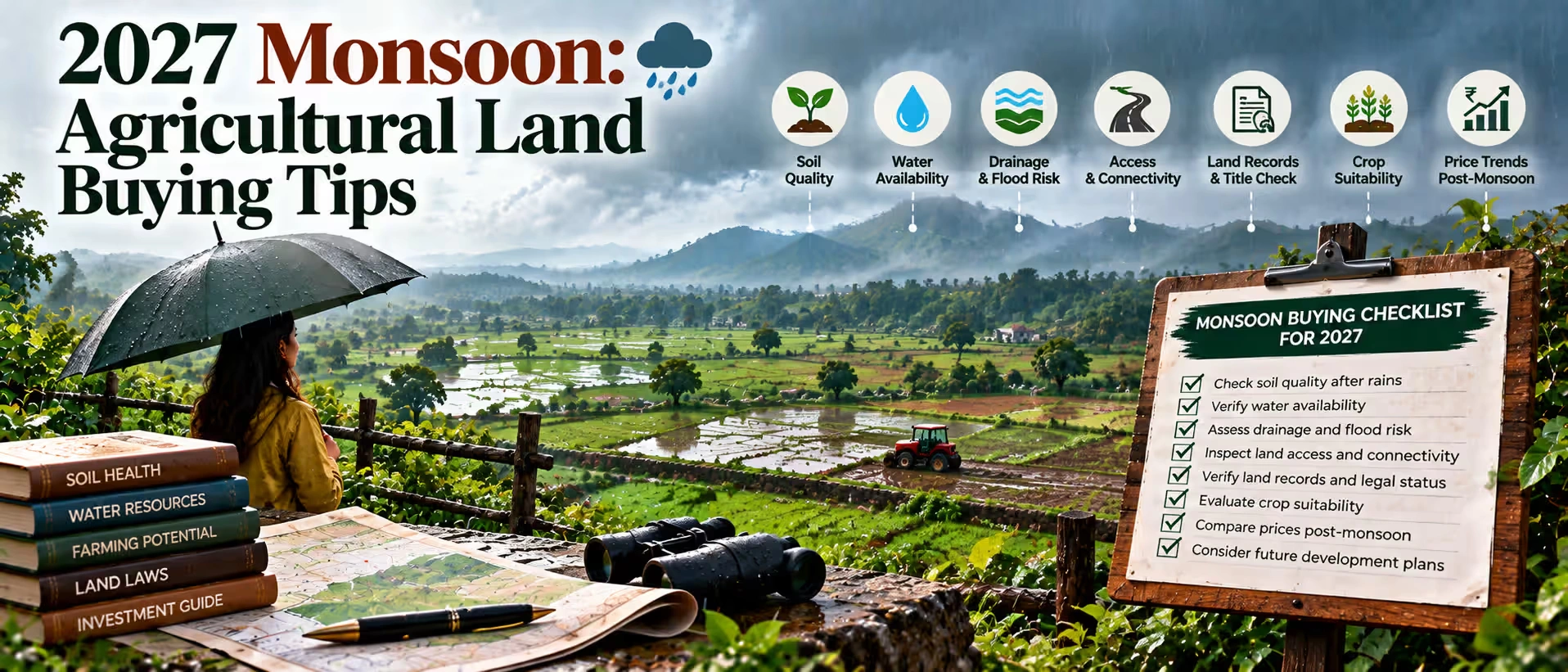
The monsoon season will play a critical role in determining the behavior of the agricultural land during the year, and buyers generally get to view the land in the dry months. A piece of land that seems flat, accessible, and fertile in November may transform into a waterlogged piece of land with a washed-out road by July. As it is currently October 2026, you have enough time before the beginning of the 2027 rains to conduct all the inspections, tests, and legal procedures necessary for planting your first crop. This guide provides you with the list of things to consider first and in what order.
Why the Timing Matters?
There are three clear advantages to buying the property in the months before the monsoons. Firstly, you will be able to look at the soil and the land under dry conditions, and secondly, you will be able to complete your registration and mutations before the start of the farming season. Thirdly, the arrangements for water, fencing, and other things can be done prior to the arrival of the rains.
The problem is that the inspection during this period will fail to show drainage issues and flooding risks. For this reason, it is better to first inspect the land during dry seasons, ask questions regarding wet seasons, and if possible, visit it during the rainy seasons.
A Rough Timeline Before the Rains
| Period | What to Do |
| October to December 2026 | Shortlist land, run first-level record checks, make the first site visit |
| January to February 2027 | Soil and water tests, legal title review, price negotiation |
| March to April 2027 | Sign the agreement, register the sale deed, apply for mutation |
| May 2027 | Fence, repair access, prepare drainage, arrange irrigation |
| June 2027 onward | Visit again after the first rains, plan sowing for the kharif season |
Timelines differ by state and by how quickly the seller's documents are ready, so treat this as a planning frame and not a fixed schedule.
Inspection 1: Drainage and Flood History
Just walk around the plot and observe the direction of the water flow. Identify the slope, the lower areas on the land, and the relative positions of streams, canals, drains, and ponds on the plot. Evidence that the water is collected in and moves across the plot includes salt deposition, variation in vegetation, silt deposition on trees and fence posts, and cracking and drying of clay soils in low-lying areas.
Next comes questioning. You should ask the other plot owners and farmers about the worst flooding that has occurred and for how many days, and whether any crop losses have been experienced. It is wise to get information from the district administration office or the state disaster management organization regarding flood prone areas as some states provide the map of these areas.
Inspection 2: Access Road in the Rainy Season
People searching farm lands near me often judge access on a sunny day and forget that a kachcha road can become impassable for weeks during heavy rain. Check whether the approach road is public, legally recorded, and passable by a tractor or truck in wet weather. If access passes through someone else's field, find out whether there is a registered right of way. Without it, a single neighbour's objection can block your movement. Also look for culverts, low crossings and drainage channels on the route, because those are the points that fail first.
Inspection 3: Soil Quality
Soil is the factor that defines what you may grow, how much fertiliser is needed, and how the land will retain water. The basic soil analysis includes:
- Observing soil colour and texture in several places, not only close to the road
- Digging a hole to determine soil depth, its structure, and presence of hardpan
- Measuring water drainage speed after you pour some water into the soil
- Finding out what has been planted there during the previous years and with what success
- Sending soil samples to the soil analysis laboratory of the government or recognised private laboratory
Several Indian states offer soil analysis via agriculture departments within the framework of the Soil Health Card programme, where the pH level, organic carbon, and nutrients are measured. The price of the soil analysis is much lower than the price of the land itself, and it can help you find out about salinity and nutrient problems that affect the price you need to pay.
Inspection 4: Water Source and Availability
However, rainfall alone is not sufficient to ensure a crop harvest, and an irrigation facility could be a very valuable addition to the plot. Get to know the availability of water on your property:
- Water from a borewell or tube well, including depth, quantity, and whether it functions properly
- Level of an open well in the dry season
- Canal and whether the plot is within the canal’s command area
- Availability of any tanks, ponds or rivers in the vicinity, along with any right to draw water from them
- Electricity connectivity with meter reading
The conditions of groundwater differ greatly across various blocks of India. In some blocks there is an extremely low groundwater level, while in some there may be over-exploitation of the same as marked by the Central Ground Water Board. Check on the groundwater situation of your block before you think of having a borewell facility as a means of irrigation.
Inspection 5: Boundaries, Area and Physical Condition
Make the ground tally with the paperwork. Survey the boundaries with the revenue map and the owner. Make notes about boundary stones, fences, and any encroachment on the land. If there is no clear demarcation of the land, a survey or demarcation by the revenue department would be well worth the money. You should also check the status of the existing structure, the trees, the fences, and any remaining produce.
Inspection 6: The Legal Checks
Physical inspection tells you what the land is like. Legal checks tell you whether it is yours to buy. For any agriculture land in India, confirm these before you pay an advance:
- The name of the owner in the most recent revenue papers is the same as the seller
- The co-owners/legal heirs of the property accept the sale
- An encumbrance certificate proves that there is no loan or litigation pending on the property
- There are no cases of acquisition, court injunction, or any governmental restrictions on the property
- Your proposed use of the land is permitted based on the land category
- Legally, you are qualified to purchase agricultural land in that particular state,e as some states prohibit non-agriculturists from purchasing agricultural land
Rules on who can buy agricultural land differ across states, so confirm the current position locally and consider a lawyer's opinion before signing.
What to Compare Across Plots?
| Factor | Why It Matters | What to Ask or Check |
|---|---|---|
| Drainage | Waterlogging damages crops and access | Flood history, slope, nearby channels |
| Road access | Affects farm work and resale value | Legal right of way, rainy season condition |
| Soil | Decides crop choice and input costs | Soil test report, past yields |
| Water | Reduces dependence on rain | Borewell, canal or tank access, power |
| Legal status | Prevents disputes and blocked sales | Records, encumbrance, acquisition check |
| Price | Should match condition and location | Registered deals nearby |
Common Mistakes Buyers Make
- Visiting only once, in dry weather, and assuming the land behaves the same all year
- Trusting verbal claims about water or access without seeing proof
- Paying a large advance before the documents are verified
- Ignoring soil testing because the neighbour's crop looks healthy
- Comparing only the price per acre and not what each plot actually offers
- Treating plots of land for sale in listings as ready to buy without a title check
Preparing the Land After Purchase
After that, utilize the weeks before the rain to prepare the land for cultivation. Put a fence around the land’s boundaries, clear away any waste products, repair the entrance road, construct/dig drainage channels, and ensure you have a source of water. Determine the type of crop you intend to grow during your initial planting period; contact the agricultural department to find out which crops would thrive and the availability of seedlings. If you intend to lease the land out, ensure that you write the deal down.
Selling Is Also a Seasonal Question
The same seasonal logic applies on the other side of the deal. Owners thinking of land selling often get better responses when the plot is shown in good condition, with clean records and clear access. If you want to sell land, gather your documents early, show the land before the rains if possible, and keep proof of water source and soil condition handy. Buyers trust a seller who can answer questions with paperwork.
Finding and Verifying Land on 2Bigha
If you are comparing different alternatives on a regional basis, then 2Bigha has agricultural land and farmland from all parts of India listed for you, along with information that helps speed up your decision-making process. The buyer can get a Land Report done that provides him with essential documentation. Alternatively, the Buyer can visit the site using Book a Visit and inspect the plot of land with assistance. If anyone is looking for farm lands in India, they will be able to find everything they need in one place.
Disclaimer: This article is for informational purposes only and should not be considered investment, legal, financial, or property advice. Real estate regulations, infrastructure plans, market conditions, and government policies may change over time. Readers are advised to verify information with relevant authorities and consult qualified professionals before making any investment or property-related decisions.