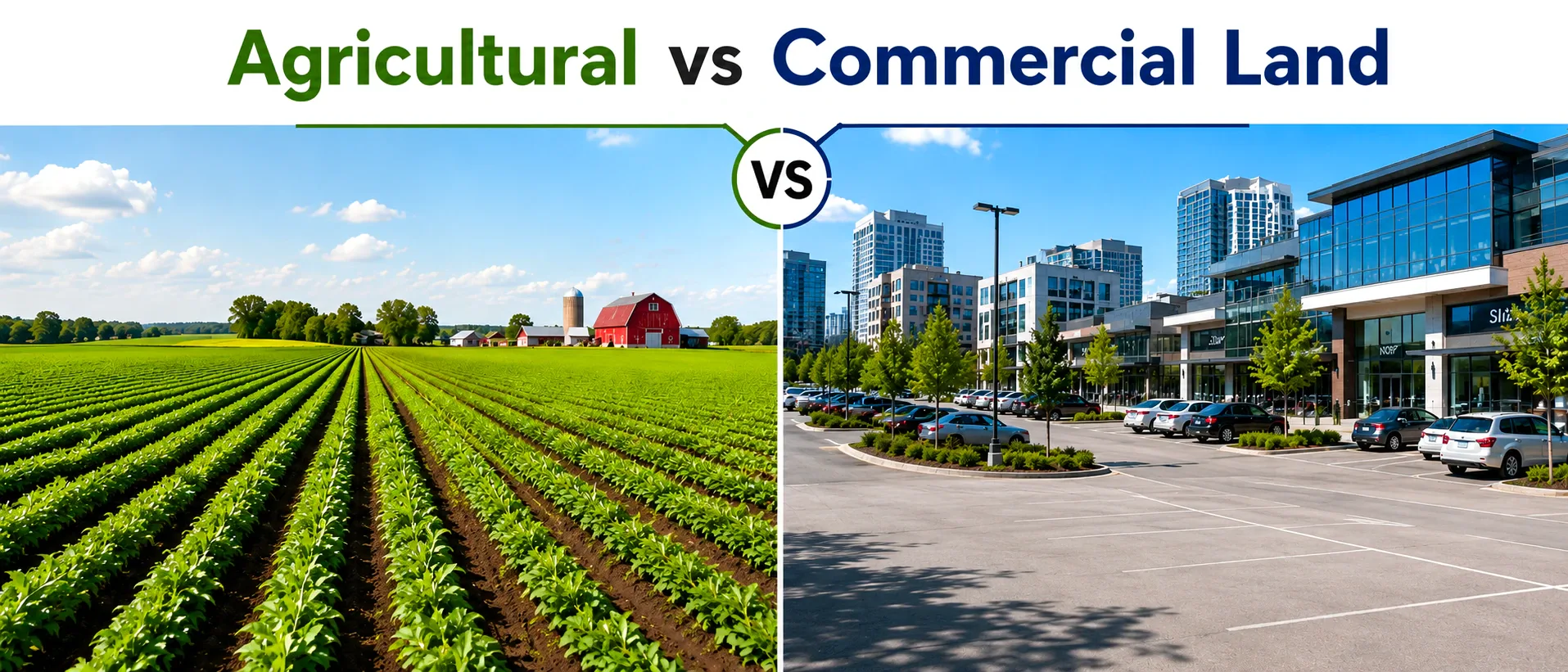
Whether you are buying land for agriculture, business, investment purposes, or future development projects, it is imperative to know which land you should choose from the different land types available. In India, buyers usually compare between agricultural and commercial land due to its benefits and investment options.
This article gives a comprehensive understanding of the entire process of buying agricultural vs commercial land including the legal differences, cost involved, documentation, taxes, and other aspects related to their investment potential. This is helpful for any buyer, be it a novice or an experienced one or those looking for farmhouse land.
2Bigha makes it much simpler by offering buyers the latest property insights, land details, and other investment options.
Key Takeaways
- The agricultural land can be used mostly for farming purposes and agriculture.
- The commercial land can be used mostly for businesses, stores, offices, factories, warehouses, etc.
- The laws, paperwork, funding, taxes, permissions, etc. greatly vary between these two types.
- The commercial land provides higher rent but needs more funds.
- The agricultural land costs less but has some limitations on the usage.
- Make sure to check the ownership, land permissions, etc. before buying anything.
Introduction
Purchase of land in India can be considered to be a highly safe investment, yet the choice of the land type is of great significance too. The main difficulty that most buyers face is choosing between agricultural and commercial lands as both have their own applications and legislation.
While agricultural lands can be used for farming, gardening, dairy farms, and some kinds of farmhouse land, commercial lands should be utilized exclusively for the conduct of business such as offices, shops, hotels, warehouses, hospitals, schools, universities, and industrial enterprises.
With rapid infrastructure growth, new expressways, industrial corridors, logistics parks, and smart city developments across India, both land categories are attracting investors. However, the buying process is not the same. Understanding ownership rules, government regulations, financing options, taxes, and future development potential is essential before making any investment.
This comprehensive guide explains everything you need to know.
What is Agricultural Land?
Agricultural land refers to land legally designated for agricultural activities such as:
- Crop cultivation
- Horticulture
- Organic farming
- Dairy farming
- Poultry farming
- Fisheries
- Plantation farming
While some states allow the development of farm lands on certain conditions, other states may have very restrictive laws.
The agricultural lands are not free to use for commercial structures because they have to be reclassified first.
What is Commercial Land?
Commercial land is land approved for business-related developments.
Common uses include:
- Office buildings
- Shopping complexes
- Retail outlets
- Hotels
- Restaurants
- Warehouses
- Logistics parks
- Hospitals
- Educational institutions
- Industrial units
- Business parks
Commercial land generally generates income through rent, leasing, or business operations and often commands higher market values in prime locations.
Agricultural vs Commercial Land: Key Differences
-
| Feature | Agricultural Land | Commercial Land |
| Primary Use | Farming | Business Activities |
| Initial Cost | Lower | Higher |
| Loan Availability | Limited in some cases | Easier from banks |
| Rental Income | Usually low | High potential |
| Appreciation | Depends on development | Strong in commercial zones |
| Construction Rules | Restricted | Permitted as per approvals |
| Government Permissions | More restrictions | Business-related approvals |
| Buyers | Farmers, investors | Businesses, investors |
| Conversion Required | Yes, for commercial use | No |
Agricultural vs Commercial Land Buying Process
Although the overall buying process appears similar, several important differences exist.
Step 1: Verify Ownership
Before purchasing any property:
- Verify ownership history
- Check title documents
- Review mutation records
- Verify inheritance if applicable
- Ensure there are no legal disputes
A clear title protects buyers from future litigation.
Step 2: Check Land Records
Land records verify ownership and classification.
Important documents include:
- Record of Rights (RoR)
- Khata
- Jamabandi
- Mutation Records
- Survey Maps
- Revenue Records
Today, many states offer digital land record portals, making verification easier.
Step 3: Verify Land Classification
One of the biggest mistakes buyers make is assuming land can be used for any purpose.
Always confirm:
- Agricultural classification
- Commercial zoning
- Master Plan designation
- Local authority permissions
Using agricultural land for commercial purposes without permission can lead to legal penalties.
Step 4: Check Zoning Regulations
Every city follows development plans prepared by planning authorities.
Verify whether the property lies within:
- Residential zone
- Agricultural zone
- Commercial zone
- Industrial zone
- Mixed-use zone
Future infrastructure projects can significantly influence land value.
Legal Rules for Purchasing Agricultural Land in India
One of the most important aspects of purchasing agriculture land in India is that rules vary from state to state.
Certain states allow only farmers to purchase agricultural land, while others permit non-agriculturists under specified conditions. Some states also impose landholding limits or require prior approval from revenue authorities.
Before buying, buyers should verify:
- Eligibility to purchase
- State-specific restrictions
- Land ceiling regulations
- Conversion rules
- Local revenue requirements
Consulting a qualified legal expert before registration is always recommended.
Can Agricultural Land Be Converted into Commercial Land?
Yes, but only after obtaining approval from the relevant local authority.
The conversion process generally includes:
- Application submission
- Land inspection
- Revenue clearance
- Conversion fee payment
- Approval from planning authority
- Updated land records
Without conversion approval, commercial construction may be illegal.
Documents Required
Agricultural Land
- Sale Deed
- Title Deed
- Revenue Records
- Mutation Certificate
- Survey Map
- Encumbrance Certificate
- Identity Proof
- PAN Card
- Aadhaar
- Tax Receipts
Commercial Land
In addition to the above:
- Approved Layout Plan
- Zoning Certificate
- Development Authority Approval
- Building Permissions (where applicable)
- Utility Approvals
Loan Availability
Banks generally provide financing for commercial land more readily than agricultural land.
Commercial property loans often cover:
- Land purchase
- Construction
- Business expansion
Agricultural land financing may depend on:
- Purpose of purchase
- Buyer eligibility
- State laws
- Agricultural income
- Bank policies
Comparing loan terms before making a purchase is advisable.
Investment Potential
Agricultural Land Investment
Advantages include:
- Lower purchase price
- Long-term appreciation
- Increasing demand for organic farming
- Growing interest in farmhouse land
- Potential future development
Challenges:
- Limited financing
- Usage restrictions
- Lower rental returns
Commercial Land Investment
Benefits include:
- Higher rental yield
- Strong capital appreciation
- Better financing options
- Suitable for businesses
- Long-term leasing opportunities
Challenges:
- Higher investment
- Greater maintenance
- Market fluctuations
- Regulatory compliance
Cost Comparison
| Expense | Agricultural Land | Commercial Land |
| Purchase Cost | Lower | Higher |
| Registration Charges | Applicable | Applicable |
| Stamp Duty | State-specific | State-specific |
| Maintenance | Low | Moderate to High |
| Property Tax | Lower | Higher |
| Development Cost | Moderate | High |
Government Initiatives Supporting Land Buyers
India's land ecosystem has become increasingly transparent through several initiatives aimed at improving property ownership and reducing disputes.
Some notable developments include:
- Digitisation of land records in multiple states.
- Online access to Record of Rights (RoR), mutation records, and cadastral maps.
- Integration of GIS-based mapping in several regions.
- Expansion of industrial corridors and logistics parks, increasing demand for commercial land.
- Ongoing infrastructure projects such as expressways, freight corridors, metro rail expansions, and new airports that are influencing land values.
Before investing, buyers should also review the latest notifications issued by their respective state revenue and urban development departments, as regulations can change over time.
Market Trends in India
Several trends are influencing land investments:
Growing Demand for Commercial Land
Rapid urbanisation, e-commerce growth, warehousing, and logistics are driving demand for commercial plots near highways and industrial corridors.
Rising Interest in Agricultural Investments
Organic farming, agri-tourism, food processing, and sustainable agriculture are attracting both individual and institutional investors.
Farmhouse Projects
Demand for farmhouse land has increased around major cities due to changing lifestyle preferences and the popularity of weekend homes, subject to local development regulations
Practical Example
Let us analyze the cases of two investors having similar budgets.
Investor A buys agricultural land in the outskirts of a fast-developing city. In due course, the land becomes very valuable owing to the construction of a highway.
Investor B buys commercial land in an existing business center. He then rents out the land to a business entity and receives monthly rental income.
Both ventures can be profitable for the investor depending upon his objectives and risk-bearing capacity.
Common Mistakes Buyers Should Avoid
- Purchasing land without verifying ownership.
- Ignoring zoning regulations.
- Skipping legal due diligence.
- Not checking encumbrance records.
- Assuming agricultural land can automatically be used for commercial purposes.
- Overlooking future infrastructure plans.
- Buying solely based on low prices.
- Failing to estimate total acquisition costs.
How 2Bigha Can Help
Whether you're planning to buy land, sell land, explore farmhouse land, or compare investment opportunities, 2Bigha offers valuable property insights to support informed decisions.
Users can explore:
- Property market trends
- Land investment guides
- Land record resources
- Real estate news
- Location insights
- Buying and selling tips
- Property management services information
- Helpful resources for property owners and investors
For regular market updates, expert articles, and investment tips, users can also consider subscribing to the 2Bigha subscription plan, which provides continued access to property-related insights and educational content.
Conclusion
Decision on choosing between Agricultural Land vs Commercial Land is completely based on your financial considerations and your intended use of the land. The agricultural land is comparatively cheaper and gives good appreciation in the long run and also gives the opportunity of being involved in farming or farm house land schemes.
Whatever the decision be, do not forget about legal verification, land record check, zonation rules, government approval process, and future plans for the development of that land area.
If you're planning to buy land, sell land, or explore new investment opportunities, staying informed is your biggest advantage. Platforms like 2Bigha can help you understand market trends, property information, land records, and investment opportunities, making your property journey more informed and confident.
Disclaimer: This article is for informational purposes only and should not be considered investment, legal, financial, or property advice. Real estate regulations, infrastructure plans, market conditions, and government policies may change over time. Readers are advised to verify information with relevant authorities and consult qualified professionals before making any investment or property-related decisions.