List Your Land
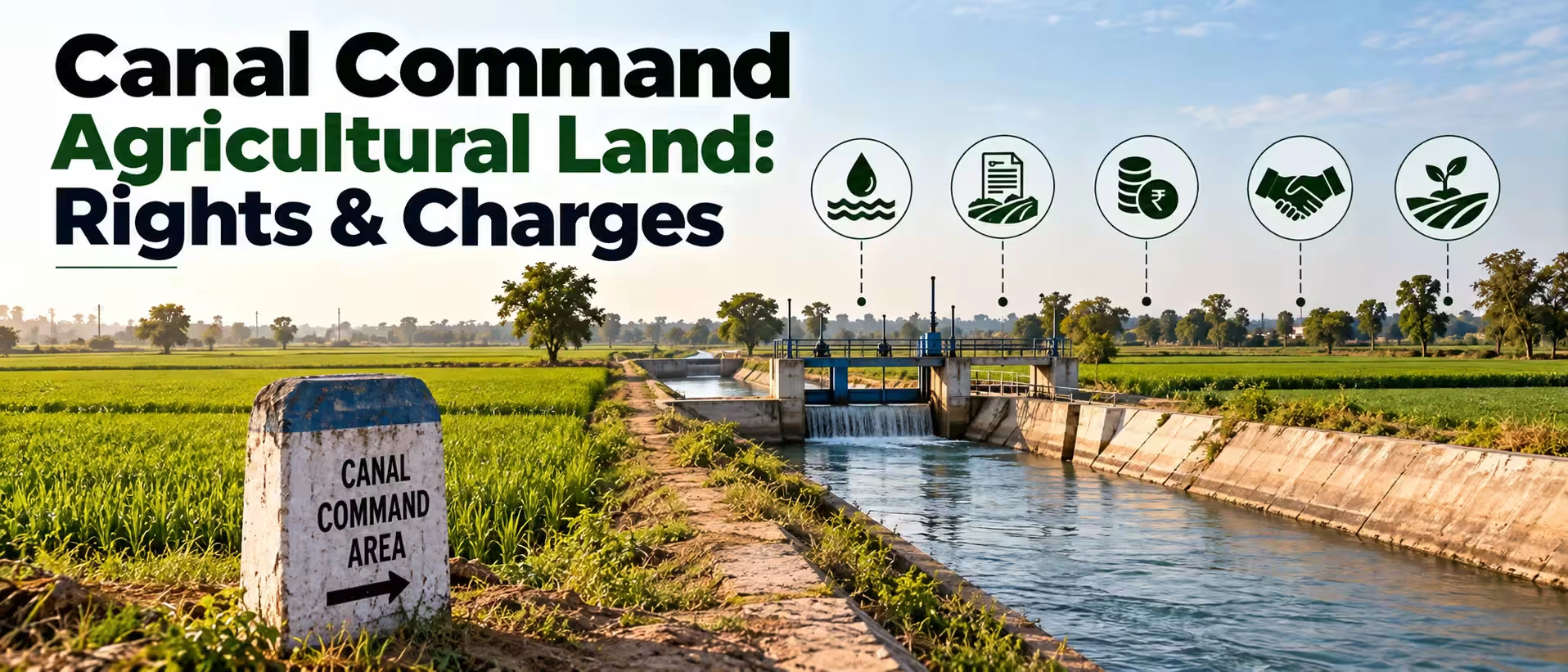
The cost of land located within a canal command area is normally higher than rain-fed land due to the availability of water supply, which may lead to harvests of two or three crops instead of just one. It is only sensible for such land to be costly if there is water available in the area, but most buyers realize late that having irrigation rights is something that needs confirmation. This guide will discuss command areas, irrigation rights, the cost involved, and the documents to look for.
What a Canal Command Area Is and Why It Matters?
A command area is the amount of land that can get water from the canal system. This term is defined legally in state irrigation acts. In the Madhya Pradesh Irrigation Act of 1931, for example, land is said to be commanded by a canal when it could be irrigated through a watercourse going through the land the canal commands. While being termed commanded land does not mean that land gets water daily, this is where most of the dispute arises.
While browsing any farm land for sale near me in the areas of the canal system, one will find command land among the main benefits, and this should make one treat it as a claim to verify. The importance of such lands depends upon four criteria:
- Availability of an operational outlet to the plot
- The plot's location on the channel – whether it is the head or the tail of the channel
- Days' supply available to the owner through rotation
- Fees payable per season irrespective of usage
How Irrigation Rights Work in a Command Area?
The irrigation laws of each state in India govern the rights to irrigation. Thus, the provisions will differ from one state to another. The typical chapters found in most state irrigation acts are those that deal with the rights in water, water supply through the canals, agreements for irrigation, and the notification of commanded areas. This means that the right to use canal water is not merely an incident of the property that gets conveyed through the sale deed.
Two terms frequently found in these irrigation laws are water rates and compulsorily assessed areas. Water rate is the rate of canal revenue payable for the use of water or for the right to use water for irrigation. Compulsorily assessed area is the area notified by the state in which the charge is payable in a definite manner and usually irrespective of irrigation.
Since the right is contingent upon the existence of the canal record, the buyer cannot simply assume that the water rights of the seller transfer to him. There was a Supreme Court case involving the Godavari canal that hinged on this very issue.
Outlets, Chaks and Warabandi: How Water Actually Reaches the Field?
When you are searching for a farm plot near my village, which lies in a canal belt, there are three working terms which you need to know before you come to visit.
An outlet is the outlet through which the water flows from the canal to the watercourse. The chak is the land block served by the outlet. Warabandi is the timetable that gives the turn of the holding in taking the water in rotation. In the Punjabi style of systems, each outlet serves the command area between 60 and 250 hectares with a constant discharge during the season, and each farmer gets his turn in rotation. With this system, your water supply depends upon your position in the timetable and maintenance of the water course. You can ask the following questions about any plot:
- Which outlet and water course serve this survey number?
- What is the warabandi turn in hours and days of the week?
- Is the water course lined and maintained or silted?
- Is this plot near the head or tail end of the channel?
- Are there any complaints of shortage during the lean months from neighbors?
A tail-end plot with a paper right to water can end up with very little of it in practice, so visit during a dry spell and speak to the farmers already using the same channel.
Water Charges You Pay as an Owner
Canal charges go by many names, such as abiana, water rate, sinchai kar, or irrigation cess. The Monsoon Land Inspection Checklist should also include these charges, as each state sets them in its own way. The common patterns are shown below.
| Charge type | How it usually works |
|---|---|
| Crop-based rate | A fixed amount per acre or hectare, which changes with the crop and the season |
| Area-based flat rate | Charged on land in the command area whether you irrigate or not |
| Outlet-based recovery | The total outlet command area is billed across the users of the outlet |
| Maintenance or user association fee | Collected by a water users' association for local channel upkeep |
| Arrears | Unpaid dues from earlier owners, which may stay attached to the land |
The outlet-based pattern is especially important for buyers. A newspaper report from Punjab described a case where farmers were asked to pay charges on the whole command area of an outlet even though the actual users irrigated only a small part of it. That report is old, and rules change, but it shows how charges can be far higher than what a plot's own use would suggest. Ask the canal office how your plot is billed before you agree on a price.
Documents and Records to Verify Before Buying
A potential buyer of the plot of land for sale near me in the canal area must do more than just the basic title verification. Collect and cross-check the following:
- Updated land record (with reference to the column for irrigation type — such as canal irrigated, tube well, or rain-fed)
- Mutation and ownership records
- Letter from the canal department regarding the outlet, chak, and plot within the command area
- Water turn/warabandi schedule
- Certificate of no dues for the canal charges from the irrigation department
- Encumbrance certificate
- Plot's village map indicating the water course from its source to the plot
- Irrigation water right/agreement deed if held by the seller
The certificate of no dues is especially important because the unpaid canal charges, which can always be recovered by the state, can attach to the land in many states.
Key Risks of Buying in a Canal Command Area
| Risk | Why it matters | How to reduce it |
|---|---|---|
| Paper right but no real supply | The plot is marked as irrigated yet stays dry in peak months | Visit in the dry season and talk to nearby farmers |
| Tail end location | Water is exhausted before it reaches the plot | Check position on the channel and past shortages |
| Unpaid canal dues | The new owner may face recovery notices | Get a no dues certificate |
| Water right not transferable | The buyer loses the entitlement | Get written confirmation from the canal officer |
| Outlet shifted or closed | Access to the water course changes | Check outlet records and any pending proposals |
| Waterlogging and salinity | Over-irrigation harms the soil | Check soil and drainage on site |
| Channel passes through neighbours' fields | Disputes over the right of way for water | Verify the watercourse route in the record |
Step-by-Step Checklist Before You Pay
The logical steps that should be taken in the process of purchasing agricultural land in a command area will be:
- Verify whether the survey number belongs to the command area.
- Find out the outlet, chak, and water course.
- Acquire the warabandi schedule and verify whether the same matches the information provided by your neighbours.
- Go there at a time when water shortage occurs.
- Find out the charges levied by the irrigation office in recent years for this plot.
- Get the no dues certificate.
- Consult a lawyer who can go through the title deed and water right papers.
- Make payments in installments based on the availability of papers.
What Sellers Should Prepare?
Owners who want a quicker sale should gather their water papers before the first buyer calls. Keep these ready: updated land records, the canal department confirmation of outlet and chak, the water turn record, receipts of paid charges, and a no dues certificate. A seller who can show real irrigation history, such as crop records for two or three seasons, will usually be taken more seriously than one who only points to the command area label.
How 2Bigha Helps You Buy and Sell Irrigated Land
Irrigated land has more points to check than a regular listing, and that is where 2Bigha helps. The platform lists agricultural land and farmland across India, with background verification reports that review ownership records and other checks before you commit. Buyers can browse listings, book site visits, and compare options without depending on a broker.
If you plan to sell land online, 2Bigha puts your plot in front of buyers who are already searching for farmland, and your documents are presented in a clear and organised way. Visit 2Bigha to explore listings or to list your land.
Disclaimer: This article is for informational purposes only and should not be considered investment, legal, financial, or property advice. Real estate regulations, infrastructure plans, market conditions, and government policies may change over time. Readers are advised to verify information with relevant authorities and consult qualified professionals before making any investment or property-related decisions.