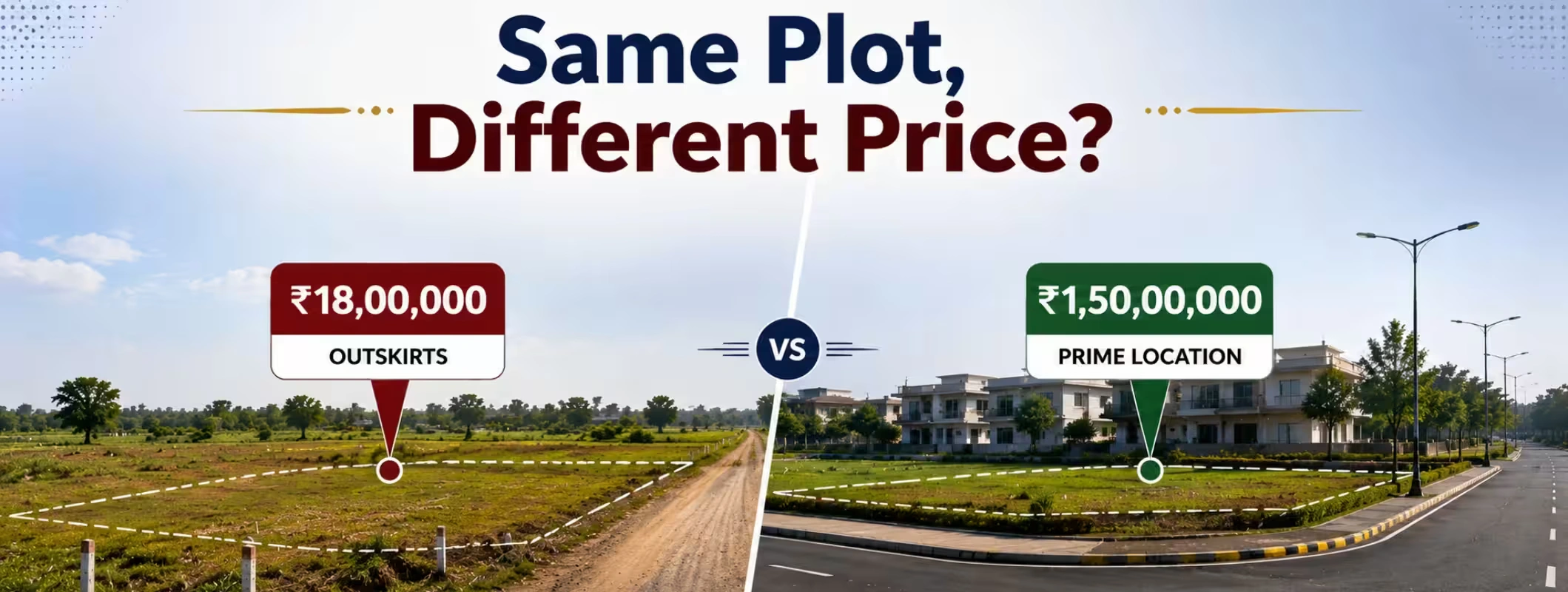
I once watched two plots get sold within the same month, same village, same size, almost the same road access. One went for 18 lakh. The other, barely 200 meters away, sold for 27 lakh. Same farmer, same broker, same paperwork process. People kept asking why. The land wasn't really that different. So what made one buyer pay nearly 50% more? Turns out, land pricing isn't just about size and location on a map. A lot of it comes down to psychology: how a buyer feels when they walk onto the plot, what story they tell themselves about it, and honestly, sometimes just bad luck or good timing. This piece digs into that. Why two nearly identical plots can sell at wildly different prices, and what it means if you're trying to buy land or Sell Land yourself.
It's Rarely About the Land Alone
Here's something most people don't expect. Rural land buyers don't actually evaluate land the way they think they do. They believe they're being logical, checking soil quality, road width, distance from the market. But emotion sneaks in everywhere. A plot facing the sunrise feels "lucky" to one buyer. Another buyer remembers visiting a similar plot as a kid and gets nostalgic. None of that shows up in a valuation report. But it absolutely shows up in the final price. So when you're scrolling through land for sale on any portal, remember, the buyer on the other side isn't a spreadsheet. They're a person with biases, memories, and gut feelings.
Why Do Two Similar Plots Sell at Different Prices?
Let's break down the actual reasons, because there are quite a few, and most sellers never think about half of them.
1. First Impressions Hit Harder Than Logic
The first 30 seconds on a plot decide a lot. If the land is clean, the entry point looks neat, and there's no garbage pile near the boundary, buyers subconsciously assume the rest of the deal will be smooth too. Messy land? Even if the legal papers are perfect, buyers get nervous. They start imagining problems that may not even exist.
2. Scarcity Pushes Prices Up Fast
If a buyer is told "only one plot left in this stretch," they panic a little. That panic translates into a higher offer. Brokers know this. That's why some online listings deliberately mention limited availability; it's not always a trick; sometimes it's true, but it works either way.
3. Anchoring From the First Number Heard
Whatever price a buyer hears first sticks in their head, even if it's wrong. If someone mentions "plots here go for 30 lakh" before showing a 22 lakh plot, the buyer feels like they're getting a steal. Even if 22 lakh was always the real number.
4. Emotional Attachment to Land Location
Some buyers want land near their hometown. Others want it close to a temple, a school, or even just a particular view. Land location matters logically too, but the emotional pull is often stronger than the practical reasoning buyers admit to.
5. Trust in the Seller or Platform
Buyers pay more when they trust the source. A random roadside board feels riskier than a listing from a known seller or a verified platform. That trust gap alone can shift prices by lakhs, especially for plot for sale listings where documentation history isn't immediately clear.
6. Fear of Missing Out on Appreciation
If a buyer hears that a nearby highway project is coming, or a new township is planned, they'll happily purchase land at a premium today, betting on tomorrow's value. Doesn't matter if the project is five years away. The story of future growth changes present-day decisions.
A Quick Comparison Table
| Zone Type | Factor | Plot A (Sold Higher) | Plot B (Sold Lower) |
| First impression | Visual appeal | Clean, well-marked boundary | Overgrown, unclear edges |
| Scarcity feeling | Availability perception | "Last plot in this row" | Several similar plots nearby |
| Seller trust | Credibility | Known local seller | Unknown middleman |
| Story attached | Property narrative | Near upcoming highway project | No major development nearby |
| Buyer's emotional pull | Emotional connection | Reminded buyer of family land | No personal connection |
Same soil. Same legal status, more or less. But the buyer's mind did the rest of the pricing work.
How Sellers Use (and Sometimes Misuse) This Psychology?
Not all of this is manipulation. A lot of it is just a smart presentation. But it's worth knowing both sides.
- Clearing the plot before showings genuinely helps; it's not dishonest; it just removes a mental barrier for the buyer.
- Highlighting nearby development plans is fair, as long as it's accurate and not exaggerated.
- Creating false urgency, claiming multiple buyers when there's only one inquiry, is where it tips into manipulation.
- Inflating an initial "asking price" just to make the real price feel like a discount is a classic anchoring trick, and buyers should watch for it.
If you're someone who wants to sell land fairly, leaning on the honest parts of this- presentation, accurate context, clear documentation- works better long-term than the manipulative tricks.
What This Means If You're Buying?
Knowing all this doesn't make you immune to it. Even people who study psychology fall for anchoring and scarcity tactics. But awareness helps. Before you purchase land, try this:
- Visit at a neutral time, not right after the seller has "prepared" it for your visit.
- Ask for the actual market rate for that land location from at least two independent sources.
- Separate the emotional pull (a nice view, a personal memory) from the practical checklist (title, access, soil quality).
- Compare at least three similar plots before deciding if the price feels fair.
- Don't let "last one available" rush your decision without checking if that's even true.
A little distance from the emotional moment usually leads to a clearer decision.
Why Online Listings Are Changing Buyer Psychology Too?
Interestingly, online listings have shifted some of this behavior. When buyers can browse dozens of plots from their phone, scarcity tricks work less often, because comparison is just a click away. At the same time, trust becomes even more important online. A buyer scrolling through farmland for sale or agricultural land listings can't smell the soil or walk the boundary right away. So clear photos, verified documents, and honest descriptions matter more than ever in digital land for sale platforms.
Where 2Bigha Fits Into This?
This is part of why a platform like 2Bigha exists. It gives land buyers a way to compare plots properly, real listings, clear land location details, and documentation that doesn't rely on a broker's persuasive pitch at the moment. For someone trying to Buy Land, browsing verified listings means less guesswork and less pressure-based decision-making. Instead of relying purely on gut feeling at a single site visit, buyers can check multiple plots for sale options side by side. And for sellers, 2Bigha offers a way to sell land based on real value, location, documentation, and soil quality, rather than just hoping a buyer falls for a clever sales pitch. Whether it's farmland for sale or a residential plot, fair presentation tends to attract serious buyers anyway.
Conclusion
Two plots can be nearly identical on paper and still sell at very different prices. Most of that gap comes down to psychology, first impressions, scarcity, trust, and the story a buyer tells themselves about the land's future. If you're buying, slow down and separate emotion from facts before you commit. If you're selling, honest presentation beats manipulation almost every time, even if it takes a little longer to close the deal. Land pricing will never be purely logical. People are involved, and people feel things. Understanding that gives both buyers and sellers a real edge.
Disclaimer: This article is for informational purposes only and should not be considered investment, legal, financial, or property advice. Real estate regulations, infrastructure plans, market conditions, and government policies may change over time. Readers are advised to verify information with relevant authorities and consult qualified professionals before making any investment or property-related decisions.