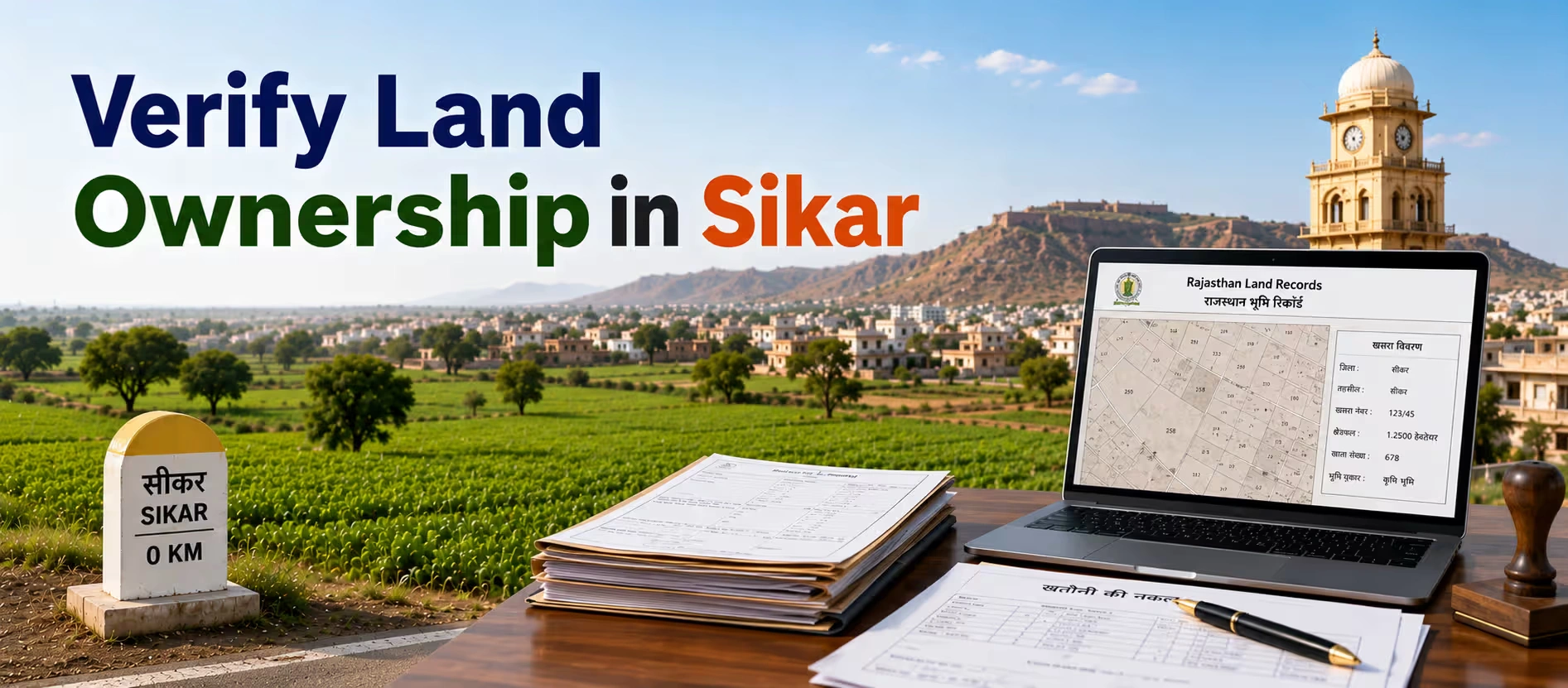
A lot of land disputes in Rajasthan start the same way: someone paid for a plot, shook hands, maybe even got a stamped paper, and only found out later that the seller wasn't actually the rightful owner. It happens more often than people admit, especially in rural belts where deals still move through word-of-mouth and local agents. If you're looking to Buy Land in Sikar or are land/plot searching anywhere around the district, ownership verification isn't a formality you tick off after the deal. It's the very first thing that should happen, before you even discuss price seriously.
Start With the Jamabandi, Not the Sale Deed
The sale deed is assumed by most first-time buyers to be sufficient. Not really. The record that will give you the name of the actual owner of the piece of land in Rajasthan is the Jamabandi. It shows the name of the owner, the khasra number, the total area, and the nature of the land. This record is obtainable on your own through the Apna Khata Rajasthan portal, otherwise known as e-Dharti, without necessarily getting an intermediary to retrieve it for you. All you need to do is pick your choice of district, tehsil, village, and use the khata number, khasra number, or the name of the owner to retrieve the data. Whatever pops up on the screen must correspond word-for-word and name-for-name to whatever the seller has told you. Otherwise, you have reason to stop and question further.
Cross-Check the Khasra Number on Bhu Naksha
Here's something a lot of buyers skip: the Jamabandi tells you who owns the land, but it doesn't show you where exactly that land sits or what shape it takes. For that, you need Bhu Naksha, the companion portal that maps out each khasra number visually. Enter the same khasra number here and compare it against the physical plot you've walked. Does the boundary match what you were shown on-site? Does the shape line up? This step matters more than people realize when buying Agricultural Land for Sale in rural stretches where fencing is loose or non-existent, and one field blends into the next without a clear marker.
Check the Mutation Status Before You Pay Anything
Ownership on paper can lag behind reality. Someone might have inherited land, sold half of it, or transferred it years ago, and the Jamabandi still shows the old owner's name if the mutation was never completed. Mutation is simply the process of updating official records after a change in ownership. On the Apna Khata portal, there's a dedicated Mutation Status section. Enter the mutation number, khata number, or owner's name along with the village, and it'll tell you whether a transfer is pending, approved, or rejected. If the seller claims to have bought this land from someone else a few years ago but the mutation still shows pending, don't treat that as a minor detail; get it resolved first.
A Quick Reference Table for Documents You'll Need
| Document | What It Tells You? | Where to Get It? |
| Jamabandi (Record of Rights) | Current legal owner, land area, land type | Apna Khata portal |
| Khasra number | Unique plot identifier | Village revenue records / Apna Khata |
| Bhu Naksha map | Exact location, shape, boundaries | Bhu Naksha portal |
| Mutation status | Whether ownership transfer is finalized | Apna Khata – Mutation Status |
| Girdawari | Crop history on the land, useful for agricultural plots | Apna Khata / WebGirdawari |
| Encumbrance details | Whether land is mortgaged elsewhere | Jamabandi's "Other Rights" section |
Don't Ignore the Girdawari, Especially for Farmland
If you're specifically eyeing Farmland for Sale rather than a residential plot, the Girdawari is worth pulling up too. It's the seasonal crop record maintained by the Patwari, showing which crops have actually been grown on that land, season after season. Buyers sometimes overlook this, but it's a decent way to confirm the land has genuinely been under cultivation and isn't sitting idle under a disputed claim. An outdated or mismatched Girdawari can also cause headaches later; it's now linked to farmer registry systems that affect loan eligibility and scheme access, so an error here isn't just paperwork noise.
Talk to the Patwari, Not Just the Broker
The digital portals have certainly increased speed, but the Patwari, who is the local revenue official, has actual power if there’s anything fishy going around. If the khasra number isn’t consistent or the Jamabandi year is too old for your liking, meeting the Patwari or the tehsil office will solve your problem in a matter of minutes without any of that lengthy online correspondence. If you are truly interested in being a responsible land purchaser, this is the final step that will set you apart from those who simply took brokers’ advice on face value.
Watch for These Common Red Flags
- Seller's name on the sale agreement doesn't match the Jamabandi
- Mutation from a previous transaction is still pending, not completed
- Khasra number on paper doesn't correspond to the actual physical location
- Jamabandi copy being shown is several years old
- Land shows encumbrance or mortgage details you weren't told about
- Multiple people claim ownership over the same khasra number
None of these mean the deal is automatically fraudulent. But each one is a reason to pause, ask, and verify further rather than rushing to close.
How 2Bigha Makes This Easier?
Ownership verification is exactly where most informal land deals fall apart, and it's also exactly why platforms built around Verified Land Listings exist in the first place. 2Bigha works as a dedicated marketplace for buying and selling agricultural land and farmland across India, and part of what that means is checking ownership documentation before a plot even goes live for buyers to see.
If your plan is to buy land in Sikar, starting your search on a platform where records have already been cross-checked saves you a good chunk of the running-around described above. And for landowners looking to sell land in Sikar or elsewhere, having your Jamabandi, mutation, and Girdawari records in order before listing tends to build trust with buyers far faster than a bare WhatsApp forward ever will. Whether it's a plot for sale in Sikar near the highway or interior farmland closer to Fatehpur, verified paperwork is what actually moves a deal forward.
A Few Practical Tips Before You Sign Anything
Get the latest year's Jamabandi, not one that's two or three years old — ownership can change quietly in between. Match the khasra number across every document you're shown, not just one. And if you're financing the purchase, remember that banks will ask for a recent, e-signed Jamabandi copy anyway, so getting this right early saves you a second round of paperwork later. If you want to sell agricultural land online yourself someday, keeping these records current isn't just about the next sale; it protects you from disputes with neighbours, tenants, or even family members down the line.
Conclusion
Land verification in Sikar is no big deal if you know the actual importance of the three to four documents that actually need to be considered: Jamabandi, Bhu Naksha, mutation, and Girdawari for agricultural lands. The portals are available; they are largely available for free, and spending just one day going through the documents will help you avoid years of litigation. Believe in paper more than anything else, and if there is still something that is not clear, just go and have a talk with the local Patwari.
Disclaimer: This article is for informational purposes only and should not be considered investment, legal, financial, or property advice. Real estate regulations, infrastructure plans, market conditions, and government policies may change over time. Readers are advised to verify information with relevant authorities and consult qualified professionals before making any investment or property-related decisions.