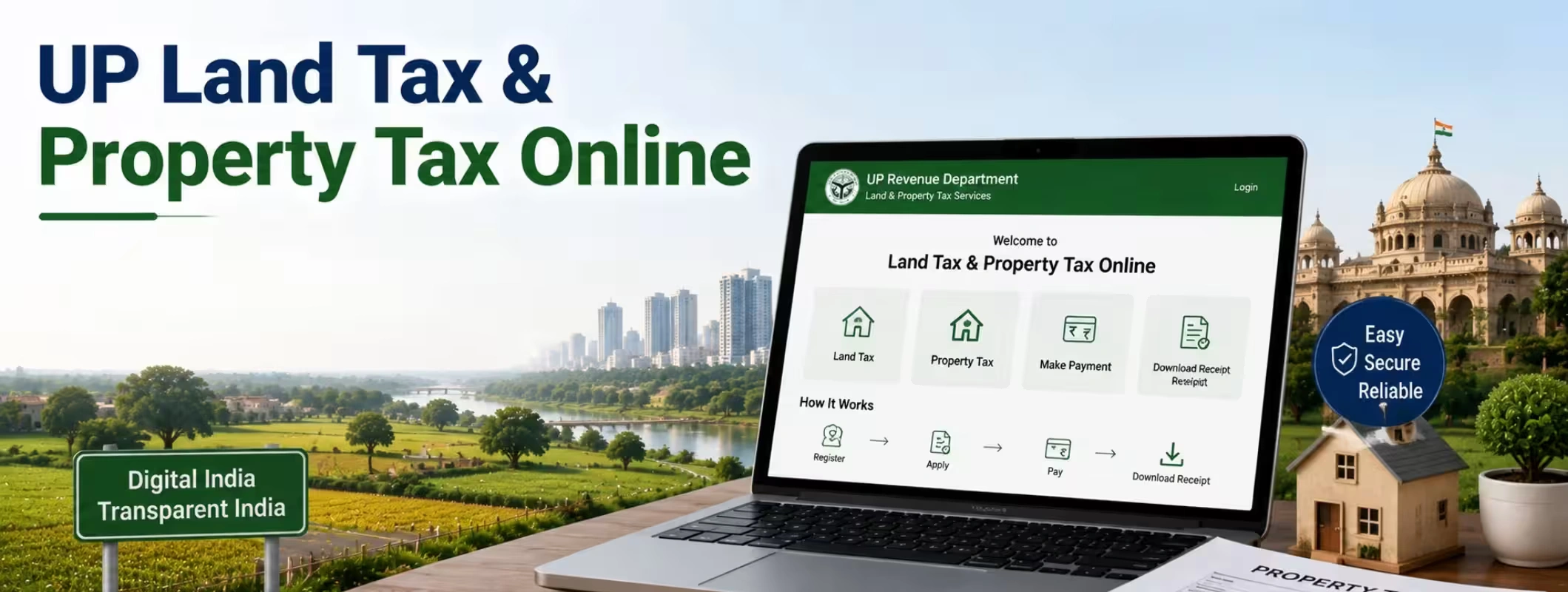
UP property tax online payment is the digital way to pay municipal tax for properties that come under urban local bodies in Uttar Pradesh. In simple words, if your property is inside a municipal limit, the local body may charge house tax, water tax, sewerage tax, or other municipal dues.
The National Government Services Portal lists “Pay House Tax, Uttar Pradesh” as a fully online service where users can pay house tax and access related services like tax calculation; the listing was last updated on April 30, 2026.
This is useful for owners of:
- Residential houses
- Flats and apartments
- Shops
- Commercial buildings
- Urban plots
- Properties inside Nagar Nigam, Nagar Palika, or Nagar Panchayat limits
For these properties, the tax is usually linked to property ID, owner name, zone, ward, mohalla, annual value, arrears, interest, and total payable amount.
Is E Nagar Sewa Used for Agricultural Land Tax in UP?
E Nagar Sewa is not the main portal for rural agricultural land records. It is primarily for Urban Local Body services.
For agricultural land in UP, owners normally check land records through UP Bhulekh, Board of Revenue services, khasra, khatauni, and related revenue portals. The Uttar Pradesh Board of Revenue website lists services for khatauni copy, certified khatauni download,land sale status, disputed land status, unique gata code, khasra, bhu-naksha, mutation, demarcation, inheritance, and agricultural-to-non-agricultural land-use conversion under relevant revenue code sections.
This means a farmer, farmhouse buyer, or land investor must first understand where the land is located:
If the land is inside municipal limits, property tax or urban local body charges may apply.
If the land is rural agricultural farmland, the owner should focus on khatauni, khasra, land revenue records, mutation, land-use status, and any applicable local revenue dues.
If the land is agricultural but being converted for residential, commercial, industrial, or plotted development, land-use conversion rules become important. The Invest UP portal lists government orders related to Section 80 of the Uttar Pradesh Revenue Code, including fees and action related to land-use matters.
Why Land Tax Matters for Agricultural Land in UP
In Uttar Pradesh, land is not just an asset. For many families, it is identity, security, and future wealth. A small mistake in tax payment, mutation, or land-use verification can create big problems later.
Suppose someone buys agricultural farmland near Lucknow, Ayodhya, Noida Extension, Kanpur, Varanasi, or Gorakhpur. The land may look clean on paper, but the buyer must check:
- Is the land still recorded as agricultural?
- Is the seller’s name properly updated in khatauni?
- Is there any dispute on the plot?
- Is the land under Gram Sabha, ceiling, lease, acquisition, or restricted category?
- Has mutation been completed after sale?
- Is land-use conversion required before non-agricultural use?
- Does the land fall inside or outside municipal limits?
The Uttar Pradesh Revenue Code-2006 includes chapters on maintenance of village records, assessment of land revenue, collection of land revenue, revenue courts, and related procedures.
This is why land tax and land records should not be treated casually. Before buying agricultural land in UP, always check the revenue record, not just the registry paper.
E Nagar Sewa Portal: What Services Are Available?
The E Nagar Sewa portal brings several urban civic services into one digital system. For property owners, the most important section is Property Tax.
On the portal, users can access:
- Search Property
- Track Online Payment
- Search Receipt
- View and Pay House/Water Tax
- View Property Details
- View House Tax Bill and Receipt
- View Water Tax Bill and Receipt
- View Sewerage Tax Bill and Receipt
- View Other Tax Bill and Receipt
- Tax tariff rates and discounts
- Know your zone and ward
These services are listed under the Citizen Services section of the official E Nagar Sewa portal.
For an urban property owner, this saves time. Earlier, many people had to visit municipal offices, stand in queues, carry old receipts, and depend on local agents. Now, basic tax checking and payment can be done online.
How to Pay UP Property Tax Online on E Nagar Sewa Portal
Step 1: Visit the Official E Nagar Sewa Portal
Go to the official Uttar Pradesh E Nagar Sewa portal. Make sure you are using the government portal, not a random third-party website.
Step 2: Go to Citizen Services
On the homepage, look for the Citizen Services section. This is where property tax, mutation, water connection, trade licence, and other public services are listed.
Step 3: Select Property Tax
Under Property Tax, choose the required option. If you want to pay your dues, select “View and Pay House/Water Tax.” If you only want to check details, use “Search Property” or “View Property Details.”
Step 4: Login or Register
You may need to log in as a citizen. If you are using the portal for the first time, create an account with your mobile number and details.
Step 5: Search Your Property
Search your property using available details such as property ID, house number, owner name, zone, ward, or mohalla. Keep your old tax receipt or property bill ready because it usually contains useful identification details.
Step 6: Check Tax Details
Before payment, review the amount carefully. Check:
- Owner name
- Property address
- Ward and zone
- Current tax
- Arrears
- Interest, if any
- Water/sewerage tax, if shown
- Total payable amount
Never pay blindly. If the owner name or property details are wrong, first contact the concerned urban local body.
Step 7: Make Online Payment
After verifying the amount, proceed with online payment through the available payment options. Use a secure internet connection and avoid paying from public cyber cafes unless necessary.
Step 8: Download the Receipt
After successful payment, download and save the receipt. Keep both digital and printed copies. This receipt may be needed during property sale, mutation, loan processing, dispute resolution, or future tax correction.
Read Also: Stamp Duty in UP
What Agricultural Landowners Should Do Instead
If you own agricultural land in UP, your first step is not property tax payment on E Nagar Sewa. Your first step is land record verification.
The Board of Revenue portal provides links for khatauni, khasra, bhu-naksha, plot sale status, disputed land status, unique gata code, mutation, inheritance, demarcation, and agricultural-to-non-agricultural land-use conversion.
For farmland owners, these documents matter more than a municipal property tax receipt:
1. Khatauni
Khatauni shows ownership and landholding details. It helps confirm whose name is recorded in the revenue record.
2. Khasra
Khasra gives plot-level and crop-related details. It helps identify the land parcel and its nature.
3. Gata Number
Gata number is very important in UP land records. Before buying or selling agricultural land, check the correct gata number and match it with the land on the ground.
4. Bhu-Naksha
Bhu-naksha helps you understand the map and boundary of the land. This is useful when there are boundary disputes or confusion between neighbouring plots.
5. Mutation Status
After buying land, mutation should be done so the buyer’s name gets updated in revenue records. Registry alone is not enough for clean land ownership management.
6. Dispute Status
Before buying agricultural farmland, check whether the land is involved in any legal or revenue dispute.
Read Also: Property Registration in UP
Agricultural Land in UP: Tax and Compliance Checklist
Before buying, selling, converting, or developing agricultural land in UP, use this checklist:
- Check latest khatauni
- Match seller name with revenue record
- Verify khasra/gata number
- Check land category
- Confirm possession on ground
- Check road access
- Verify irrigation source
- Check if land is disputed
- Confirm mutation status
- Check whether the land is rural or within municipal limits
- Confirm whether land-use conversion is required
- Speak to a local revenue expert or legal advisor before payment
This checklist is especially important for buyers looking at farmland near highways, expressways, upcoming townships, industrial corridors, religious tourism zones, and expanding city borders.
When Agricultural Land Becomes a Property Tax Matter
Agricultural land may come under different tax treatment when its use or location changes.
For example, if farmland is converted into residential plotting, commercial use, warehouse use, school use, resort use, or farmhouse development, the owner may need land-use conversion, development permissions, local body approvals, and tax reassessment.
This is where many investors make mistakes. They buy agricultural farmland thinking it can be used for anything. But land use matters. A land parcel recorded as agricultural cannot automatically be used for commercial construction.
That is why buyers should check Section 80-related land-use conversion requirements and local development authority rules before starting any construction or plotting activity. Invest UP’s land/revenue page lists official government orders connected with Section 80 fees and related revenue-code matters.
Common Mistakes People Make While Paying UP Property Tax Online
Many property owners make small mistakes that later become expensive. Avoid these:
Paying Tax on the Wrong Property ID
Always match the property ID, owner name, ward, and address before paying.
Ignoring Old Arrears
If arrears are pending, your payment may not fully clear the property dues. Check the full outstanding amount.
Not Downloading Receipt
A successful payment is not enough. Download the receipt immediately.
Confusing Land Tax with House Tax
Agricultural farmland and urban house tax are different matters. Do not assume E Nagar Sewa covers every type of land.
Buying Land Without Checking Khatauni
For agricultural land in UP, khatauni verification is essential. Registry is important, but revenue record verification protects you from future disputes.
Documents You May Need
For urban property tax payment, keep these ready:
- Property ID or house number
- Owner name
- Old tax receipt
- Ward and zone details
- Registered mobile number
- Payment method
- Address proof, if required for correction
For agricultural land verification, keep these ready:
- Gata number
- Khasra number
- Khatauni details
- Village name
- Tehsil name
- District name
- Registry copy
- Mutation application details
- Seller’s ID and ownership proof
Why This Matters for Farmland Buyers in 2026
In 2026, demand for agricultural land in UP is rising in many areas because of expressways, religious tourism, warehousing, farmhouses, and long-term land investment. Buyers are looking at agricultural farmland not only for farming but also for future appreciation.
But land investment is safe only when documentation is clean.
A beautiful road-facing land parcel may look attractive, but if the khatauni is not updated, the land is disputed, or the land-use category does not allow your intended use, the investment can get stuck.
For city property, check E Nagar Sewa. For agricultural land, check revenue records first.
Read Also: Encumbrance Certificate in Uttar Pradesh
Final Words
UP property tax online payment through E Nagar Sewa has made life easier for urban property owners. You can check dues, pay house/water tax, track payment, and download receipts without repeated office visits.
But if your concern is agricultural land in UP, then your focus should go beyond the E Nagar Sewa portal. You must verify khatauni, khasra, gata number, mutation, land-use status, dispute status, and local revenue records.
So before you buy, sell, convert, or develop agricultural farmland in Uttar Pradesh, do the homework. Check the right portal, verify the right record, and take advice before making a big payment.