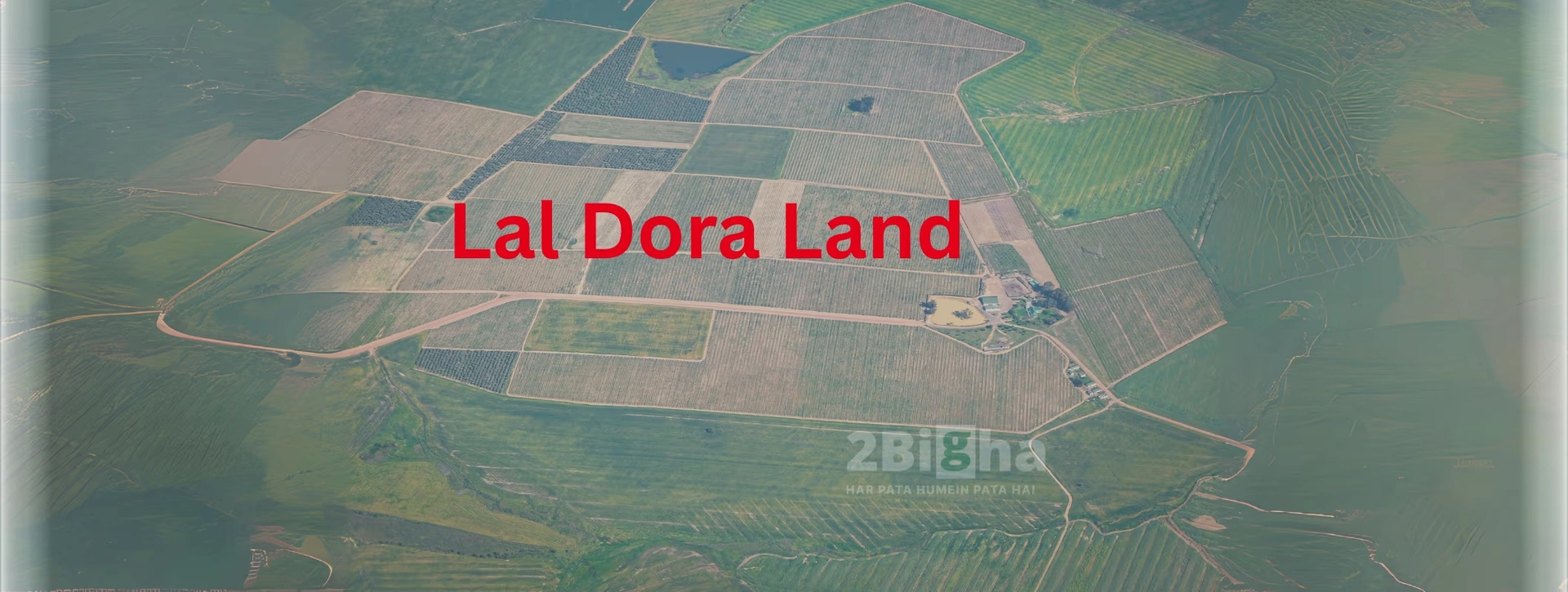
Lal Dora land is one of the most talked about and misunderstood land types in India particularly in Delhi and its surrounding areas. Many see Lal Dora land as an affordable investment in land however, others worry about legal risk.
If you're looking to purchase land, it is crucial to know the details of Lal Dora land, how it operates and if it's appropriate for investments.
This step-by-step guide will help you understand Lal Dora land in simple terms, so that you can make an informed investment choice.
What is Lal Dora Land?
Lal Dora land refers to land that falls within the old village residential limits. During British rule, village boundaries were marked with red lines on maps, known as “Lal Dora.”
This land was kept outside municipal rules to allow villagers to build homes without strict regulations.
Even today, Lal Dora land mostly exists in urban villages and surrounding areas of big cities.
Why Lal Dora Land Matters for Land Investment?
Lal Dora land attracts land investors because:
- Land prices are usually lower than freehold or residential plots
- Located in growing urban or semi-urban areas
- High demand for rental housing and commercial use
- Potential for future appreciation if regularization happens
But, Lal Dora land investment requires proper screening before purchasing.
Step 1: Identify Whether the Land Is Lal Dora or Extended Lal Dora
Before investing, verify the type of land:
Lal Dora
- Original village residential area
- Limited legal documentation
- Mostly old constructions
Extended Lal Dora
- Areas added later due to population growth
- Slightly better planning and access
- Higher chances of future development
Always ask for revenue records and village maps to verify the land category.
Step 2: Understand Ownership and Title Status
Clear ownership is the most important factor in land investment.
For Lal Dora land:
- Sale deeds may not always be registered
- Ownership may be based on GPA, Agreement to Sell, or inheritance
- Multiple family claims are common
You should:
- Verify the seller’s possession history
- Check chain of ownership
- Match documents with actual land boundaries
Avoid land deals where ownership is unclear or disputed.
Step 3: Check Local Authority Rules and Restrictions
Lal Dora land often does not follow regular building bylaws. This can be both an advantage and a risk.
Key Points to Check:
- Whether construction is allowed
- Height and usage restrictions
- Possibility of sealing or demolition
- Any government acquisition plans
Understanding local authority rules helps reduce future legal trouble.
Step 4: Verify Utility Access and Infrastructure
A good land investment depends on livability and usability.
Check whether the land has:
- Water connection
- Electricity supply
- Sewage or drainage system
- Proper road access
Lal Dora land with basic infrastructure usually has better resale value.
Step 5: Assess Legal Risks in Lal Dora Land Investment
Lal Dora land comes with certain risks, such as:
- Limited legal protection
- Difficulty in getting bank loans
- Problems during resale
- Risk of government redevelopment
To Reduce Risks:
- Prefer extended Lal Dora areas
- Avoid disputed properties
- Take legal advice before buying
A safe land investment always balances price with risk.
Step 6: Know the Difference Between Lal Dora and Freehold Land
Feature
|
Lal Dora Land
|
Freehold Land
|
Registration
|
Limited or unavailable
|
Fully registered
|
Loan Facility
|
Mostly not available
|
Easily available
|
Construction Rules
|
Flexible
|
Strict
|
Price
|
Lower
|
Higher
|
Risk Level
|
Medium to High
|
Low
|
Understanding this difference helps you choose the right land investment option.
Step 7: Evaluate Future Growth and Appreciation
Lal Dora land investment can be profitable if chosen wisely.
Look for:
- Areas near highways or metro routes
- Villages under urban expansion plans
- Locations with high rental demand
- Government redevelopment or regularization talks
Future growth potential is key to earning returns from land investment.
Is Lal Dora Land Safe to Buy?
Lal Dora land is not illegal, but it is not fully regulated either. It is suitable for:
- Experienced land investors
- Buyers looking for affordable entry
- Long-term holding strategies
It may not be suitable for:
- First-time investors without guidance
- Buyers depending on home loans
- Those looking for quick resale
Tips for Safe Lal Dora Land Investment
- Always verify land records
- Avoid cash-only deals
- Physically inspect the site
- Confirm access roads
- Consult a land expert or legal advisor
A careful approach can turn Lal Dora land into a smart land investment.
Final Thoughts
Knowing the details of Lal Dora land is essential prior to making any land investment decision. Although it is affordable and high growth potential, it also has legal and document-related challenges.
If you follow this step-by-step guide you can assess risks to verify ownership and discover lucrative opportunities. The smart land investment isn't about land that is cheap, but about making informed and safe choices.
If you are careful, Lal Dora land can be an asset worth acquiring in your portfolio of land investments.