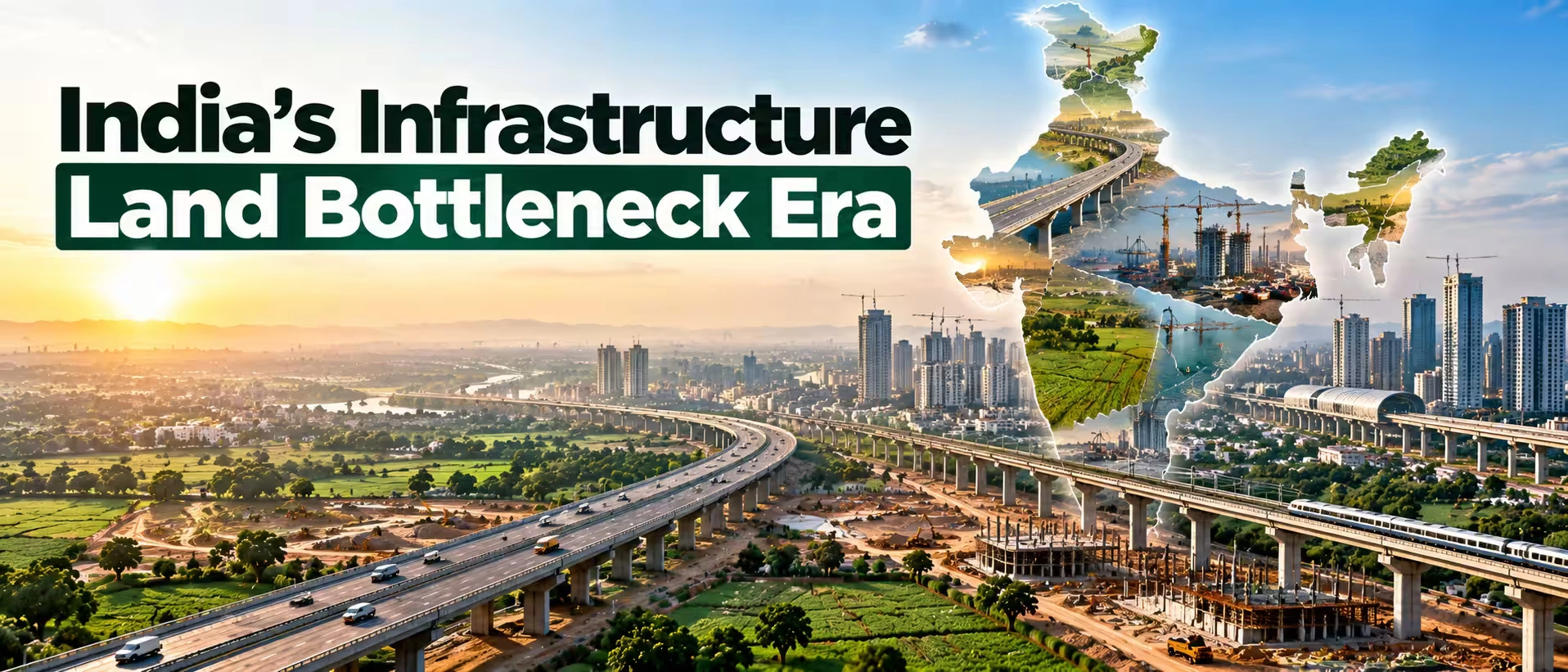
The national highways of India form the foundation of India's transportation system. They connect cities of all sizes, increase efficiency of logistics, and drive the growth of economies across different regions. With India investing massively in infrastructure with programs like Bharatmala National highways are also becoming major routes for land investments, agriculture land for purchase, commercial development, as well as the expansion of real estate.
In this blog, we break down the Top 10 Biggest National Highways in India, their lengths, importance, and how they influence land appreciation, real estate growth, and infrastructure-driven investment prospects.
Why Do Long Highways Are Important to Land Investment?
The major national highways are zones with high-impact to encourage development. The reasons why they are important:
Increased Connectivity = More Land Value
Areas that are connected via long highways typically see an increase in value faster due to the ease of transportation to cities as well as logistics hubs.
Economic Corridors Attract Developers
Logistics centers, industrial parks, commercial and logistics centers thrive along major highways, resulting in an increase in the demand for space.
Government Push to Improve Infrastructure
The large-scale investment in road paving, new expressways and corridors boost the confidence of investors.
Ideal to use for Residential & Commercial Planning
Highways speed up travel which makes nearby land perfect for development plots, farmhouses, warehouses, retail developments.
Top 10 National Highways with the Most Traffic in India
Below is a listing of the longest national highways, based on their length as a whole and their coverage of the route:
Rank | National Highway | Approx. Length | Key Route / Connectivity |
1 | NH 44 | 4,112 km | Srinagar to Kanyakumari |
2 | NH 27 | 3,507 km | Porbandar (Gujarat) up to Silchar (Assam) |
3 | NH 48 | 2,807 km | Delhi - Jaipur - Ahmedabad - Mumbai - Bengaluru - Chennai |
4 | NH 52 | 217 km | Sangrur (Punjab) to Ankola (Karnataka) |
5 | NH 30 | 2,040 km | Sitarganj (Uttarakhand) to Ibrahimpatnam (Andhra Pradesh) |
6 | NH 6 | 1,873 km | Meghalaya to Mizoram |
7 | NH 53 | 1,781 km | Gujarat to Odisha |
8 | NH 16 | 1,711 km | Kolkata to Chennai |
9 | NH 66 | 1,622 km | Panvel (Maharashtra) from Kanyakumari |
10 | NH 19 | 1,435 km | Delhi to Kolkata |
Comprehensive Insights on Major Highways
1. NH 44 - India's Longest Highway
- It connects the northernmost with the southernmost tip of India.
- Improves interstate commerce and logistics for long distances.
- An ideal location for industrial land, logistics parks and commercial plots with highway access.
- The regions of NH 44 are witnessing rapid urbanization and land appreciation.
2. NH 27 - The East-West Power Corridor
- Connects the western part of Gujarat to the states of northeastern India.
- Ideal for development of warehouses, transport businesses, and agro-based industries.
- Investors favor land near NH 27 due to rising commercial opportunities.
3. NH 48 - The Business Highway of India
- The route passes through key business hubs such as Delhi, Jaipur, Ahmedabad, Mumbai, Bengaluru, and Chennai.
- Important for investment in industrial land manufacturing facilities, as well as logistical sectors.
- One of India's largest economic corridors.
4. NH 52 - A Multi-State Transit Corridor
- It spans a variety of geographies, all the way from Punjab across the state of Punjab to Karnataka.
- Helps with freight movement, agriculture as well as tourism.
- The demand is growing for commercial plots and land that is connected to transport.
5. NH 30 - Connecting North to South-Central India
- It runs throughout Uttarakhand, UP, MP, Chhattisgarh, and AP.
- Potential for residential plotted development as well as township developments in the developing regions.
6. NH 6 - North-East India's Strategic Route
- One of the major routes for connecting northeastern areas.
- In a region that has increasing demand for agricultural land logistical, border trade infrastructure.
7. NH 53 Industrial and Port Connectivity Highway
- It connects Gujarat and Odisha Two major industrial areas.
- Demand for industrial land is high close to ports-linked zones.
8. NH 16 - Eastern Coastal Highway
- It runs parallel to the east coast, linking Kolkata with Chennai.
- An ideal option for logistics firms, port-related companies, ports, and infrastructure for the coast.
9. NH 66 - Western Coastal Highway
- The passes traverse Maharashtra, Goa, Karnataka and Kerala.
- Popular for tourism, trade in the coast as well as the growing interest in farmland and coastal property.
10. NH 19 - Delhi to Kolkata Corridor
- A major freight route that connects with the capital city of the country to the region of eastern.
- Preferential for industrial hubs, logistics hubs, clusters, as well as Commercial land purchasers.
How Do These Highways Impact Land Investment Trends?
The rising demand for plots Near Highways
Because of the increased accessibility and the potential for business the value of highway-side plots is higher than inner locations.
Warehousing and Industrial Opportunities
The rise of e-commerce and logistics increases the demand for industrial land close to national highways.
The growth of Cities in Tier 2 and Cities of Tier 3 Cities
The highways traverse emerging cities which opens up the possibility of:
- Townships for residential residents
- Commercial complexes
- Retail corridors
Infrastructure-Driven Appreciation
Projects to widen and improve the land's quality improve the value of land significantly in the course of time.
Tips for Investors Who Are Interested in highway-adjacent land
1. Check Zoning Regulations
Make sure the land is legally authorized to be used for industrial, commercial or residential use.
2. Review Future Infrastructure Plans
The construction of new expressways, airports or industrial corridors may increase the value of land.
3. Verify the Land Titles
Clear documentation ensures a secure investment.
4. Consider the Long-Term
Highway-linked real property typically earns an impressive capital appreciation for 5-10 years.
5. Collaborate with Land Experts
Experts assist in identifying high-potential areas and also avoid land that is in dispute.
Conclusion
The top 10 biggest national highways in India play a leading role in supporting economic growth, logistics, regional development, and infrastructure-driven land appreciation. With the rapid growth of roads in India, land located near major roads is rapidly becoming the most sought-after alternative for investors seeking long-term, high-return investment in land.
If you're in search of industrial or commercial land as well as highway-touch property, or investment in agriculture land, these highways in the national system have tremendous potential for the next few years.
FAQs
1. Which is the biggest national highway in India?
The largest national highway in India is NH 44, stretching approximately 4,112 km from Srinagar in the north to Kanyakumari in the south. It passes through major states such as Punjab, Haryana, Delhi, Rajasthan, Gujarat, Maharashtra, Karnataka, and Tamil Nadu. This highway forms the backbone of India’s road transportation network and is highly significant for long-distance travel, logistics, tourism, and land development along its route.
2. How many national highways are there in India?
India has a rapidly expanding highway network, with more than 600 national highways covering over 1.3 lakh kilometers. These highways form the primary routes for passenger and freight movement. As the government continues upgrading roads under programs like Bharatmala, the total highway length is expected to grow significantly, opening new opportunities for infrastructure and land investment.
3. Why are national highways important for land investment?
National highways strongly influence land appreciation because they enhance connectivity, reduce travel time, and attract commercial activities. Land located along major highways often becomes ideal for:
- Warehousing & logistics centers
- Roadside commercial complexes
- Industrial development
- Township and plotted developments
Improved infrastructure increases demand, making highway-adjacent land one of the most profitable long-term investments.
4. What factors should I check before buying land near a national highway?
Before investing near a highway, evaluate:
- Zoning and land-use regulations (commercial, industrial, residential)
- Title clarity and legal verification
- Future infrastructure plans like expressways, industrial corridors, airports
- Accessibility to upcoming urban centers
- Traffic patterns and commercial potential
Proper due diligence ensures hassle-free ownership and long-term appreciation.
5. Is buying land near highways a good long-term investment?
Yes. Highway-side land typically offers strong long-term appreciation due to continuous improvements in connectivity, trade corridors, and regional development. As cities expand outward, land near highways becomes more suitable for:
- Logistics hubs
- Retail outlets and restaurants
- Farmhouses
- Residential townships
This makes it a high-potential investment for both developers and individual buyers.
6. Which highways offer the best real estate opportunities in India?
Highways like NH 44, NH 27, NH 48, and NH 66 offer excellent real estate opportunities due to their length, connectivity, and economic importance. They pass through multiple high-growth regions where demand for commercial and residential land is rising. These corridors have seen rapid development in warehousing, industrial estates, and plotted layouts.
7. How does the expansion of national highways impact nearby land prices?
Whenever a highway is widened, upgraded, or extended, land prices in the surrounding areas tend to increase. Reasons include:
- More businesses setting up along the route
- Improved accessibility attracting homebuyers
- Higher traffic flow boosting retail potential
- Increased interest from logistics and industrial players
Such infrastructure-driven appreciation is one of the strongest market trends benefiting land investors.
8. What is the difference between a national highway and an expressway?
A national highway is a major road that connects cities and states across India, used by all types of vehicles. An expressway, on the other hand, is a high-speed, access-controlled road designed for faster travel with limited entry/exit points. While both are crucial, expressways often boost land value even more due to faster connectivity and higher commercial attraction.