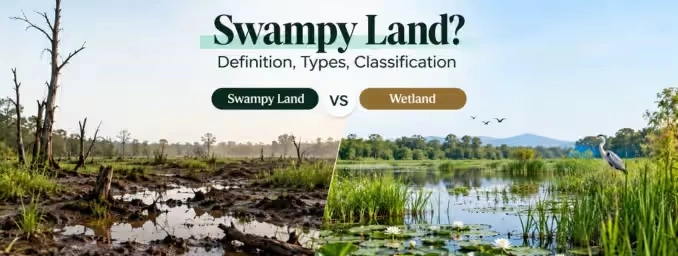
If you have ever stepped into any land that seemed like a sponge, water accumulating around your feet, abundant vegetation, and an air filled with a tinge of the smell of mud and rotten things, then you may be sure to have stepped on swamp lands without even knowing that such land has a name and classification. Most of us confuse the terms “swamp” and “wetland.” They are not the same, and for those who have been looking for farmland near me or comparing agricultural land for sale, this difference could actually help them avoid purchasing one such piece of land, which seems good on paper but turns out to be useless when the rains start.
Swamp Definition: What Makes Land "Swampy"?
In simpler terms, a swamp is a wetland that is filled with trees and shrubs that grow in water, which can be either perennial or seasonal in nature. It is saturated for lengthy periods of time, even throughout the whole year, and its saturation influences all the properties of the swamp's flora and fauna.
The ecological definition of a swamp consists of three main components: stagnant water, soils that are waterlogged at least part of the year, and vegetation adapted to growing in water, such as mangroves, cypress, or reed, depending on the region. Swampy lands can be found in India in deltaic areas of rivers, around the Sundarbans, and in low-lying coastal areas where drainage is poor. It is not 'bad' from the ecological point of view and is extremely valuable, but not suitable for building or cultivation for any buyer.
Wetland Definition: The Bigger Category Swamps Belong To
Wetlands are much broader in definition than swamps. The wetlands refer to the regions in which the water covers the soil for significant portions of the year, and the swamps are just a subset of wetlands.
Other examples of wetlands besides swamps would include the marshes (with grass growing rather than trees), the bogs (which are generally more acidic and have peat soil), and the fens (their principal source of water being below-ground). Consequently, all swamps are wetlands, but not all wetlands are swamps.
This distinction between swamps and wetlands is not a semantic one. There are separate rules governing the usage of the terms, and lands that appear to be identical at first sight may actually be very different according to the definitions of wetlands and swamps.
Types of Swampy Land
Not all swamps behave the same way, and the type usually depends on water source, salinity, and vegetation. Here's a simple breakdown. Understanding these differences is also important when assessing land for purchase or selling property online, as the land's classification and characteristics can affect its potential use and value.
| Type of Swamp | Main Feature | Common Vegetation | Typical Location |
|---|---|---|---|
| Freshwater swamp | Fed by rivers, rainfall, or groundwater | Cypress, willow, reeds | Inland floodplains, river deltas |
| Saltwater/mangrove swamp | Fed by tidal seawater | Mangroves | Coastal belts, estuaries |
| Forested swamp | Dense tree cover with waterlogged floor | Hardwood or softwood trees | Low-lying forest regions |
| Shrub swamp | Dominated by shrubs rather than tall trees | Shrubby willows, buttonbush | Transitional wetland zones |
| Seasonal swamp | Wet only during monsoon or flood season | Grasses, temporary aquatic plants | Agricultural lowlands |
That last one, seasonal swamp, is actually the trickiest for land buyers. A plot can look perfectly dry and farmable in February and turn into standing water by August. This is exactly the kind of thing a quick site visit during the wrong season can completely miss.
How Swampy Land Gets Classified?
Classification isn't just an academic exercise; it directly affects what you're legally allowed to do with a piece of land. Broadly, swampy and wetland areas get grouped based on a few factors:
- Hydrology — how the water gets there (rainfall, tides, groundwater, river flooding) and how long it stays
- Soil type — whether it's peat-based, clay-heavy, or a mix that drains poorly
- Vegetation cover — trees versus grasses versus shrubs, which tells you a lot about the water pattern over time
- Salinity — freshwater swamps behave very differently from saline coastal ones, both ecologically and legally
- Regulatory status — whether the land falls under wetland protection laws, coastal zone regulations, or has no formal protection at all
That last point is the one buyers genuinely need to pay attention to. In India, several wetlands are protected under the Wetlands (Conservation and Management) Rules, and building or farming on classified wetlands can run into serious legal trouble, not because someone's being difficult, but because these ecosystems play a real role in flood control and groundwater recharge.
What Are Ramsar Sites, and Why Do They Come Up in This Conversation?
If at all you have been busy researching wetlands in India, then one term that you would definitely have come across by now is a Ramsar site, and you may be wondering exactly what it means. Well, it is pretty straightforward. Ramsar sites are a consequence of an international agreement called the Ramsar Convention, set up way back in 1971 in the town of Ramsar, Iran, concerning the conservation of wetlands.
There are more than 80 Ramsar sites in India, and these include Chilika Lake in Odisha, Keoladeo National Park in Rajasthan, and the Sundarbans wetlands in West Bengal. No matter who the neighboring plots belong to, any land that lies within a Ramsar site or is a neighbor to a Ramsar site has some very strict restrictions put on it. Not only is development not allowed, but draining it is not allowed either.
Needless to say, this information will be very useful for you if you are looking for land because a plot of land near a Ramsar site boundary might be as ordinary as any other land and even cheaper, but it is not suitable for agriculture or construction.
Swampy Land vs. Wetland: The Direct Comparison
Since this comparison trips people up constantly, here's it laid out plainly:
| Aspect | Swamp | Wetland (General) |
|---|---|---|
| Definition scope | A specific type of wetland | The broader umbrella category |
| Dominant vegetation | Trees and woody plants | Varies, grasses, shrubs, trees, or none |
| Water presence | Often permanent or near-permanent | Can be seasonal or permanent |
| Examples | Mangrove swamp, cypress swamp | Marsh, bog, fen, swamp (all fall under wetland) |
| Legal treatment | Falls under wetland protection where applicable | A broader regulatory category includes swamps |
So really, asking "swamp or wetland" is a bit like asking "apple or fruit"; one just sits inside the other.
Why This Matters If You're Actually Buying Land?
Here's where this stops being a biology lesson and becomes genuinely useful. A lot of buyers get excited about a cheap plot without realising the low price might be because the land sits in a low-lying, poorly draining area, essentially swampy, even if nobody used that word during the sale. Before finalising anything, it's worth checking:
- Whether the land has any history of waterlogging, especially during the monsoon
- If it falls within or near a notified wetland or Ramsar boundary
- What the soil actually looks and feels like across different parts of the plot, not just near the entrance
- Whether local farmers in the area grow anything successfully there or avoid it
- If the seller has any documentation about land classification, not just ownership papers
Skipping these checks is how people end up with agriculture land for sale that turns out to be unfarmable for half the year.
Where does 2Bigha help with this exact problem?
This is precisely the kind of detail that's easy to miss with a quick site visit, and exactly why 2Bigha focuses on verified listings rather than just photos and a price tag. Land classification, drainage history, and legal status are checked before a plot even gets listed, so buyers aren't left guessing whether their dream plot turns into a swamp every August.
Whether you're browsing farmlands near me and want to rule out poor-drainage plots, comparing agriculture land for sale across a few districts, or a landowner exploring selling property online and wanting an honest classification of what you actually own, 2Bigha's platform is built to catch exactly these kinds of details before they become expensive surprises.
Disclaimer: This article is for informational purposes only and should not be considered investment, legal, financial, or property advice. Real estate regulations, infrastructure plans, market conditions, and government policies may change over time. Readers are advised to verify information with relevant authorities and consult qualified professionals before making any investment or property-related decisions.